Venezuelans in South Florida celebrate Maduro’s capture, hope for return to democracy
Venezuelans in South Florida awoke Saturday to long-awaited, welcome news: Nicolás Maduro had been captured in the middle of the night by U.S. forces following military action in Caracas. The Venezuelan leader’s detention, announced by President Donald Trump, sparked hope — and uncertainty about what comes next for a nation long battered by repression, economic collapse and exile.
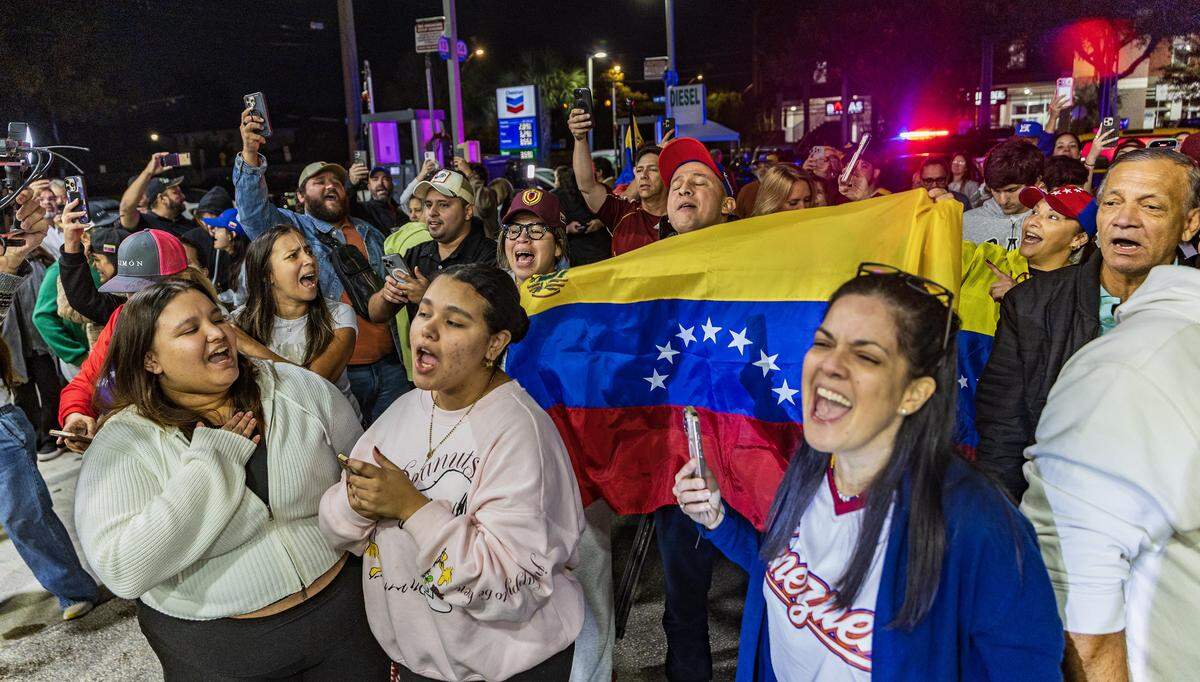
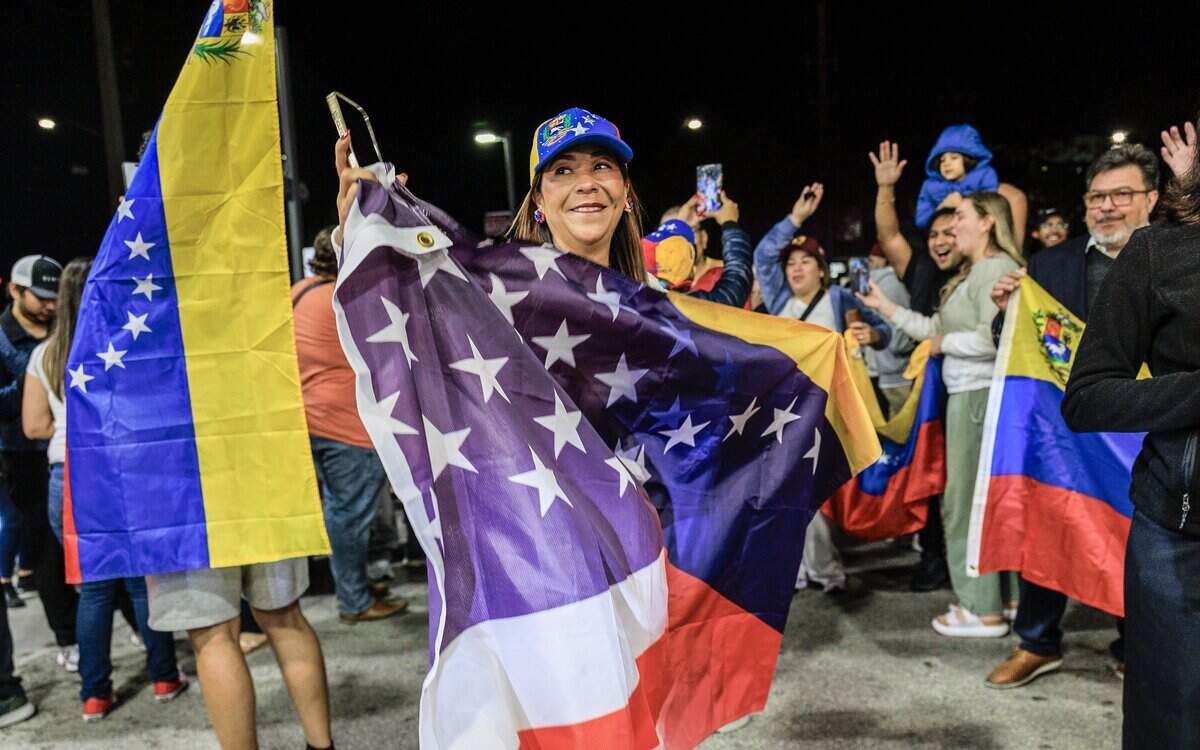
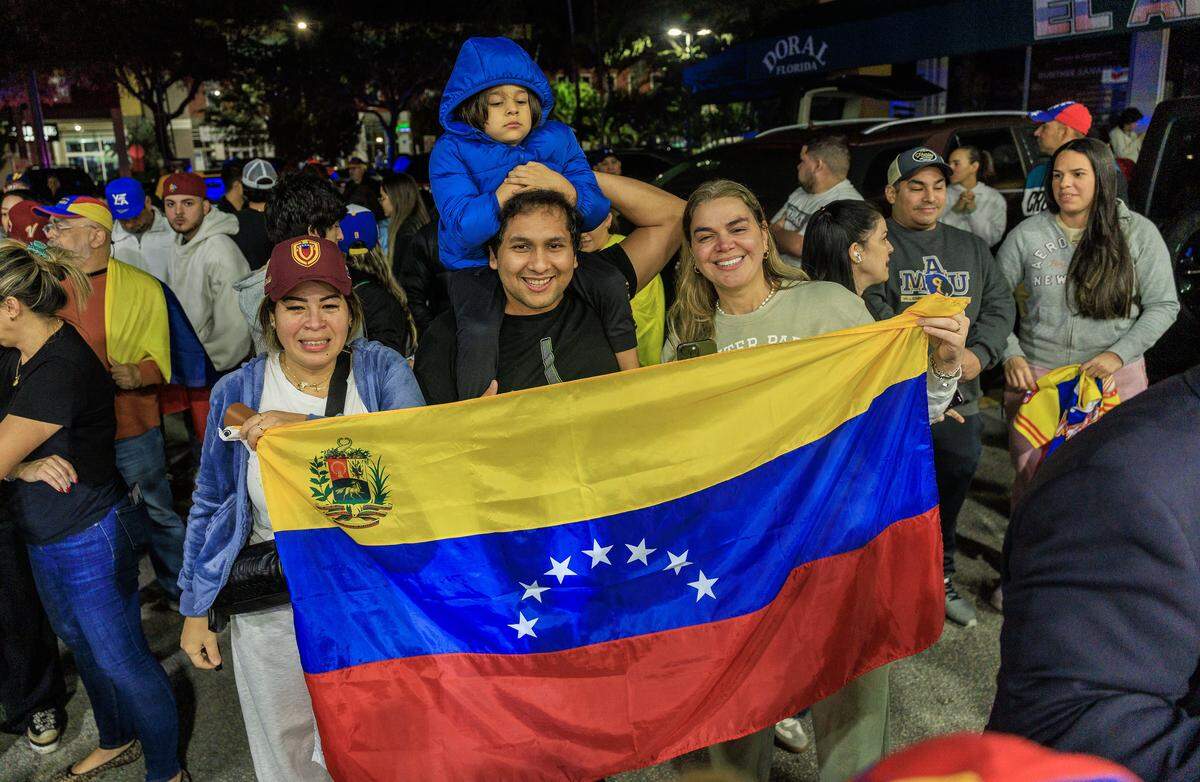
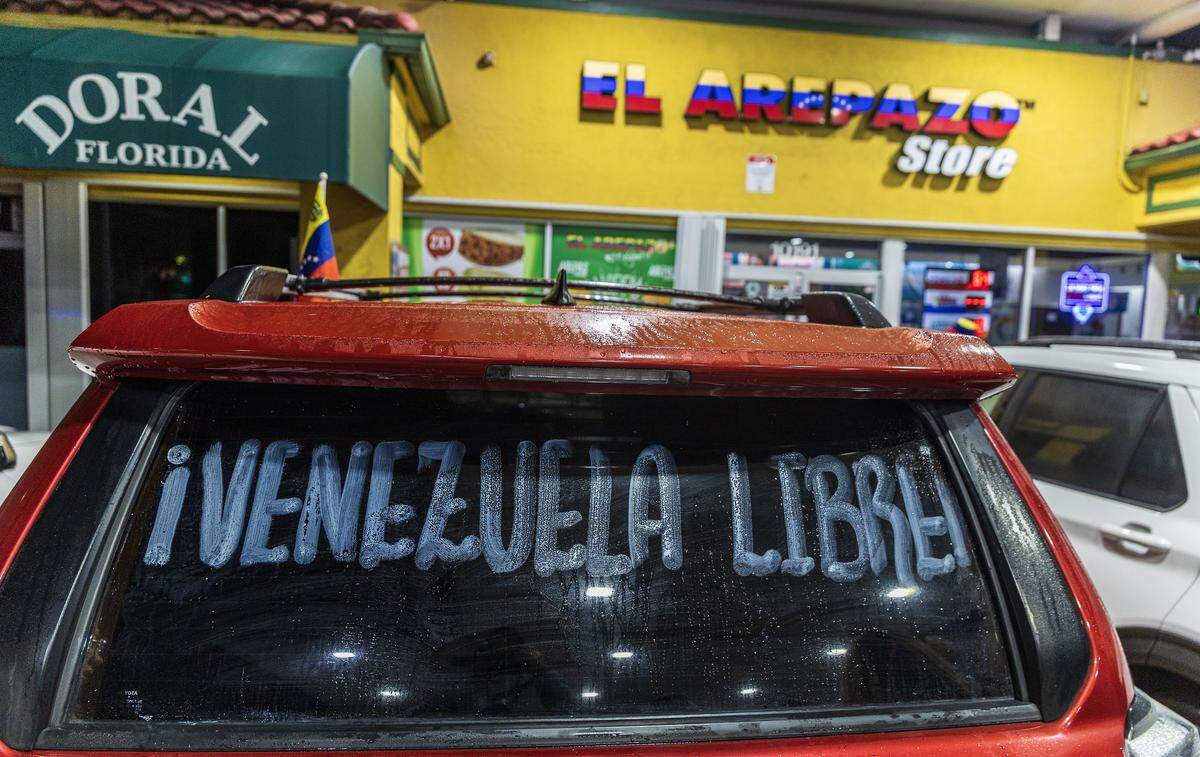
Even before the sun rose, hundreds of people waving a sea of Venezuelan flags gathered outside El Arepazo, a well-known Venezuelan restaurant in Doral, the heart of the Venezuelan community in the U.S.
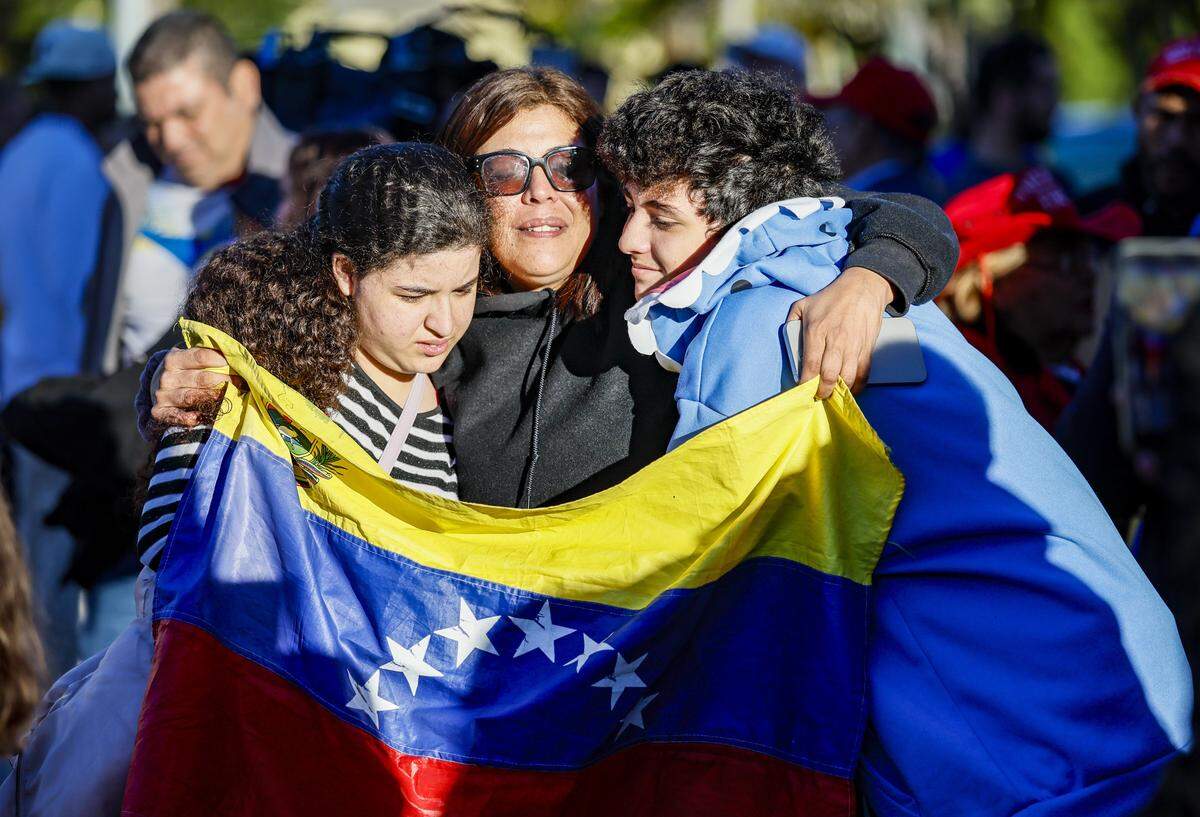
Many cheered, danced, cried and embraced each other as they celebrated the capturing of Maduro, something they say will bring long needed change — and hopefully liberation — to their country.
Jennifer Santillan, 48, who left Venezuela five years ago, leaving behind a career as a lawyer and her work for Foro Penal, a human rights organizations that serves political prisoners, said she feels an unimaginable happiness that the Venezuelan people will “finally have freedom.”
”Our young people will know a different type of government,” she said adding that she wants to see “all the innocent people, who are unjustly imprisoned” be freed.
Kirvin Suarez, 49, said she has been waiting for this day for years. Her brother, Yormi Suarez, was killed in 2004 while protesting the previous Chavez regime in Venezuela, she said. He was shot and killed by a sniper, according to Suarez. Her brother was 22. “They took a brother, a son, an uncle,” Suarez said. “They took everything from us.”
She described Venezuelans as fighters and hard workers who want to return to their country. “I know that all Venezuelans are going to rebuild our country,” she said.
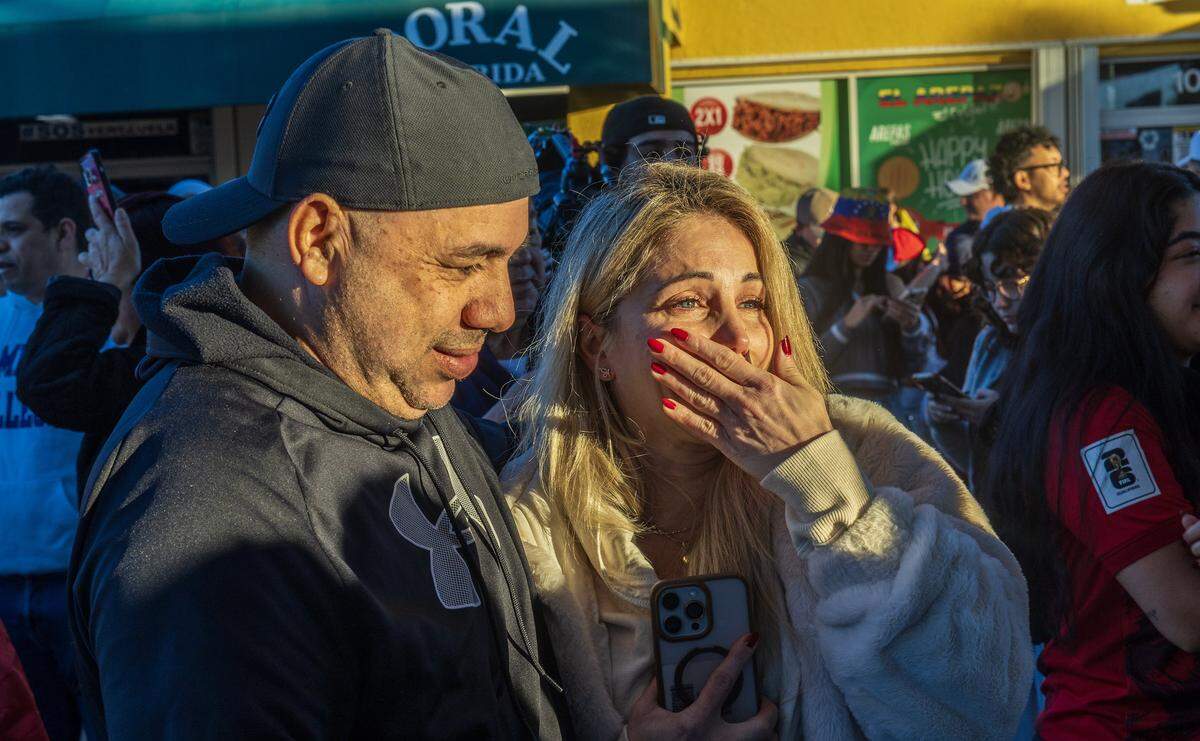
For Esther Zalchendler, celebrating at El Arepazo was worth missing her Saturday morning flight back to North Carolina. She was in South Florida visiting family.
Zalchendler, 47, has lived in the U.S. for four years and became emotional as she spoke about the life she left behind in Venezuela in search of a better, more stable future. She described Venezuela as beautiful, but said daily life had grown increasingly difficult as jobs disappeared and even basic necessities like food became scarce.
She recalled volunteering at a hospital for three years, where she witnessed patients struggling with hunger and shortages of medicine.
While Zalchendler said she is grateful to the United States for welcoming her and giving her the opportunity to work and build a life, she never lost hope that she would one day return to her homeland.
“This is just the first step,” she said.
What happens next?
While Venezuela’s future remains uncertain, many in Saturday’s crowd shared a common hope: the chance to rebuild their country.
Irasel Carpavirez, 55, has lived in the United States for about 10 years and is now a permanent resident in the process of obtaining her citizenship. Still, she said she is ready to return to her homeland as soon as possible, calling this moment an end to deaths, political imprisonments and family separations.
“I think this is the moment to return to Venezuela and rebuild,” the former lawyer said in Spanish. “We need a lot of people to work, a lot of people to rebuild everything. All our talent has left and is scattered across the country and the world. So, all that talent—doctors, engineers, lawyers, teachers—everyone has to come back because Venezuela has to rise from the ashes.”
What happens next remains unclear. Under Venezuela’s constitution, the vice president would assume power in the event of a president’s resignation, death, or removal. VP Delcy Rodríguez remains in Venezuela and has publicly demanded proof of life for Maduro and his wife. Meanwhile, Edmundo González Urrutia, the presumptive winner of the presidential elections in July 2024 remains in exile in Spain, and opposition leader María Corina Machado is in Europe after having received the Nobel Peace Prize, leaving unresolved questions about who would lead a potential political transition.
The military action comes amid months of the Caribbean naval operations aimed at combating narcotrafficking and amid allegations that Maduro leads the “Cartel de los Soles.” Last year’s presidential election was widely criticized by opposition groups and international observers as stolen. Opposition candidate González Urrutia—recognized internationally as the president-elect—and his supporters say the election was rigged, forcing thousands more Venezuelans into exile.
But after Trump’s remarks around noon at his Mar-a-Lago estate in Palm Beach following Maduro’s capture, in which he stated that the U.S. is “going to run [Venezuela] essentially until such time as a proper transition can take place,” the joy turned more into concern.
“He has announced the occupation of Venezuela without euphemisms, he said it clearly and bluntly: ‘We are going to sell its oil’,” said Jorge Landaeta, a longtime Doral resident. “It’s an outrage that a foreign government is returning to the politics of colonialism. This is a threat to the world.”
Despite his concerns, Landaeta, 50, said he has reason to celebrate Maduro’s ouster. “Venezuela changed jailer, from Cuba and Russia to the U.S. This is a policy of invasion and occupation, but today, at least is a day to celebrate—the end of a dictatorship.”
A path to freedom
Rafael Pineyro, a Venezuelan-American city councilman in Doral, said the moment represents a decisive stand in favor of democracy and human dignity.
“After decades of repression and the systematic destruction of freedoms under the Maduro regime, the Venezuelan people deserve true accountability and a clear path to freedom,” Pineyro said in a statement to the Herald. “I support the confirmed action of the United States as a measured step to confront tyranny, protect regional stability, and support those who have suffered in silence for far too long.”
Pineyro added that, in his role as a Doral councilman, the city stands in solidarity with Venezuela and all those continuing to fight for freedom and the rule of law.
The joy and hope among the diaspora contrast sharply with the situation inside Venezuela, where many citizens remain fearful of openly celebrating. Maduro and his wife, Cilia Flores, were detained, while key figures of the regime—including Vice President Delcy Rodríguez, Defense Minister Vladimir Padrino López and Interior Minister, Diosdado Cabello—remain in the country.
For Venezuelan advocates in the United States, the announcement brought a sense of long-delayed justice. Adelys Ferro, executive director of the Venezuelan American Caucus and a longtime advocate for Venezuelan immigrants, said the moment carries profound meaning for those who have endured persecution, hunger, and forced exile.
“Today my thoughts are with the innocent—with families who lived in terror, with those persecuted for speaking out, and with immigrants who carry years of pain, separation, and hope,” Ferro said. “May this moment open the door to truth, accountability, and a democratic transition that protects life and human dignity.”
This story was originally published January 3, 2026 at 10:49 AM.