
‘I have nightmares’: Venezuelans sent to Salvador prison relive terror after return home

Mervin Yamarte, a young Venezuelan detained for more than four months in the Salvadoran mega-prison known as CECOT after his deportation from the United States, said even though he’s now back in his home in Maracaibo, he is still afraid.
And he still wakes up every morning at 3:30 a.m. — the same time he was awakened by guards in the maximum security facility.
“I haven’t been able to sleep as I should. It’s taken me a while to adapt. But I’m happy,” he told the Miami Herald at his home in the neighborhood of Los Pescadores in western Venezuela.
Yamarte and three of his friends from that impoverished community – Edwuar Hernández, 23, Andy Perozo, 30, and Ringo Rincón, 39 – were deported to El Salvador on the night of March 15, accused by the U.S. of having links to the dangerous Venezuelan criminal gang Tren De Aragua.
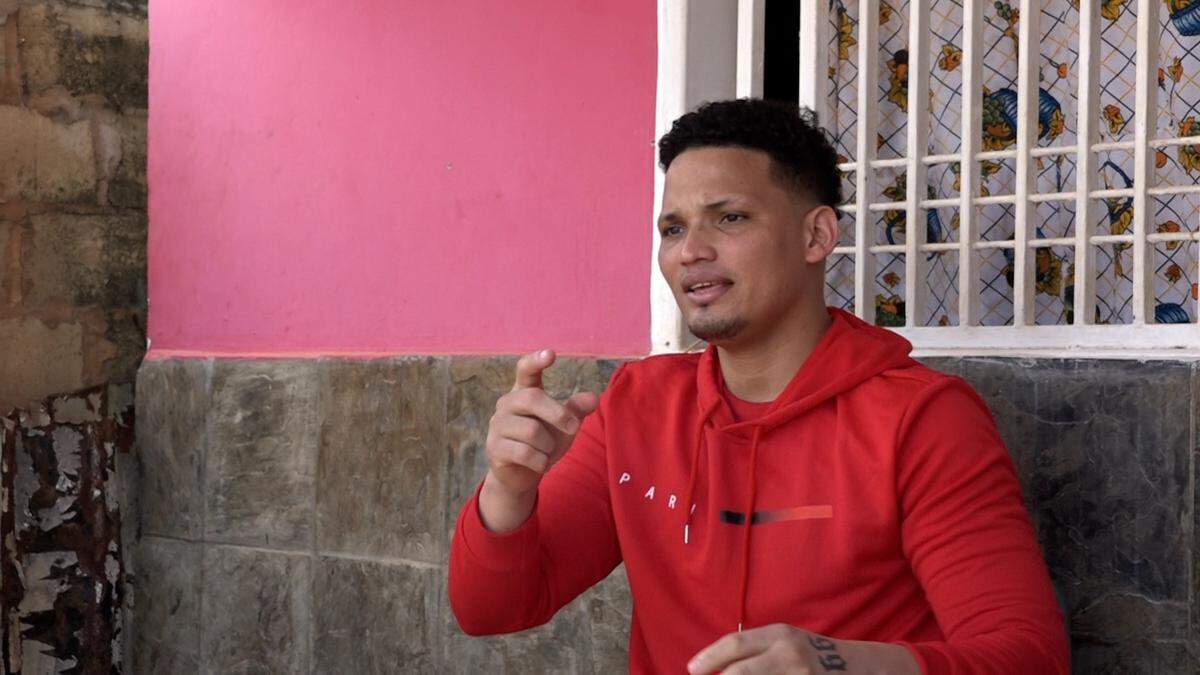
It is an accusation that they and their families have vehemently denied. “I don’t go out, because I’m afraid of being singled out” on the streets of his community as a criminal, Yamarte said.
In March, the Trump administration sent 252 Venezuelans to a maximum-security prison in El Salvador, using a 1798 law known as the Alien Enemies Act.
Read more: ‘Scared to die’: Venezuelan who was held in megaprison files complaint against U.S.
Yamarte, who worked in a tortilla factory while living in Texas, was included in the first group of 238 Venezuelans to arrive at the Salvadoran prison.
“We are not criminals. We are dignified people. I never had problems with the law, neither here nor in the United States,” he told the Herald after his return home to Los Pescadores, where he was greeted with balloons, celebrations, tears and hugs.
Yamarte was arrested on March 13 inside his apartment in Dallas along with Hernández, Perozo and Rincón, three childhood friends.
Local police and Immigration and Customs Enforcement officers went to the apartment looking for Perozo, who had a deportation order after missing his appointment with an immigration judge after entering through the Mexican border without documentation in 2023.
The four men said they were arrested because the agents mistakenly profiled them as members of the violent Tren de Aragua gang because of their tattoos. Other friends and relatives with whom they lived and who did not have tattoos were not arrested, they said.
All of them thought that they would face some form of legal process in the U.S., or at worst be deported back to Venezuela. The reality turned out to be worse: On March 15 they were flown to CECOT, the Salvadoran megaprison that has been the subject of international accusations of human-rights abuses.
The four men, released and sent home on as part of a deal between the U.S. and the Venezuelan government, said they had suffered physical and psychological torture inside CECOT.
Yamarte called it “hell.” Rincón said the “terror” has left “marks” on their bodies and psyches.
A softball and soccer player, Yamarte said he is still sore in his shoulders, especially at night, from the times CECOT guards lifted him by both arms while he was handcuffed behind his back. He said lost several toenails after officers stood on his feet while during searches. His ankles still sport dark shadows from tight cuffs.
Detained in Texas, deported to El Salvador
Perozo, who has five children, said he was beaten daily for a week at CECOT and a gun was fired near his left ear during a riot 15 days after his imprisonment.
“Every time they took me to the doctor, they didn’t treat me, they beat me,” he told reporters minutes after receiving hugs from his parents.
Perozo has not left his neighborhood since he arrived.
“I have nightmares and I can’t sleep. I dream that I’m still there,” he said, adding he has as an urgent request for anyone who can help him adapt to life back in Venezuela: “We need psychological help.”
President Nayib Bukele of El Salvador has consistently denied that abuses and human rights violations have occurred inside CECOT.
Maduro accused Bukele of “kidnapping and torturing” the group of Venezuelans inside CECOT and called them “hostages”. The Venezuelan political leader also echoed the claims that many of them received “beatings” and ate “rotten food”. Referring to a new investigation about it from Venezuelan justice system, he said: “There will be justice”.
This week, a special report from a group of outlets and journalists that included ProPublica quoted Natalia Molano, a spokesperson for the U.S. State Department, who said that United States is not responsible for the conditions of the Venezuelans’ detention in El Salvador. She added that “the United States is not involved in the conversation” about abuses inside CECOT denounced by the former prisoners.
From sadness to joy
During the months that the four men from Los Pescadores were imprisoned in El Salvador, friends and family held several protests, traveled to Caracas to meet with Venezuelan leader Nicolás Maduro and participated in prayer vigils
Their mothers, wives, neighbors and teammates described the four Pescadores men as young workers with no criminal records in Venezuela or the United States, and who decided to emigrate to the U.S. to earn money to send back to their families in Maracaibo.
“I suffered a lot. We were very said,” said Wilfredo Perezo, Andy Perezo’s father, crying as he remembers the 127 days of the imprisonment of his son and his friends in CECOT until their arrival home, where the group was received by the national government as heroes.
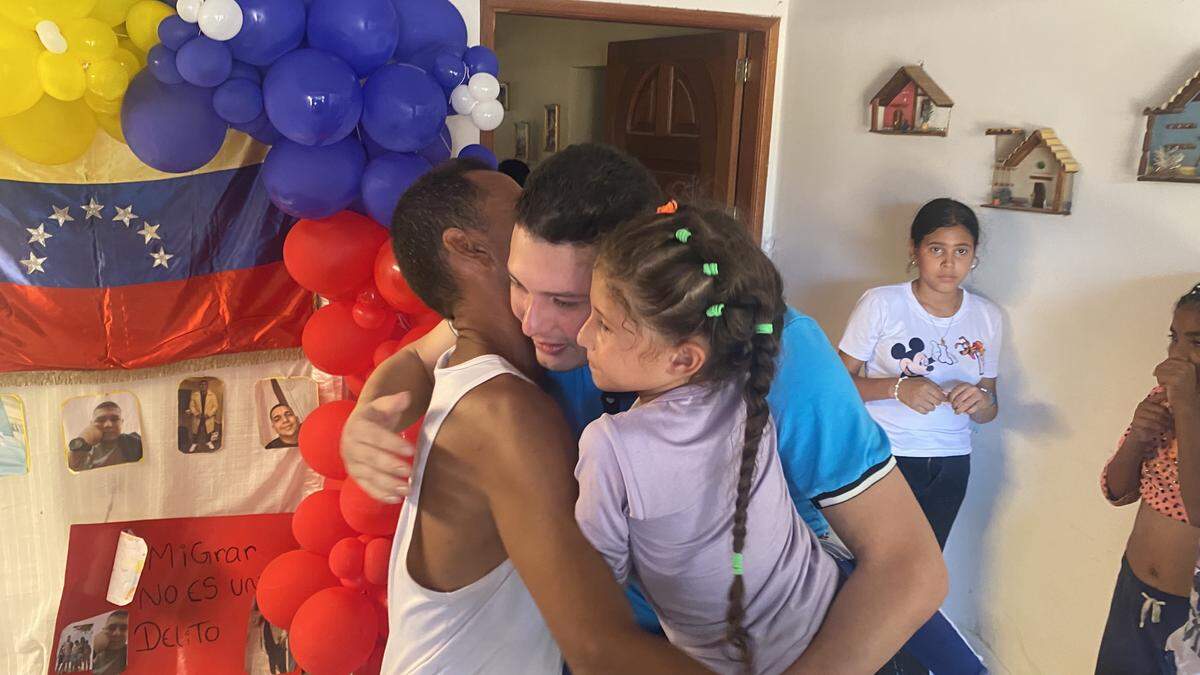
Returning to his family, especially his 6-year-old daughter, his wife Yainelis and his mother Mercedes, has been “extraordinary,” said Yamarte, who sports tattoos on his arms and one on his hand, the number 99, his favorite, he said, and which he wore on the shirts of his soccer teams every weekend.
“I want to clear my name. I didn’t deserve this,” he told the Herald.
Yamarte said he still doesn’t have a job. He would like to get one that allows to finish the house his family began renovating in Los Pescadores, near his mother’s home, thanks to the money he sent from Texas.
His mother was the first among the men’s parents to recognize one of the four from videos of their transfer to CECOT. In one of the images, Yamarte was seen being shaved and in despair.
Mercedes said she screamed with joy on July 18 when she saw on television her son get off the first of two planes that flew from El Salvador with the 252 Venezuelans on board.
During her son’s time in prison, she said she consoled herself with prayers and playing the song that he dedicated to her a few days before his arrest and deportation, “Es mi madre” — She’s my mother, by Colombian singer Jhonny Rivera: “She doesn’t abandon me. She is the one who suffers if I suffer, she is the one who cries when I cry, she protects me and is my shield.”
Abuse every day
Ringo Rincón lives a few houses away from the homes of the Yamartes and the Hernández Herreras. He was arrested in the Dallas apartment shortly returning home after finishing his shift making deliveries. He said he was surprised to see so many police officers inside his residence and his friends handcuffed face down in the living room.
One of the first questions he was asked was if he had any tattoos. They asked him to remove his shirt and show them. He has several on both arms and on his chest, and a large one of a watch on his left shoulder.
Rincón says the biggest scars on his body were left by blows from CECOT guards, whom he says beat him “without compassion.”
“The abuse came every day,” he said. Rincón smiled when he spoke of his children, being reunited with his mother and his favorite food, chicken and rice, which he has eaten no less than three times since his return home.

Yarelis Herrera, mother of Edwuar Hernández Herrera, decorated her home colored balloons and a giant poster with photos of her smiling son when he returned home.
That day, he was greeted with lunch and cold beer. Christian music and the song Volver a casa — Returning Home — by Venezuelan singer Cáceres, played in the background.
Edwuar Herrera, the youngest of the men from Los Pescadores deported to CECOT, described his days back in his hometown as calming and happy.
He said that, like his friends who were imprisoned with him, he is “trying to clear” his mind of what happened in El Salvador, playing sports, spending time with family and watching movies.
“Being able to have time again with my daughter and my mother is priceless,” he said.
He tries to “not to think about it so much,” he said about his time in the Salvadoran prison, although he hopes that the U.S. justice system will “cleanse” the reputations of the 252 Venezuelans send to CECOT.
He said he never had access to a judge or a lawyer, either in the U.S or El Salvador. He added he was beaten badly by the prison guards and was hit by four rubber bullets during a riot.
The U.S. government, he said, ”threw us out as alleged terrorists. We don’t deserve any of that.”
This story was originally published July 31, 2025 at 6:59 PM.