
‘Scared to die’: Venezuelan who was held in megaprison files complaint against U.S.
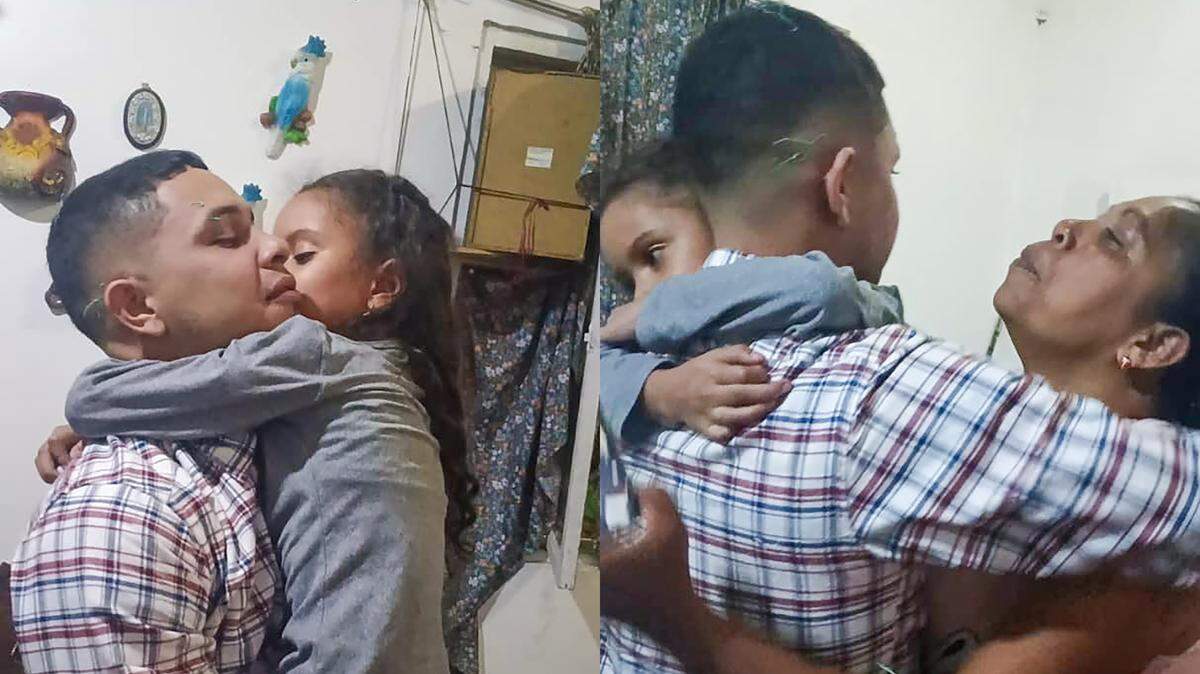
He once dreamed of being recognized for his work — but instead, the U.S. sent him to a mega-prison in El Salvador. Branded a gang member and a terrorist, he spent four months behind bars. Now, after his release and return to Venezuela, he’s determined to clear his name.
Neiyerver Adrian Leon Rengel was one of more than 250 Venezuelans detained in the United States who was transferred in March to the Salvadoran maximum-security prison known as CECOT, the Spanish initials for Terrorism Confinement Center.
“I was very scared,” Leon Rengel, 27, told the Miami Herald, describing how guards would frequently insult them, calling them trash, scumbags and worse, and often told them they would never leave the prison. “Even more so when a Salvadoran officer told me I was going to die there or spend 90 years in prison. While I was in CECOT, I never saw a lawyer or a judge. They wouldn’t even let me make a phone call.”
The League of United Latin American Citizens, LULAC, a Washington-based civil-rights organization, has filed an administrative complaint with the Department of Homeland Security on his behalf, alleging Leon Rengel was deported without reason or due process. The complaint also details the abuses Leon Rengel said he endured at CECOT.
“He was beaten in his chest and stomach by guards, who used fists and batons to inflict pain,” the complaint says. “On one occasion, he was taken to an area of the prison without cameras, where guards routinely brought detainees to assault them without leaving a video record. There, [Leon] Rengel was viciously beaten.”
Leon Rengel told the Herald the Venezuelan detainees were kept in a separate module from Salvadoran detainees that housed 32 cells. He said he was placed in one of the cells with 19 other men, though some detainees were held in cells with fewer people, he said. He said he and his countrymen were “beaten badly” if they complained about prison conditions.
He recounted sleeping on bare metal bunks, stacked four levels high, without bedding or pillows. The two toilets in his cell were entirely open, offering no privacy, he added. He said the only time they were given mattresses and sheets was when authorities came to visit.
“Once the photos were taken and the authorities left, the guards would come and take away the mattresses and blankets,” he recalled. During the 125 days the Venezuelans were held at CECOT, they were not allowed outside once, he said: “We never saw sunlight.”
At one point, during a prison riot, he said, inmates were placed in an area called La Isla, the island, “to beat us with batons. He described the island as a dark, small punishment room with a circular vent and two cross-shaped bars. The space was meant for two people, Leon Rengel said, but guards crammed in more detainees. “They brought in several prisoners to beat us. We went more than 24 hours without water or light.”
After the beatings, he said, they were taken to get medical care, but a doctor falsified the records, claiming their injuries were from playing soccer, something he says never happened. “We hardly ever left the cells.”
The complaint filed on Leon Rengel’s behalf by LULAC in partnership with the Democracy Defenders Fund seeks $1.3 million in damages for violations of his civil rights.
“They gave him a document in English stating he could either be deported to Venezuela or appear before a judge,” said Juan Proaño, CEO of LULAC. “Leon Rengel chose to see a judge — but he was never given that opportunity. Homeland Security failed to follow due process.”
The complaint is the first step before litigation. Homeland Security has six months to respond. If they fail to do so, a lawsuit will be filed in Washington, D.C., Proaño said.
Over the past four months, as both Venezuelan and Salvadoran detainees have been held at CECOT, El Salvador’s President Nayib Bukele has denied any allegations of torture inside the mega-prison. Responding to reports of abuse, he said, “Apparently, anything a criminal claims is accepted as truth by the mainstream media and the crumbling Western judiciary.”
Targeted for tattoos
When Leon Rengel emigrated to the U.S. in 2023, his goal was simple: to become a well-known barber and showcase his art. But in the heightened immigration crackdown during the Trump administration, he was labeled a member of the Venezuelan gang Tren de Aragua, largely because of his tattoos.
He was arrested on March 13, his birthday, in the parking garage of his apartment in Irving, Texas, where he was living with his girlfriend. At the time, he was on a video call with his 6-year-old daughter, Isabella, who lives in Caracas, he said. Four Drug Enforcement Administration patrol cars surrounded him and arrested him, he said, although the agency has never clarified its role.

“They asked me to lift up my shirt, and when they saw my tattoos they accused me of being member of Tren de Aragua. But they never showed any evidence of a connection to the gang,” he said. “They just laughed while wishing me happy birthday.”
U.S. immigration agents have been targeting Venezuelan men based on tattoo images like animals, basketballs or reggaeton lyrics, even in the absence of any criminal record. Experts have said Tren de Aragua doesn’t typically use tattoos as gang markers, and relying on them as indicators of gang ties risks serious miscarriages of justice.
READ MORE: ‘Crime of tattooing’: Why experts say body ink is no way to ID Venezuelan gang members
“When I entered the U.S., nobody questioned me about my tattoos or anything related to a gang. It wasn’t until after 2024 that I first heard officers mentioning tattoos and the gang,” Leon Rengel said.
Records show that Leon Rengel entered the U.S. on June 12, 2023, through the Paso del Norte port of entry on the Mexico-Texas border after a prescheduled appointment on CBP One, a digital portal created by the Biden administration designed to manage the flow of migrants at the southern border. When he was arrested in March, Leon Rengel had been living in the U.S. for 21 months, with a pending Temporary Protected Status application, and was scheduled to appear before an immigration judge on April 4, 2028.
He had one arrest in the U.S., in November 2024, for possession of drug paraphernalia — a non-jailable misdemeanor under Texas law. He was a passenger in a vehicle that was pulled over. According to Irving city records, he later pleaded guilty to possession of marijuana and was fined $492. He received no jail time or probation.
In a statement issued in April — at a time Leon Rengel’s family had no knowledge of his whereabouts — and repeated again in July, Homeland Security spokeswoman Tricia McLaughlin said he had “entered our country illegally in 2023 from Venezuela and is an associate of Tren de Aragua.” But DHS did not provide any documentation to support the claim or explain why Leon Rengel was sent to El Salvador— especially given that the U.S. and Venezuela have been cooperating in the deportation of Venezuelan nationals directly back to their home country.
Claims of abuse in El Salvador
For weeks after his detention in Texas his family had no idea where he was. He hadn’t been returned to Venezuela, where his mother, Sandra Rengel, and three of his four siblings live, nor was his name in the Immigration and Customs Enforcement detainee locator system or even on CECOT records obtained by media outlets. His relatives only learned of his whereabouts on April 23 through media reports, 39 days after he was deported to El Salvador.
READ MORE: Weeks after disappearance, DHS confirms Venezuelan man was deported to El Salvador
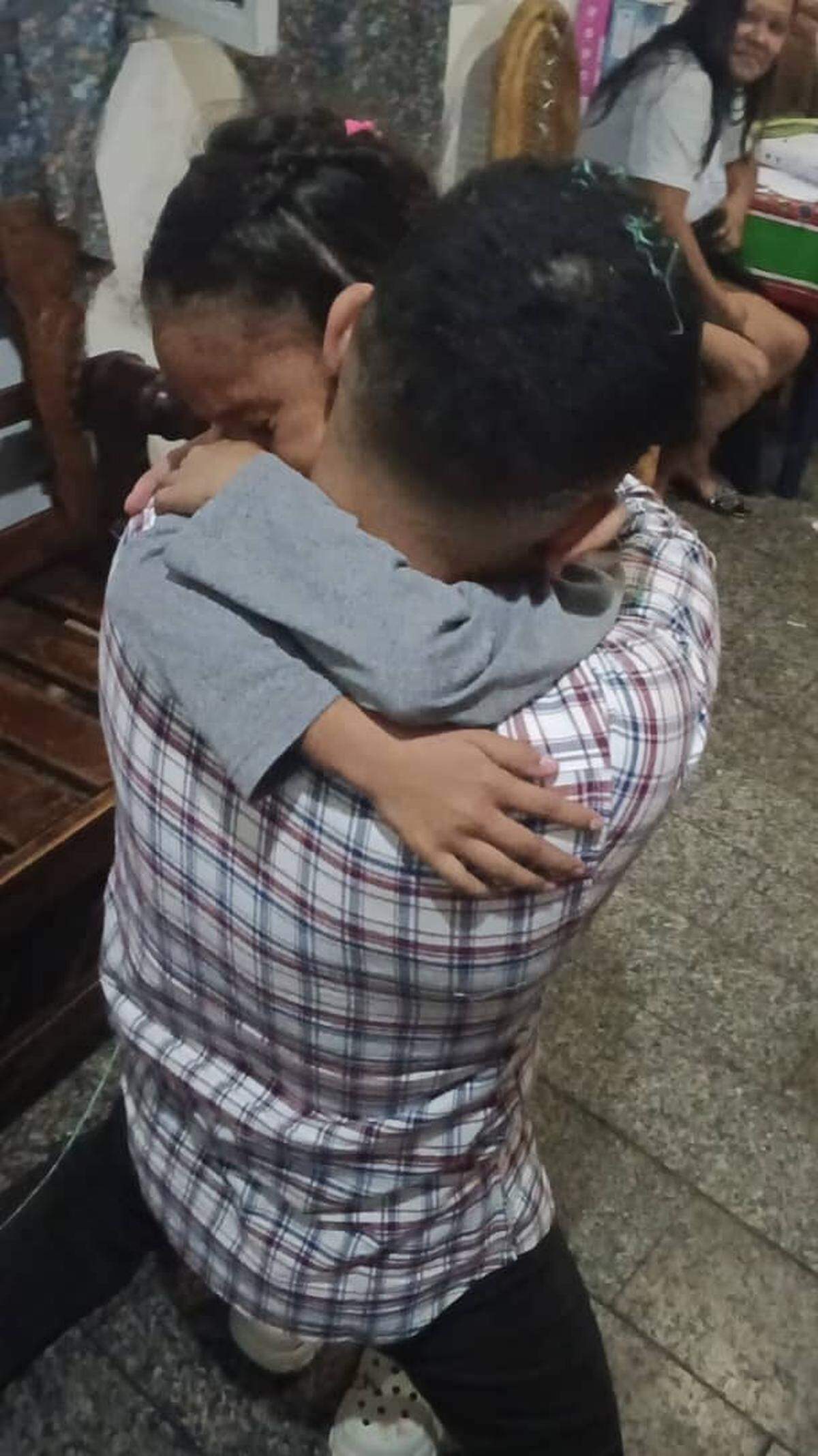
“The most difficult part was for my mother and daughter, who didn’t know where I was — whether I was alive or dead,” Leon Rengel said. “My daughter suffered a lot. She prayed every day to see me again.”
After his detenton in Irving he was briefly held at the Bluebonnet Detention Facility in Anson, Texas and later transferred to the East Hidalgo Detention Center, a privately run facility used by ICE in La Villa, Texas. Two days later he was deported to El Salvador.
Leon Rengel said he and dozens of other Venezuelan detainees were told they were being deported to Venezuela. ICE agents “never told us we were going to El Salvador,” he said. “They said we were being sent to Venezuela and even made us lower the airplane window shades. The surprise came when we landed in San Salvador.”
On July 18, the United States and Venezuela carried out a wide-ranging prisoner swap. As part of the agreement, 252 Venezuelans who had been deported from the U.S. and held in El Salvador’s maximum-security prison were exchanged for dozens of political prisoners and 10 Americans imprisoned in Venezuela — including a Venezuelan-American who had been convicted of committing a triple murder in Spain.
Leon Rengel said his only goal in filing the complaint is to clear his name.
“It’s unfair they detained us without any evidence of wrongdoing. I have no criminal record in Venezuela or Colombia. All I want is for them to be held accountable for the harm the government did to me.”
More than 75 other Venezuelan men that were held in CECOT are preparing similar claims, some of which involve allegations of head trauma, sexual violence and other forms of abuse, according to Proaño, the LULAC executive.
“This claim is too important to ignore,” Proaño said. “If the Department of Homeland Security can deport Venezuelans without due process, they can do it to anyone — migrants of other nationalities, even U.S. citizens who are mistakenly identified. What’s to stop them from sending people to third countries they’re not even from?”
He added: “We can’t let that become the norm. They need to be held accountable — and that means financial consequences.”
Proaño said if the U.S. government is forded to pay “$1 million to each of the 250 people wrongfully deported to El Salvador, that’s $250 million. That’s a small amount compared to the billions already being spent to deport Latinos. It’s the only way they’ll learn.”
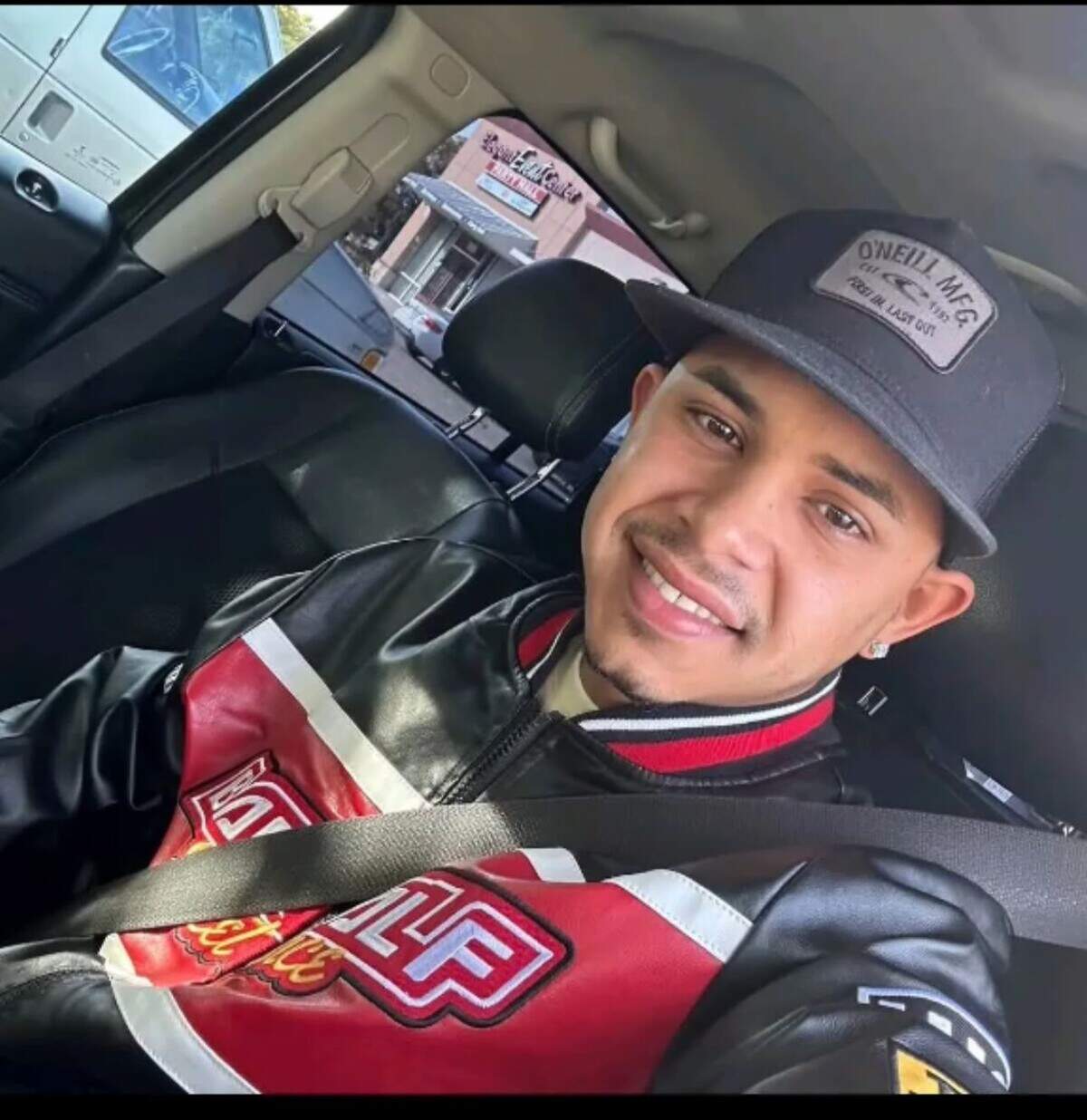
Leon Rengel was born in 1998 — the same year Hugo Chávez rose to power, marking the beginning of Venezuela’s unraveling. Growing up in a poor neighborhood of Caracas, his generation faced blackouts, food shortages and the crumbling of institutions. Before moving to the U.S., he spent six years in Colombia with his partner and daughter, maintaining a clean record, according to Colombian authorities. Inspired by friends who had successfully built new lives in America, he decided to emigrate. Now, he regrets that choice.
“If everything changes in the U.S., I’d go back just to visit — to see places I’ve always dreamed of,” he said. “But I wouldn’t try to build a life there again. This government is destroying the future of many Hispanics, especially Venezuelans.”
This story was originally published July 31, 2025 at 8:24 PM.