
The U.S. lifts some sanctions on airline Conviasa to help countries deport Venezuelans
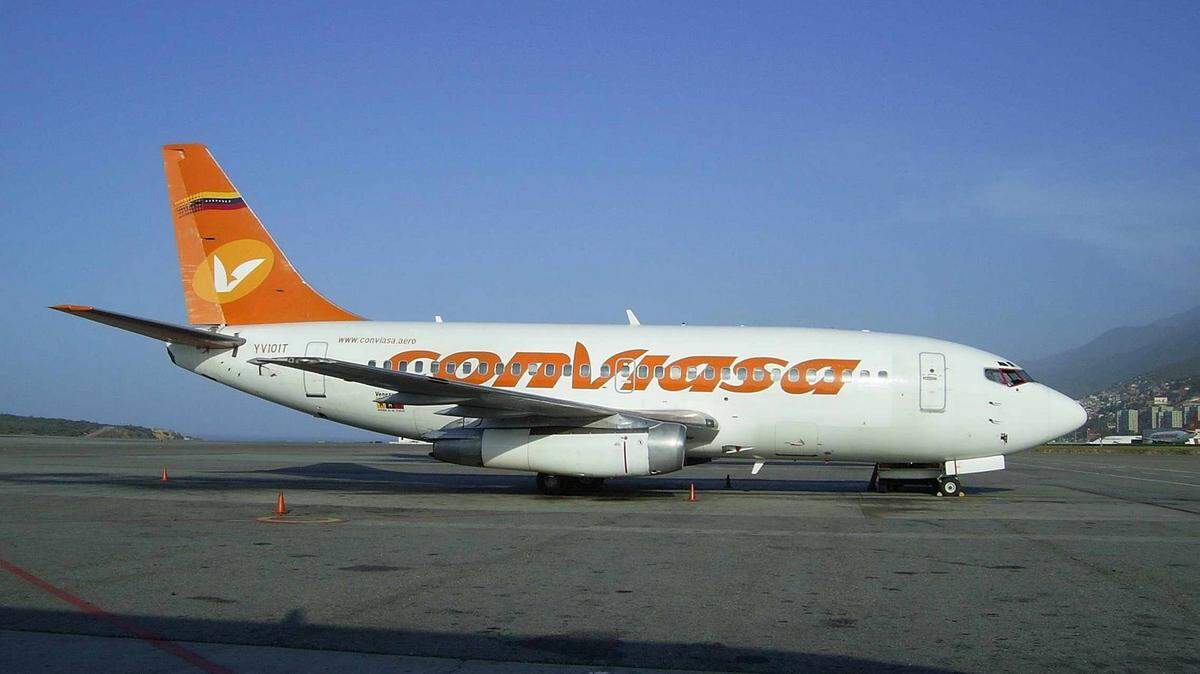
The Biden administration has partially lifted sanctions on the Venezuelan national airline Conviasa so Canada and countries in Latin America and the Caribbean can use its planes to deport Venezuelan migrants back to the troubled South American nation.
A new license issued by the Treasury Department on Thursday authorizes “all transactions ordinarily incident and necessary to the repatriation of Venezuelan nationals from non-U.S. jurisdictions in the Western Hemisphere to Venezuela” involving Conviasa, whose corporate name is Consorcio Venezolano de Industrias Aeronáuticas y Servicios Aéreos S.A.
The license also authorizes transactions related to “non-commercial (i.e., not-for-profit) flights” between Venezuela and third countries in the Western Hemisphere. More critically, it allows U.S. companies to provide maintenance to the company’s aircraft.
“Our priority is that Venezuelans can return to their country when they have no basis for an asylum case in any country,” Deputy Assistant Secretary of State Mark Wells said in a press Thursday. “So we are going to facilitate these Conviasa flights.”
The Trump administration first sanctioned the Venezuelan government owned airline in 2019 as part of broader sanctions against the government of Nicolas Maduro. In 2020, Treasury included the company on its list of blocked nationals kept by its Office of Foreign Assets Control because the airline was being used “to ferry Maduro and his inner circle to confer with dictators, authoritarian regimes, and other criminals around the world,” the U.S. State Department said at the time.
Anyone that does business with companies on the blocked list is exposed to U.S. sanctions as well, which is why the Treasury blacklisting of Conviasa caused the airline to shut down several international routes.
The easing of sanctions on the airline comes after the administration’s own push to deport Venezuelans amid criticism by Republicans about its border policies.
On Thursday, U.S. immigration authorities deported over a hundred Venezuelans in the fourth repatriation flight since the Department of Homeland Security announced in October a deal with Maduro to start sending Venezuelan migrants who did not arrive legally back to their home country.
In the press call Thursday, Blas Nuñez-Nieto, assistant secretary for border and immigration policy at the Department of Homeland Security, said each deportation flight carries between 130 and 135 people, which makes the total of Venezuelans sent back around 650.
The DHS official said the number of encounters by U.S. immigration authorities with Venezuelan migrants fell 65% since deportations resumed last month. U.S. Customs and Border Protection recorded 40,863 encounters with Venezuelan migrants in October at the U.S.-Mexico border, down from 66,584 in September. But those numbers also include Venezuelans coming legally through a newly created parole program.
The U.S. does not recognize Maduro as the legitimate president of Venezuela. In the call with reporters, the DHS official did not say whether the administration considers the country safe enough for the migrants to return.
“The people repatriated to Venezuela by this new process announced in October are people who have been very closely reviewed and interviewed, and we have determined that they do not have a legal basis to remain in the United States,” Nuñez-Nieto said.
He added the Biden administration expanded legal pathways for Venezuelans and migrants from countries like Cuba, Nicaragua and Haiti to come to the U.S. legally.
The administration also lifted oil sanctions on the Venezuelan state-owned company PDVSA last month, hoping Maduro would honor an agreement with the opposition signed in Barbados that would pave the way for free and fair presidential elections next year.
U.S. Sen. Ben Cardin, chair of the Senate Foreign Relations Committee, and another 10 democratic senators commended the administration in a letter Thursday for its diplomatic efforts to back a a negotiated solution in Venezuela and use sanctions “as a tool to prompt changes that advance U.S. national interests”.
“At the same time, though, we are aware of the Maduro regime’s failure to honor past commitments and the credible accusations of its involvement in crimes against humanity,” the senators said in a letter addressed to State Department Secretary Antony Blinken and Treasury Secretary Janet Yellen. “To that end, we urge you to reimpose sanctions absent concrete steps by the regime to implement the Barbados agreement.”
This story was originally published November 17, 2023 at 3:04 PM.