
U.S. strikes deal with Maduro government, will start deportation flights to Venezuela
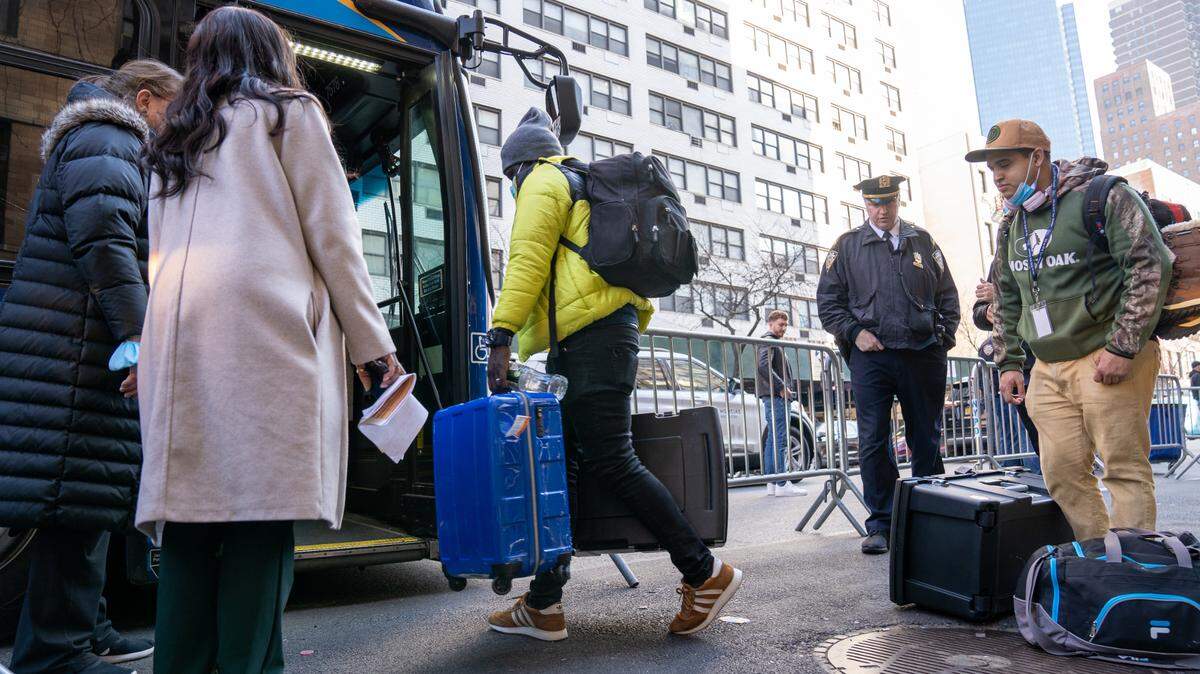
The Biden administration struck a deal with Venezuelan leader Nicolás Maduro to resume directly deporting Venezuelan migrants back to the South American country for the first time in years, U.S. authorities said Thursday.
The Department of Homeland Security said the announcement “follows a decision by authorities from Venezuela to accept the return of Venezuelan nationals,” and multilateral conversations in Mexico City on Wednesday between the governments of the United States, Mexico, Colombia and Panama.
In announcing its new policy, the Department of Homeland Security said the measure will apply to those “Venezuelan nationals who cross our border unlawfully and do not establish a legal basis to remain.”
The development comes after a sharp increase in the number of Venezuelan migrants showing up between July and August at the U.S.-Mexico border, according to federal government data. CBS News reported that preliminary numbers showed that some 50,000 Venezuelans had crossed the border last month, an all-time monthly high.
The decision also comes weeks after Homeland Security made an additional 472,000 Venezuelans eligible for Temporary Protected Status, a protection from deportation that allows people from countries in turmoil who are already in the United States to temporarily live and work here. At the time of the TPS announcement, the head of the agency deemed Venezuela too unsafe for those who had arrived here by July 31 to return.
Thursday’s announcement shocked Venezuelan activists in South Florida, who claimed it could place the lives of thousands of their countrymen in danger.
“This is terrible news,” said former opposition leader Alexis Ortiz. “We understand that immigration in the United States has reached a critical situation, but U.S. officials must also understand that any Venezuelan who is directly repatriated to Venezuela is being sent back to starvation, to political persecution and to a state of total helplessness.”
Crisis in Venezuela
Venezuela is the source of the largest movement of people in the Western hemisphere in decades, as the country struggles with social, political, and economic crisis. Over 7 million people have fled the country, according to the United Nations.
The Biden administration has launched several policies to curb illegal immigration at the U.S-Mexico border, including programs for Venezuelans, Haitians, Nicaraguans and Cubans that allow people to come for a two-year period as long as they pass background and health checks and have a financial sponsor.
The U.S. government has also announced billions of dollars in investments and projects in Central America to address the root causes of migration, as well as a two-month joint operation with Panama and Colombia in April meant to end illegal migration through the dangerous jungle known as the Darien Gap.
But despite the attempt to shut down the highly trafficked migration route through the risky region that Colombia and Panama share, authorities have recorded a record amount of crossers this year. Panamanian authorities reported over 330,000 crossings through August, with over half coming from Venezuela.
In all, the U.S. government has also had nearly 200,000 encounters with Venezuelan nationals at the border between October 2022 and August 2023 — nearly 12,000 more than the whole previous fiscal year.
The high volume of migrants coming to the United States has been a constant line of attack from Republicans and other critics, who point to the number of encounters at the border and the wave of newly arrived immigrants that cities like New York are struggling to absorb as proof that Biden’s immigration policies aren’t working. The migration crisis has also divided Democrats, who advocated for TPS for the Venezuelans already here.
It remained unclear Thursday when the last direct deportation flight Venezuela took place. But Thomas Cartwright, an independent volunteer who tracks Immigration and Customs Enforcement flights since Jan. 2020, said he had not seen direct flights to Venezuela since he began documenting deportations. Venezuela and the U.S. broke off diplomatic relations in January 2019.
Both the Trump and Biden administrations have conducted deportation flights of Venezuelans to other countries. Last year, the federal government started sending Venezuelans who had previously lived in Colombia back there. The Trump administration also sent Venezuelans to Trinidad and Tobago. The number of deportations of Venezuelan nationals has been in the low hundreds annually in recent years, according to ICE reports.
Concerns among Venezuelans
Venezuela has several open accusations of crimes against humanity in international courts, and human-rights groups have published several reports that highlight the torture of political dissidents and extrajudicial killings of dissidents as common practices in the country. Representatives of the Venezuelan community expressed concerns to the Herald about the fate of those who will be sent back to the South American country and claimed that it will help strengthen Maduro’s grip on power.
Jose Colina, president of the Organization of Politically Persecuted Venezuelans in Exile, said the announcement is a new sign that the administration is attempting to normalize relations with the Maduro regime.
“We have the U.S. government working together with the Maduro regime to get Caracas to allow the repatriation of Venezuelan nationals. This immigration measure has significant political repercussions because now even though they don’t recognize Maduro’s presidency, they now have to work together with him to repatriate Venezuelans,” Colina said.
The United States recognizes the opposition-controlled National Assembly as the legitimate democratically elected authority in the country and accuses Maduro of dismantling the country’s democratic system. While officials from the Biden administration have communicated with Maduro, there are no formal diplomatic ties between the two governments.
Those communications attempts, however, have led to significant improvements in the relations between the two countries, with the administration offering to lift the sanctions imposed by the Trump administration on the regime if Maduro agrees to hold free and fair elections. These “diplomatic engagements”, which began last year, have also led to Maduro freeing a number of Americans jailed in Venezuela and to Washington allowing Chevron and other oil firms to expand operations in the South American country.
Adelys Ferro, the president of the Venezuelan American Caucus, said she believes the Biden administration is using this measure as another way to establish law and order at the border. She said that members of the Venezuelan opposition had been informed about the decision.
“What we hope is that all Venezuelans who return to Venezuela are treated well, and that there is oversight so this entire process is handled in the most humane way possible,” she said.
Other Venezuelan advocates complained that the administration’s poorly defined and at times ambiguous policy has fueled the immigration crisis. U.S. government immigration and policy announcement have encouraged people to flee Venezuela, but later come across the ire of officials when they do reach the border, said Venezuelan advocates and service providers.
Patricia Andrade, founder of the Venezuelan support network Raices Venezolanas, said an ill-defined policy in Washington has partly led to the high numbers at the border.
“This administration is characterized by improvisation, by the adoption of unexpected measures,” Andrade said. She pointed to comments Biden president made in September 2022 in which he described the “the ability to send” people back to Venezuela, Nicaragua, and Cuba as “not rational.”
This story was originally published October 5, 2023 at 4:33 PM.