
U.S. tells Venezuelan opposition that talk of military intervention is ‘magical realism’
In a harsh response to the increasing division in the Venezuelan opposition, U.S. special envoy Elliott Abrams said that one opposition leader’s latest comments on a potential American military intervention to solve the country’s crisis reminded him of Gabriel García Márquez’s “magical realism.”
María Corina Machado, a well-known figure in the Venezuelan opposition, published a letter on Saturday criticizing interim president Juan Guaidó for the many “lost opportunities” to oust Venezuela’s strongman Nicolás Maduro, and opposing Guaidó’s latest call for unity in boycotting the upcoming parliamentary elections.
She argued that Guaidó, the head of the National Assembly, did not do enough to trigger a constitutional article that would make foreign intervention legitimate.
“I always suggested to you that the departure of the Maduro regime required building an option of force,” she wrote. “You have consistently refused to approve Article 187.11, which would be part of the legal framework for international support and an unequivocal message, both to our international allies and to the regime itself.”
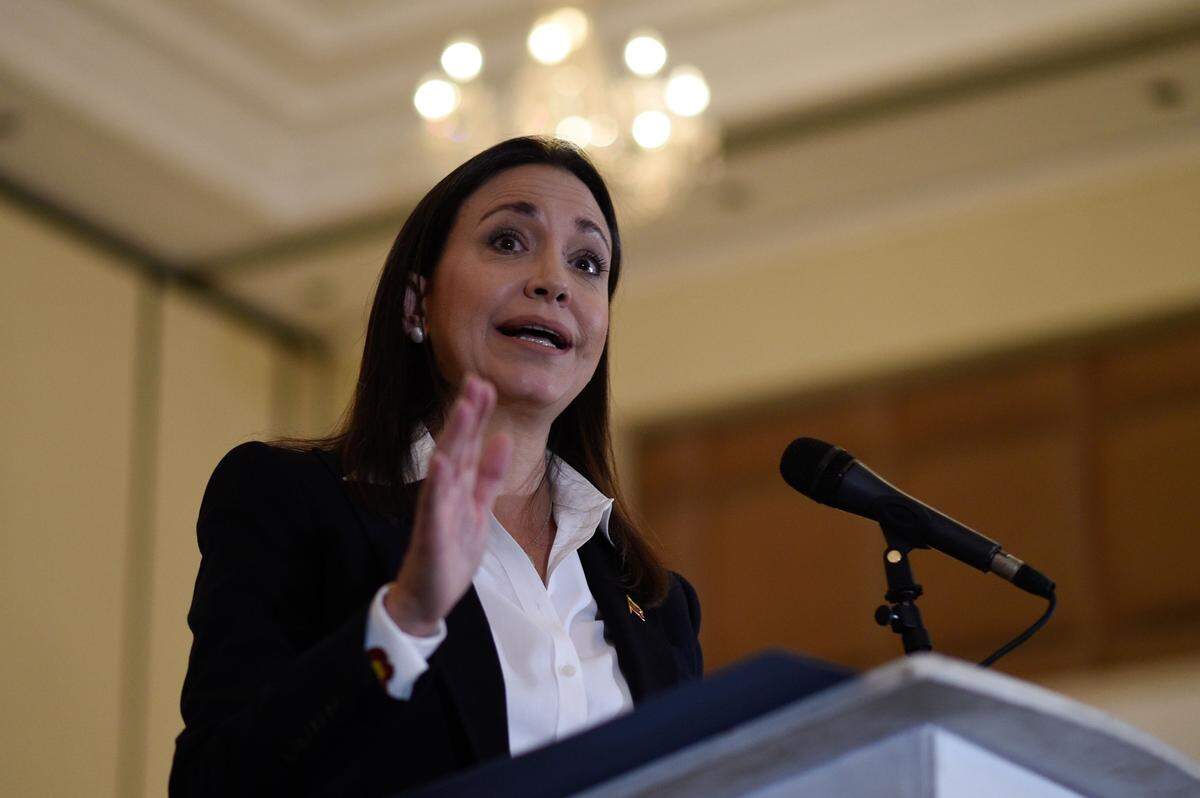
But in an interview on Monday on whether the U.S. government had given any indication to Machado that it would provide military assistance, Abrams told Colombian TV station NTN24 that her remarks reminded him of iconic Colombian writer “Gabriel García Marquez and the famous magical realism.”
The U.S. diplomat said Machado wanted “a magical rescue.”
“What it seems to us the opposition needs to do is the very hard work of organizing opposition under a very repressive and brutal regime, and Maria Corina, seems to me, is calling for a kind of magical Plan B that is going to solve all of the problems of Venezuela,” the U.S. diplomat said. “And who is going to do the solving? Foreigners who intervene. I don’t think that’s a sensible response to the problem that Venezuela faces and to the need for the opposition to be united.”
Divisions in the Venezuelan opposition have grown following Guaidó’s inability to unseat Maduro, either through plots involving the military or street protests, despite broad international support and a “maximum pressure” sanctions campaign by the U.S.
Whether it’s because they sense weakness — after President Donald Trump also made public comments doubting Guaidó’s leadership— or because they are assessing their political future or because they are frustrated with the lack of progress, some opposition leaders like Machado and former presidential candidates Henrique Capriles have broken their alliance with Guaidó.
Even though the Maduro regime banned Capriles from running for office, the opposition leader said his party was considering participating in the upcoming National Assembly elections. The U.S. has said it would not recognize its results.
Abrams was the second U.S. diplomat blasting the division among opposition leaders in less than two days, after the U.S. ambassador to Venezuela, James Story, said on Sunday that some in the Venezuelan opposition were launching attacks against Guaidó to “come out of the ashes” and rebuild their political careers.
“There are people who only think about plan B, who only think that the magic moment of a military intervention will arrive, which is very harmful,” he told the news website El Diario. “There are many people who drop bombs from the bench or on the sidelines of things, with their fantastic ideas, while President Guaidó continues to build a civic, social, political movement.”
In a Senate hearing last month, Abrams said the U.S. government would continue supporting Guaidó as Venezuela’s rightful leader, even if Maduro goes forward with the “fraudulent” parliamentary elections.
Despite U.S. officials’ efforts to dispel notions of military forces intervening in Venezuela, hopes of a U.S. intervention were fueled early on by senior officials like Vice President Mike Pence and former national security adviser John Bolton, who repeated the phrase “all options are on the table.” The tough talk, aimed at destabilizing Maduro and his allies, has been taken literally by many in Venezuela, even after it was clear the Trump administration did not have an appetite for a military incursion.
U.S. officials have vowed to continue increasing the pressure against Maduro. Still, several U.S. senators voiced their concerns about the lack of results from a policy aiming at dislodging Maduro from power.
“Our Venezuela policy in the last year and a half has been an unmitigated disaster,” said Sen. Chris Murphy, (D-CT) in last month’s Senate hearing.
Follow Nora Gámez Torres on Twitter: @ngameztorres
This story was originally published September 1, 2020 at 3:57 PM.