
U.S. will stand by Guaidó, but senators cast doubt on policy towards Venezuela
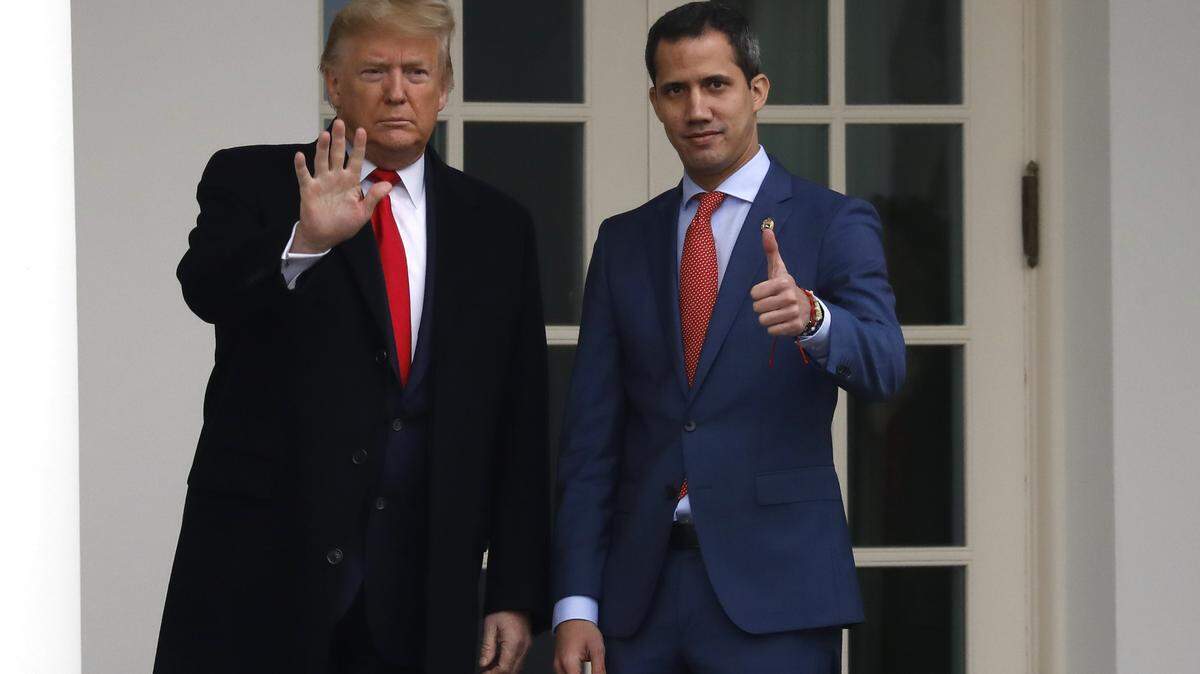
The United States will continue supporting Venezuela’s National Assembly President Juan Guaidó as the country’s rightful leader, despite Nicolás Maduro’s efforts to orchestrate a “fraudulent” election, a top U.S. diplomat said during a Senate hearing on Tuesday.
“Juan Guaidó occupies the office of the interim president because it was vacant as a result of the May 2018 corrupt and fraudulent presidential elections,” said Special Envoy for Venezuela Elliott Abrams during a hearing in the Senate’s Foreign Relations Committee.
“It cannot be that Maduro can improve his situation, legally or practically, by holding another corrupt and fraudulent election,” said Abrams. “In our view, the constitutional president today and after January 5, 2021, is Juan Guaidó.”
Citing multiple irregularities, including decisions by the Maduro-controlled Supreme Court and National Electoral Commission to take control of major opposition parties, Guaidó and most opposition parties announced that they will not take part in the elections of a new National Assembly scheduled for December. The new Assembly must be seated on January 5.
But several U.S. senators expressed concern about what could be another opportunity for Maduro to consolidate his power, during a hearing in which they blasted the administration’s policy towards Venezuela.
“Our Venezuela policy in the last year and a half has been an unmitigated disaster,” said Sen. Chris Murphy, (D-CT). “Our big play, recognizing Guaidó right out of the gate and then moving quickly to implement sanctions, did not work. All it did was harden Russia and Cuba’s play in Venezuela.”
Murphy said Guaidó’s refusal to participate in the upcoming elections would leave the United States in the position of recognizing “someone as the leader of Venezuela who doesn’t control the government, who doesn’t run the military and who doesn’t even hold office.”
Despite Abrams’ repeated vows of support for Guaidó, the senators’ questions illustrate how the Venezuelan opposition leader, who appeared in Congress as Trump’s guest at the State of Union address in February, has been losing popularity in Washington.
Senator Rand Paul, R-Ky., said Guaidó was “socialist” and that the United States could be making the mistake of wanting to “replace one socialist with another.”
Trump himself voiced his doubts in an interview with Axios in June when he said he had not been “necessarily in favor” of Guaidó’s “election.” I don’t think it was very meaningful one way or the other,” he added.
With the help of Senator Marco Rubio, R-Fla., Abrams tried to defend the current U.S. policy of sanctions against Maduro, noting that it has the support of the international community. But several senators questioned why the administration had not imposed sanctions on Turkey, another Maduro ally, or tried to offer incentives to Russia and China to back off.
Senator Bob Menendez, D-N.J., criticized the administration for denying temporary protection status, known as TPS, to Venezuelan immigrants, which would allow them to avoid deportation and work in the United States. Abrams said the administration was not currently deporting Venezuelan immigrants, but did not speak of a permanent solution.
Menendez also warned that the administration could be wasting precious time in its efforts to remove Maduro from power.
“We cannot continue on the same course and expect to achieve different results,” Menendez said. “I fear the administration may very well have squandered a limited window of opportunity crafted by valiant Venezuelans. I hope it is not too late to open that window again.”
Follow Nora Gámez Torres on Twitter: @ngameztorres
This story was originally published August 4, 2020 at 5:58 PM.