
Abrams defends U.S. policy toward Venezuela and dispels rumors of talks with Maduro
The U.S. special envoy for Venezuela, Elliott Abrams, denied that the United States is willing to engage in talks with Venezuelan strongman Nicolás Maduro, during remarks in which he defended current U.S. actions towards the South American nation.
“The answer is no. The only thing we have to discuss with Maduro is the details of his departure, “Abrams said during a call with journalists Tuesday.
Last week, when a Norwegian delegation was traveling to Venezuela to “learn” about the political situation in the country, the U.S. ambassador to Venezuela, James Story, told the Venezuelan outlet Caraota Digital that the administration is willing to engage in a “dialogue with the dictatorship to seek a transition process,”
The interim government of Juan Guaidó, which has received much internal criticism for its past talks with Maduro, quickly denied rumors of a new negotiation, sparked by the presence of Norwegian diplomats who last year mediated talks that eventually failed.
The country’s current situation does not look more promising, and the U.S. policy seems to have hit a wall.
Despite support for Guaidó, a strong sanctions campaign, veiled offers to Maduro to negotiate his departure, and a transition plan that promises to eliminate sanctions in exchange for free elections, Maduro and his military allies still maintain control of the country.
Asked about what has gone wrong in U.S. policy towards Venezuela, Abrams said he “did not see it that way.”
“The removal of a dictatorship is always very difficult” due to the regime’s control over the security forces and the media, he said. “I would say that what went wrong is that Nicolás Maduro decided to impose a vicious and brutal regime.”
Abrams said the United States would maintain a policy of sanctions combined with diplomatic efforts to help the Venezuelan people “in their struggle for a peaceful transition.
“We think the outcome would be the demise of the regime,” he said.
The diplomat said the essential formula contained in a framework for a democratic transition presented by the State Department in March — proposing a government without Maduro or Guaidó that would organize free elections — is supported by many countries.
But Abrams also acknowledged that Maduro has rejected this path and is moving forward with his plan to organize a “phony election.”
Abrams noted that in recent weeks, the State Department had sanctioned several officials and associates of Maduro for participating in acts of corruption, including the president of the Supreme Court of Justice Maikel Moreno. The former minister of electric energy, Luis Alfredo Motta, was sanctioned Tuesday under similar accusations. Both have pending charges before the U.S. Department of Justice.
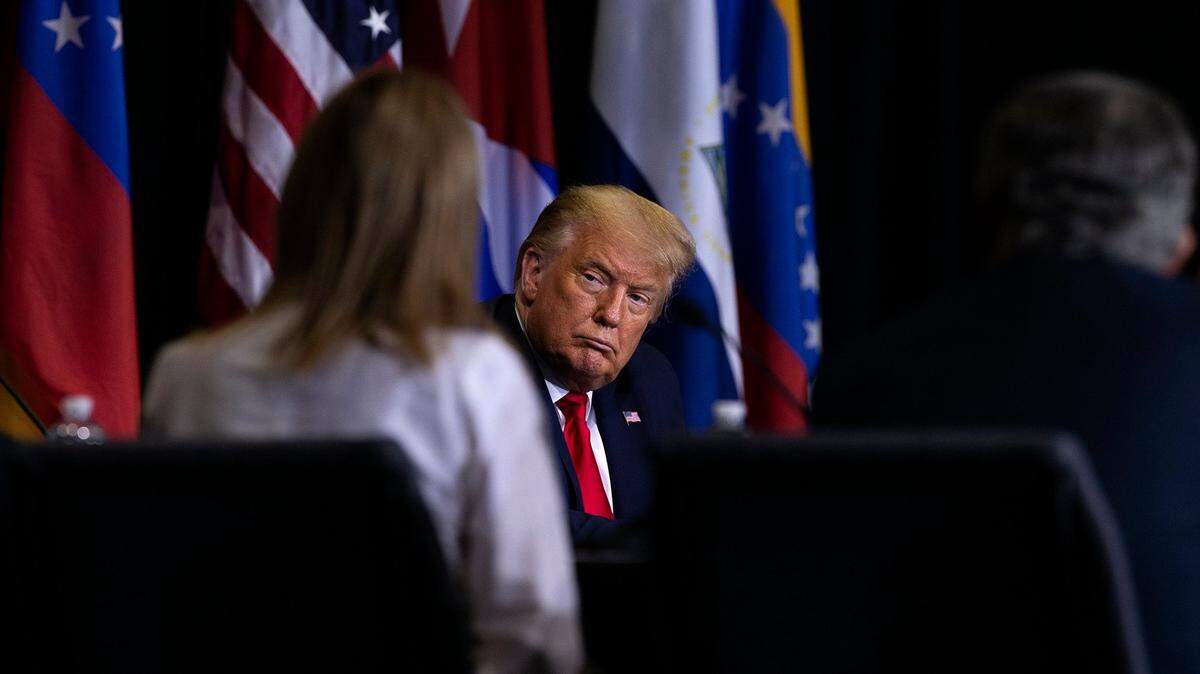
But the administration has been sending mixed messages. President Trump suggested last month that he would meet with Maduro. Then he clarified he would only discuss his departure from power.
With the November elections in sight, Trump flew to Miami days after his comments to assure Venezuelans that he would “fight” for them, but didn’t offer concrete steps.
Trump also seems to have doubts about Guaidó’s leadership, according to former security adviser John Bolton’s book “The Room Where It Happened.”
In an interview with Telemundo, the only one he gave during his trip to Miami, Trump said that Guaidó “seems to be losing power.”
Follow Nora Gámez Torres on Twitter: @ngameztorres
This story was originally published July 28, 2020 at 4:58 PM.