He’s the face of U.S. policy in Haiti. Now the Trump administration wants him in Kenya
The Trump administration’s top diplomat in Haiti may soon be leaving his post.
Henry T. Wooster, who has spent the past year shaping Washington’s response to the country’s vexing security and political crises as chargé d’affaires at the U.S. Embassy, has been nominated as ambassador to Kenya, the White House announced Monday. Wooster’s name was included in a slate of ambassadorial nominations sent to the U.S. Senate, alongside nominees for other senior administration positions.
The nomination requires Senate approval, but the career diplomat’s potential departure from a volatile Haiti after only a year comes as the Caribbean nation prepares to take some of its most consequential decisions since his arrival.
There is still no definitive timetable for long overdue elections, although the office of Prime Minister Alix Didier Fils-Aimé said Tuesday that authorities had met with members of the country’s Provisional Electoral Council to review the electoral law and financing for the first vote in a decade. Fils-Aimé has suggested strengthening the law to narrow the field of candidates and giving greater weight to sanctions imposed by the U.S., Canada, the European Union and the United Nations to prevent questionable candidates from participating.
Beyond the political uncertainty, Haiti faces the prospect of receiving more than 300,000 nationals who have been living in the United States under Temporary Protected Status. The Trump administration has asked the U.S. Supreme Court to consider its request to end the deportation protection despite an ongoing lawsuit and rulings by two lower courts blocking the move. A decision could come as early as this month.
Haiti remains in the grip of violent gangs despite recent gains in parts of Port-au-Prince. Questions also remain about whether the newly deployed Gang Suppression Force, created by the U.S. and supported by the U.N., can help restore order. The force was authorized by the U.N. last fall, and on Monday soldiers from Chad conducted their first patrols in Port-au-Prince after completing a two-week training.
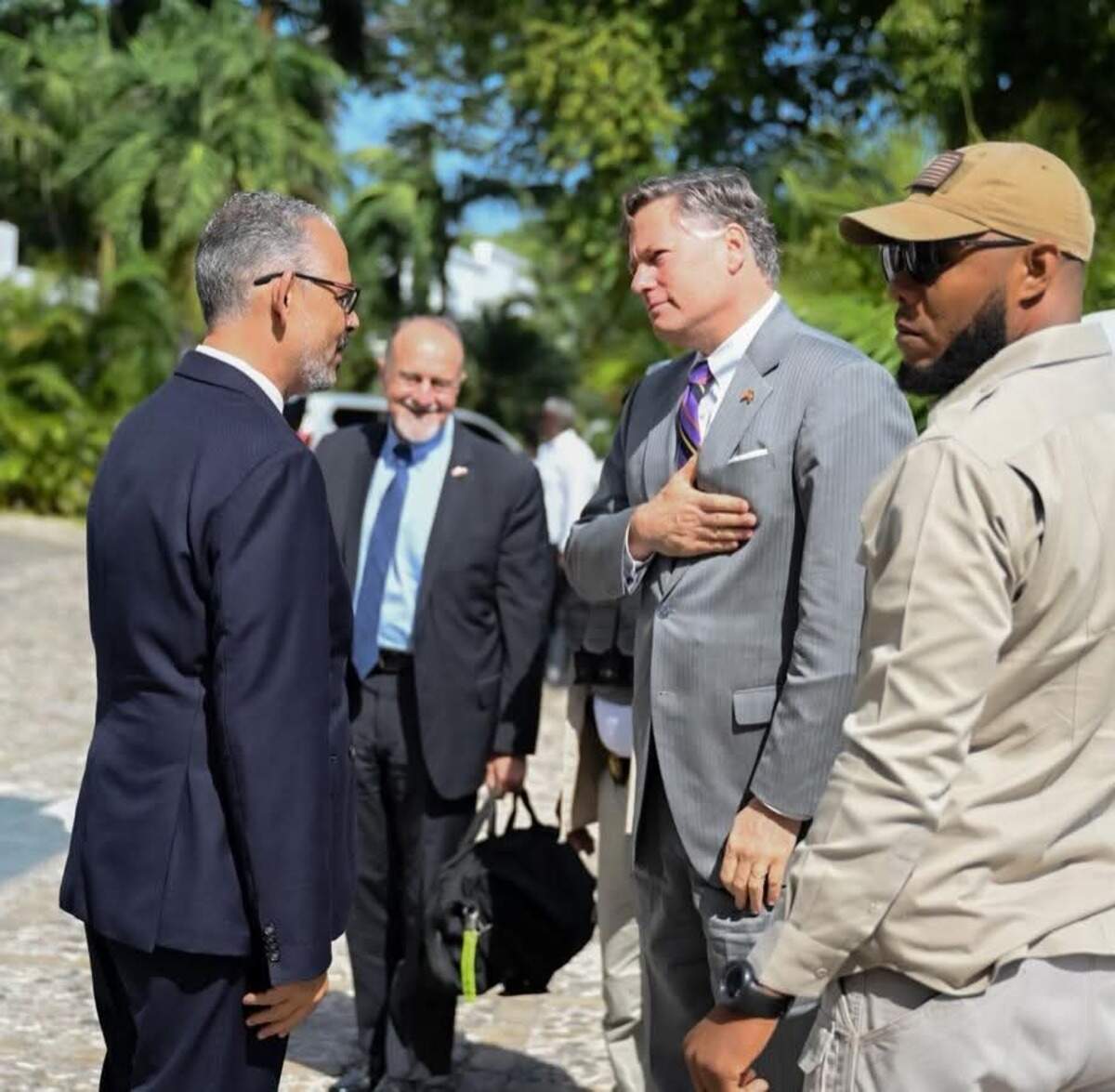
Wooster, a senior foreign service officer with a special-forces background, assumed leadership of the U.S. Embassy in Port-au-Prince on June 12, 2025. Though he did not go before the Senate for confirmation, he was given unusually expansive powers as he carried out what the State Department described as “a whole-of-government approach to U.S. policy on Haiti.” That involved keeping the focus on security even as the Trump administration cut humanitarian aid dismantled the U.S. Agency for International Development.
Wooster’s approach to diplomacy has drawn mixed reactions. While critics have viewed it as heavy-handed, supporters have noted that it helped prevent further instability.
For example, when members of the now defunct Transitional Presidential Council sought to extend their hold on power as their terms neared their end, they were met with warnings from both Wooster and Secretary of State Marco Rubio. When those warnings appeared to have had little effect, several council members were targeted with U.S. sanctions.
The approach has made Wooster both respected and feared. It has also helped keep Haiti on the State Department’s agenda as the Trump administration divides its attention among Cuba, Venezuela and conflicts in the Middle East.
“He has been effective in Haiti by being disciplined and highlighting the main interest of the US -- security,” said Georges Fauriol, a senior political analyst at the Center for Strategic and International Studies in Washington. “But it may also be an approach running out of time, with a rise in violence, the hoped-for deployment of the GSF so far not changing the politico-security situation in Haiti, and the credibility of the PM-led Haitian interim government installed in February on shaky ground.”
Wooster’s nomination, Fauriol said, may nonetheless be confirmation that “the White House views him as an effective diplomat, and solid Africa experiences, assets he will need in Kenya, although ironically coming in from Haiti reminding some Kenyans of their country’s unhappy Haiti-MSS episode. Where this all leaves US-Haiti policy is not clear.”
‘The state is in charge, not the gangs’
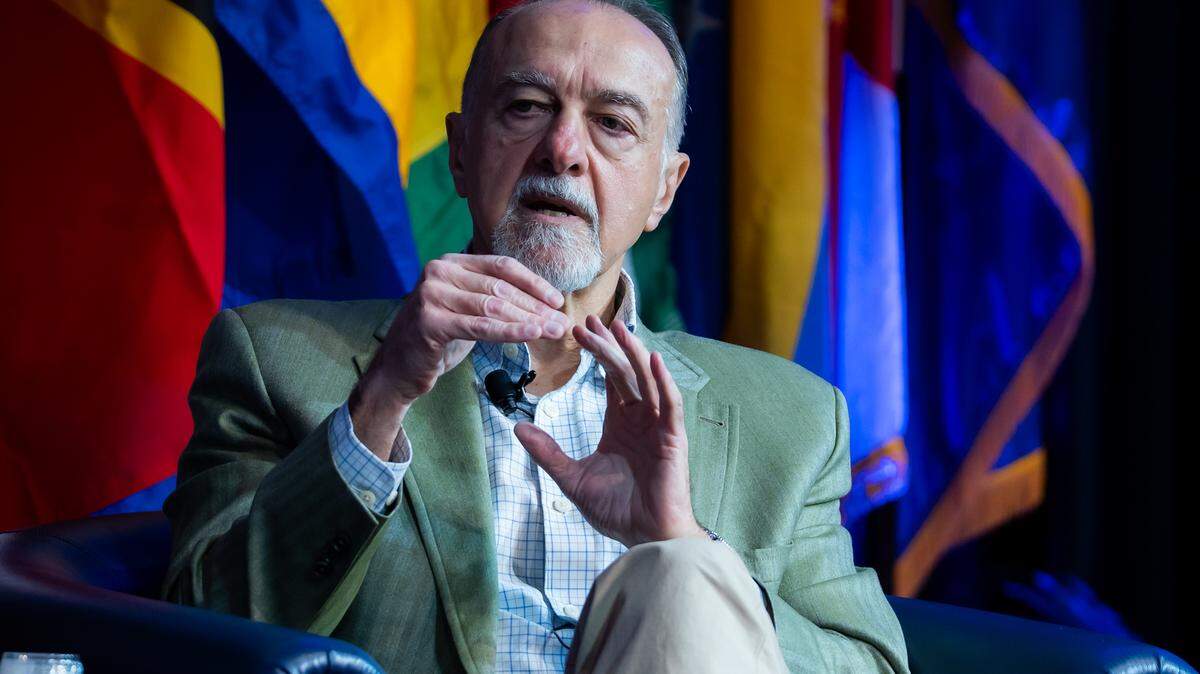
Last month, during the 11th Annual Hemispheric Security Conference in Miami hosted by Florida International University’s Jack D. Gordon Institute, Wooster said the United States’ immediate objective in Haiti was to improve security and establish a basic level of stability.
“We are improving the security situation to a standard whereby society and the state, human beings can function,” said the diplomat, who was joined during a panel discussion by Canada’s ambassador to Port-au-Prince, André François Giroux. “The state is in charge, not the gangs. It’s the state who sets the pace of what that society is doing, not the gangs.... Also, no mass illegal migration to U.S. shores.
“We are looking to improve security, which means heightened stability,” he added. “We are not providing an antidote that cures, once taken, all the ills.”
He also emphasized that the upcoming elections are a matter for Haitians to decide.
“This election isn’t ours to own,” Wooster said. “This is a matter for the Haitian people and the Haitian authorities to decide, despite the myths and the fantasies that it’s our dark hand creeping in from some direction.”
He also addressed the issue of dubious candidates running, which has generated political debate in Haiti.
“Obviously, there are some numbers of people who we would hold our nose about. I think they’re pretty well known, most of them with a lot of blood on their hands. But at the end of the day, we don’t own this,” Wooster added. “If they were to turn in our direction in terms of any legitimation, we certainly would have views on that as the United States government, and in terms of our policy.”
Keith Mines, a former U.S. diplomat who served in Haiti, said Wooster’s special-forces background made him “uniquely qualified” for his position and “helped to see what was required to restore security.” Mines, who previously headed the U.S. Institute for Peace, said Wooster’s forceful but collegial leadership style, and knowledge of Haiti from his past posting in Port-au-Prince, were also assets.
“He will be difficult to replace and one hopes for lengthy delays in his appointment to Nairobi,” he added. “It is a critical time with the arrival of the Gang Suppression Force so hopefully a strong replacement, also with the rank of ambassador... will be found soon for a seamless transition.”
Landau’s visit
Last week saw one of Washington’s most visible signs of its renewed engagement in Haiti: the visit of Deputy Secretary of State Christopher Landau. U.S. diplomats have been steering clear of Port-au-Prince, citing the gangs that kidnap, kill and terrorize the population.
Landau became the highest ranking U.S. government official to visit since Antony Blinken, secretary of state under President Joe Biden, traveled to the country in September 2024.
During Landua’s visit, he toured the Gang Suppression Force’s new military base in Vertières, just east of the embassy; observed a shooting exercise and visited the grounds of the National Palace. The area, including the Champs-de-Mars public square, had long been inaccessible because of gang violence.
At the palace visit, both Landau and Fils-Aimé, looking to project an image of progress, paused for selfies with their personal cell phones.
But the visit also underscored Haiti’s continued fragility.
While both pointed to security gains in post-visit statements, armed gangs in the neighboring Artibonite region ambushed a police patrol, killing three Haitian police officers and a civilian, on the day of Landau’s visit. According to a source familiar with the incident, the cops had been attempting to clear a roadway so that a nearby hospital could receive a badly needed oxygen delivery.
This story was originally published June 2, 2026 at 5:28 PM.