Pope and Haiti’s leader discuss security, migration and humanitarian challenges
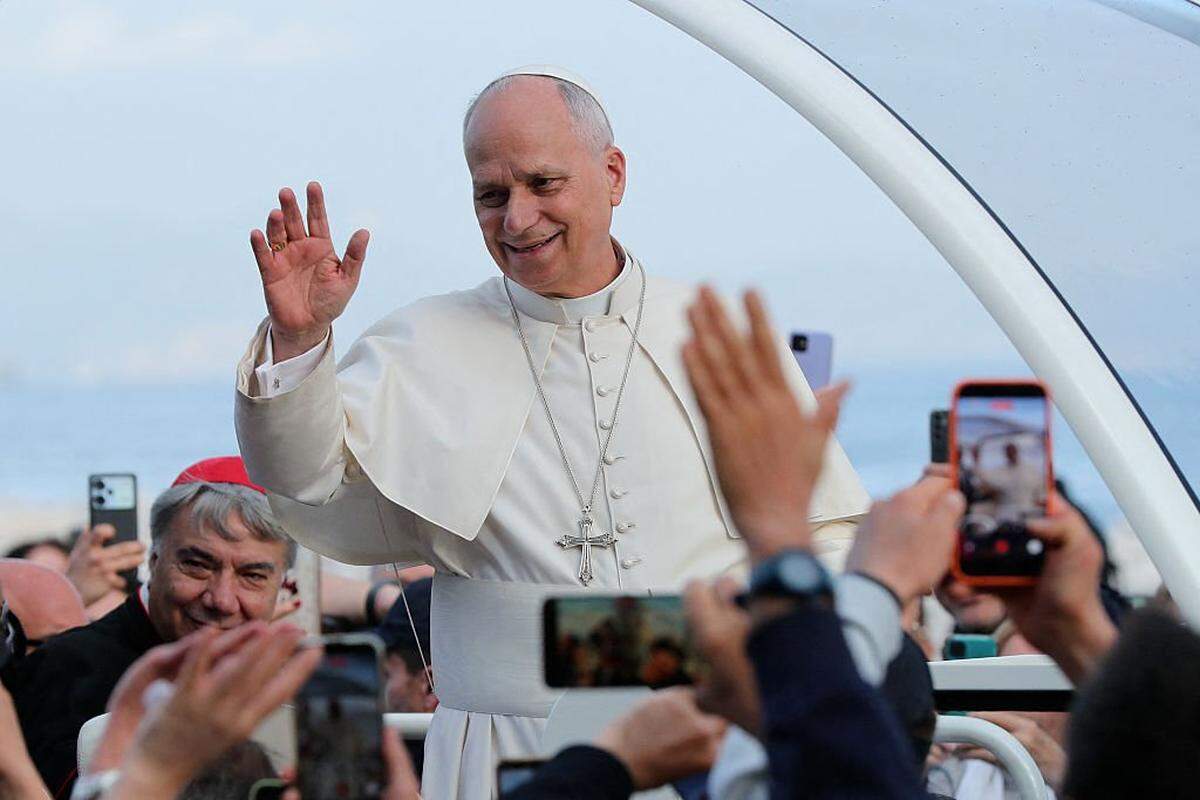
Haiti Prime Minister Alix Didier Fils-Aimé discussed his country’s ongoing security and socio-political crisis, as well as humanitarian and migration challenges, during an audience with Pope Leo XIV at the Vatican on Saturday.
The visit came a day after the first American pontiff marked the first anniversary of his election as head of the Catholic Church and as the United Nations details in a new report how the spreading violence by armed groups continues to devastate Haitians’ lives.
Fils-Aimé’s visit with the pope also occurred two days after the pontiff received U.S. Secretary of State Marco Rubio, a leading supporter of the security response in Haiti, where 1 in 4 individuals in Port-au-Prince live in neighborhoods controlled by armed gangs. The groups have targeted regular citizens, kidnapped priests and nuns and destroyed Catholic-led institutions.
The talks were “cordial” and took place at the Secretariat of State, the Holy See said. “Appreciation was expressed for the good relations between the Holy See and Haiti. Mention was then made of the precious contribution the Church offers the country at this particular time,” the Vatican said in a statement.
“The conversation continued with a discussion of current issues in Haiti,” the statement added. “Reference was also made to the necessary contribution of the international community in addressing the present difficulties.”
Fils-Aimé gifted Pope Leo a jersey of the Haiti National soccer team, which is returning to the World Cup for the first time in more than 50 years.
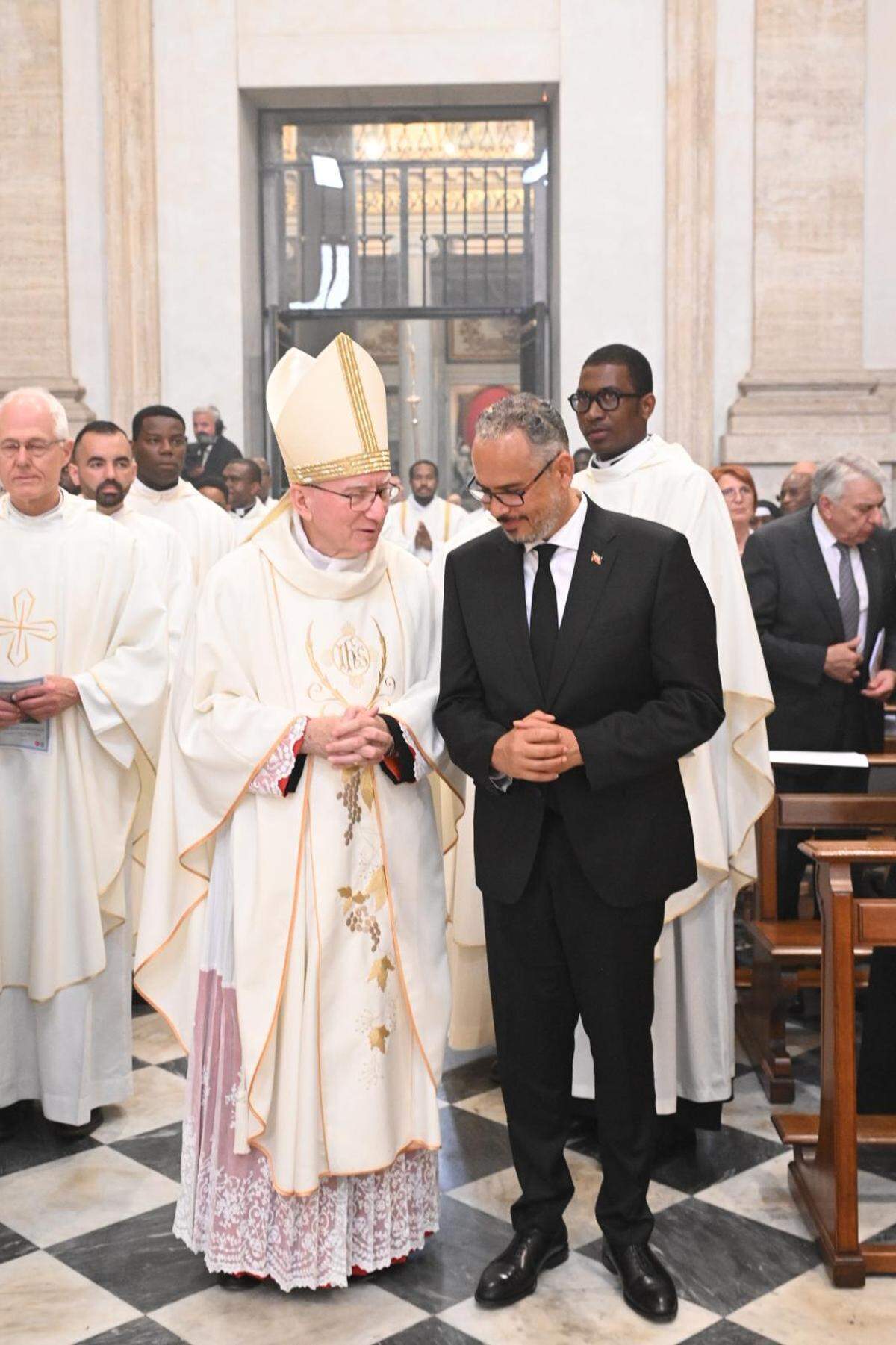
After the papal audience, Fils-Aimé met with Cardinal Pietro Parolin, the Vatican secretary of state, and Archbishop Paul Richard Gallagher, the secretary for relations with states and international organizations.
On Saturday afternoon, Fils-Aimé attended a Mass for peace in Haiti, at the Basilica of Saint Mary Major. In a press release, the prime minister’s office says Fils-Aimé “expresses his gratitude for the fraternal attention shown to Haiti and reaffirms the government’s commitment to strengthening its historic relations with the Holy See, in a spirit of dialogue, peace, and hope for the nation.”
Before the visit, Fils-Aimé stopped in Miami to help launch the construction of a new, multistory Haitian Consulate office in Brickell. He told the Miami Herald that he planned to appeal to the pope for support for an international peace conference on Haiti.
His visit to the Vatican comes as Haiti continues to confront a surge in gang violence, particularly in the Lower Artibonite and Center regions, where armed groups are exploiting a security vacuum with the recent withdrawal of Kenyan police officers who were part of the United Nations-authorized Multinational Security Support mission, along with delays in the deployment of troops from the Gang Suppression Force.
Bigger and more lethal than the MSS, the new anti-gang force has faced setbacks because of the war in Iran, bureaucratic red tape and other logistical challenges.
A report published this week by the U.N. Integrated Office in Haiti, the organization’s political mission in the country, underscored the spread of violence beyond the capital and said at least 1,642 Haitians were killed and 745 injured in the first three months of the year.
Carlos Ruiz Massieu, the head of the office, noted that despite security advances in certain areas of downtown Port-au-Prince, where security forces have intensified operations since December, the violence by armed groups remains a daily and unbearable reality for many Haitians. With violence driving displacement and hunger, nearly 1. 5 million Haitians are internally displaced while more than half of Haiti’s nearly 12 million people are facing hunger, according to the U.N.
In areas under gang control, armed groups have continued to commit widespread human-rights abuses, including targeted killings, kidnappings, extortion and the destruction of property, Farhan Haq, deputy spokesman for U.N. Secretary-General António Guterres, told reporters in New York on Friday.
“Overall, gang members were responsible for 27% of those killed and injured between January and March. They were also responsible for sexual violence, including gang rapes or cases of sexual exploitation,” he said. “According to data published in the report, more than 69% of those killed or injured during the first three months of the year were the result of operations carried out by security forces against gangs, sometimes supported by a private military company using drones.”
This story was originally published May 9, 2026 at 12:42 PM.