Haitian prime minister visits Miami on way to Vatican to meet the pope
Haiti Prime Minister Alix Didier Fils-Aimé is headed to Vatican City for an audience with the pope.
The head of Haiti’s transitional government is scheduled to meet the pontiff on Saturday. He plans to thank him for his support of the country and appeal for an international peace conference on Haiti, Fils-Aimé told the Miami Herald.
“The Church has always been a partner whenever we want to talk about peace and I think that Haiti’s at the point where we are ready with everything that is coming,” he said. “We need to start preparing … so we can start talking and healing as a people. And I think that the religious leaders, whether it’s the pope or the Protestants or the Vodou leaders, everybody needs to... bring the country back together.”
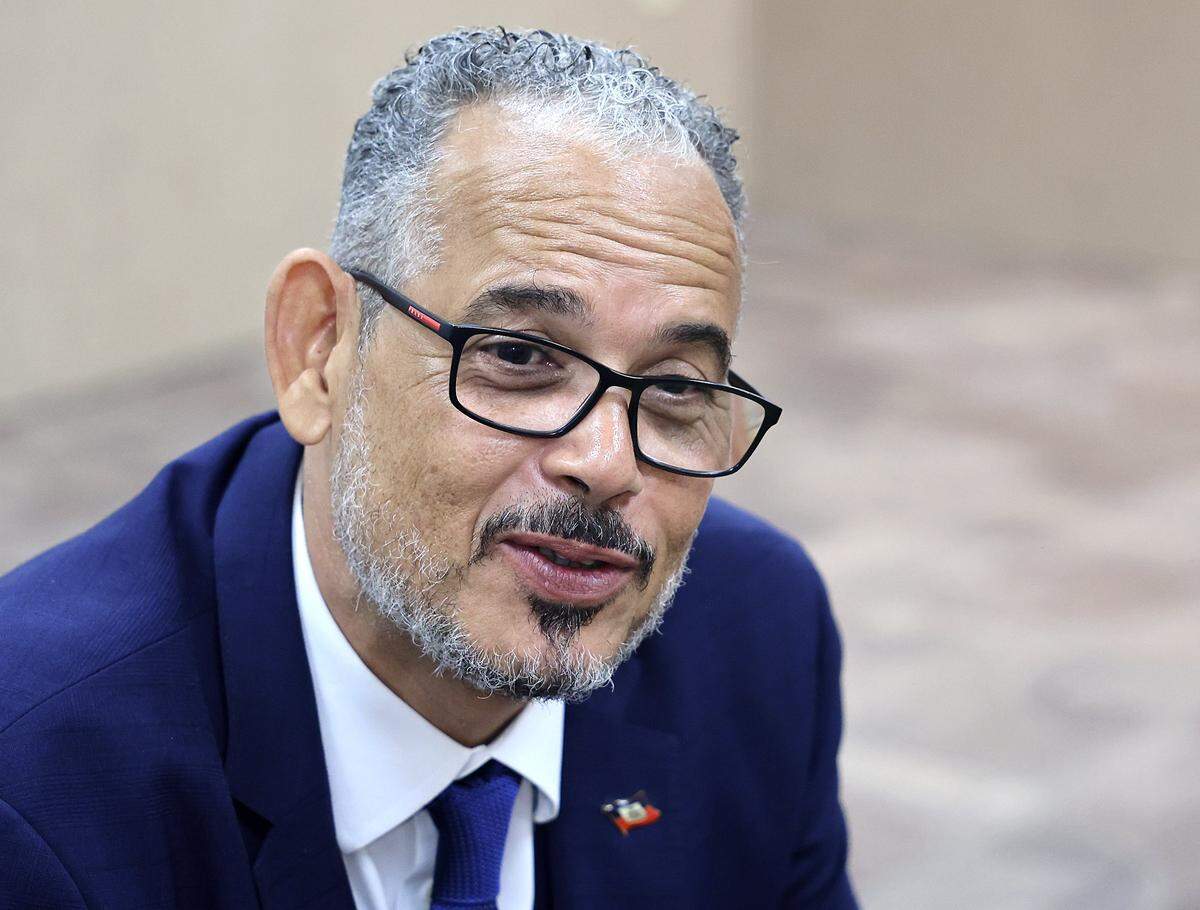
Fils-Aimé is the second Haitian leader in less than 18 months to receive an audience at the Holy See, but the first to meet Pope Leo XIV, who was elected a year ago Friday. The Roman Catholic Church’s 267th leader, whose family lineage traces through Haiti, is the first American pope.
Like his predecessor Pope Francis — who welcomed the former head of Haiti’s presidential council less than three months before his death on April 21, 2025 — Leo has closely followed the deepening crisis in Haiti, where Catholic nuns and priests have been among those kidnapped by armed gangs and where church-affiliated hospitals have been forced to close.
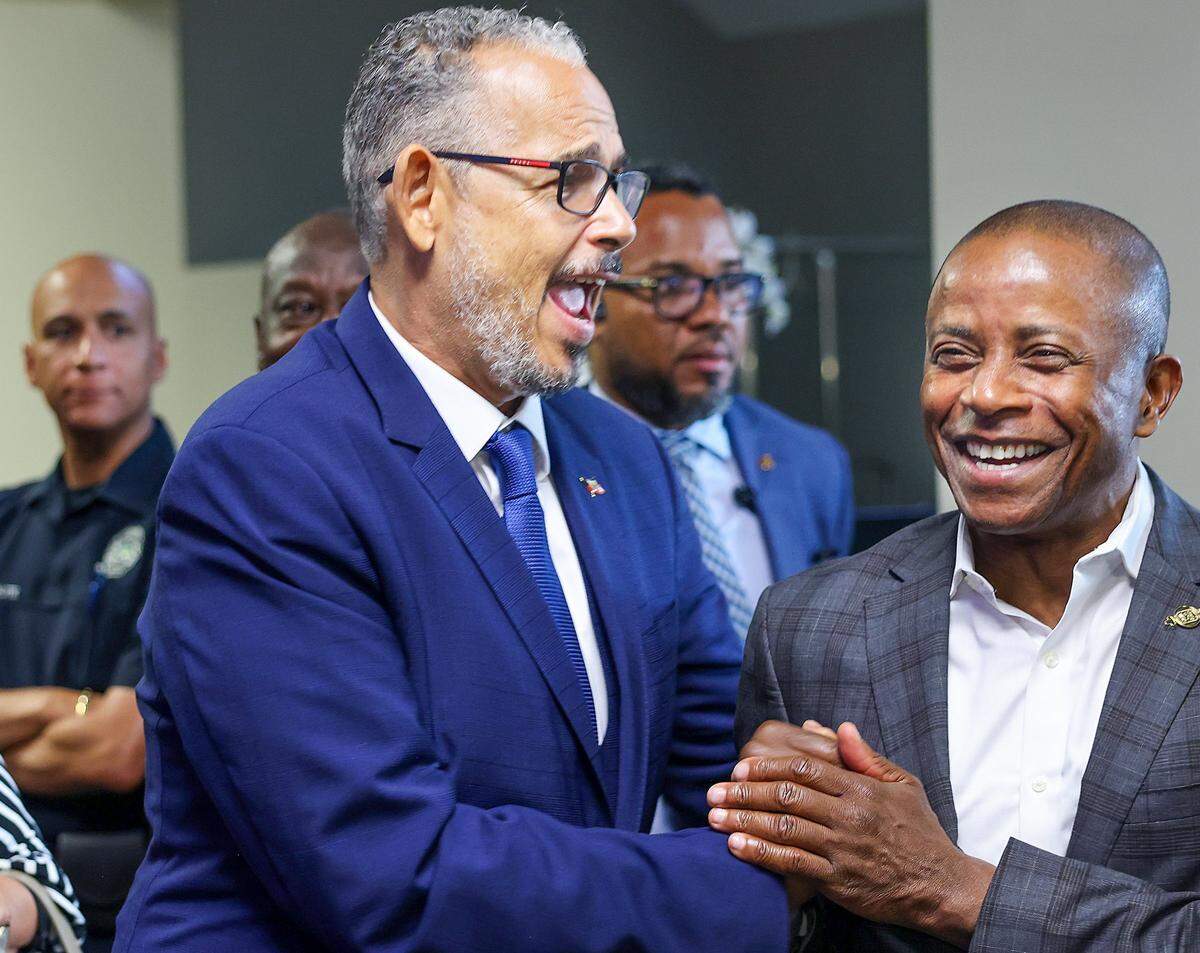
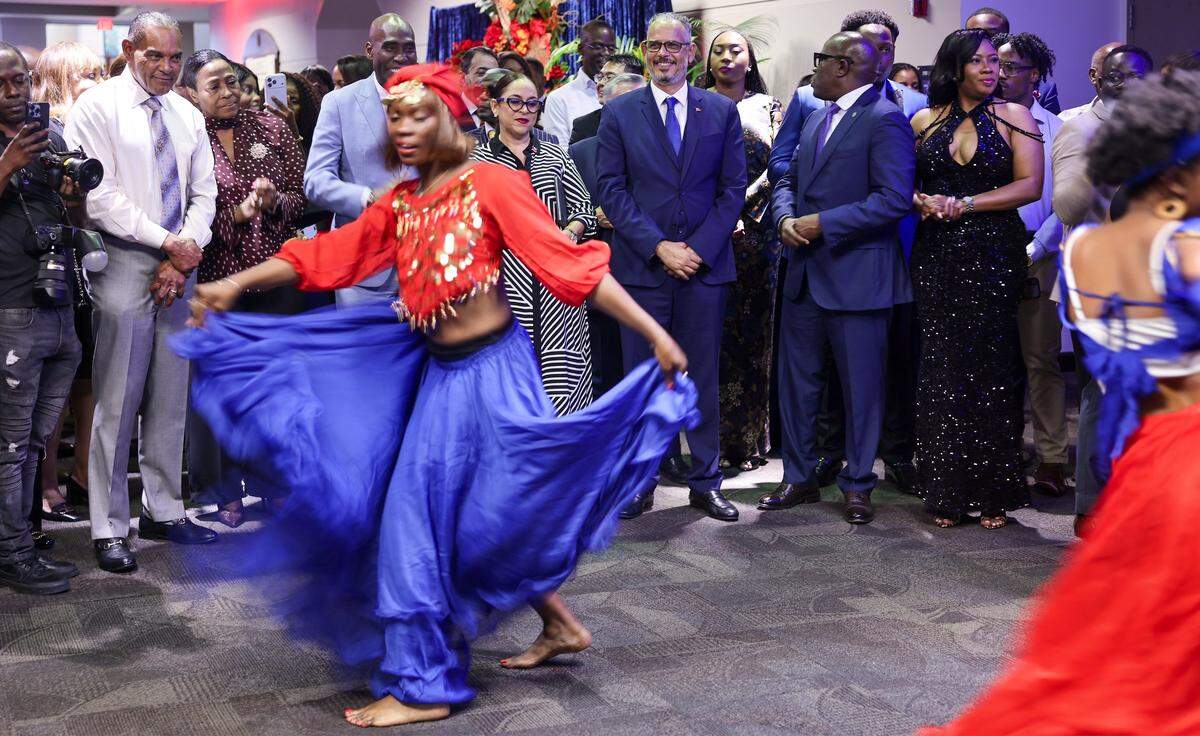
“Our country is going through difficult times, particularly in terms of security. These hardships wound families and put lives to the test, but they have never shaken the determination of the Haitian people, nor the resilience of its institution. And in the face of this reality, the government remains fully mobilized,” Fils-Aimé told a gathering during a stopover in Miami Friday night. The group included North Miami elected officials and community leaders.
The Haiti National Police, he said, continues to be strengthened while the country’s fledging armed forces “are steadily increasing their operational capacities.”
An anti-gang task force, utilizing explosive drones and foreign contractors, he added, has also “begun its involvement on the ground alongside the national forces with a clear mission: Secure the territory, protect the population and neutralize criminal groups. The struggle is demanding, but it’s being carried out with courage, discipline and a sense of duty. Our ambition is clear: To restore lasting security, so that every Haitian woman and men, including those in the diaspora, may live return and invest in Haiti with confidence.”
Armed groups continue to tighten their grip in Haiti, especially outside of the capital in places like the Lower Artibonite region, where the Gran Grif gang has attacked members of the public and government offices. Residents in the region say they have been targeted by a coalition led by an escaped prisoner who had been condemned to life in prison before escaping.
In the interview with the Herald, Fils-Aimé said Haiti is anxiously awaiting the arrival of the new United Nations authorized Gang Suppression Force, whose deployment has been slow to roll out. During his recent visit to the U.N. Security Council, he said, he reminded them that “the international community took an engagement to help” Haiti.
“They decided they will, and we are going to keep them to their promise.,” he said.
Once the force is in Haiti the country will need healing, especially youths, some of whom have little choice except to join gangs, Fils-Aimé said.
“We’re going to need to heal, and the healing is going to have to go through justice,” he said. “And there is going to be the need for getting the kids back…getting kids that didn’t go to school, sending them to school, those that are older, giving them a job, and we need to create the opportunity.
Pope audience follows one with Rubio
Fils-Aimé’s meeting with the pope will come after the pontiff met with U.S. Secretary of State Marco Rubio on Thursday to discuss the situation in the Middle East and other topics, the State Department said.
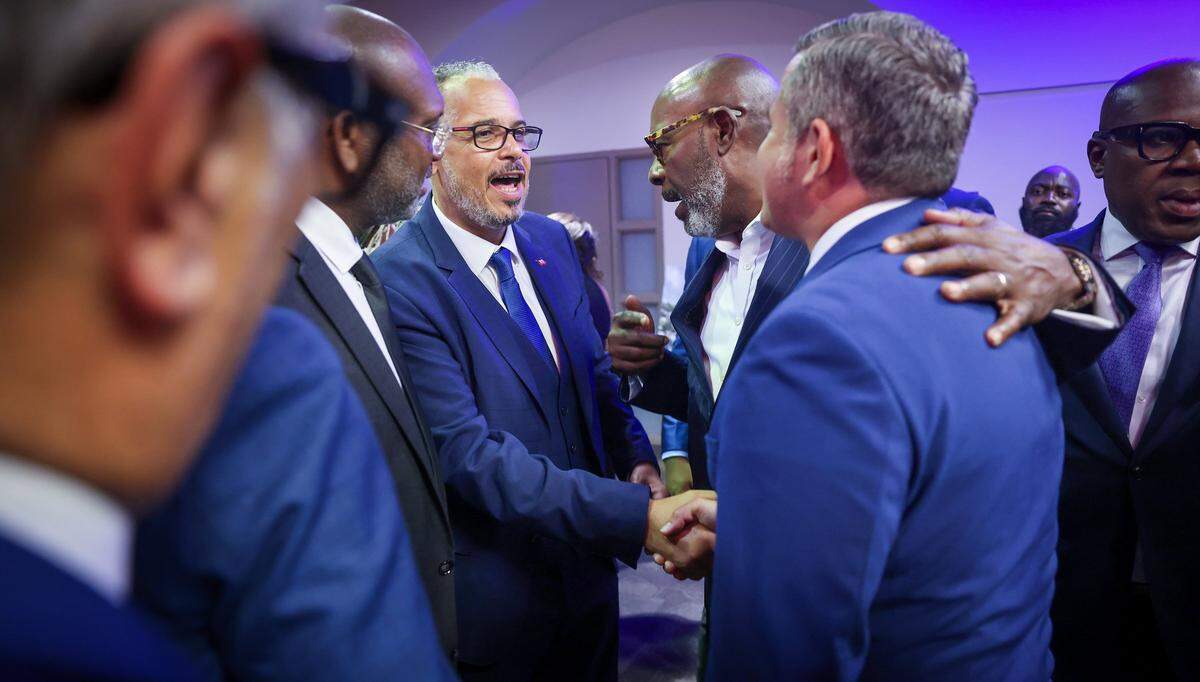
Last month, the Haitian prime minister visited Washington and the U.N., where he discussed continued support for Haiti, including the multinational anti-gang force. During his meetings, he also raised issues ranging from immigration to intelligence-sharing — a deficiency that came under scrutiny during the federal trial in Miami of four South Florida men accused of conspiring to kidnap or kill Haiti’s president, Jovenel Moïse nearly five years ago.
The prime minister said the issue of Temporary Protected Status for Haitians in the U.S. came up “with everybody I spoke to,” including lawmakers from both political parties and officials at the State Department. The Trump administration has moved to end the deportation protections for Haitians.
“I understand that every country has the right to decide who and how they come to their country, but there is a reality,” the prime minister said. “Sending the people now to Haiti would be counterproductive to what we’re doing... because we wouldn’t have places to put them as we speak.”
This story was originally published May 7, 2026 at 5:08 PM.