Gang Suppression Force not a done deal, U.S. says as it sanctions former Haiti leaders
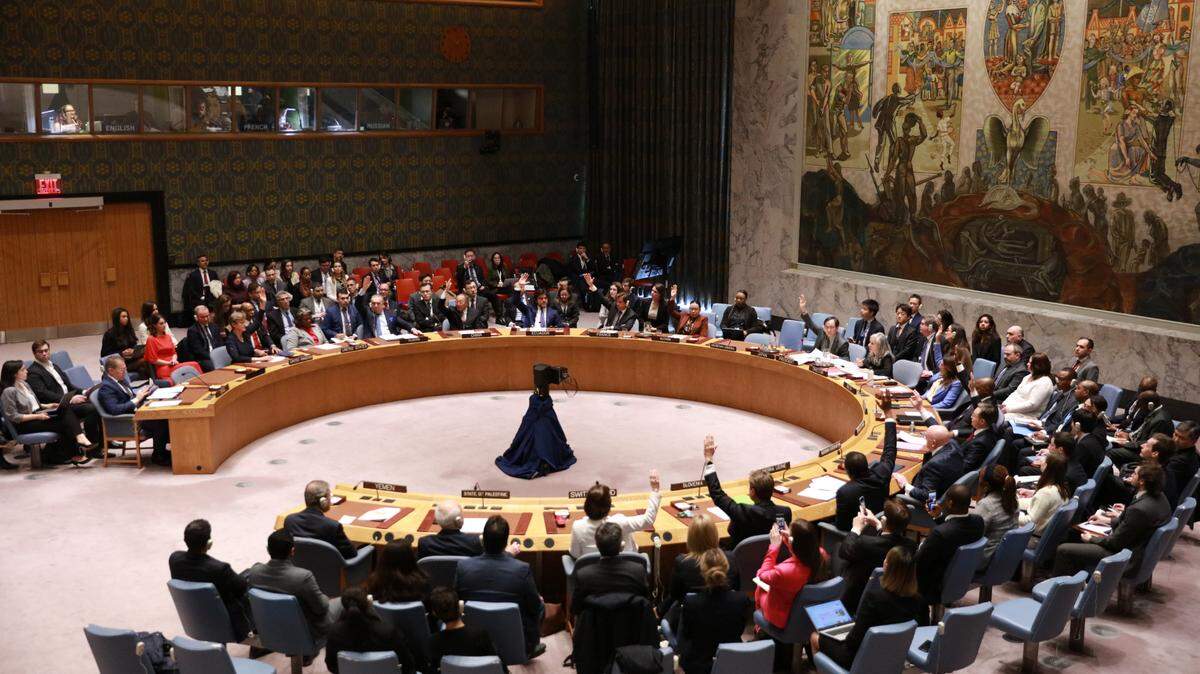
Despite overwhelming support on the United Nations Security Council and among countries in the region for a new, more robust force to take on Haiti’s armed criminal groups, the adoption of a resolution to approve the new measure is not a done deal, the State Department’s deputy secretary of state said Monday.
“There are still those who might try to prevent its adoption or slow our response in Haiti’s hour of need,” Christopher Landau said as he also announced new U.S. visa sanctions against two former Haitian lawmakers. “The time for action is now, and the United States asks all our partners to join us in pressing for this critical resolution.”
Landau was among several speakers participating at a high level meeting on Haiti at the U.N. The meeting was organized by Kenyan President William Ruto to discuss the East African nation’s leadership of the U.N.-authorized Multinational Security Support mission over the last 15 months.
During his opening remarks, Ruto said Kenya would not leave quickly but pleaded for support and predictability with the new armed international mission. But while he insisted Kenya had “achieved in Haiti,” Ruto was also candid about the mission’s shortcomings, which have included having only half the personnel it was supposed to have and shortages in equipment and financing.
“If we don’t provide a proper transition, we’re to lose everything that we have achieved,” Ruto warned.
The U.S. and Panama earlier this month began circulating a draft resolution to authorize a new Gang Suppression Force. The resolution calls for five times the personnel of the current Kenya-led mission and allows the new force to act more independently of the Haitian police.
Landau did not provide details about the roadblocks to transitioning the current mission into the Gang Suppression Force. But those who closely follow the U.N., which is holding its General Assembly in New York this week, say the proposal faces a number of technical and political questions, including its chain of command, coordination with the U.N. political office and Organization of American States. Also, there are questions about how will it achieve its target of 5,500 personnel when the current mission could not get more than 1,000.
“We need more clarity on what the mission is going to be like and what the numbers are going to be like,” Barbados Prime Minister Mia Mottley said.
Also at issue are China and Russia, two of the five permanent members on the Security Council. They’ve raised a number of concerns, including using the dues paid by members to partly support the new Gang Suppression Force at a time when the Trump administration is also taking back millions in U.N. funding.
“We support the mission... and stand ready to engage with all parties to explore all possible and also feasible ways forward,” Ambassador Geng Shuang, China’s representative, said. “I would like to emphasize that addressing the multidimensional crisis in Haiti requires a comprehensive approach, and what’s fundamental here is that Haiti itself must show its ownership and assume primary responsibility by taking concrete actions.”
The discussions on the future security mission comes at a dire moment in Haiti. During the last 19 months armed gangs have become even more entrenched in Port-au-Prince while expanding north into rural communities.
Kenya-led mission has struggled
Despite its good intentions, the Kenya-led mission has struggled to control the gangs’ expansion. Ruto warned that the mistakes of the past cannot be repeated with the new mission.
“We must be very clear on the mandate of what it is supposed to achieve,” he said. “We must have a predictable resource package. It cannot be what Kenya has gone through — a game of guess work... depending on people’s goodwill, depending on when they have time and when they can get some attention. It must be predictable.”
He added: “We must have the necessary logistical support to be able to make that mission succeed.”
As an example of the current mission’s challenges, Ruto said it had been unable to set up 12 forward operating bases to set up security personnel in territories that have been claimed or reclaimed by gangs. “That was not possible because of the logistical support architecture that did not allow mechanics to leave Port-au-Prince, that did not allow food and other logistical support to leave Port-au-Prince,” he said.
Another problem was the vehicles provided by Washington. In addition to being poorly equipped for the mission, they were also used and “broke down a lot... It put our personnel in great danger when they broke down in very dangerous places,” Ruto said.
Late last month, the mission lost a Kenyan policeman, and several others were injured as they were towing one of the broken-down armored vehicles on a mountaintop road in Petion-Ville.
Ruto said despite the challenges his troops faced in Haiti, solving the country’s destabilizing security crisis “is not mission impossible.”
“I believe that the international community must do for the people of Haiti what is right,” he said. “The women, the children who go to school there, I think, deserve the support of the international community. What is going on in Haiti is unacceptable. It is indefensible. It is simply wrong that we cannot marshal the support that is necessary for us to stabilize at to drive out the gangs.”
With the current mandate for the Kenya-led mission set to expire in less than two weeks, international observers have raised questions about whether the Kenyans would leave prematurely.
“The one thing that Kenya will not do is to walk away from Haiti in haste,” Ruto said. “We believe that they are members of humanity, and we owe them a clear transition.”
New U.S. sanctions
During his comments, Landau stressed that the United States cannot continue to carry the lion’s share of the financial burden for the mission.
He also announced the U.S. has designated two former politicians for visa sanctions for their “destabilizing effect on Haiti’s democratic institutions and processes.”
The former politicians are Arnel Belizaire, who served in the Chamber of Deputies, and Antonio Chéramy, a former member of the Senate. Cheramy, a well-known singer known as ‘Don Kato,’ before his 2015 election to the Senate, made headlines in 2019 when he ransacked the Senate to prevent the ratification of an appointed prime minister. Following the incident, he confirmed in the Haitian media his U.S. visa had been suspended by the embassy.
“Our designation renders Belizaire, Cheramy and their immediate family members ineligible for entry into the United States,” Landau said. “The U.S. government will remain relentless in pursuing those supporting terrorist gangs through indictments, arrests, sanctions, armed seizures and other immigration restrictions.”
Fragmented response
The response to the armed gangs in Haiti has been fragmented, with the government turning to private armed contractors and citizens setting up vigilante brigades. The current Presidential Transitional Council has less than four months left before its mandate expires, with elections increasingly unlikely this year.
The council’s current head, Laurent Saint-Cyr, said the political will exists within the transition to address the country’s political paralysis and security, but Haiti needs help.
Like Ruto, he warned that no mission to restore peace can be carried out without the proper resources.
“There’s no longer a time for promises, for pleas, for endless negotiations,” he said. “It’s time for action, urgent action, decisive and collective action.”
This story was originally published September 22, 2025 at 11:40 AM.