‘Gang Suppression Force’ to replace Haiti’s Kenya-led mission under U.S. proposal
The United States is proposing a significant shift in the ongoing effort to help Haiti wrestle back territory from criminal armed gangs by rebranding the current Kenya-led Multinational Security Support mission into a more aggressive Gang Suppression Force with a new mandate, more police and expanded autonomy from the Haitian police.
The revamped Gang Suppression mission would have a cap of 5,500 uniformed personnel and 50 civilians. While troops’ salaries would continue to be paid from voluntary contributions to the United Nations, logistical support will be funded from a newly created U.N. Support Office in Haiti, according to a draft resolution the U.S. and Panama began circulating on Thursday and obtained by the Miami Herald.
The idea of a U.N. Support Office, funded through members’ assessed contributions to support the mission’s activities, was first proposed by U.N. Secretary-General António Guterres in February to provide logistical and operation support. The Trump administration earlier this month confirmed to the Herald its support for the plan and a forthcoming push to seek a doubling of the mission’s cap.
The draft esolution asks U.N. members to transition the Kenya-led mission to the new effort for an initial period of 12 months following the adoption of a resolution. The U.N is expected to begin negotiations in coming days.
One area of contention is the U.N. package that would fund lethal equipment, which Guterres had avoided mentioning in his proposal. Another is the change involving the Haitian police. The Kenya mission was sold as providing support to the Haitian police by reinforcing, training and mentoring cops. But in reality that didn’t happen, as the Haitian police high command failed to provide intelligence on gangs, and internal fighting and political tensions with the country’s transitional government fractured the already divided force.
Unlike the current, mostly police-led Kenya mission, which cannot conduct operations on its own, the newly revised force would be authorized to act independently of the Haiti National Police. In giving the new mission more autonomy, U.S. officials are hoping to stop the violence that has led to thousands of deaths since the foreign troops’ arrival.
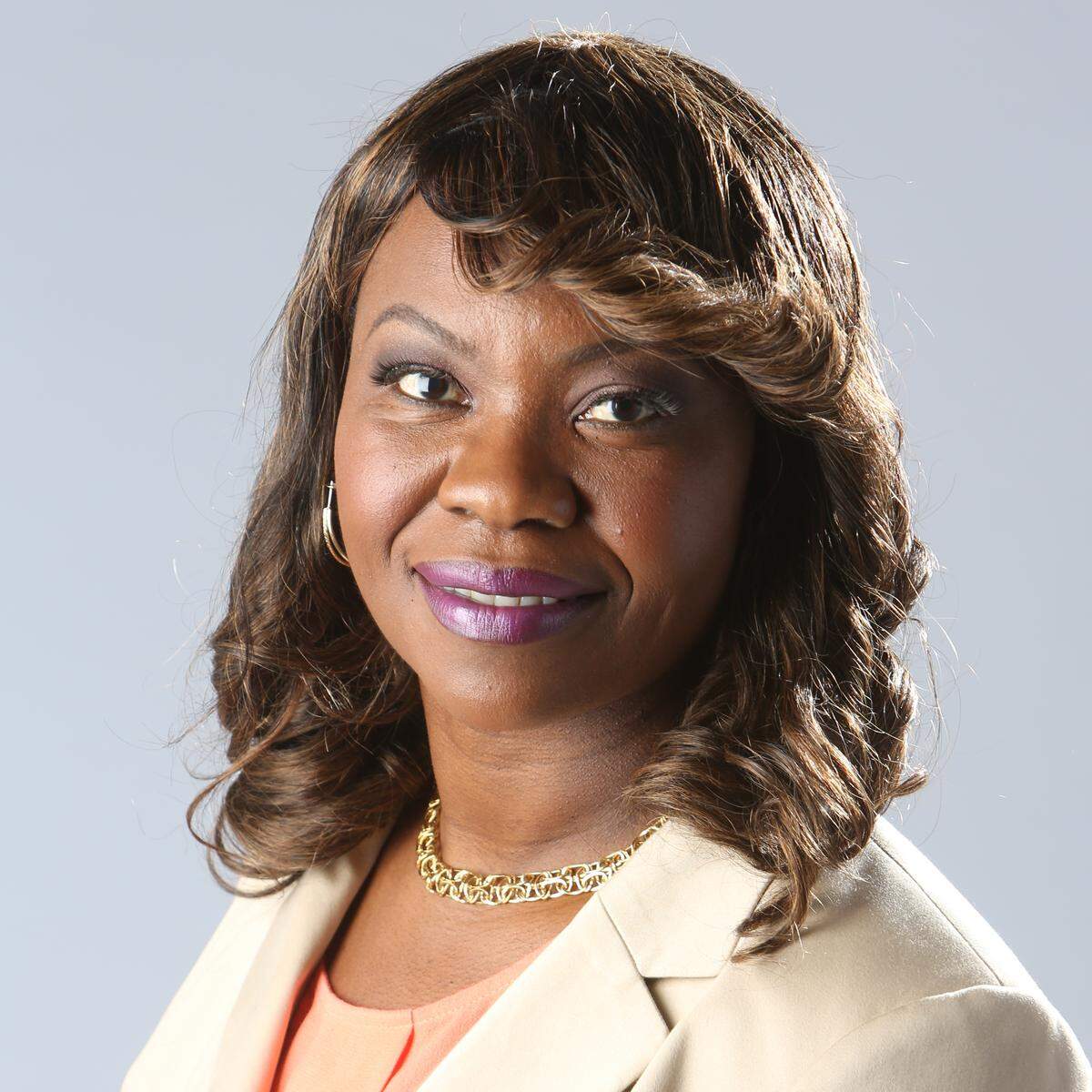
“The next international force must be resourced to hold territory, secure infrastructure, and complement the Haitian national police. In parallel, a comprehensive approach is required to disrupt gang financing, arms trafficking and other illicit flows fueling instability,” U.S. Ambassador Dorothy Shea told the Security Council on Thursday.
Shea repeated the administration’s thanks to Kenya for stepping up to lead the mission, as well as to the troops from Jamaica, the Bahamas, Guatemala and El Salvador. She said that by establishing a Gang Suppression Force and supporting Guterres’ proposal, the U.S. and Panama are trying to address Haiti’s growing violence, which is expanding to other regions and has pushed Haiti’s capital to the brink of collapse.
READ MORE: UN chief: Humanitarian crisis, plight of Haiti children a matter of ‘life and death’
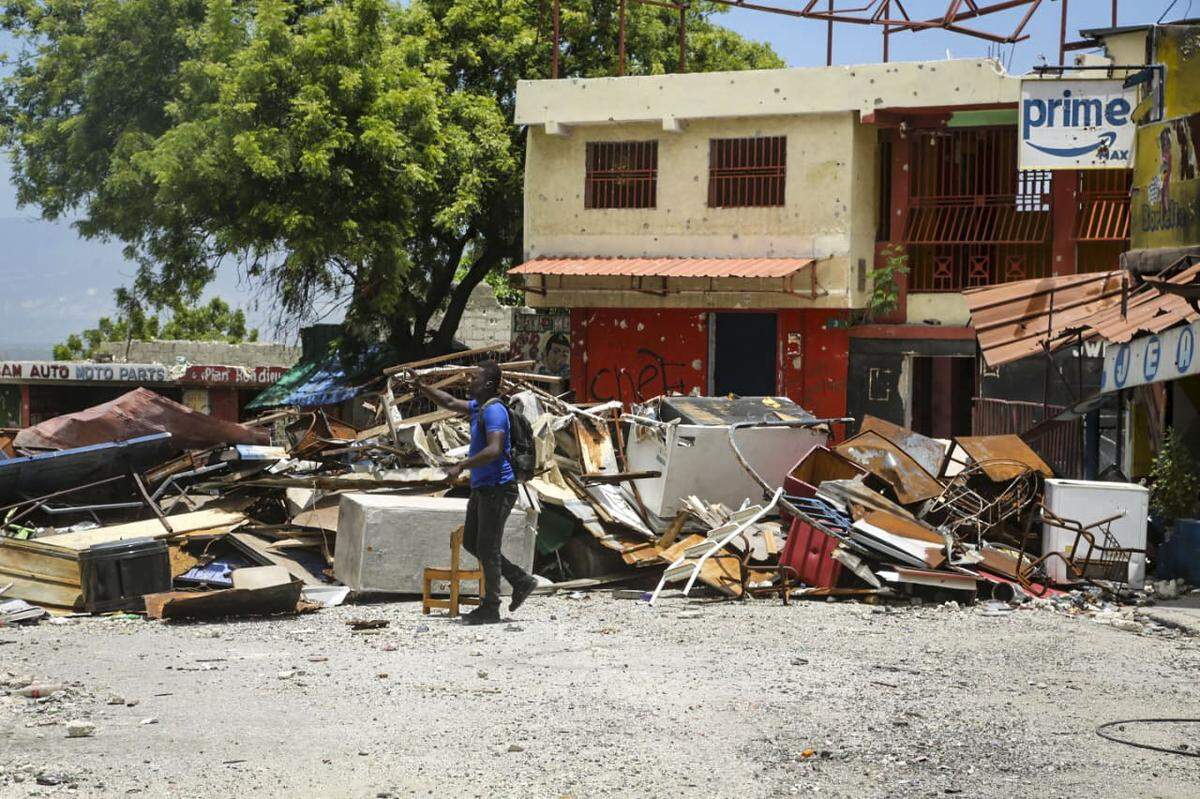
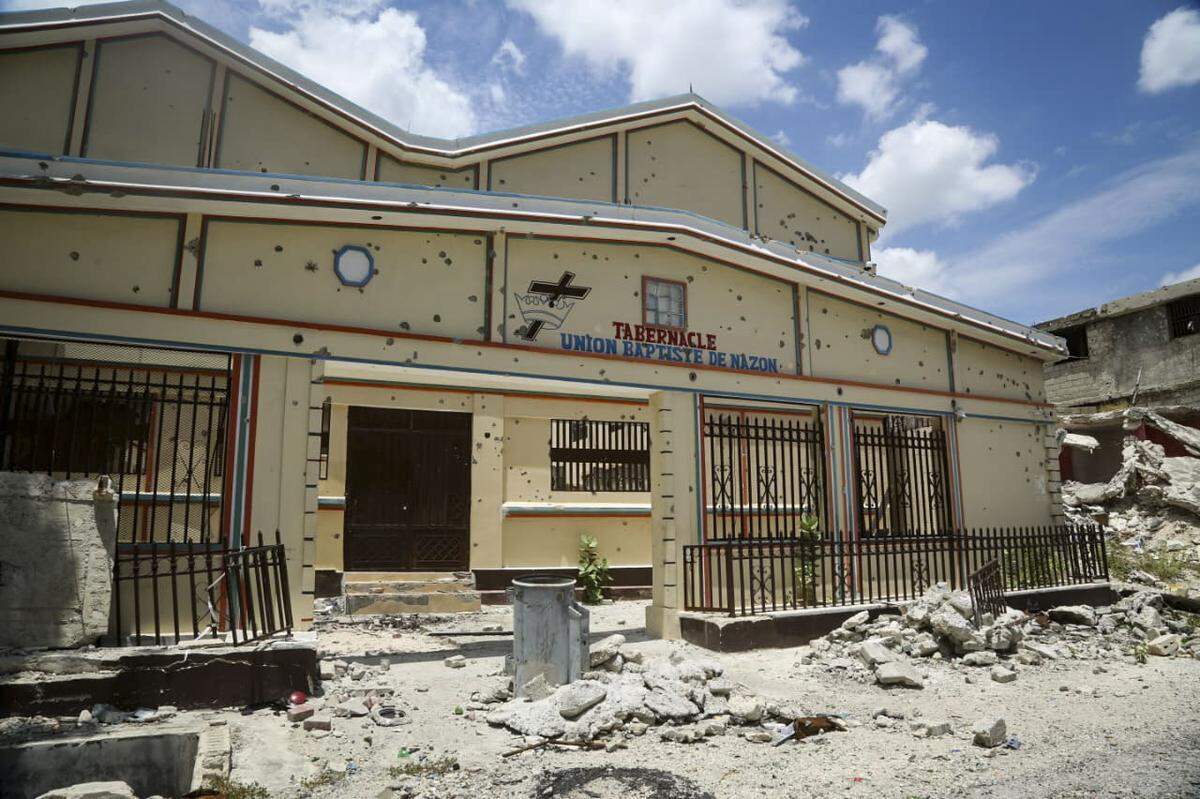
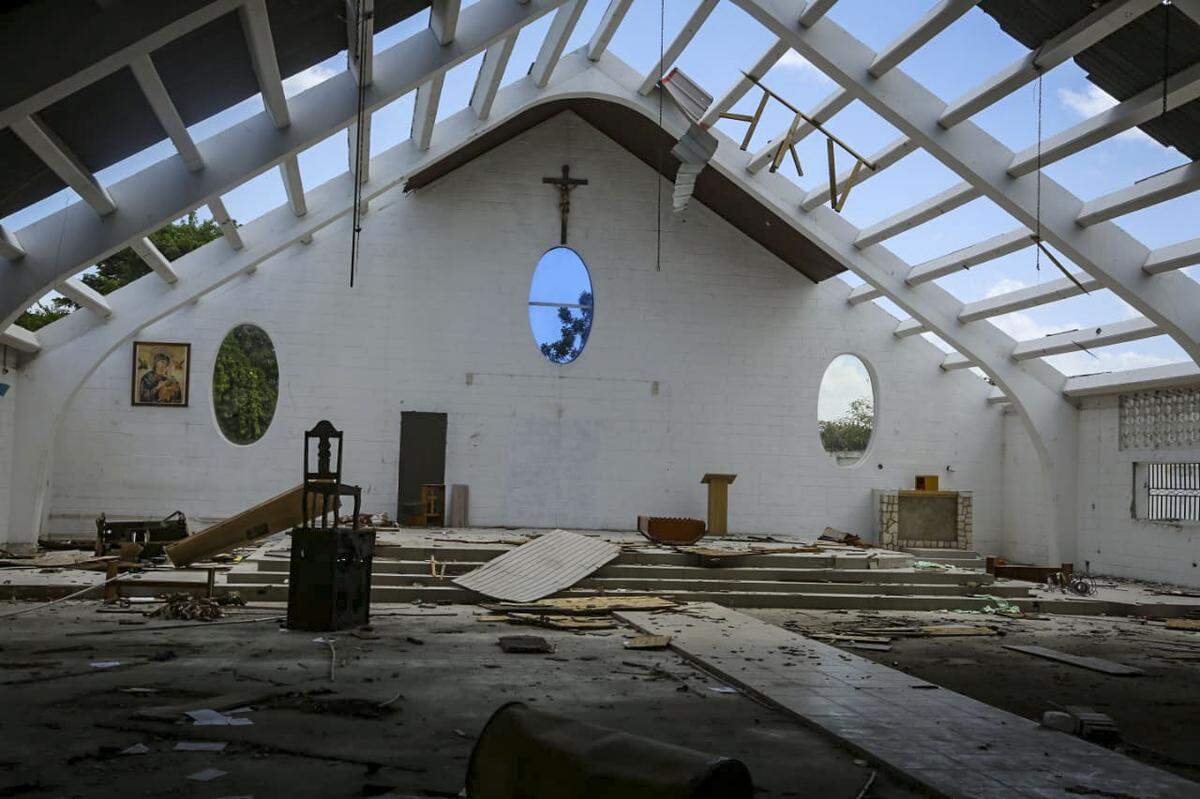
On Thursday, as Security Council members deplored the alarming violence and humanitarian toll of Haiti’s crisis, gang-displaced residents from some Port-au-Prince neighborhoods took to the streets to see if they could return home. Two days earlier, gang leader and spokesman of the powerful “Viv Ansanm” gang coalition, Jimmy “Barbecue” Chérizier, announced that some of the 1.3 million who have been internally displaced can return. Instead of homes, however, residents found looted-out structures, bullet-riddled churches missing their rooftops and windows, and streets littered with debris at the bottom of the Delmas neighborhood.
“We urge Council members: join us — join us in responding to the call from the Haitian government, as we forge a new path towards peace and security, and establish the U.N. Support Office to properly, and sustainably, resource this effort,” she said. “This will ensure the mission has the tools at its disposal to take the fight to the gangs and ensure that the Haitian state can meet the foundational needs of its people.”
Guterres said Thursday he welcomes efforts by Security Council members to advance his Feb. 24 proposal to strengthen the multinational security support mission through U.N. logistic and operational support.
Under the new model, member countries would continue to deploy under a U.N. chapter that traditionally gives the United Nations more flexibility in the use of force.
Romain Le Cour Grandmaison, head of Haiti Observatory at Global Initiative Against Transnational Organized Crime, said on paper the proposal incorporates many of Guterres’ recommendations.
“Nevertheless, the plan may face the same reality as the MSS,” he said. “Let’s assume that the resolution passes, which is far from certain: How can consensus be reached within the Security Council on its duration? How can a real operational mandate be built? Who will fund it? Who will provide technical or human support? What will happen with Kenya?”
Also, in terms of the details, the coordination with the Haitian authorities is barely mentioned. Moreover, the fight against networks supporting gangs, whether political or economic, through sanctions or other multilateral mechanisms, or in support of the Haitian justice system, is absent from the resolution.
“Where are the sanctions? Where is the consideration of organized crime and the political economy of violence? There is much missing for this resolution to be commensurate with the crisis,” he said.
Le Cour Grandmaison, whose organization has issued several studies on the rise in criminal gangs and self-defense groups in Haiti, also notes that the proposed resolution reveals a surprising political turning move at a moment when the Trump administration has pushed to rescind hundreds of millions of dollars from U.N. agencies and its peacekeeping operations.
“Suddenly, six months after the U.N. Secretary-General’s letter, and at a time when the United States is withdrawing from anything that might remotely affect the U.N., there is a willingness to return to the multilateral mechanism of peace operations,” he said.
The Kenya-led mission began deploying to Haiti in June 2024. Though envisioned originally to have as many as 2,500 security personnel, it has remained at about 1,000 with Kenya contributing about 700 police officers, two of whom were killed in armed ambushes this year. The remaining troops, which include some military, have deployed from El Salvador, Guatemala, Jamaica and the Bahamas.
In the new resolution, the authors note that despite the best efforts of the Kenya mission, “its modest resources and resultant capacities have not been able to keep pace with the dramatic expansion of the threat posed by gangs and thus the mission requires sustainable logistical support.”
At the same time, a special representative envisioned to provide strategic guidance for the mission was never appointed, leaving it an orphan as supporters struggled to raise money. The new resolution says that it concurs with the secretary-general that funding “is vital.”
Under the new mandate the mission’s members would still support the Haiti National Police through joint operations. But they will also be authorized to “conduct independent, intelligence-led targeted counter-gang operations to neutralize, isolate and deter gangs that continue to threaten the civilian population and undermine Haitian institutions,” the resolution reads.
As part of the Haiti Support Office, there will also be a Standing Group of Partners. They will consist of Canada, El Salvador, Jamaica, Kenya, The Bahamas, Guatemala and the U.S. On Wednesday, the Haitian government sent a letter to Guterres’ outlining the countries’ commitment to play a high level strategic role.
The resolution, which also endorses a recent proposal by the Organization of American States, notes that with the Gang Suppression Force, “direct support for this assistance is anticipated to be funded by the OAS’ Secure-Haiti project.” It calls for the new Special Representative to coordinate with the U.N. and the OAS.
The resolution also says that both the U.S. and Panama recognize “the willingness of member states to contribute to stability and security in Haiti by contributing personnel, equipment, and other resources.”
Notably absent from the resolution is any reference to Haiti’s police task force, which currently is using weaponized drones and mercenaries to go after gangs. The resolution also makes no mention of the country’s nascent army, which has also been recruited in the fight.
“To make meaningful progress on this collective challenge, we need international stakeholders and donors to come to the table and join the United States, Panama, and others who have demonstrated their commitment to Haiti’s security, in meaningful burden sharing to help promote stability in Haiti.,” Shea said. “We remain committed to working with the international community to drive progress forward in Haiti, and call on all Council members to take concrete action in support of this effort.”
This story was originally published August 28, 2025 at 5:45 PM.