The U.S. is Haiti’s largest aid donor. Now Trump is freezing all foreign aid for 90 days
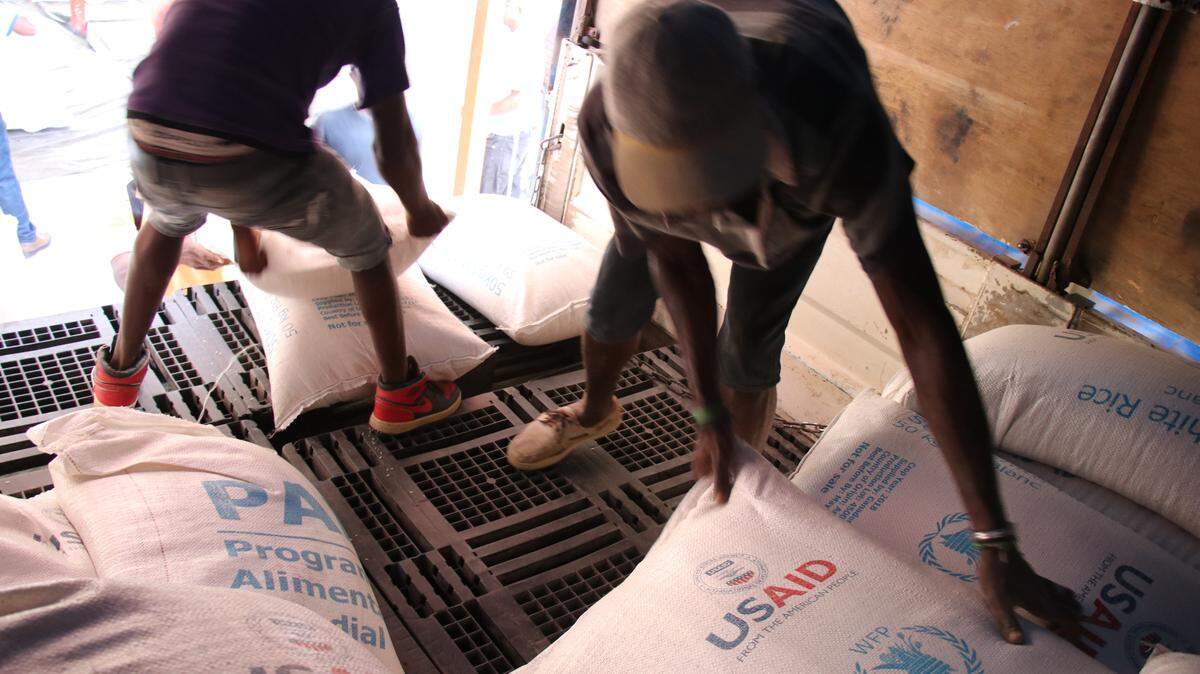
Military assistance to Egypt and Israel, and emergency food, are — for now— the only exceptions the Trump administration is making to an executive order temporarily halting U.S. foreign aid for 90 days, pending a review.
The waivers were listed in an internal State Department memo obtained by the Miami Herald that was distributed to offer guidance about the review process being launched by Secretary of State Marco Rubio. The goal of the exercise is to see if the programs being funded are aligned with President Donald Trump’s foreign policy agenda following his signing of the order on Monday.
The memo, sent to State Department employees on Friday, halts virtually all aid and says that “effective immediately, no new obligations shall be made for foreign assistance” until the secretary makes a determination after a review.
The memo also states that “stop orders” are to be immediately issued for existing awards.
The U.S. Agency for International Development, officers and partners were subsequently informed of the decision via email. Bottom line: All new aid is halted, and payments for approved aid are stopped until further review.
The U.S. doesn’t provide direct funding to Haiti, even though Washington is the Caribbean nation’s largest donor. However, it provides crucial support in several areas, from healthcare to policing. The State Department’s Bureau of International Narcotics and Law Enforcement Affairs, in particular, pays a pivotal role in the fight against armed gangs. The bureau trains and equips the Haiti National Police, providing everything from night goggles and guns to SWAT training.
Haitians and providers of services in the country say the halt in aid is a catastrophic blow to a country in which the government is already operating on a shoestring budget of $2.5 billion for about 12 million people. It risks making an already tragic situation worse at a time when gangs are carrying out mass massacres, the healthcare system is near collapse and diseases like HIV and tuberculosis are seeing a resurgence, and women continue to die in childbirth.
“I do not have the specific numbers by sector, but I imagine this can have a negative impact on security and health,” said Port-au-Prince-based economist Kesner Pharel. He had hoped, he said, that Haiti would make the short list with Israel and Egypt of nations that would continue getting assistance.
Several service providers contacted by the Herald said they are still trying to figure out the impact to their programs. But already some were seeing the effects: A hospital administrator trying to request an online fund transfer for HIV/AIDS funding approved until March was unable to do so. Similarly, the editor-in-chief of the country’s oldest newspaper, Le Nouvelliste, announced over the radio during his editorial segment on Magik9 on Thursday that its USAID-financed advertising had ceased.
“This reckless halt threatens decades of progress in global health equity,” Partners in Health, which runs the University Hospital in Mirebalais with its sister organization, Zanmi Lasante, said. The group was involved in the design and implementation of the President’s Emergency Plan for AIDS Relief, launched in 2003 under President George W. Bush, and has drastically reducing HIV transmission rates globally.
“The most vulnerable, those who are already marginalized by poverty and systemic inequities, will unjustly bear the brunt of this decision. The halt not only puts millions of lives at risk right now but could fuel further HIV drug resistances, risking a resurgence of the HIV/AIDS epidemic—one of the deadliest in history,” said Dr. Joia Mukherjee, chief medical officer for Partners in Health.
Democratic lawmakers Gregory Meeks of New York and Lois Frankel of Florida concur. They told Rubio in a letter on Friday that the decision “will cost lives.”
Meeks, ranking member on the House Foreign Affairs Committee, and Frankel, ranking member on the Appropriations Committee on National Security, said the directive “has immediate detrimental impacts, including possible closure of implementing partner organizations needed to carry out this work.” Congress, they said, had already cleared the funds, and it is their constitutional duty to see that funding is spent as directed.
Trump’s “Reevaluating and Realigning United States Foreign Aid” executive order “undermines American leadership and credibility around the world,” the letter said. U.S. foreign aid, it went on, isn’t about a handout but rather “a strategic investment in our future that is vital for U.S. global leadership and a more resilient world. It directly serves our national interests and demonstrates our credibility to allies, partners, and vulnerable people who rely on American assistance for survival.”
Asking that funding immediately be resumed, the lawmakers warned that “the damage we risk is simply too high.” To illustrate their points, they said under PEPFAR the U.S. currently provides 20.6 million people across 55 countries with anti-retroviral treatment for HIV/AIDS. Another 37 million have access to mosquito nets, while 63 million get medicines to prevent the spread of deadly malaria. “These lives depend on an uninterrupted supply of medicines, and your pause in funding will cost lives,” the lawmakers wrote.
They ended their letter by noting that a crisis-wracked and impoverished Haiti, along with Gaza, Sudan and Ukraine, are the places where people are relying on U.S. aid for survival.
A spokesperson at the State Department did not answer Miami Herald questions about the effects of the freeze on Haiti funding. Aid providers, including those who do not get direct U.S. funding, say they fear that health services and security will bear the brunt. According to the U.S. government, USAID has provided more than $170 million in life-saving humanitarian assistance since the 2021 budget year, and between 2021 and June of last year, the Bureau of International Narcotics and Law Enforcement Affairs, isbursed at least $189 million to develop and professionalize the Haiti National Police.
At the same time, the Biden administration disbursed more than $600 million in funds and in-kind contributions for the Kenya-led Multinational Security Support mission that began deploying in late June to help Haiti’s police take on armed gangs. Last week, Kenya deployed the third contingent of 217 police officers to Haiti, but 400 other trained and U.S. vetted officers still remain in Nairobi.
How the wide reaching aid freeze will affect the international armed mission, which has only received $110 million in foreign assistance in its United Nations trust fund, is among the unanswered questions. Sources say a lot depends on what was disbursed for the mission and in the pipeline before the Biden administration left office.
A Washington observer who is familiar with how U.S. government funding works said the halt means that all money for Haiti, including for the U.S.-backed anti-gang armed security mission, is frozen. The security mission and Haiti National Police will need to make do with what they have for the time being, the source said. That includes ammunition, which the Biden administration provided last year and became essential in helping security forces take on a powerful gang coalition trying to take over large swaths of Port-au-Prince, targeting critical infrastructure like government buildings and hospitals.
Months after the attacks led to a months-long closure of the main airport, the escape of more than 4,000 prisoners from two of the largest prisons, and the installation of a new political transition entity, the situation remains highly volatile. Gangs last year killed more than 5,600 Haitians last year, pushed the number of internally displaced Haitians to over 1 million after they were forced to flee their homes and plunged close to six million people into even more dire straits and in need of humanitarian assistance.
The violence has continued. The day of Trump’s inauguration, a gang operating near the U.S. Embassy opened fire on an armored embassy van, wounding a gardener as he and other employees were being transported to the housing compound on a winding dirt road. The next day, gangs launched another attack, this time killing a woman and injuring several people when they shot up two armored vehicles belonging to the consulate of India and opened fire on a third car in the convoy, not far from the capital’s international airport.
On Wednesday, members of the U.N. Security Council did not mention the U.S. aid freeze. But concerns about funding fueled diplomats’ discussions as they expressed alarm about the continuing intensification of Haiti’s gang violence and deepening humanitarian crisis amid a slow-moving political process to get a newly elected president and parliament in office by February 2026.
China’s representative sought to put the burden of Haiti’s crisis on the United States, saying the U.S. represents the largest source of the illegal high-powered weapons flowing into the hands of armed criminal groups. He pushed for the Security Council last year to mandate the creation of the Multinational Security Support mission. “The United States has the greatest responsibility and obligation to support and assist the [mission] to ensure it delivers its mandate and plays its role,” Geng Shuang said before the U.S.’s representative issued a rebuttal rejecting “scapegoating.”
The fate of the Kenya-led mission, though authorized until October, remains uncertain. Though Rubio signaled support for it during his Senate confirmation hearing, the level of future U.S. commitment is unclear.
Joonkook Hwang, the Security Council representative from South Korea, said though the international community had made a concerted effort to help Haiti address its gang violence, the Kenya-led mission has “fallen short of expectations, primarily due to resource and financial constraints.” In the face of the delay of bringing the mission to its full operational strength of 2,500, the security situation continues to deteriorate.
“Last week, the government of the Republic of Korea made a financial contribution of around $10 million” to the mission trust fund, he said. “We hope this contribution inspires support for Haiti.”
Rubio will embark on his first official visit to the region as secretary of state next week. His itinerary includes visits to Panama, Guatemala, El Salvador, Costa Rica and the Dominican Republic. In light of the halt in aid, his tour raises the question of what the U.S. will be offering to help carry out Trump’s agenda.
This story was originally published January 25, 2025 at 10:55 AM.