
Trump administration hits Cuba’s tourism, trade, energy sectors with crippling sanctions
The Trump administration on Monday imposed sanctions on Cuba’s tourism ministry, one of the island’s largest hotel operators, along with several companies in the trade, energy, ocean transport and finance sectors, tightening the squeeze on the island’s government as the country’s humanitarian crisis worsens.
“Today, the Department of State is designating ten entities to further the Trump Administration’s comprehensive push to end the Cuban regime’s malign activities, both in Cuba and across our hemisphere,” the agency said in a statement. “These actions target interlocking pillars of that apparatus: state-owned entities that funnel revenue to the regime and paramilitary forces, armed civilian groups, and surveillance organizations that repress the Cuban people.”
The list includes one of the Cuban government’s largest trade groups, Gecomex, the import-export arm of the Ministry of Foreign Trade and Foreign Investment that includes the main state-owned food import agency, Alimport; Coreydan and Enetec, two companies that import fuel; and Grupo Caudal SA, a state company that provides insurance and financial services.
The Trump administration also imposed sanctions on Gemar, a maritime and port transport business group attached to the Ministry of Transportation.
Recently, GAESA, the military conglomerate that controls about 40% of the island’s economy, reportedly transferred its assets in the company managing the container terminal at the port of Mariel, Terminal de Contenedores Mariel S.A., to one of Gemar’s companies, Coral Maritima SA, to circumvent U.S. sanctions, according to a report by Cuba news outlet 14ymedio. GAESA had been previously sanctioned under a May executive order.
The State Department also sanctioned four other entities for their link to the repression of Cubans: the Association of Combatants of the Cuban Revolution, the Rapid Response Brigades, the Territorial Troop Militias and Antex SA, a GAESA subsidiary “that manages the export of Cuban forced labor to Angola,” the statement says.
The new designations come under an executive order signed by President Donald Trump earlier this year that authorizes sanctions on repressive entities, Cuban government enterprises in key economic sectors, and foreign companies doing business with sanctioned Cuban entities. In a statement on the fifth anniversary of the nationwide July 11, 2021, protests, Secretary of State Marco Rubio had promised the administration would use “every tool at our disposal to both address the national security threats posed by the Cuban Communist regime, and to drive the economic and political reforms to give Cuba a better future.”
Previously, Rubio had sanctioned Cuba’s state energy company CUPET, Cuban mining companies and several military enterprises and regime officials.
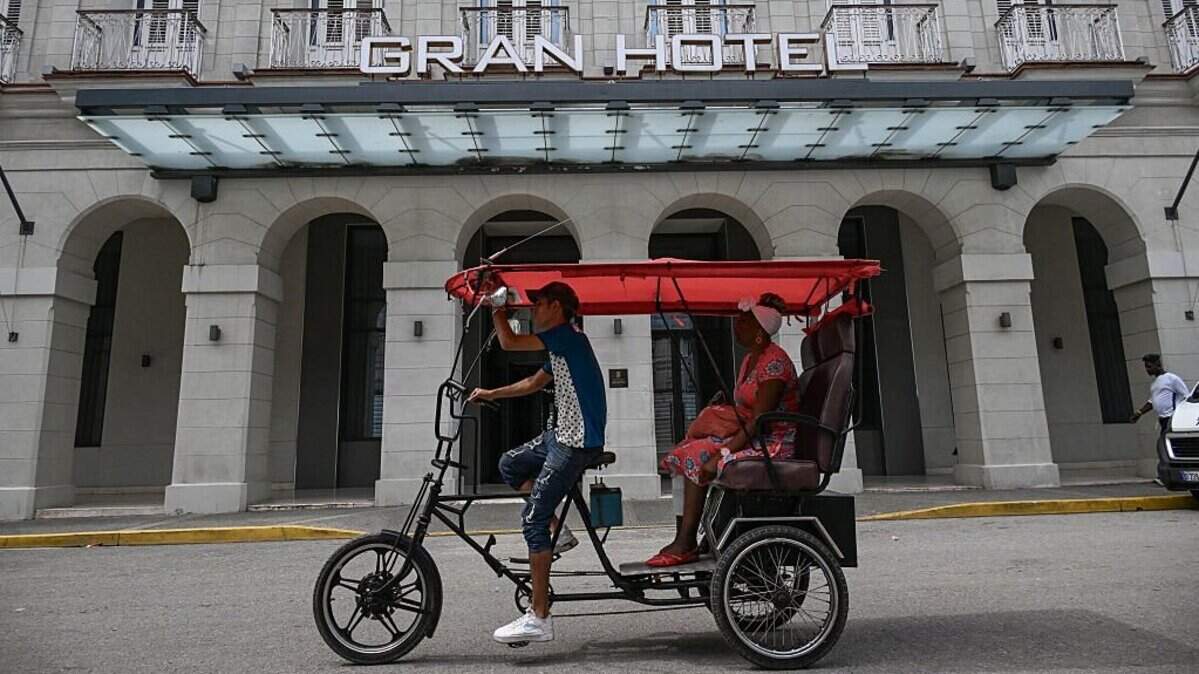
Sanctions on the tourism ministry hit the island’s tourism industry hard because they exposed foreign hotel chains that have contracts with the ministry’s hotel chains to U.S. sanctions. After the administration sanctioned GAESA — which had become the country’s largest tourism operator through its subsidiary Gaviota — several foreign hotel chains ended their management contracts with Gaviota or left the Cuban market.
Cuba’s tourism never recovered from the COVID-19 pandemic and was already in crisis amid the severe economic downturn in recent years. This year, increased U.S. pressure on Cuba’s allies who used to supply oil has caused fuel shortages, leading several airlines to suspend flights to the island. The flight cancellations, the daily blackouts and a worsening humanitarian crisis have all caused tourism to tank, with only 359,000 international arrivals recorded between January and May this year, a 58% contraction from the same period in 2025.
The sanctions come as the humanitarian situation on the island continues to deteriorate.
A resident in Playa, a neighborhood in Havana, said he had been without running water for six days. A Russian woman living in Havana who runs a popular Instagram account said she had been without running water for 10 days. The country’s power grid collapsed twice last week, and many residents in Havana said they also had no internet connection or cellphone service.