
Rubio sanctions Cuba’s state energy firm CUPET, accusing regime of weaponizing fuel
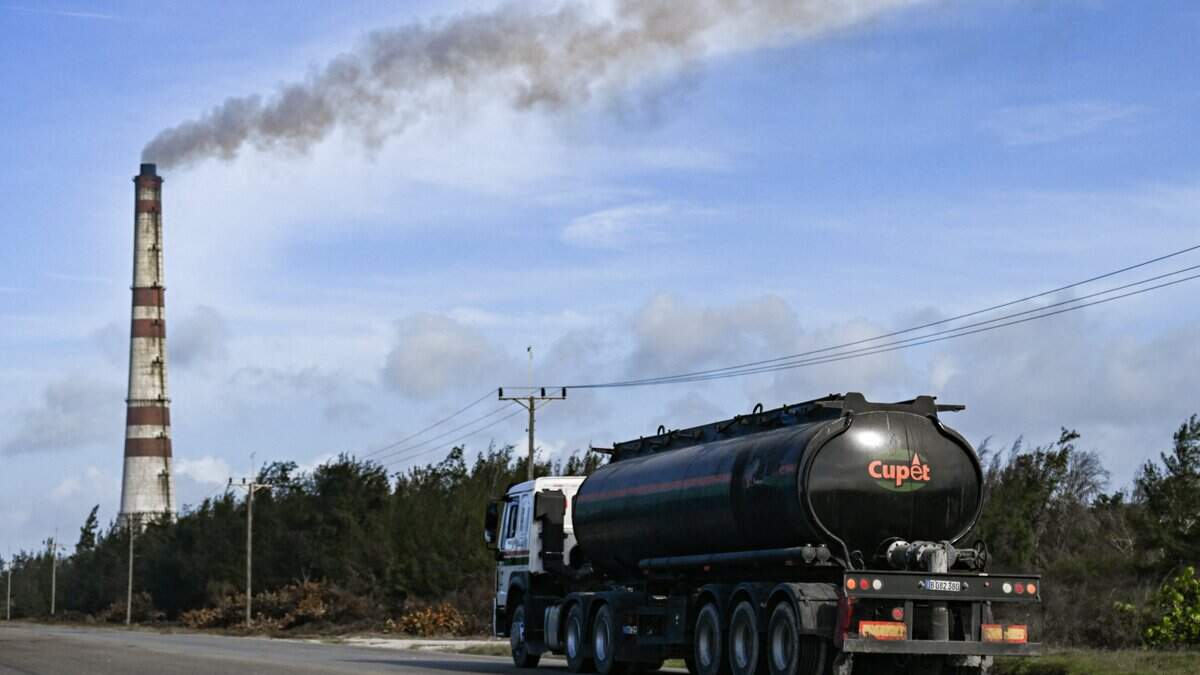
Secretary of State Marco Rubio announced sanctions Thursday on Union Cuba-Petróleo, known as CUPET, Cuba’s state energy company, accusing the island’s communist leaders of “having weaponized energy” to control the population and for their own “kleptocratic” benefit.
CUPET, which owns refineries and storage facilities, has also come under the control of GAESA, the Cuban military conglomerate that operates the country’s gas stations and controls much of the island’s economy.
CUPET was added to the Treasury Department’s blacklist of “designated” nationals and entities with whom American companies cannot do business. The Cuban company was sanctioned under a new executive order signed by President Donald Trump on May 1 that gives broad authority to the secretaries of State and Treasury to sanction Cuban government companies and foreign entities doing business with Cuba.
“For decades, the regime has stolen and hoarded available fuel — using it for the Castros’ private jet, the security services forces used to repress the Cuban people, to keep empty tourist hotels lit up, and to bus people in for fake protests and political stunts — all while the Cuban people have suffered blackouts and waited weeks to fill their cars,” Rubio said on X.
He said more sanctions against Cuba are likely.
“President Trump wants a new future for the Cuban people with greater economic and political freedom and opportunity,” he added. “Until then, we will continue to target the Communist regime’s ability to leverage its energy trade to further its corrupt agenda and violently repress the Cuban people.
The sanctions come two days after a Coral Gables company, Vanguard Energy, announced a deal with the Cuban government to store fuel on the island for sale to the private sector. Vanguard signed a contract with a Cuban importing agency that would then use storage tanks owned by CUPET, the state monopoly. Vanguard believed it didn’t need a specific authorization, known as a license, because the U.S. Department of Commerce had issued guidance authorizing fuel sales to the private sector and other authorized non-governmental organizations.
But shortly after the Miami Herald reported on the deal, the administration said Vanguard needs an authorization to contract with Cuban state government entities sanctioned under the May executive order.
It is unclear how Thursday’s announcement will affect Vanguard’s agreement. The Herald reached out to Akerman, the Miami law firm that represents the company, for comment, but had not heard back by publication time.
In a longer statement, the State Department said that “all transactions and dealings by U.S. persons or persons within (or transiting) the United States that involve any property or interests in property of designated or otherwise blocked persons are prohibited unless authorized by a general or specific license issued by [Treasury] or exempt.”
Sanctions on CUPET might further complicate Cuba’s acute energy crisis. Cuba once received free oil from Venezuela in exchange for medical services and intelligence support. But that stopped after Venezuelan strongman Nicolás Maduro was captured by U.S. forces. Trump also signed an executive order threatening tariffs on Cuba’s other oil suppliers.
The pressure aims to force Cuban leaders to adopt economic and political reforms they have so far resisted, but it risks worsening the country’s raging humanitarian crisis. Cuban leader MIguel Díaz-Canel, said the country has received only one oil tanker from Russia in five months and that the oil cut-off amounts to an act of “genocide.”
Meanwhile, Cubans are suffering through regular blackouts that now last for more than a day, including in the capital, Havana. With no electricity or gas to cook, residents in Cuban cities and towns are cooking with coal and wood, sometimes in the streets. The lack of fuel has also disrupted the distribution of water as well as public transportation.