
Coral Gables firm strikes deal to send fuel to Cuba’s private sector on oil tankers
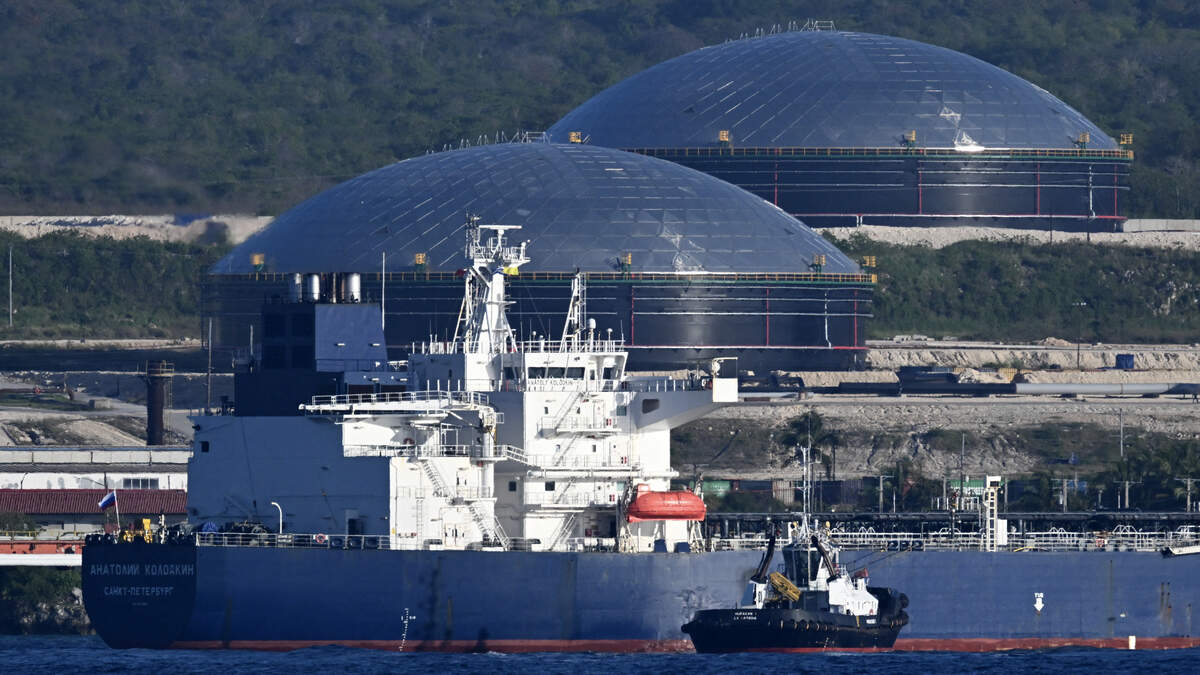
An energy company based in Coral Gables has struck a landmark deal to lease Cuban government storage facilities and supply fuel shipped on oil tankers to the island's private sector and humanitarian and religious organizations.
In February, the Trump administration authorized oil exports to Cuba for “private sector economic activities and those sold directly to individuals for personal or family use,” without the need for a government authorization known as a specific license.
Coral Gables-based Vanguard Energy, a regional fuel trader in the Caribbean and Latin America, quickly became a provider of diesel and gasoline to Cuba’s private businesses, delivered in specialized shipping containers known as ISO tanks. But the process is expensive and inefficient: the tanks can carry only 6,900 gallons of gasoline, and they must be filled and shipped to Cuba for transfer, then returned for refilling.
Vanguard Energy signed a contract last month with a Cuban importing agency to lease facilities owned by the Cuban government company CUPET for fuel storage. The Coral Gables company will ship gasoline and diesel in oil tankers, not ISO tanks, and store it in Cuba, allowing a larger volume of fuel to reach private businesses and bringing fuel prices down, according to Matthew Aho, a policy advisor with Miami-based law firm Akerman, who helped broker the deal.
“We’re looking to bring a reasonable-sized vessel, over 250,000 barrels of diesel fuel and gasoline, regular 87 gasoline, to put into a tank” once a month or every 40 days, Matthew Klann, the president of Vanguard Energy, told the Miami Herald.
Klann said the company will hold the title to the fuel and will not transfer it to the Cuban government. The company plans to begin selling fuel to customers who have already been vetted for sales via ISO tanks, including the U.S. Embassy in Havana.
“Then, as the process rolls out, and it looks like it works, and it’s auditable, and both the U.S. side and the Cuban side see the benefit of privatization in their fuel market, you would hope that they go further, and more private companies can come in, and gas stations can potentially be sold to the private sector, and then an energy market, a gas market starts to flourish again,” Klann said. “This would be the first process to start doing something in Cuba like this, to show both sides that privatization of the fuel market is how this business should be done.”
The deal is the first of its kind and could pave the way for more U.S. companies to participate in Cuba’s energy sector, a goal the Trump administration has been pursuing. It would also give the private sector greater leverage amid an acute energy crisis on the island. And it would allow religious organizations like the Catholic Church and other humanitarian organizations to secure fuel to deliver aid to the public.
The agreement follows months of discussions among Vanguard, Cuban authorities and U.S. officials, the company said in a statement, and it marks “the most significant commercial shift in Cuba’s fuel sector in decades.”
The Cuban government has been unable to import fuel since January – except for one Russian oil shipment – after the Venezuelan government stopped sending free oil to the island, following the capture by the U.S. military of Nicolás Maduro, and Mexico stopped shipments fearing U.S. tariffs.
The agreement lands at a tense moment in the relationship between the United States and Cuba. The Trump administration has engaged in talks with Cuban leaders, pressing them on a number of demands, including enacting economic and political reforms, releasing political prisoners, and stopping China and Russia from using Cuba to spy on the United States..
Cuba’s leader, Miguel Díaz-Canel said the Trump administration’s pressure on oil suppliers to stop delivering fuel to Cuba amounts to an “act of genocide.” Publicly, Cuban leaders have given no signal they intend to bow to U.S. pressure.
But there is no solution in sight that would allow the Cuban government to import the fuel it needs to meet the demands of the Cuban economy, which is mostly paralyzed, and its population, already suffering days-long blackouts. The Vanguard Energy deal suggests that Cuban leaders understand their predicament.
“This isn’t a deal where we’re giving it to CUPET; it is actually establishing a physical presence on the island, where a U.S. person, subject to U.S. law, has the right to inspect the fuel, has a title to it, and it is only distributed once it gets paid in the U.S.,” said Augusto Maxwell, a lawyer with Akerman involved in the contract negotiations. “To me, from a U.S. policy point of view, it is a big win.”
Akerman’s legal analysis concluded that the contract met the requirements established by the Commerce Department’s new policy authorizing U.S. fuel sales to the private sector and authorized individuals for personal use, provided that the company puts in place a robust compliance program and a due diligence program to approve customers and monitor distribution.
“We’re going to be able to give the U.S. government absolute traceability” of the sales, Maxwell said.
A State Department spokesman told the Herald that “Vanguard Energy has not received any U.S. license for this transaction. The Trump Administration’s sanctions remain in effect absent specific guidance or licensing to the contrary.”
After the Herald story was published, a Trump administration official further clarified that “the company needs permission to contract with designated entities and state-owned enterprises covered by executive order 14404,” which President Donald Trump signed on May 1. The order prohibits transactions with all Cuban government entities. Under the new executive order, the State Department designated GAESA, the military conglomerate that owns CUPET.
Cuba’s Foreign Ministry did not reply to Herald requests for comment.
Both the Treasury and Commerce Departments have said companies cannot sell oil to the Cuban government, the military, or sanctioned officials. They also can’t sell it for the benefit of hotels managed by the Cuban military that are listed as banned properties under State Department sanctions.
Aho said Vanguard Energy has secured a contract with strong protections, including maintaining ownership of the fuel stored on the island, control over whom the company would sell the fuel to, and the ability to monitor and inspect the fuel in storage. Payments from private business owners, embassies, or other authorized organizations will not go through Cuba’s banking system, he added.
He also said the contract includes protections that could be invoked if government workers are found to be siphoning off fuel.
“Sales will be limited to customers who successfully complete Vanguard’s due diligence program, ensuring transparency, accountability and adherence to applicable U.S. regulations,” the company said in a statement. “To comply with U.S. laws, Vanguard will also enact safeguards to ensure that fuel is not diverted to the Cuban government or government-owned companies sanctioned by the United States.”
But the major challenge will be ensuring that private companies buying fuel from Vanguard Energy comply with U.S. regulations and do not resell it to the government, said Jorge Piñón, an energy expert at the University of Texas at Austin. How Vanguard navigates this and other challenges will provide valuable information for a future transition in Cuba, Piñón added.
The deal, Piñón said, “opens the door for countless independent distributors and helps get companies larger than Vanguard Energy excited and starting to head to Cuba. And this also aids in a potential transition. We will have the know-how regarding how to supply oil to Cuba, thanks to the experience gained from Vanguard.”
This story was originally published June 9, 2026 at 6:52 PM.