
Hurricane Oscar left six people dead in Cuba while the country struggles with power outage
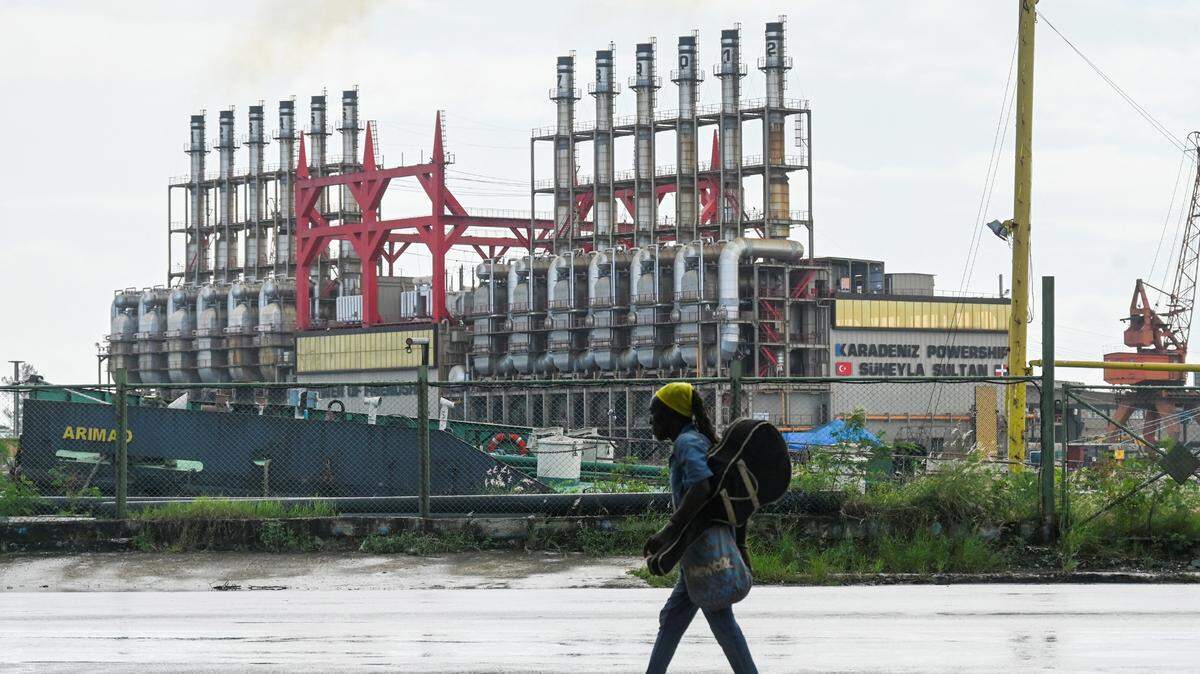
Following three days of nationwide blackouts caused by the collapse of Cuba’s electrical system, power was restored to most of Havana on Monday, after Cuban authorities gave up efforts to restore the entire grid for now and opted to try to hook up individual regions around the country.
But outside the capital, most of the population appeared to still be without electricity Monday afternoon, after the grid initially collapsed around 4:00 p.m. Friday.
The Electric Union, the country’s state-run utility, said Monday it was generating only 200 megawatts of electricity to service part of six provinces. It takes 3,000 megawatts to power the entire country. The eastern side of the island, which Tropical Storm Oscar crossed Monday after making landfall Sunday as a Category 1 hurricane near Baracoa, in Guantánamo province, appeared to be the most affected by the loss of power.
On Monday night, Cuban leader Miguel Díaz-Canel said at least six people died in Imías and San Antonio del Sur, close to Baracoa, because of flooding caused by the storm. Some zones areas were still inaccessible to members of the military and the Interior Ministry involved rescue operations, he said on X.
With no power since Friday, residents in rural areas might not have had much warning about the coming hurricane.
Initially, there was little information about the impact of Oscar in Cuban state media on Monday morning, but by afternoon the government was carrying out emergency rescue operations with the help of the Cuban military and the Interior Ministry to save people trapped by flood waters in Guantánamo, according to the Facebook page of the Cuban President’s Office.
The posting said there was severe flooding in Baracoa, Imías and Maisí, all in Guantánamo province, and added there were early estimates of about a thousand homes damaged by the storm.
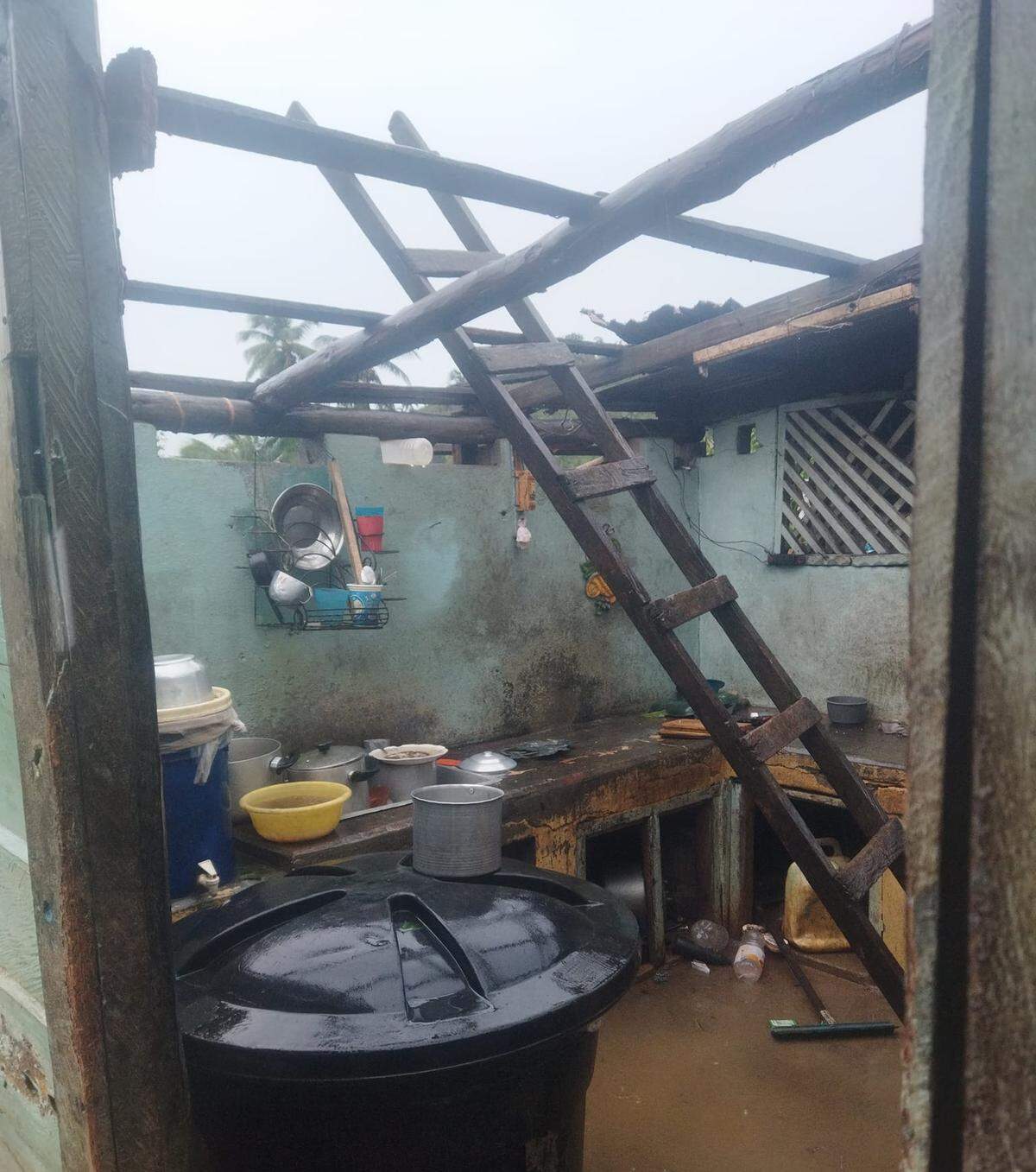
There are few images of the wreckage left by the storm. Photos and videos shared by the local radio station Radio Baracoa of El Jamal, a town nearby, show fallen trees, homes that lost roofs and some flooding. A short video shared by the official news outlet Cubadebate on Facebook shows ocean waves battering Baracoa’s seaside wall and water flooding the streets.
On Friday, the failure of the Antonio Guiteras power plant in Matanzas, a province in western Cuba, triggered the island-wide blackout. Over the weekend the outages continued as the state electric utility’s efforts to connect the island’s major stations to the grid failed.
By Monday afternoon, the Electric Union said 90% of customers in Havana had power. The company was finally able to restart one unit in the power plant in Mariel, west of Havana, and tie it into another plant using natural gas, a shipboard power plant and generators in Mariel, said Energy Minister Vicente de la O Levy.
Cuban news outlet Cubadebate reported that a second unit in the Mariel power station was working in the afternoon. The news outlet also said the Antonio Guiteras power plan was back online but running at limited capacity.
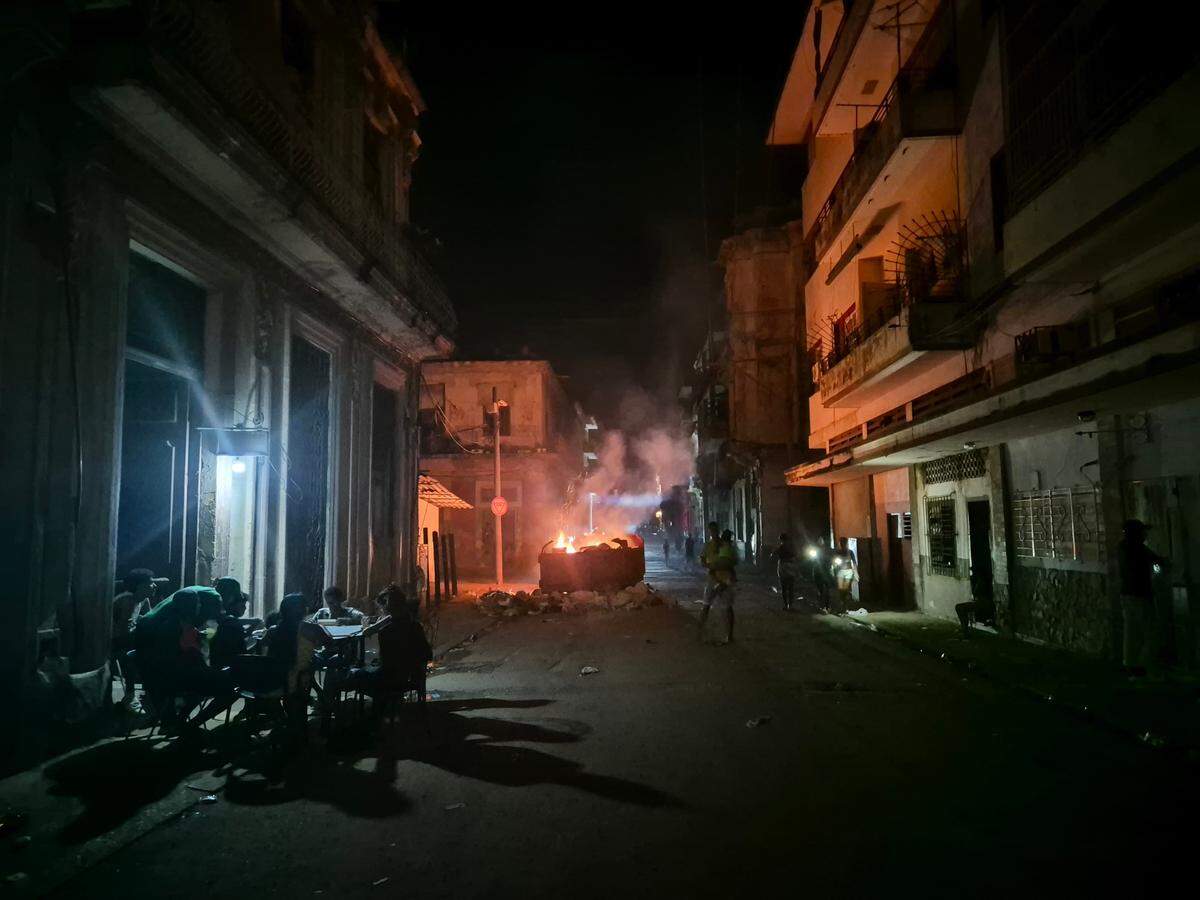
The electric service remained unstable even for those getting power back. A resident of San Miguel Del Padrón in Havana said the electricity was back Monday morning, only to go out again a few minutes later.
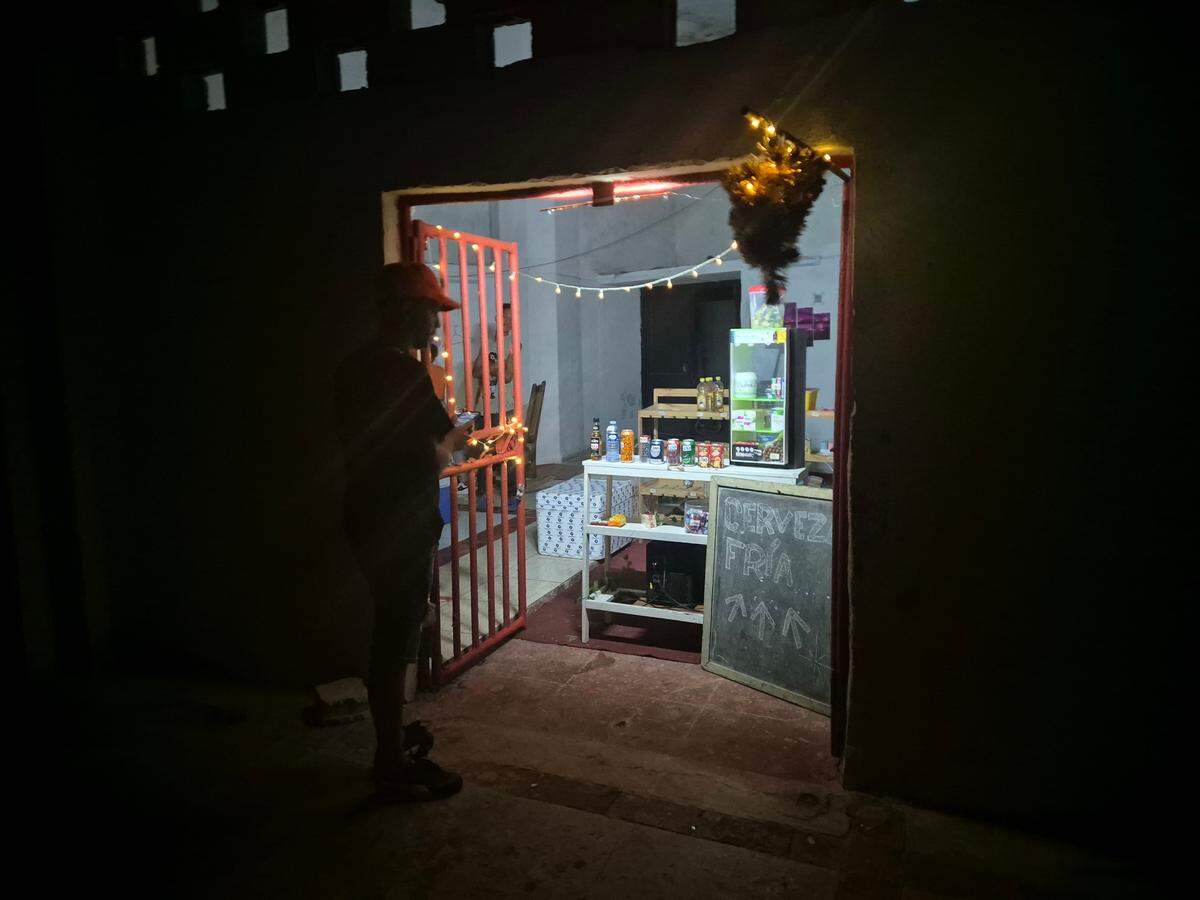
Many Cubans are still enduring the blackout, with no obvious end in sight.
From Camaguey, in central Cuba, independent journalist Jose Luis Tan Estrada posted a brief update on X Monday morning: “74 hours without light. The food was spoiled. There is no liquefied gas, cooking with charcoal. Saving water from the cistern.”
In Lawton, a Havana neighborhood, Berta Soler, the leader of the dissident group Ladies in White, said she still had no power and cannot leave the house because a police patrol had been stationed outside.
“We have been without electricity and water since Friday,” Soler told the Miami Herald in a phone call. “The situation is very bad because many people also do not have liquefied gas to cook or food. And if they had gas and food they had to cook it all so it didn’t spoil.”
Another prominent dissident, Martha Beatriz Roque, said electricity returned to her Havana neighborhood of Diez de Octubre on Monday morning, but the problems did not stop there.
“Right now, we have a very difficult situation with the water supply,” Roque told the Herald. She said another member of the Ladies in White told her her mother had just been discharged from the hospital after cancer surgery, “and she told me, ‘Look, Martha, I’m going to go out with two buckets to see who can give me two buckets of water.’”
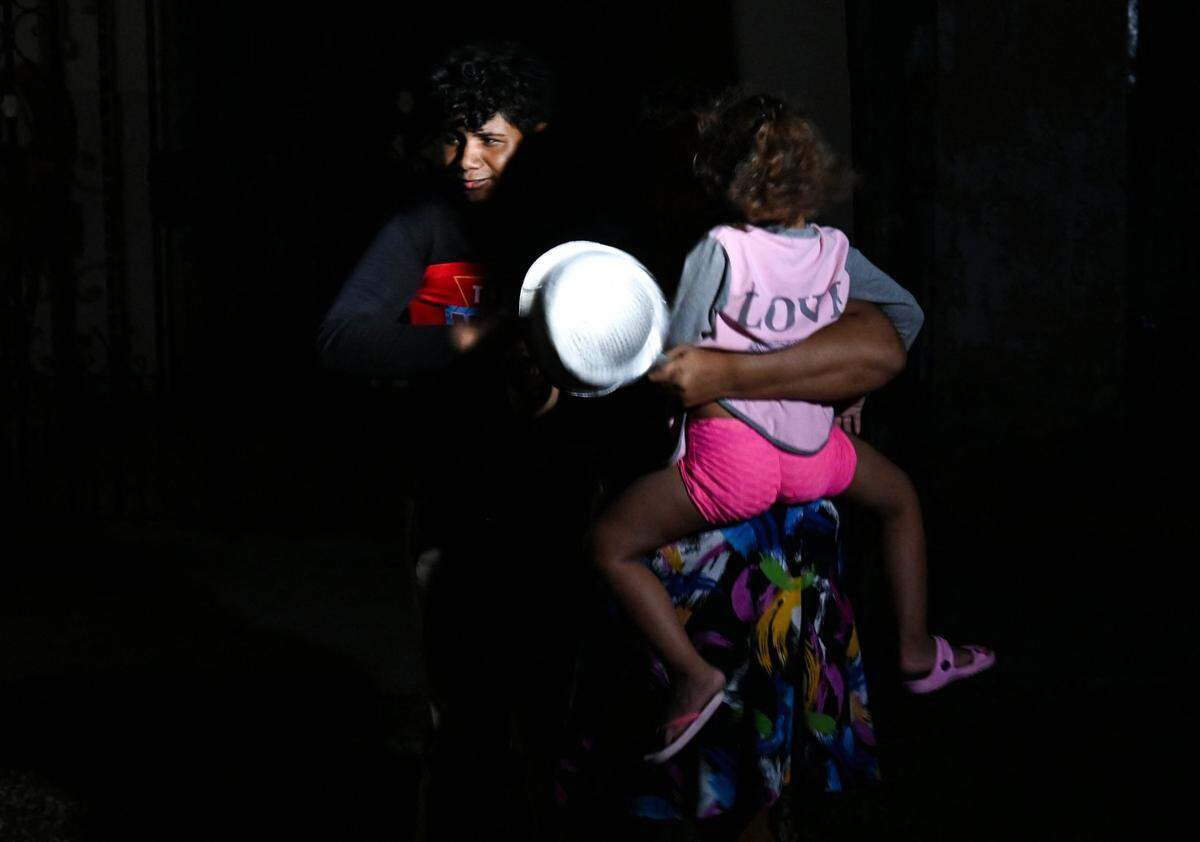
After the second and third nights without electricity, some Cubans around the island came out to the streets to bang pots and pans in protest. In Manicaragua, a town in the province of Villa Clara, a group gathered in front of a government building, which led to a skirmish between police officers and some demonstrators that was caught in a video and shared on social media.
The country’s handpicked president, Miguel Díaz-Canel, had a stark warning for protesters: The government will not tolerate any disturbances by “indecent, drunken” people who try to “disturb public peace and commit acts of vandalism,” he said, wearing a military uniform during a government meeting.
“The revolution will never tolerate such behavior,” he added, saying violators would be prosecuted “with the rigor corresponding to our revolutionary laws.”
In 2021, Díaz-Canel ordered the crackdown on island-wide anti-government demonstrators, leading to hundreds of harsh sentences.
“There is a lot of fear,” Roque said. “Cubans are afraid after what he said.”
But if the power situation does not improve soon, more protests are likely, Soler said.
“If the lack of electricity, water, fuel, liquefied gas and food continues, we are going to take it to the streets,” she said. “The Cuban regime has left us to our fate, while all of them are enjoying all the good things and we Cubans have nothing.”
This story was originally published October 21, 2024 at 3:32 PM.