
Hurricane Oscar makes landfall on eastern Cuba as island-wide blackout continues
Cuba ended a third day without electricity Sunday night after new outages during the weekend set back efforts to restore power on the island, underscoring the challenges posed by decades-old, poorly maintained equipment.
Cubans in the eastern provinces of Holguín and Guantánamo braced for a direct hit by Hurricane Oscar on Sunday afternoon. As the Category 1 hurricane made landfall near Baracoa, a coastal in city in Guantánamo province, around 5:50 p.m., most of the country still had no power.
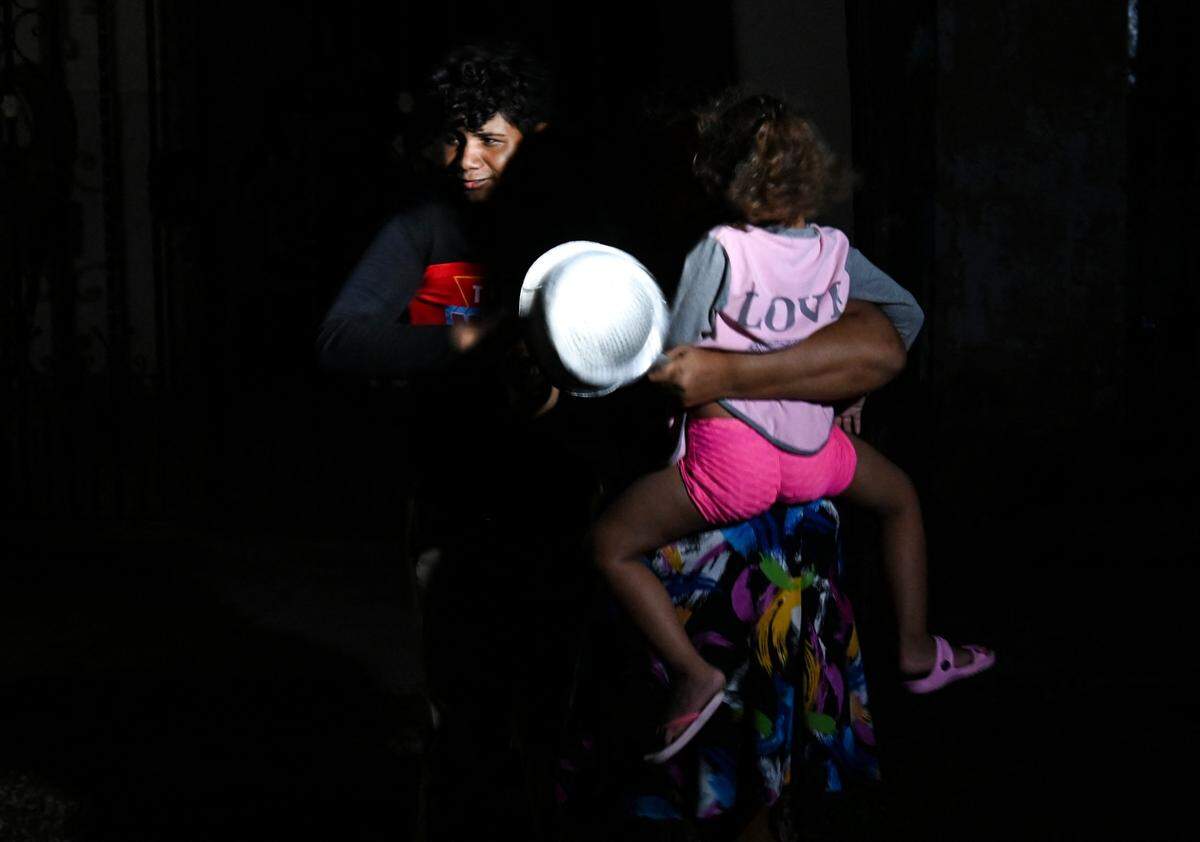
Heavy rain and winds up to 80 mph were expected to reach Santiago de Cuba, the island’s second-largest city, and Las Tunas nearby. But with no electricity since Friday, there were few ways to warn citizens, especially those in rural mountainous areas, of the impending danger.
Citing the possible effects of Hurricane Oscar and the work in progress to restore the electrical system, Cuban authorities suspended all nonessential activities, including classes, from Monday to Wednesday in a brief note signed by the “Revolutionary Government” and published in the Communist Party newspaper Granma on Sunday afternoon.
Timeline of the blackouts
Most of Cuba’s population has had no electricity since Friday morning, when a failure at the Antonio Guiteras power station in the western province of Matanzas caused the entire grid to collapse. Since then, the state-run Electric Union has tried and failed several times to reconnect the island’s thermoelectric plants to the system.
On Saturday morning, the Electric Union announced a second “total outage” around 6 a.m. Lázaro Guerra, a senior company official, said there was a failure in a “microsystem” in western Cuba. Later, another company official told the official news outlet Cubadebate that the outage happened while workers were trying to reconnect a unit in the Mariel thermoelectric plant near Havana to the grid.
As the day went by, Cuban government officials said service had been restored to 16% of consumers in limited areas close to hospitals, water pumps and other essential services. The Cuban electrical system needs to generate at least 3,000 megawatts to meet the island’s demand. Guerra said the company was generating close to 700 megawatts using backup diesel generators and a floating power station in the Port of Mariel that the island has rented from Turkey.
Then, the lights went off again.
Just before midnight Saturdayt, the Energy Ministry said a similar outage at 10:15 p.m. “disconnected” an electrical sub-system in western Cuba, shattering hopes that service would be completely restored anytime soon.
On Sunday, Cuban state media said the failure happened while attempting to connect to the grid a power-generating unit in a thermoelectric station in Santa Cruz del Norte, near Havana.
As Hurricane Oscar approached, the electric company said a failure in a generating unit in the Renté thermoelectric plant in Santiago de Cuba had caused an outage in a “microsystem” built to power some areas in eastern Cuba, leaving the provinces of Santiago de Cuba and Guantánamo without power on Sunday morning.
In the afternoon, the Electric Union said it had restored service to 29 hospitals, 26 water pumps and 230.564 customers in Havana. It also said it connected several provinces to the same electrical system.
Shortly after, there another setback occurred: Another total disconnection of the entire grid left most Cubans around the island without electricity.
Crumbling equipment
The first nationwide blackout on Friday followed days of electricity cuts that had lasted up to 20 hours in some provinces.
Following the late Fidel Castro’s orders, the government had purchased diesel-powered generators that were supposed to act as a backup system to avoid blackouts when power stations fail. However, as the whole system deteriorated, the country relied heavily on those generators. Energy Minister Vicente de la O Levy said in a press conference Sunday afternoon that before the grid collapse Friday, the generators were not working because of a lack of diesel fuel.
Just hours before the electrical grid failed Friday, the island’s prime minister had said the economy was “paralyzed” and ordered non-essential businesses and activities, including schools and universities, to shut down.
“The fundamental problem is that the Cuban electrical system, mainly the thermoelectric plants, has been in operation for more than 50 years, and operational maintenance has never been provided, much less capital maintenance, because they did not have money for that,” said Joge Piñón, a senior research fellow at the University of Texas at Austin’s Energy Institute and an expert on Cuba’s electrical grid.
“The national electrical system is like a ‘56 car that has 20,000 different parts in the engines, and they keep breaking here and there, and they try to fix it with patches,” he said. “That doesn’t work.”
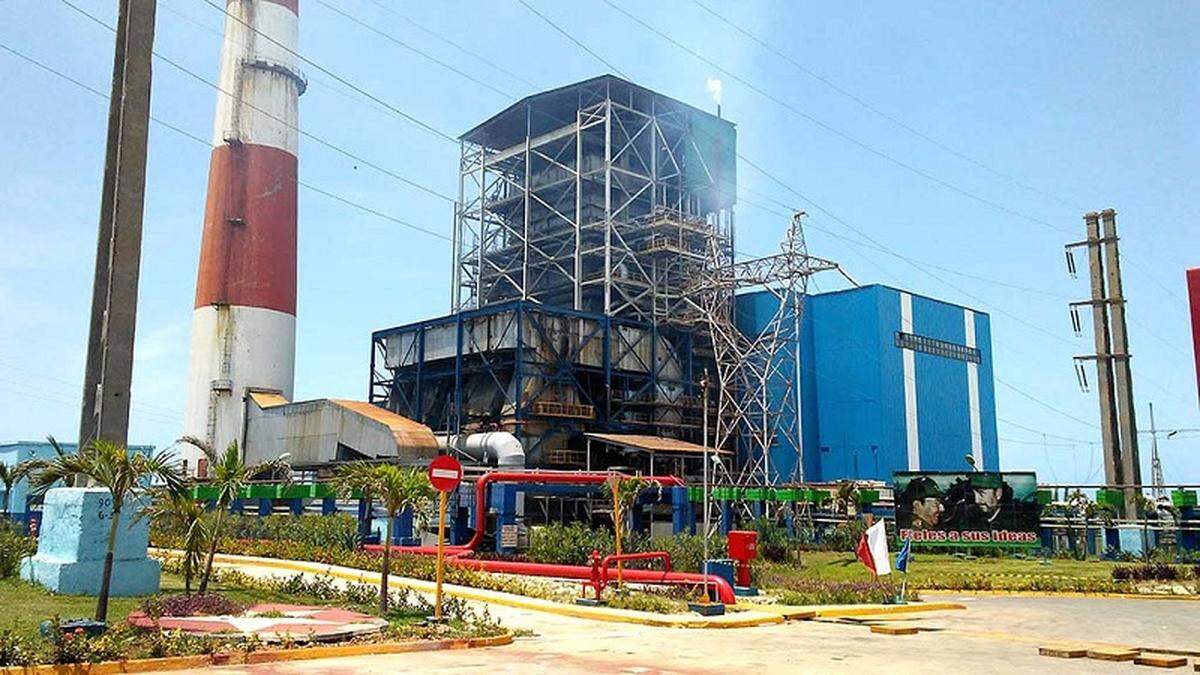
After Hurricane Ian knocked out power to the island in 2022, provoking protests, the energy minister at the time, Arronte Cruz, admitted that lack of maintenance on the island’s eight power plants had reduced their generating capacity. Another official said at the time that electrical transmission lines were “in critical condition” due to lack of maintenance and that many of the island’s backup system of diesel generators were also in disrepair.
Cuba’s dependency on foreign oil has made keeping the lights on more difficult. Venezuela, a close political ally, decreased oil shipments to the island last year to around 23,000 barrels per day, less than half what it shipped the year before, Piñón said. In 2022, Cuba imported more than $300 million in Russian oil, but since then the shipments have been more sporadic. Cuba needs 120,000 barrels of oil per day to meet domestic demand.
Over the weekend, Cuban leader Miguel Díaz-Canel blamed the decades-old U.S. embargo for the island’s inability to buy oil or repair the power stations. But critics question what happened to a $1.3 billion loan the Russian government gave Cuba in 2015 to build four new 200-megawatt power units at two thermoelectric plants.
Frustration grows
On Saturday night, a few videos circulated on social media of Cubans banging pots and pans in protest in different locations in Havana after more than 30 hours without electricity. Frustration is growing as precious, expensive food goes to waste in refrigerators without power.
Cuba’s economy has been in a recession since 2019, and the situation has worsened in the last few years. Food, medicine and other necessities are scarce, and the government is no longer able to maintain essential public services like trash collection or distribute the food it used to give via ration cards.
Independent news outlet 14ymedio published a video of Holguín residents rushing to buy liquefied gas to cook before the hurricane hit. In neighborhoods in Havana like San Miguel del Padrón, residents have been without cooking gas for a week. In Las Tunas, a province in eastern Cuba, the government distributed coal for cooking, and in the capital, in the neighborhood of Centro Habana, some even tried to cook by burning old wood furniture.
In Boca de Jaruco, a small town near Havana Anabel Martínez, 36, said neighbors with portable generators have helped others to at least recharge their cellphones.
Martínez said she has a refrigerator, which has helped keep some food fresh.
“I don’t open it unless it’s absolutely necessary,” she said.
In the town of Regla in the province of Havana, a woman who asked to remain anonymous said, “there is nothing to cook with, nor anything to cook.
“We just have to pray to see if they turn the power back on.”
El Nuevo Herald staff writer Maykel Gonzalez contributed to this report.
This story was originally published October 20, 2024 at 10:55 AM.