
Cuba moves to ‘partially’ dollarize economy as government struggles to make payments
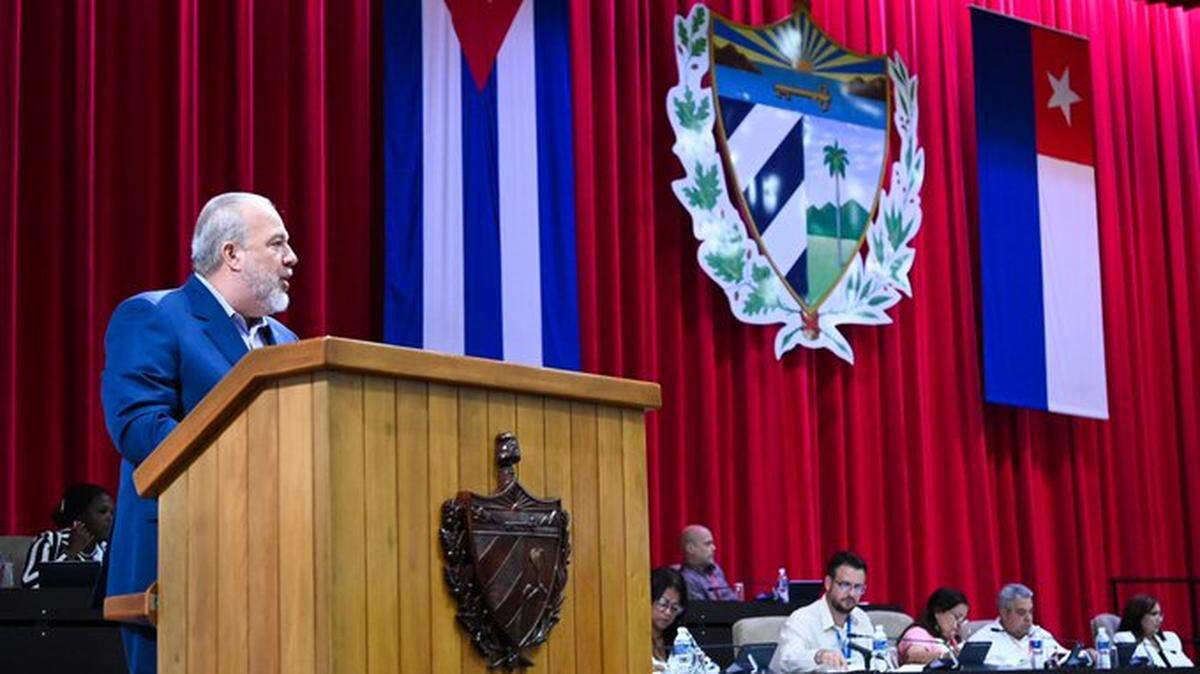
Cuban Prime Minister Manuel Marrero said the government will embrace a “partial” dollarization of the economy as it struggles to buy food, oil, and pay creditors in a scenario he described as a “war economy.”
During a session of the National Assembly on Wednesday, Marrero said the government will start accepting payments in dollars and other foreign currencies at hotels, stores and other venues linked to the island’s tourism industry as a temporary measure.
“It is not the government´s vision to pursue a full dollarization of the economy,” he said.
Currently, tourists must purchase prepaid cards in a local virtual currency, the MLC, to buy goods, gas and services, as the government has pushed to transition from cash to online payments. Cubans often complain about such requirements in a country with a poor technological infrastructure and frequent blackouts, and the country’s prime minister acknowledged that was the case.
“It cannot be that [tourists] want to buy an expensive excursion, and at that moment there is no connectivity and they cannot pay with the card,” he said. “And yet they have cash but we say no and we lose the money.”
For a brief period, the government opened dollar stores in Cuba in 2020, but the dollars had to be deposited to a card linked to a bank account.
Marrero said the authorization to pay foreign currency in cash “in some sectors” was one of several measures the government was taking to stabilize the country’s finances. He announced a new policy requiring state enterprises to use only the local Cuban peso for transactions with some exceptions, including wholesale importers, exporting companies and enterprises in the Mariel Special Development Zone, a special economic zone to attract foreign direct investment.
Crackdown on the private sector
But the prime minister squarely blamed an informal currency exchange market and the private sector for redirecting and taking in most of the foreign currency entering the country. About $2 billion “previously controlled by the state has gone to that market, partly illegal,” he said.
He shared figures showing that the private sector, including small and medium enterprises, self-employed workers and cooperatives imported about $1.3 billion dollars in goods last year. But he said that economic activity has created an “uncontrollable demand” for dollars, driving its price up and depriving the government of foreign currency.
The minister then announced new restrictions on private enterprises, including tighter controls on their bank accounts, price caps on food and goods they sell, higher taxes, and a ban on using foreign banks to pay providers abroad. If enacted, the measures would significantly thwart any further expansion of private enterprises, even threatening their survival.
Some Cuban observers say the crackdown on the private sector makes little sense at a time of significant scarcity, given the gap these businesses are filling as significant importers of food and goods.
“It reeks of desperation,” said Ric Herrero, the executive director of the Cuba Study Group, a Cuban American organization that supports private entrepreneurs in Cuba. “The Cuban government can defy math laws, but a private business can’t. Private businesses will leave the market and there will be nothing left. The government will see the results of these Draconian measures right away.”
A source who has a business in Cuba and asked not to be named said the move seems to be an attempt to fill the government coffers with dollars coming from elsewhere because the government “is bankrupt.”
“They have a lot of internal struggles and are trying to calibrate how to stimulate the economy without giving away power,” the source said.
Limiting car imports
The source said the government is under pressure from state workers, the Communist Party bureaucracy and retired miitary officers who are now watching how others prosper while earning meager salaries and pensions.
That tension was evident during Marrero’s address to the National Assembly when he announced restrictions on the cars imported by private enterprises. Business owners have been buying millions of dollars in vehicles from the United States — and Florida in particular — according to U.S. trade statistics, some of them luxury brands like Mercedes Benz and Tesla.
“The number and types of vehicles that non-state management firms can import will be limited,” he said. “There are some cars that are entering that are not compatible with our society, they are not necessary. And we also have to limit the number, which should be based on the interests of the country.”
Marrero said the government lacked foreign currency to fund its budget fully and was open to foreign investment. “But we will never give up sovereignty. We are not giving the country away.”
He had a message to foreign creditors: “We ask for understanding regarding the delay in payment but we reiterate that we will fulfill our commitments to the last cent. When? When our possibilities and conditions improve.”
This story was originally published July 18, 2024 at 5:47 PM.