
Secretary Mayorkas delivered speech at ‘Cuban Day’ event hosted at the White House
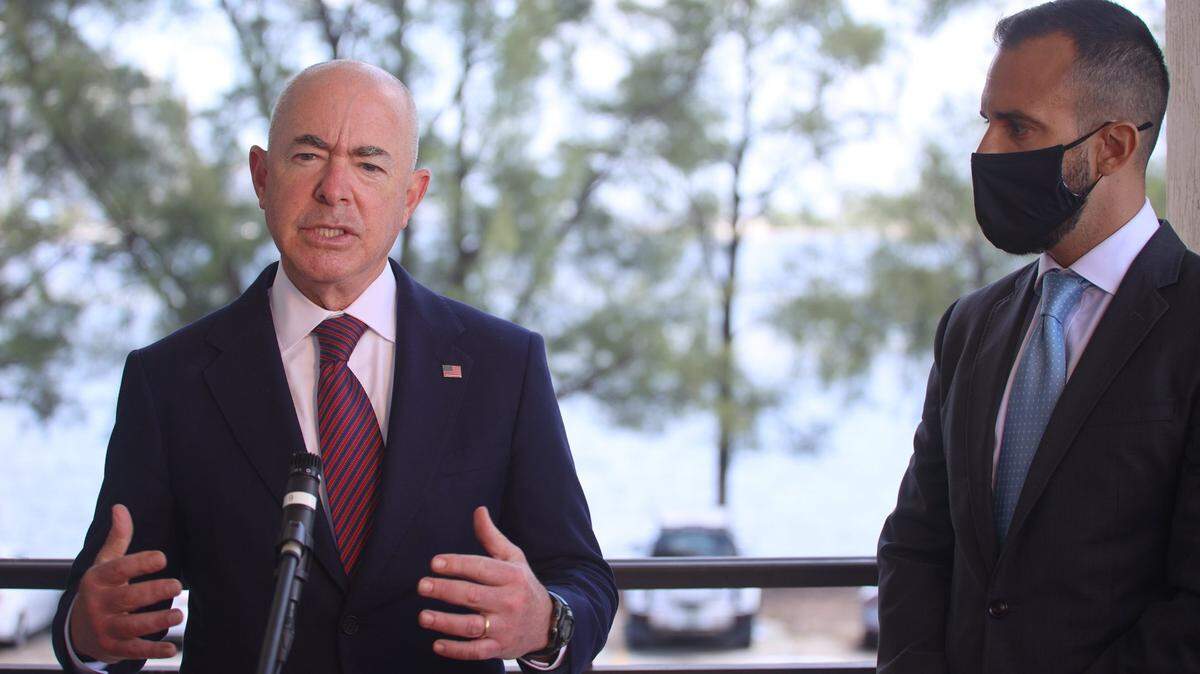
A day after the U.S. Senate dismissed articles of impeachment against him, Homeland Security Secretary Alejandro Mayorkas delivered remarks to Cuban Americans at the White House on Thursday afternoon at an event at which U.S. officials also discussed Cuba policy and migration.
The event, organized by the Office of Public Engagement and advertised as “Cuban Day at the White House,” was meant to “recognize” the contributions of the Cuban-American community to the United States and “highlight the Biden-Harris administration’s commitment to Latino communities,” according to the invitation.
Mayorkas, a Cuban American and the first Hispanic to lead Homeland Security, spoke after a panel on Cuba policy and migration management and another one on the economic accomplishments of the Biden administration. On Wednesday, the Senate swiftly voted to dismiss two articles of impeachment against Mayorkas, killing a House Republican effort to remove him from the Cabinet for his handling of immigration at the U.S-Mexico border.
Navy Secretary Carlos del Toro, who is also Cuban American, delivered remarks ahead of Mayorkas, according to the agenda provided by the White House. José Javier Rodríguez, a former Florida state lawmaker confirmed last month as an assistant secretary of the Department of Labor, almost three years after being nominated, delivered opening remarks.
Renowned Cuban pianist Chucho Valdés performed at the end of the event.
The White House gathering follows the latest bilateral talks about migration between American and Cuban officials in Washington, D.C., on Tuesday. After heightened tensions over recent protests against the island’s government, which Cuba blamed on the U.S., Cuban Vice Foreign Minister Carlos Fernandez de Cossío, who led the Cuban delegation, struck a more conciliatory tone and told CBS News that his government was open to accepting more deportation flights from the United States.
Currently, Cossío said Cuba is receiving one deportation flight per month, but he suggested that number was decided by the U.S. side and that Cuban authorities have previously said they were willing to accept more.
A State Department spokesperson said that Cuban authorities “have accepted a regular schedule of removal flights since the Migration Talks in April 2023. We are pleased to see these flights return to a more regular cadence.”
The official said that in addition to discussing the implementation of the current migration accords between the two countries, U.S. and Cuban officials also met Wednesday in Washington to discuss “topics of bilateral interest on international law enforcement matters.”
“Ensuring safe, orderly, humane, and regular migration between Cuba and the United States remains a primary interest of the United States, consistent with our interest in fostering family reunification, and promoting greater respect for human rights and fundamental freedoms in Cuba,” the spokesperson said. “Increased law enforcement cooperation enables the United States to better protect the American people and national security and to facilitate bringing criminals to justice.”
Cuban officials also asked for relief from U.S. economic sanctions, according to a statement by the Cuban Foreign Ministry. The government is nearly bankrupt. It was recently unable to pay for shipments of oil and food that were aboard ships already in Cuban waters, officials revealed on state television. The Cuban government blames the U.S. embargo for the situation, but for years has been unable to reform its socialist economy, which is centrally planned and bogged down by bureaucratic restrictions and mismanagement.
Still, the White House event was not expected to deliver news on Cuba policy. An effort by the Biden administration to issue new regulations to support the emerging private sector on the island has stalled after Florida Republican Rep. Mario Díaz-Balart objected, hinting that aid to Ukraine may be in jeopardy if the administration moves forward.
Díaz-Balart, a Cuban American who sits on the House subcommittee on appropriations that decides over the State Department budget, is a staunch supporter of sanctions against the Cuban government. He recently included a provision in the 2024 federal budget prohibiting using funds destined for democracy promotion in Cuba for activities in support of the private sector.
The Herald has learned that the administration is not using such funds for activities to promote an entrepreneurial class in Cuba, raising questions about how effective the budget provision would be in blocking the Biden administration’s efforts.
Cuba has also rejected calls to release hundreds of political prisoners, a stumbling block in the diplomatic relationship with the United States.
This story was originally published April 18, 2024 at 11:11 AM.