
Rubio questions missed red flags on Cuban-agent case in letter to State Department
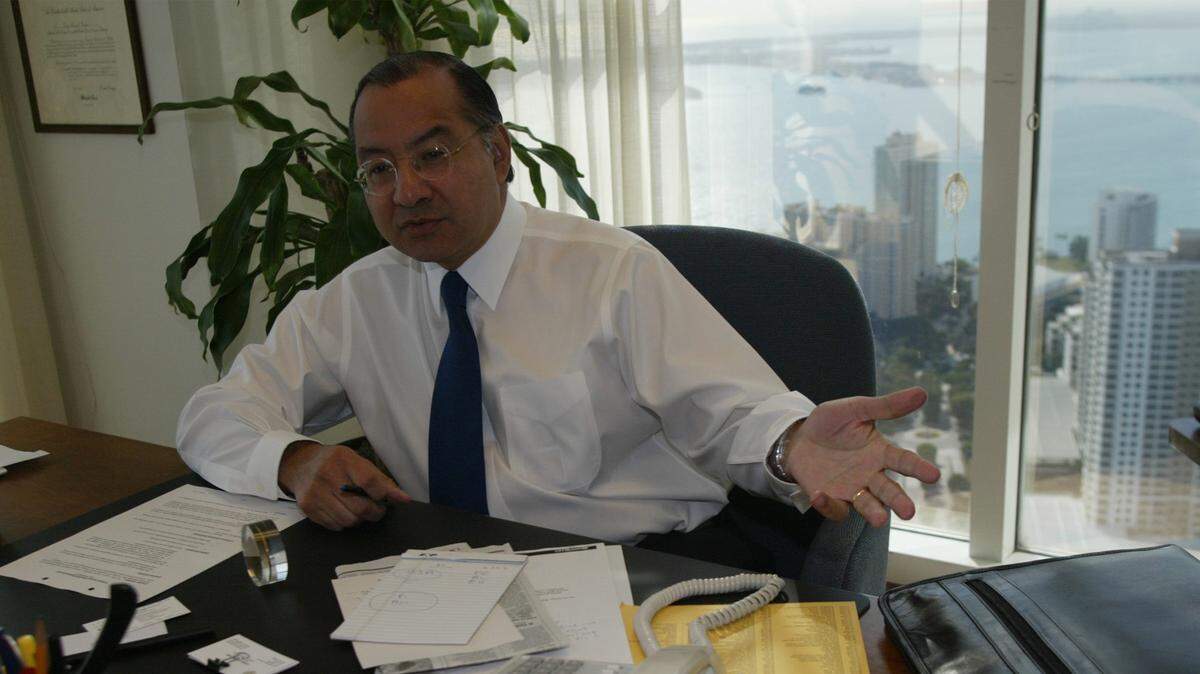
Florida Republican Sen. Marco Rubio sent a letter Monday to Secretary of State Antony Blinken seeking answers on why U.S. government agencies failed to share critical information that might have helped uncover sooner that Victor Manuel Rocha, the former U.S. ambassador, was a covert agent for Cuba.
Rocha, who pleaded guilty in federal court, was not charged with actual espionage, which would have required concrete evidence of his contacts with Havana, but he was sentenced to 15 years by a federal judge in Miami for acting as an unregistered foreign agent of Cuba
Rocha, 73, held several high-ranking positions at the State Department, the White House’s National Security Council and was an advisor to the commander of the U.S. Southern Command between 2006 and 2012 after he left the foreign service in 2002. All of these were positions in which he could have influenced foreign policy toward Cuba and have access to classified information. The FBI believes Rocha was recruited by Cuban intelligence services in 1973 while he was in Chile.
But for over 40 years, Rocha went undetected while he helped Cuba.
In a letter seeking an update on the ongoing “damage assessment” of Rocha’s actions as “a Cuban spy,” Rubio, who is vice chair of the Senate Intelligence Committee, wants to know about the “counterintelligence gaps” that allowed Rocha to stay undercover as well as any security measures put in place to prevent “further infiltrations” at the State Department.
“What is most shocking about the Rocha case is the apparent myriad of red flags indicating that the State Department and other federal agencies ignored Rocha’s Cuban ties,” Rubio said in the letter. “What explains the failure of interagency processes to share critical information about Rocha possessed by the CIA and FBI with the State Department?”
According to Rubio’s letter, federal officials had been alerted to Rocha’s possible ties to Cuba but still allowed him access to sensitive national security information. In particular, the CIA received a tip from Cuban Army lieutenant colonel who defected to the U.S. and who identified Rocha as a spy in 2006. Rocha would have been included on an FBI shortlist of possible Cuban spies in 2010, Rubio wrote.
The senator also said that other events in Rocha’s background and foreign-service career, including his travel to Chile, the authorship of a memo advocating for the dismantling of U.S. sanctions on Cuba while he was at the NSC and his attempt to purchase outstanding property claims against the Cuban government, should have raised some flags.
Shortly after Rocha was arrested in December, the Miami Herald reported on Rocha’s involvement in 2007 in an attempt to buy claims to property confiscated in Cuba by Fidel Castro’s government. Rubio also asked Blinken if the State Department or any other U.S. agency had investigated this effort.
“At a minimum, these details indicate a systemic failure of the State Department’s counterintelligence mitigations that urgently need to be addressed,” Rubio said.
In a statement read in court Friday in Miami, Rocha took “full responsibility” for the damage he had done and said he will “continue to make, as required, significant amends through my unconditional collaboration to those I have betrayed.”
This story was originally published April 15, 2024 at 5:24 PM.