
Senate committee seeks answers from spy agencies after bombshell Havana Syndrome report
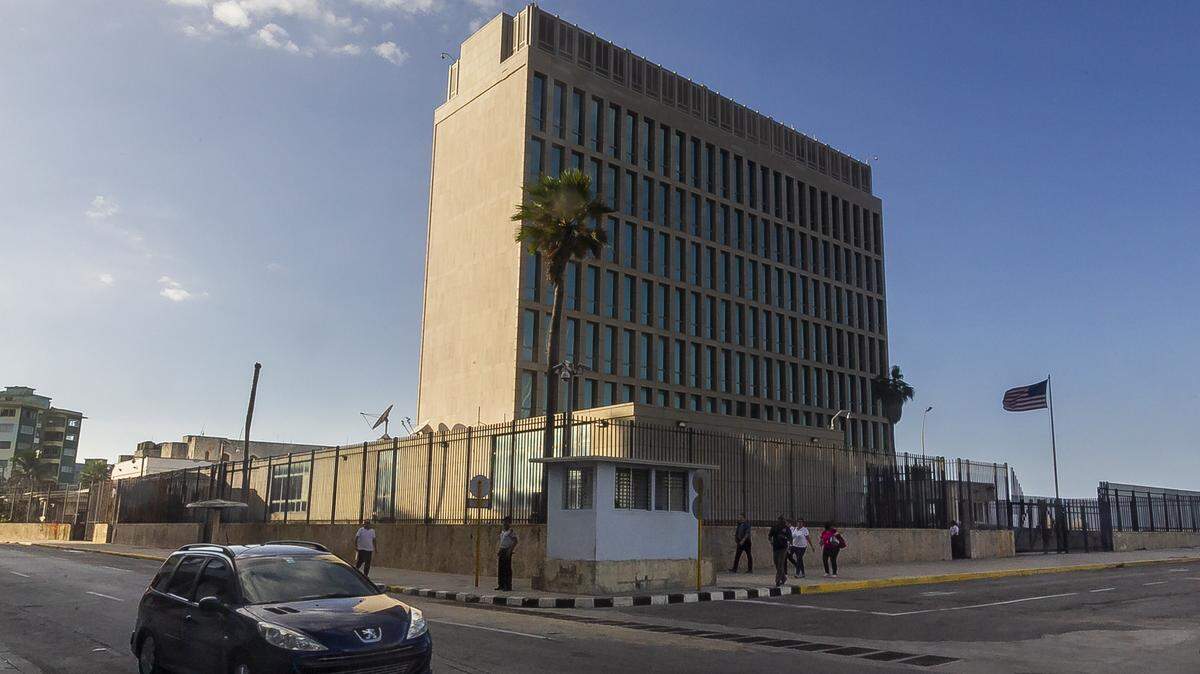
The Senate Select Intelligence Committee is asking U.S. intelligence agencies about the information reported by three media outlets over the weekend about Havana Syndrome pointing to possible Russian involvement, including cellphone data placing Russian military intelligence operatives near some of the incidents.
“The Committee has made requests for more information based on the reporting from the Office of the Director of National Intelligence, the CIA, the Defense Intelligence Agency and the FBI,” a spokeswoman for Florida Republican Sen. Marco Rubio, the committee vice-chairman, said.
“We continue to look into the anomalous health incidents and the intelligence community’s response to these events,” she added.
In a bombshell investigation, the CBS show 60 Minutes, the Russian exile outlet The Insider and German magazine Der Spiegel identified a top-secret Russian military intelligence unit known as 29155 working with non-lethal acoustic weapons as the possible culprit of some of the suspected attacks against U.S. intelligence officials and diplomats causing the Havana Syndrome.
The victims affected have reported experiencing strange noises and sensations of pressure coming from a specific direction and later developed debilitating symptoms like vertigo, migraines and hearing and cognitive problems. Many have been diagnosed with traumatic brain injuries.
The Senate committee had been hearing testimony from Havana Syndrome victims, and the House Intelligence Committee decided to open a formal inquiry into how U.S. intelligence agencies handled their investigation of these incidents.
In an interview with 60 Minutes, Greg Edgreen, who ran the investigation into Havana Syndrome for the Defense Intelligence Agency from 2021-23, said he believed Russia was behind the injuries and was attacking the United States abroad and at home. He said the U.S. government has hesitated to formally attribute the attacks out of concerns of escalating confrontations with Russia.
The CBS investigation show also reported on incidents that have injured FBI agents on U.S. soil.
The Insider also ran a long investigative story piecing together data from cellphones, air travel data, and witness testimonies to place the unit operatives at the same time and place where some of the incidents happened in Europe.
But the data might have already been known to U.S. spy agencies, specifically to the CIA.
Two U.S. media outlets, GQ magazine and NBC, reported in 2020 that the CIA had used cellphone location data to place Russian intelligence agents in the same cities and at the same time that CIA officers were injured.
According to the GQ report, “the CIA investigators were able to deduce the whereabouts of Russian agents, and place them in close physical proximity to the CIA officers at the time they had been attacked when they were in Poland, Georgia, Australia, and Taiwan.”
“In two of the incidents, location data apparently showed FSB agents in the same hotel at the same time their targets experienced the onset of symptoms,” the report added.
However, both outlets reported, citing unnamed intelligence officials, that the CIA’s director at the time, Gina Haspel, was not moved by the evidence, which was considered inconclusive.
The CIA referred questions about the location data to the Office of the Director of National Intelligence. The Herald sent an email to that agency with questions late Tuesday.
The White House, the Pentagon and the State Department all said Monday they stood by a March 2023 intelligence assessment concluding that it was “very unlikely” that a foreign adversary was responsible for Havana Syndrome.
This story was originally published April 2, 2024 at 7:09 PM.