
Russia is behind Havana Syndrome, attacks on U.S., former lead Pentagon investigator says
The former head of the Pentagon’s investigation into the mysterious health incidents known as Havana Syndrome told the CBS investigation show “60 Minutes” he believes Russia was behind them and was attacking U.S. officials abroad and at home.
In partnership with The Insider, a Russian exile media outlet, and German magazine Der Spiegel, 60 Minutes reported Sunday night on new evidence connecting a possible domestic incident of Havana Syndrome to Russia and identified a Russian military intelligence unit, identified as 29155, as the possible culprit of some of the suspected attacks, the latest turn in a case that has confounded U.S. spy agencies.
Havana Syndrome got its name from the city where U.S. and Canadian diplomats and intelligence officials first reported in 2016 experiencing strange noises and sensations of pressure, and later developed debilitating symptoms like vertigo, migraines and hearing and cognitive problems. The incidents were later reported around the world, which led to suspicions that a foreign adversary, possibly Russia, was attacking U.S. diplomats and spies with some type of directed energy weapon.
As the Herald previously reported, 60 Minutes also said that a 2014 incident in Frankfurt affecting American officials might be an earlier instance of Havana Syndrome.
Though U.S. intelligence officials initially suspected Russia’s military intelligence, known by the initials GRU, U.S. intelligence agencies said in March that they hadn’t found hard evidence pointing to those responsible and that it was unlikely that a foreign adversary has been attacking American officers around the world.
But the incidents have not stopped.
According to 60 Minutes, a previously unreported “anomalous health incident” — the government term for the Havana Syndrome — at the NATO summit in Lithuania last year attended by President Joe Biden left a senior Pentagon official seeking medical care.
Greg Edgreen, who ran the investigation into Havana Syndrome for the Defense Intelligence Agency from 2021-23, said that as a result of the incidents, U.S. officers abroad have been “neutralized.”
When asked by the show’s host, journalist Scott Pelley, if he thought the United States is being attacked, he answered, “My personal opinion, yes.” “By whom?” Pelley asked.
“By Russia,” Edgreen said.
Edgreen warned that there are “no barriers on what Moscow will do,” but he said that in both the Trump and Biden administrations, the bar to attribute these incidents to Russia was too high “because we did not, as a country, and a government, want to face some very hard truths,” in particular what to do after such a conclusion.
Another suspected attack that happened in Florida also points to a Russian link, 60 Minutes reported.
An active unnamed FBI agent told the show she experienced one of these incidents in Florida in 2021 and a year later in California.
According to 60 Minutes the agent, identified on the show only as Carrie, had been investigating a suspected Russian spy who had come to the United States as a chef, Vitalii Kovalev. He was arrested for speeding at 110 mph in the Florida Keys in June 2020. A video of the arrest obtained by CBS shows that the police found notes about several bank accounts, his Russian passport, and a device that can erase the car’s computer, including its GPS record.
The two incidents severely affecting the FBI agent’s health happened when Kovalev was in prison.
The chef turned out to be a Russian military electrical engineer with a top security clearance, Christo Grozev, a journalist with The Insider found. Previously, as the top investigative journalist for Bellingcat, the open-source investigation outlet, Grozev uncovered the identities of the Russian operatives who attempted to poison the former Russian spy Sergei Skripal and the late Russian opposition leader Alexei Navalny.
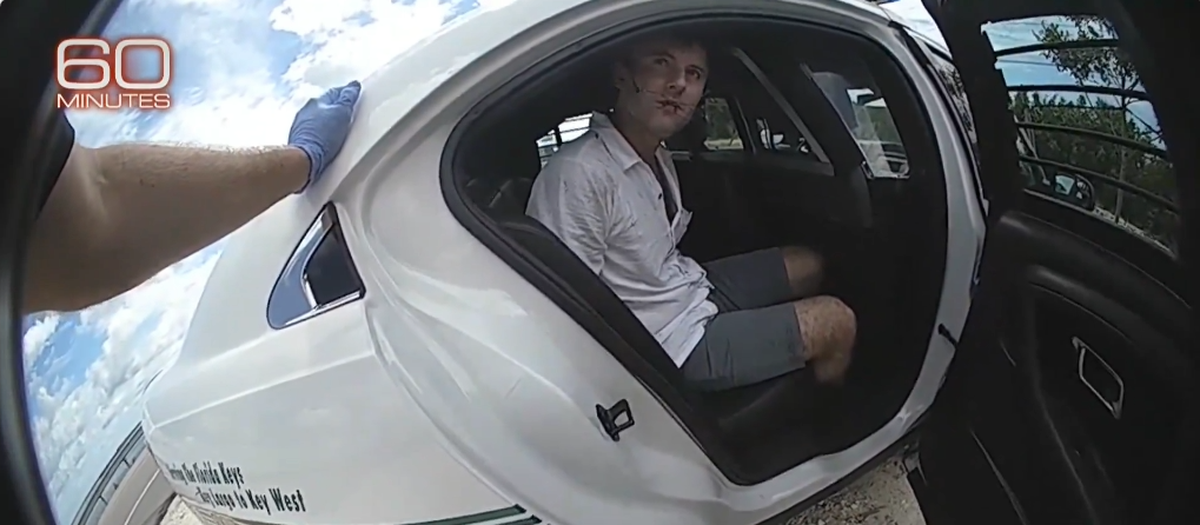
Kovalev traveled back to Russia after serving a 30-month sentence in the U.S. for evading police and reckless driving, and is believed to have died fighting in Ukraine.
Grozev also found a piece of accounting linking the top secret GRU unit 29155 to the use of non-lethal acoustic weapons and more evidence placing members of the unit in Tbilisi, Georgia, when Americans reported incidents there in 2021.
U.S. intelligence agencies previously said Havana Syndrome could be explained away by environmental factors, previous conditions or stress. But the CIA and other federal agencies are also paying compensation to those officers injured around the world after government doctors certified that they did suffer brain injuries that have no known explanation.
The Defense Department is still investigating the “anomalous health incidents,” which they treat as “counterintelligence incidents,” and its doctors have developed protocols to treat Havana Syndrome victims. After gathering testimonies from the victims, the House Intelligence Committee has also launched a formal investigation into how U.S. intelligence agencies handled the Havana Syndrome Investigation.
Mark Zaid, a lawyer for a dozen Havana Syndrome victims, told 60 Minutes that there is evidence of a government “cover-up.”
Sources told the Herald that many of the officers injured were involved in work related to Russia or were stationed in places where Russian spies could work with ease, like Cuba, China, Vietnam and most of Europe. Some incidents in Hanoi, Bogota, London and India happened ahead of or during the visits by senior U.S. officials.
Cuba, a close Russian military partner, has denied it has any involvement in these incidents and Cuban diplomats and scientists have insisted that injuries are psychosomatic, a case of mass hysteria or can be explained by pre-existing conditions.
After the Miami Herald reported on the cases of CIA agents receiving compensation for brain injuries linked to Havana Syndrome cases, Cuba’s Vice Foreign Affairs Minister wrote on X: “Without any shame, pundits & main media outlets continue to recycle the fabulous legend of “attacks” against US diplomats. No evidence has surfaced, the scientific community has descarted it (sic), yet there is money to be made & political slander against #Cuba to be pushed.”
This story was originally published March 31, 2024 at 9:58 PM.