
Elián González, elected to office in Cuba, says he wants to help improve relations with U.S.
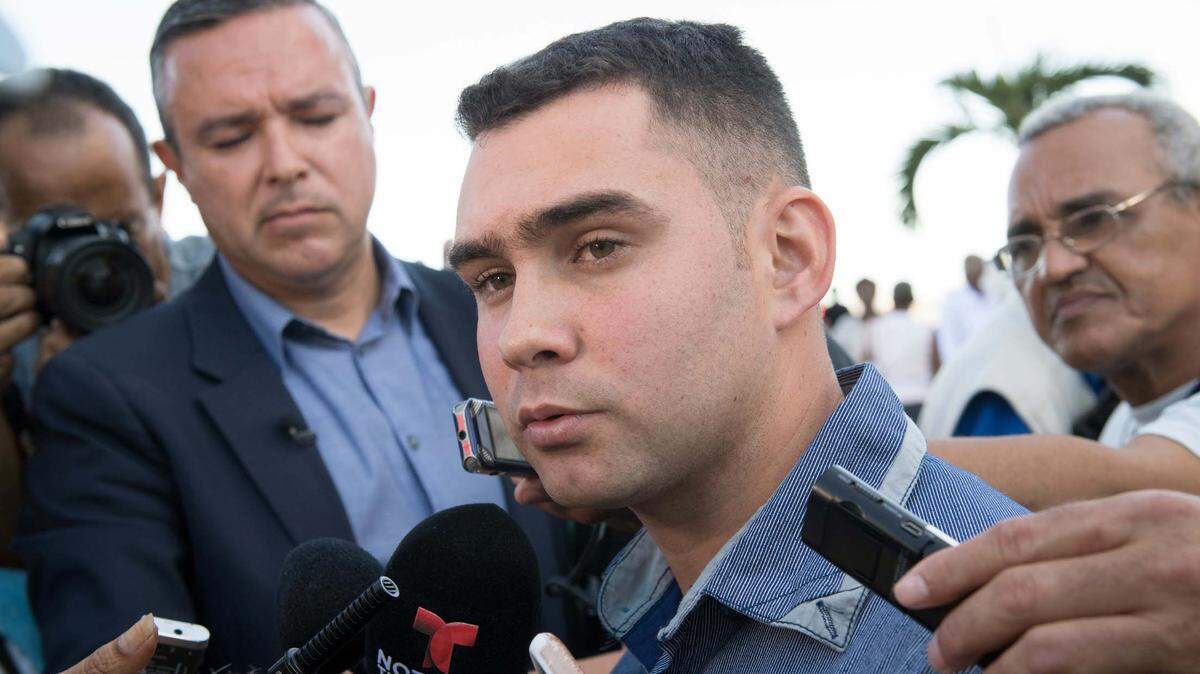
More than two decades after he was returned to Cuba from the United States following a diplomatic crisis and a custody battle between his father and his Miami relatives, Elián González says his election on Sunday to Cuba’s National Assembly puts him in a position to help improve the strained relationship between the two countries.
“I think I could be someone the American people recognize, and I can help bring the American and Cuban people together. and not just the people, but also that our governments reach an understanding and remove all the barriers between us. Our country doesn’t have any sanctions on the United States,” he told CNN in an interview after he voted Sunday in his Matanzas hometown of Cárdenas, the city he will represent in Cuba’s version of a parliament.
González, 29, who arrived in South Florida at age 5 clinging to an inner tube in November 1999, is well known in Cuba and around the world. His mother drowned while attempting the perilous sea journey fleeing the island’s communist regime. A highly public custody battle between his Miami relatives and his father in Cuba, Juan Miguel González, ensued. The dispute quickly turned into a bitter political confrontation between Fidel Castro and the Cuban exile community, ending with a dramatic raid by federal agents of the Little Havana home where the boy was staying and his return to the island.
Cuban exiles feared González would be indoctrinated if sent back to Cuba and used as a poster child of the revolution.
Over the years, he attended public events close to Fidel and Raúl Castro, and in his public statements and social media accounts he frequently talks about them and his support for the island’s regime. Fidel Castro attended some of his birthday parties and school graduation ceremonies.
González received a military education and graduated as an industrial engineer, and is now working at a company in the beach town of Varadero that belongs to GAESA, a conglomerate run by the Cuban military that is under U.S. sanctions.
In a video produced by Cuban state media to mark the 20th anniversary of what became known in Cuba as “the Battle for Elián,” González said the “Cuban people’s fight was not in vain. ... I am here to serve the people, the Comandante and the Revolution.”
As a new member of the National Assembly, González talked about the fact that about a quarter of the voters in Cuba failed to come out for Sunday’s elections in an interview with local TV station Yumuri. He blamed it on U.S. sanctions he said were designed to create discontent in the population. He also said he would fight to “change whatever we need to change. We will face all challenges and cry in the assembly when things go wrong.”
But while parroting the usual talking points from the Cuban government, he also gave interviewers more candid responses.
Speaking of how being a father of a 2-year-old girl has changed him, he told CNN that the experience has made him better understand what his father did to get him back, but also “how all the Cubans who are separated from their families feel and fathers who aren’t able to give all the attention and things their children want.”
Family separation has become a visible problem on the island as migration to the United States and other countries has spiked in recent years.
He also said the country should welcome exiles back regardless of ideologies or parties, a far cry from government propaganda calling Miami Cuban exiles “terrorists” and “haters.”
“What we want is to reach a day when they are no longer exiles, that they come home,” González said. “That all the young people that we don´t have today feel that as long as they are willing to work for Cuba, for the well-being of all Cubans, beyond a party, beyond ideology, to work for the people of Cuba, to work for a common well-being, our doors are open to all to build a better country, which is what we need.”
This story was originally published March 29, 2023 at 10:53 AM.