
U.S. officials urge Cuban authorities to release political prisoners in visit to Havana
Two high-ranking Biden administration officials asked Cuban authorities to release political prisoners during a meeting this week in Havana to discuss migration issues, including the resumption of visa services at the U.S. Embassy in the Cuban capital.
According to a statement put out by the embassy on Thursday, the State Department Assistant Secretary for Consular Affairs Rena Bitter “expressed concern to Cuban officials about the human rights situation and urged the government to unconditionally release all political prisoners.”
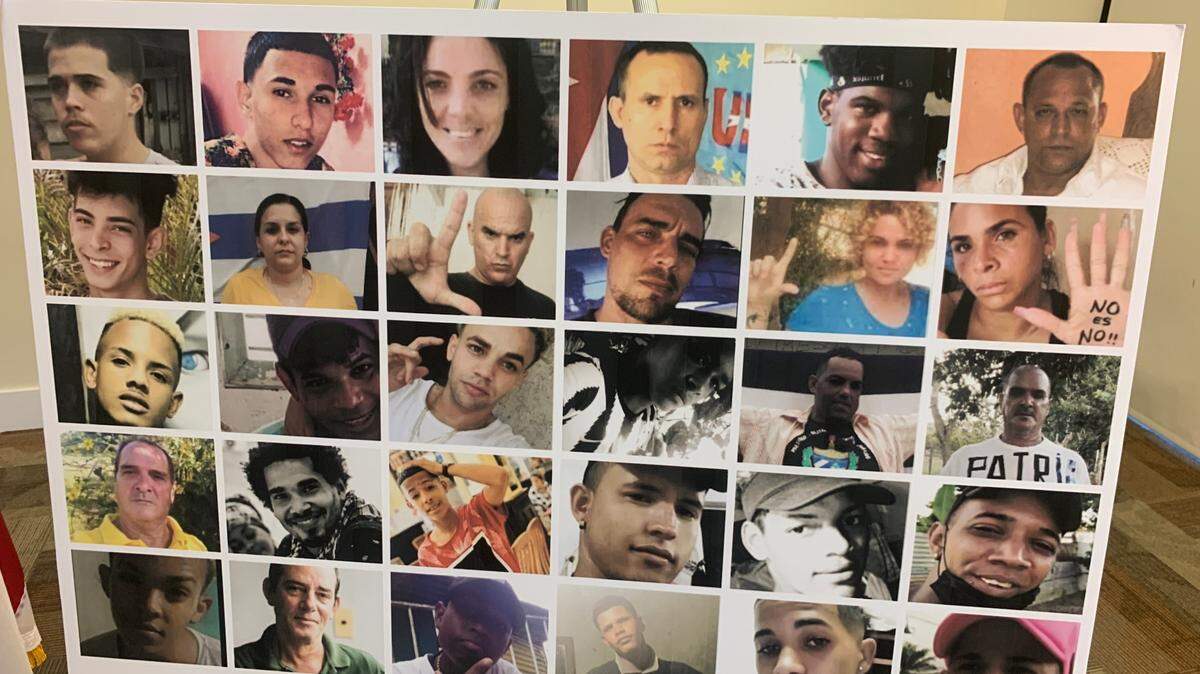
At the end of September, Prisoners Defenders, an advocacy organization based in Madrid, listed 1,026 political prisoners and prisoners of conscience in Cuba, including many participants in the anti-government protests in July last year. That number has likely grown as Cuban authorities imprisoned protesters during demonstrations following the devastation left by Hurricane Ian in western Cuba.
Bitter and U.S. Citizenship and Immigration Services Director Ur Mendoza Jaddou traveled to Havana with a delegation to discuss the resumption of the Cuban Family Reunification Parole, which restarted in August. The program offers an expedited route to family reunification, which otherwise could take several years.
The officials also told their Cuban counterparts that the embassy would resume processing all immigration visa applications on Jan. 4, the statement said. That includes immediate relative, family preference, diversity visa, and K fiancé(e) visa categories, the State Department said on Thursday in an update published on its website.
In a tweet, Bitter said the restart of the visa services and the family reunification program “will help facilitate safe and legitimate travel to the United States.”
An unparalleled migration exodus of more than 200,000 Cubans coming to the United States in fiscal year 2022 has set in motion a number of exchanges between the two governments, despite their political differences and frequent sparring over the human rights situation on the island.
The number of Cubans coming to the U.S. southern border notably increased after Nicaragua, a close Cuba ally, lifted visa requirements for Cuban nationals in November last year. The deterioration of the economy and increased government repression have been cited as key factors to leaving the island by recent Cuban arrivals interviewed by the Herald.
The Cuban government has blamed U.S. policies for the exodus, stating that the Cuban Adjustment Act, a 1966 law that helps many Cuban migrants become legal U.S. residents, is a factor. They also criticized the shutdown of consular services in Havana in late 2017 after the State Department evacuated the staff following unexplained incidents that injured several U.S. officers working at the embassy. Since then, Cubans wanting to immigrate to the United States have had to pay for an expensive trip to Guyana to obtain visas at the American Embassy there.
Bitter and Jaddou were joined by other State Department officials handling Cuban affairs, including Benjamin Ziff, the chief of mission for the U.S. Embassy in Havana, according to a photo of the meeting’s participants published by the Cuban Foreign Ministry.
Foreign affairs vice minister Carlos Fernández de Cossío headed the Cuban delegation, which included Ernesto Soberón, the consular affairs director, and other officials.
According to the statement released by the foreign ministry, Cossío “reiterated the importance of fully resuming immigration and consular services at the U.S. Embassy in Havana, including the processing of non-immigrant visas.”
The U.S. Embassy said Bitter’s visit focused on the expansion of consular services in Havana but did not mention if there are plans to restart issuing visas for those wanting to visit the United States, nor reopening the in-country refugee program, also shut down during the Trump administration.
The State Department declined to say if the U.S. officials inquired about a recent incident involving a Cuban Coast guard vessel and a speedboat with Cubans heading to Florida that left seven dead, including a two-year-old.
This story was originally published November 10, 2022 at 4:27 PM.