
The Biden administration excludes Cuba from the Summit of the Americas
The Biden administration finally confirmed it did not invite the authoritarian governments of Cuba, Venezuela and Nicaragua to participate at the Ninth Summit of the Americas that starts Monday in Los Angeles over concerns about human rights in those countries.
“The U.S. continues to maintain reservations regarding the lack of democratic space and the human rights situations in Cuba, Nicaragua and Venezuela,” a senior administration official said. “As a result, Cuba, Nicaragua and Venezuela will not be invited to participate in this Summit.”
As the host of the Summit, the U.S. had wide discretion over the invites. But the administration engaged “in broad and candid” discussions over the guest list with other countries because it values “the diversity of views of our regional neighbors,” the official said.
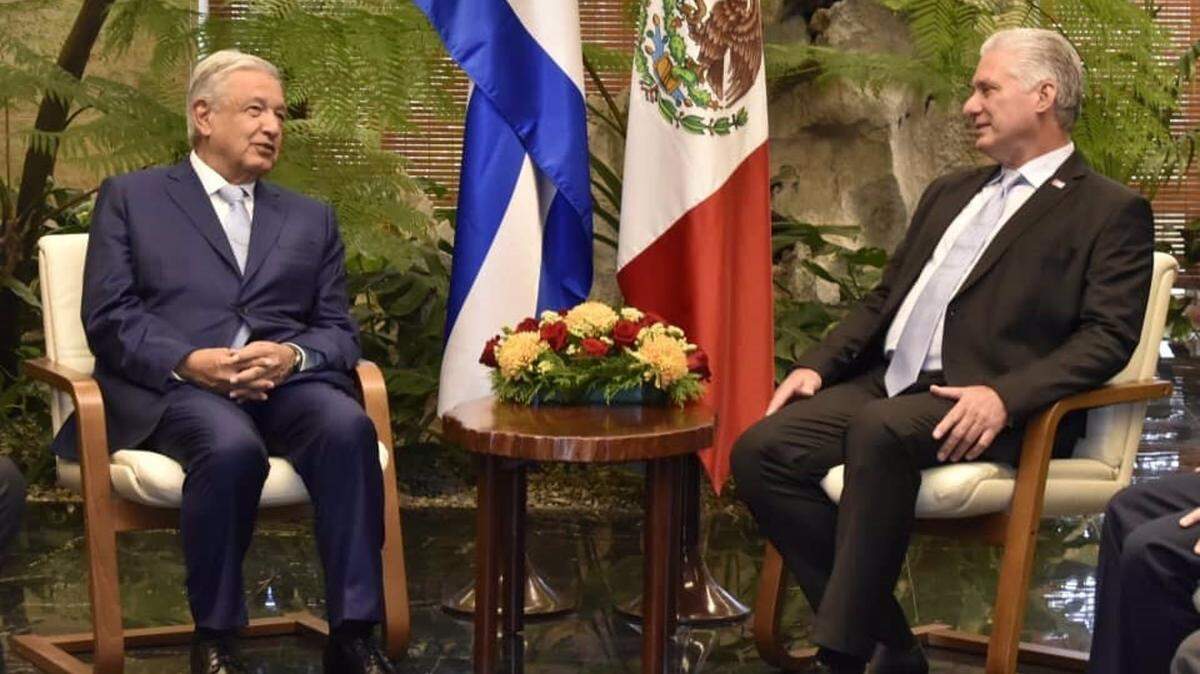
The announcement ends a diplomatic spat with Mexican President Andrés Manuel López Obrador, who said he would skip the event if Cuba was not invited. He confirmed Monday morning he was not attending “because all countries were not invited.”
During his daily press conference, the Mexican president spent several minutes blasting the administration for excluding Cuba and echoing the Cuban government’s anti-imperialist rhetoric.
He accused the United States of wanting “to dominate” and “exclude” countries in the region “with no reason.”
“We consider that a continuation of the old policy of interventionism, lack of respect for nations and their peoples,” he said.
He said that “Biden was a good man” but that he was under pressure from Republicans, New Jersey Senator Bob Menendez and Cuban Americans in Florida. He also said he was planning to meet President Biden in July.
In a statement Monday, the Cuban government predicted the Summit would fail to address the region’s most pressing issues and accused the Biden administration of using “blackmail, threats and dirty tricks” to get governments to attend the event.
López Obrador, who has grown closer to Cuba’s leader Miguel Diaz-Canel, received “a special acknowledgment” in the statement published in the daily newspaper Granma.
Previously, administration officials ruled out an invitation to Nicaragua’s Daniel Ortega and Venezuela’s Nicolás Maduro. Ortega said he was not interested in attending, and Maduro was unlikely to travel to the United States, where he would face charges of narcotrafficking.
Cuba’s leader Miguel Díaz-Canel also said that he would not participate in the Summit. Biden administration officials floated the idea of inviting a low-level official from the foreign affairs ministry, which is now off the table.
The senior official said members of the civil society from Cuba, Venezuela, and Nicaragua would participate in parallel forums this week.
But few would travel from Cuba, where the government had prevented activists from flying to the United States to attend the events.
Mexico’s insistence on getting Cuba invited also encouraged other countries to boycott the gathering.
In addition to López Obrador, presidents of Honduras, Xiomara Castro, and Bolivia, Luis Arce, are not expected to attend, but a majority of nations in the Western Hemisphere will.
The Mexican foreign affairs minister, Marcelo Ebrard, will participate in place of López Obrador and U.S. officials have said cooperation on migration, one of the Summit’s priorities, will not be affected.
Caribbean countries also demanded that Juan Guaidó, the opposition leader recognized as interim president of Venezuela by the United States, would not be invited. But he is likely to have a video call with Biden on the sides of the Summit, sources told the Herald.
The Summits, which began in 1994 in Miami, are the only regional gathering of heads of state from the U.S., Canada, Latin America and the Caribbean, taking place every three or four years.
In Los Angeles, participating nations are expected to agree on a migration declaration and a plan to strengthen the health systems across the region.
This story was originally published June 6, 2022 at 8:34 AM.