Biden’s Summit of the Americas looks like it will be a huge missed opportunity | Opinion
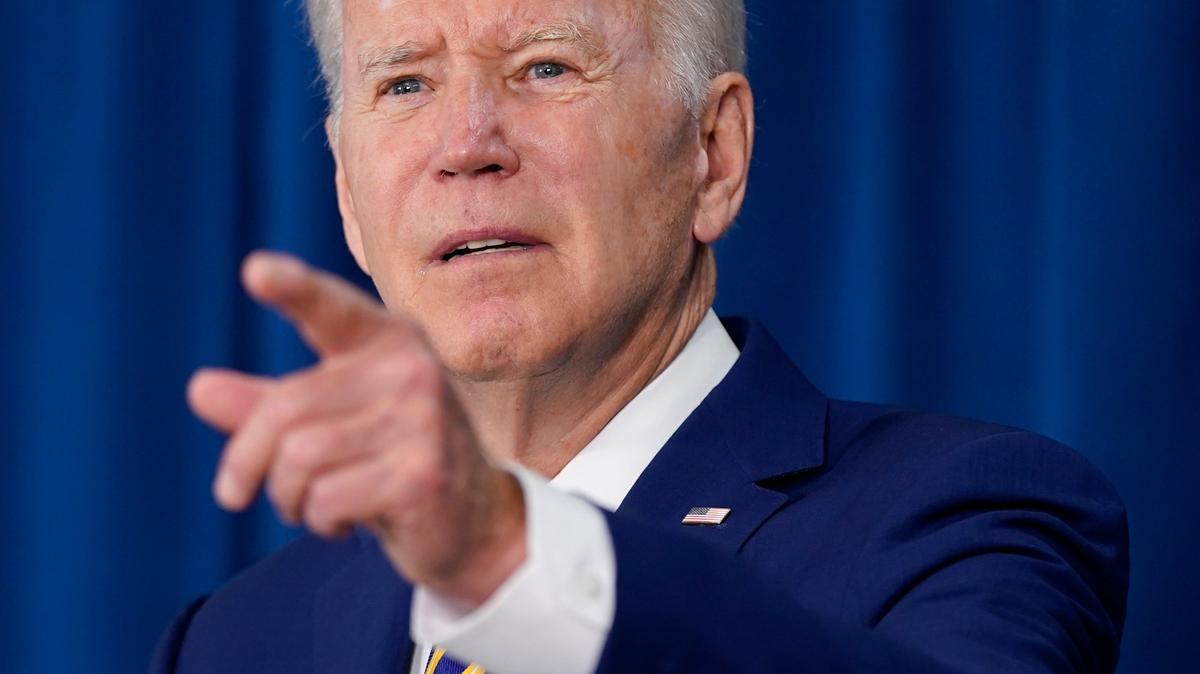
After having covered virtually all Summits of the Americas since the first such meeting of hemispheric heads of state in Miami in 1994, I can say pretty confidently that the one scheduled for this week in Los Angeles will be one of the most poorly organized and least ambitious ever.
To be fair, President Biden, who is hosting the June 6-10 summit, has had more urgent priorities recently. He has successfully assembled the world’s biggest pro-democracy alliance since World War II to confront Russia’s invasion of Ukraine, and he deserves full credit for it.
And, granted, Biden’s Republican critics have no moral authority to criticize the president for his lack of attention to Latin America. U.S. neglect for the region was even worse under former President Trump, who routinely cast Latino migrants as criminals, and was the only U.S. president to skip a Summit of the Americas.
But, having said that, the Biden administration deserves criticism for failing to set an ambitious agenda for this meeting, which offers a rare opportunity to improve U.S-Latin American ties. This summit takes place only every three or four years, and is the only regional meeting of leaders of the United States and Canada.
During the first of these summits in 1994, the Clinton administration and Latin American countries agreed to create a Free Trade Area of the Americas, which was supposed to span from Alaska to Patagonia. The plan was rejected by South American countries years later, and the United States turned its attention to its Asian trade partners.
Subsequent summits produced some tangible results, such as the 2001 Inter-American Democratic Charter that allows for diplomatic sanctions on countries that break democratic rule.
But there are no known ambitious plans for this summit. And three days before the start of the meeting, it wasn’t even clear which heads of state will attend.
Much of the blame lies with Mexico’s populist president, Andres Manuel Lopez Obrador, who effectively torpedoed the summit weeks in advance by stating he would not attend unless Biden invited Cuba, Nicaragua and Venezuela. The Biden administration rightly decided not to invite any of these countries’ rulers.
There was also a demand by Mexico and other countries not to invite Venezuela’s opposition leader, Juan Guaidó, who the United States and many other countries recognize as Venezuela’s interim leader. Most likely, Guaidó will have a video call with Biden during the summit, sources familiar with the summit negotiations say.
But the Biden administration deserves criticism for having allowed Lopez Obrador to hijack the summit’s agenda, and turn the attendance of the Cuban, Venezuelan and Nicaraguan dictators into the central theme of the meeting. That couldn’t have happened if there was a bold U.S. economic proposal on the agenda that would have drawn most countries’ interest.
The White House has been obsessed with bringing Lopez Obrador to the table, because its main priority at the summit will be signing a migration document that will help stem the flow of undocumented migrants to the U.S. border before November’s mid-term elections in the U.S.
That helps explain why the Biden administration has gone out of its way to please the Mexican president, and has relaxed some U.S. sanctions on Cuba and Venezuela in recent weeks, Latin American officials say.
But Biden’s special adviser for the summit, Debbie Mucarsel-Powell, the former Miami congresswoman, told me that the summit is likely to produce several meaningful agreements.
They will include a migration deal to help countries cope humanely with the influx of millions of refugees from Venezuela and other countries, with the help of resources from the World Bank and regional financial institutions, she said.
There will probably also be a joint statement on health security to better combat COVID-19 and future pandemics, climate, energy and possibly trade proposals to modernize existing free trade accords. “The economic agenda is pretty significant,” Mucarsel-Powell told me.
But Mucarsel-Powell acknowledged that there won’t be a final summit declaration, as in many past hemispheric meetings, but, rather, separate documents on specific issues.
“This summit will be a launching pad for a two-year implementation period,” she told me. “If we can implement the documents that will be agreed on, this will be the most successful summit that we’ve had to date.”
Still, I fear that — barring last minute surprises — the meeting will be a huge missed opportunity, both for the United States and for Latin America.
Latin America is in a severe economic slump, with growing poverty rates and declining investments. The region could be in an ideal position to benefit from the growing regionalization of world trade, and the increased trend toward trading with friendly countries that economists call “friendshoring.”
The Summit of the Americas could be an ideal setting for launching an ambitious inter-American plan to shift some U.S. factories from China to Latin America. That would bring about massive investments to Latin America, and would help the United States solve its supply chain disruptions caused by the COVID-19 pandemic and the war in Ukraine.
In addition, both Latin America and the United States could benefit from reviving former President Obama’s 100,00 Strong in the Americas program that sought to drastically increase the number of college student exchanges. The program was allowed to fizzle during the Trump administration.
According to a shocking statistic from the Institute for International Education Open Doors study, the three Latin American countries with the most students in U.S. colleges — Mexico, Brazil and Colombia — account for only 3.7% of all international students in U.S. colleges. The vast majority of foreign students in U.S. universities come from China, India and South Korea.
Meanwhile, the number of international students in China has doubled, and China has recently offered 5,000 scholarships to Latin American students. For growing numbers of Latin American youths wanting to study abroad, China is the most affordable alternative.
Unfortunately, instead of talking about “near-shoring,” revamping educational exchanges and other key issues for the hemisphere’s prosperity, the discussion surrounding the summit is centering on the totally inconsequential issue of whether three decrepit dictators should be invited. The region’s leaders should set that nonsense aside, and focus on trade and investments that could help reduce poverty and migration.
Don’t miss the “Oppenheimer Presenta” TV show on Sundays at 7 pm E.T. on CNN en Español. Twitter: @oppenheimera