
Cuban intelligence colonel says he is an academic now, blames the U.S. for July 11 protests
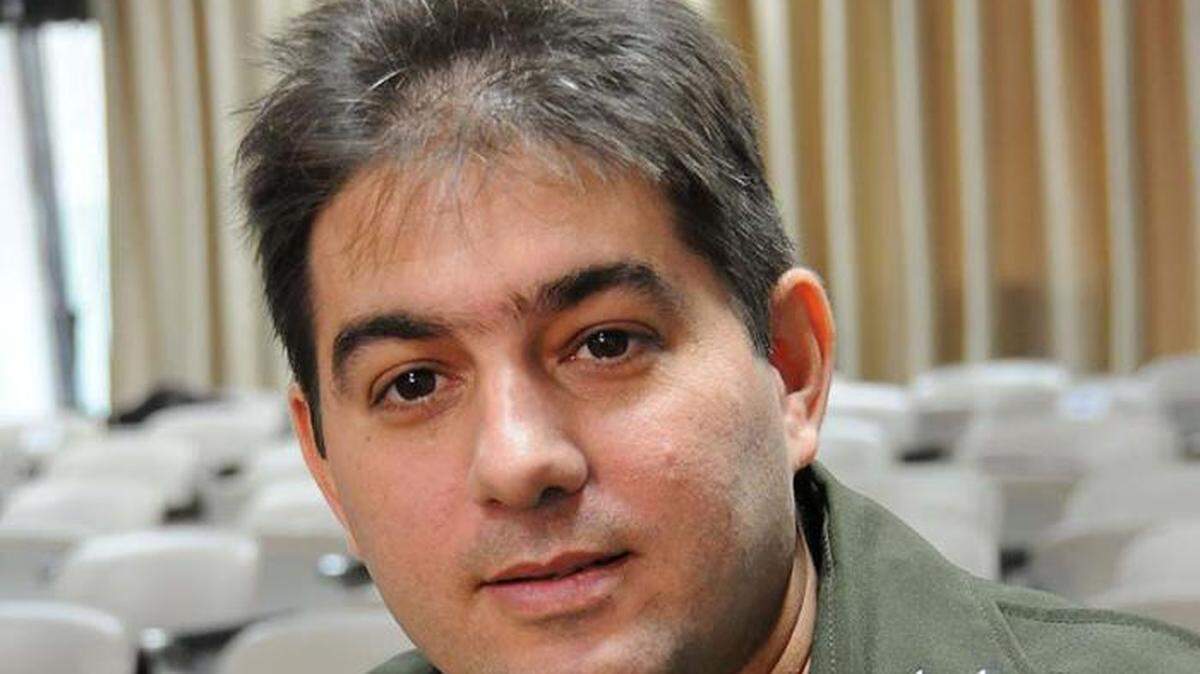
A Cuban intelligence colonel invited to talk at a controversial Latin American Studies event Saturday said that he is now an academic in favor of dialogue but echoed the Cuban government line claiming the widespread protests that rocked the island last July resulted from a U.S.-backed plot.
Abel Enrique González Santamaría, a colonel in Cuba’s Ministry of the Interior who holds a Ph.D. in political science and is reportedly working at the Office of the Havana Historian, spoke Saturday at an online panel at the Latin American Studies Association’s annual congress, despite criticism for his inclusion.
“There is evidence that indicates that the events of 11 J in Cuba were organized by the extreme anti-Cuban right from the territory of the United States with the use of social media and especially with funds from the U.S. government,” said González Santamaría.
He did not provide evidence to back up his claim. González Santamaría had previously defended the government’s response to the protests in a book he compiled.
The July 11 islandwide anti-government protests were mainly peaceful, though some protesters overturned police cars and threw stones at the police. Videos showed some police and military officers shooting at protesters and beating some demonstrators.
Independent organizations like Justicia 11J and Cubalex have tracked more than 1,400 arrests connected to the protests, and Cuban judges have handed down heavy sentences to hundreds of protesters, including teenagers. Amnesty International and Human Rights Watch have documented several violations of due process and have called for the release of the protesters.
Other academics at the Saturday panel agreed that U.S. sanctions played a role in fueling the protests but provided a different view of the main factors leading to the uprising. They stressed the role played by Cuba’s failed central planned economy, the poorly designed monetary reform, racial inequalities and the desire for more political freedoms, all behind the frustration expressed by those who took to the streets on July 11.
The Latin American Studies Association is the largest professional academic group studying the region, and Santamaría’s invitation stirred criticism and calls for his exclusion from the event.
“Maintaining the presence of this State Security officer not only endangers the other members of LASA but also shows that this organization, in the case of Cuba, prioritizes the perpetrators over the victims,” said doctoral student José Raúl Gallego, who first called attention on social media to the issue.
LASA “has absolutely no shame about including a career spy and intelligence officer of Cuba,” tweeted University of Florida professor Lillian Guerra.
The session chairman, former Cuban diplomat Carlos Alzugaray, said on Twitter that González Santamaría was “demobilized” from the ministry and is now MININT an academic.
González Santamaría did not respond to questions from the Herald during the session asking him to clarify the conditions of his alleged departure from the ministry. Instead, he said he had been an academic and author for several years. He did not address his work with Ministry, which encompasses the police, state security and other intelligence agencies.
Alzugaray said questions about the sentences handed to demonstrators “were not pertinent to the panel.”
LASA’s leadership defended González Santamaría’s participation, arguing it reflected the organization’s commitment to promoting a diversity of ideas.
After the Herald published a story about the colonel’s presence at the Congress, Gerardo Otero, LASA’s current president and professor at Simon Fraser University in Canada, said there was nothing out of the ordinary.
“It seems to me something completely ordinary within the plural, interdisciplinary and diverse activities of LASA that a representative of the Cuban State is included to present its position in the face of one of the most outstanding events in the island’s political life,” Otero said in an email. His response was later distributed to LASA’s Cuba section members in another email.
González Santamaría participated in the negotiations to restore diplomatic relations between the U.S. and Cuba during the Obama administration and led high-level discussions about sensitive matters such as the American fugitives of justice hiding in Cuba, both as an official of the Ministry of the Interior and member of the now dismantled Defense and National Security Commission. The commission was led by Raúl Castro’s son, Colonel Alejandro Castro Espín.
A former foreign correspondent who worked in Cuba in the late 1990s and early 2000s said he met a young González Santamaría, who went by “Henry,” the English version of his middle name Enrique. At the time, González Santamaría was a State Security agent keeping an eye on foreign journalists, he said.
“He struck me as very young, and I figured he was in training because he would always be accompanied by an older agent who went by the name Rangel,” said the former correspondent who asked not to be identified.
The journalist said he had a couple of meals with “Henry” and “Rangel” at “some dilapidated palace in Havana.” During one of those meetings, the agents asked him if he could “help with the Americans because they told me they see me getting along and invited by the Americans. After I told them no, things changed, and I guess I became an enemy.”
This story was originally published May 7, 2022 at 5:22 PM.