Brother of powerful Cuban general moves like a phantom in embargo-evading offshore world
READ MORE
Openlux: The Price of Secrecy
A collaborative project examines how the wealthy — and also the corrupt — have turned an obscure nation into a place to skirt taxes and hide assets.
Expand All
If you’ve wondered how the Cuban economy has survived under one-party rule despite 59 years of a trade embargo imposed by its northern neighbor, a small yet wealthy Western European country offers a glimpse how.
To stay afloat in difficult times, Cuba has relied on the same mechanism used by the rich, the famous — and sometimes the crooked: shell companies with layers of lawyers, accountants and faux directors to move and hide money.
The outlines of this became apparent in the 2016 release of the Panama Papers, a leak of names behind opaque offshore corporations that ripped back the veil of secrecy on offshore shell companies.
Now a new collaborative effort by journalists across the globe called OpenLux reveals how Cuba has for decades used the tiny tax haven Luxembourg to register offshore companies and fly under the radar.
Luxembourg, just under 1,000 square miles in size, borders France, Germany and Belgium. In 2019, under pressure from its European Union partners, it began providing information about people who control companies there.
The French newspaper Le Monde obtained a non-public version of the Luxembourg registry in a searchable format. It shared it with the investigative Organized Crime and Corruption Reporting Project (OCCRP), which in turn invited select newsrooms across the globe to publish stories about those in the registry.
That led the Miami Herald, el Nuevo Herald and their parent, McClatchy, to an important find.
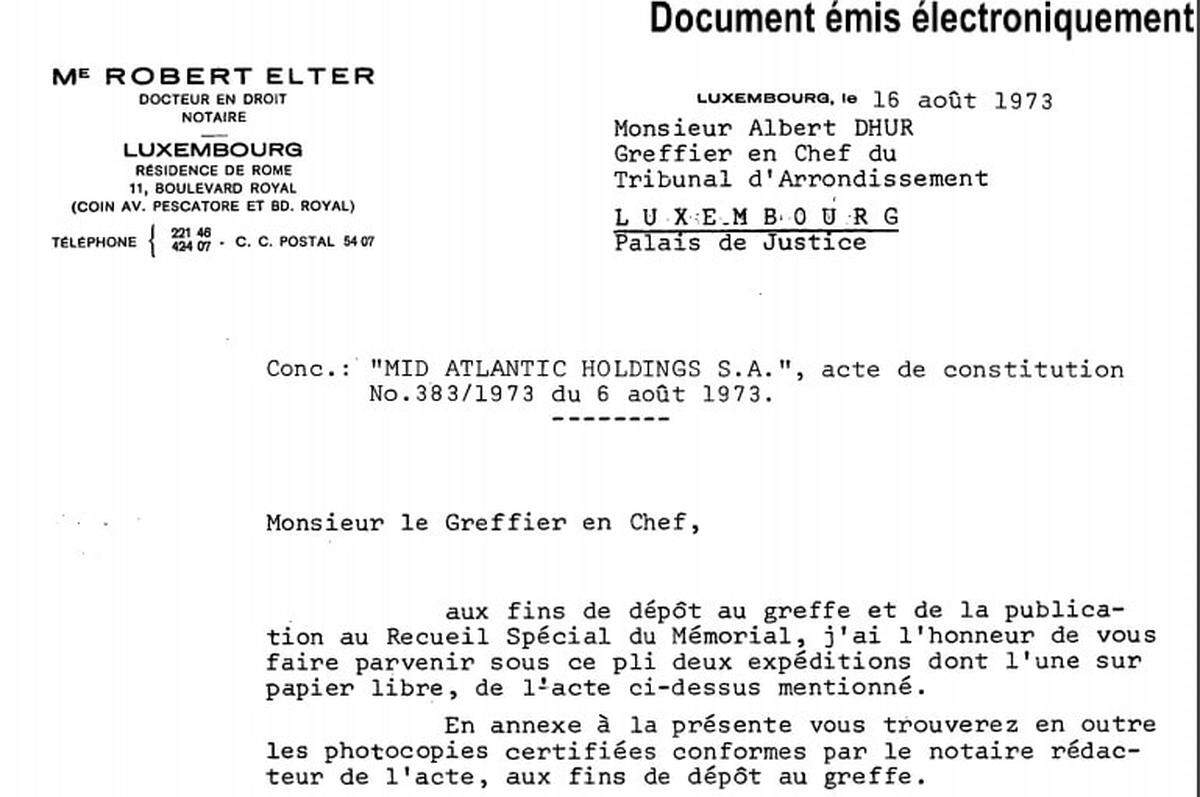
Buried deep in the nearly 200 documents in the Luxembourg corporate registry dating back to 1973 about a generic-sounding company, Mid Atlantic, was one that showed an owner with a familiar, well-connected surname for Cubans.
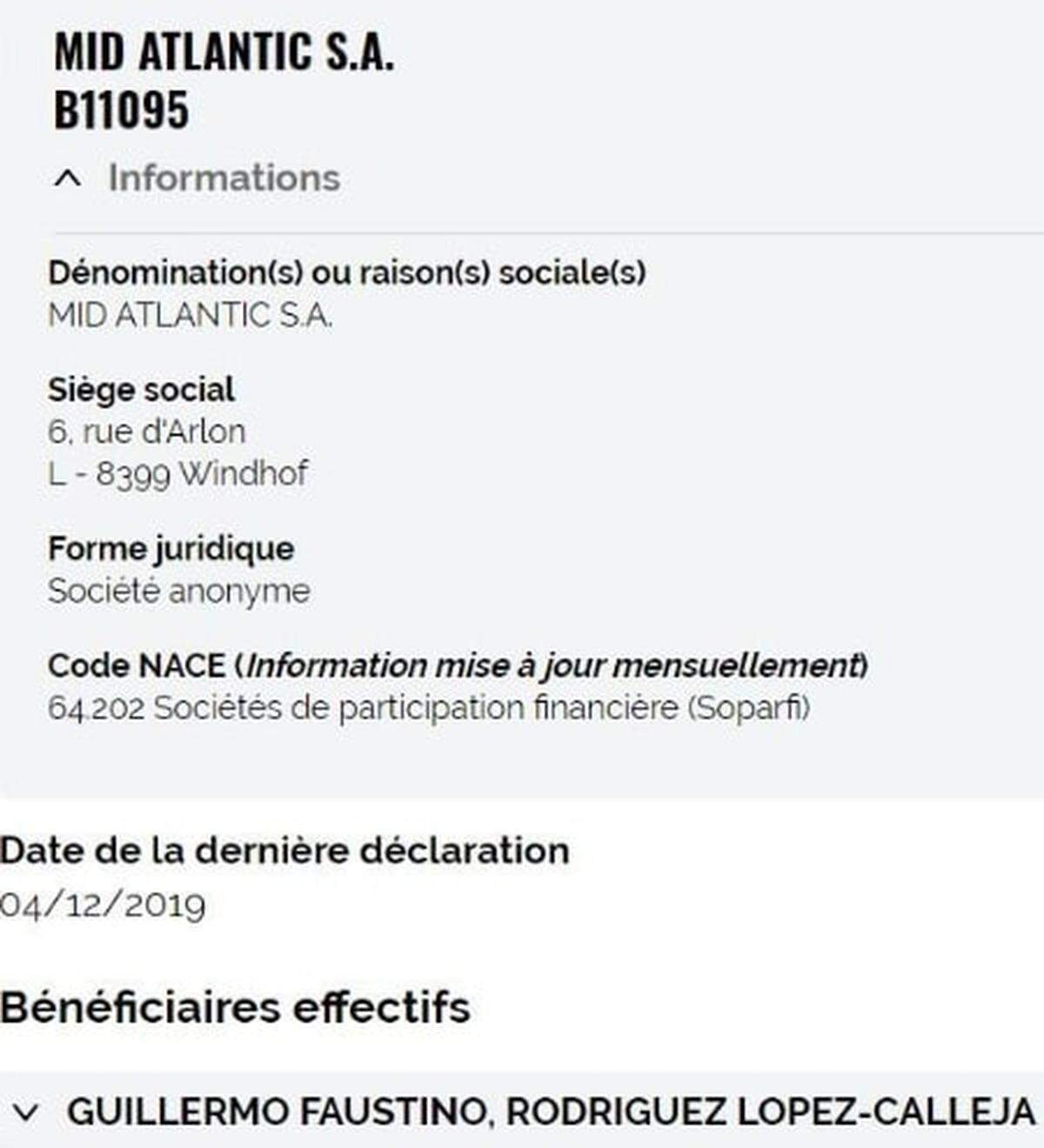
Ownership documents dated April 12, 2019, show Guillermo Faustino Rodríguez López-Calleja as the controlling owner of the decades-old company with a plain-vanilla name.
If you search online for him and Mid Atlantic, nothing comes up. Likewise if you search for him by name in the Luxembourg registry.
You’d have to know he was involved with Mid Atlantic and then pull the corporate documents. The country’s relatively new database of company owners is searchable, but only by company name, not owner.
It has enabled Guillermo — and presumably his predecessors — to stay out of public view.
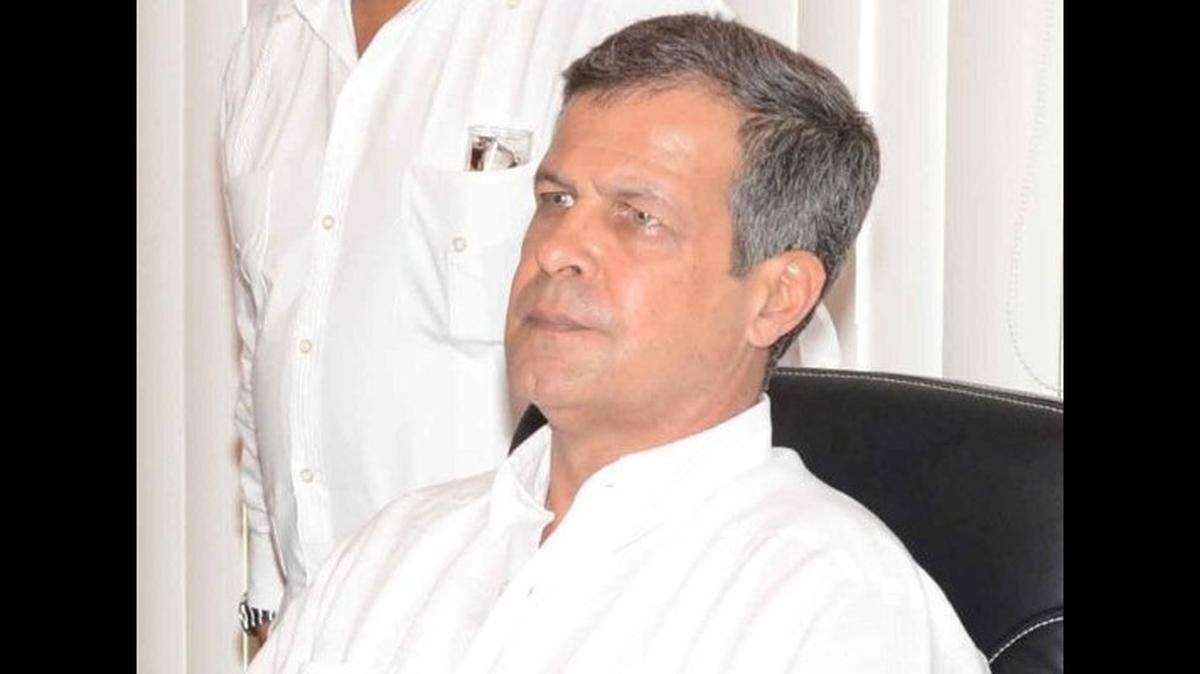
Here’s why that matters. He’s the brother of Gen. Luis Alberto Rodríguez López-Calleja, sanctioned in 2020 by the U.S. government because he runs Cuba’s military-industrial conglomerate Grupo de Administracion Empresarial S.A., or GAESA.
The economic arm of the Cuban military, GAESA has its fingers in the lucrative sectors of tourism, finance, international trade, shipping and construction. The conglomerate is said to control almost 60 percent of the Cuban economy.
The Trump administration sought to ramp up sanctions on companies like GAESA linked to the Cuban military, blocking them and their business partners from access to the U.S. financial system, making them a risky business proposition abroad.
The new Biden administration must decide whether to maintain that approach, especially since rapprochement tried in the Obama years did not create noticeably more freedom for ordinary Cubans.
“There are two states in Cuba: one that handles businesses and transactions in dollars, controlled by the military, and an administrative state that manages the unproductive side of the economy,” said Emilio Morales, a former executive of the state-owned Cuban import-export agency called CIMEX S.A.
A State Department confidential cable from the chief of mission in Havana to the CIA in June 2009, citing GAESA’s absorption of a previous state conglomerate Cubalse, presciently warned the move would “further consolidate power within a few, mostly military hands.” It identified Luis as GAESA’s general director at the time. He is currently its president.
Marrying into Power
Guillermo’s brother Luis has another claim to fame. He married into the Castro regime.
Now apparently divorced — these things are not public record in one-party Cuba — Luis had been married to Raúl Castro’s daughter Deborah Castro Espin until about 2012, with whom he had two children. He reportedly lived just houses away from Raúl, the younger of Cuba’s two long-ruling Castro brothers. Even after the apparent divorce, Luis carries tremendous influence in the Cuban government.
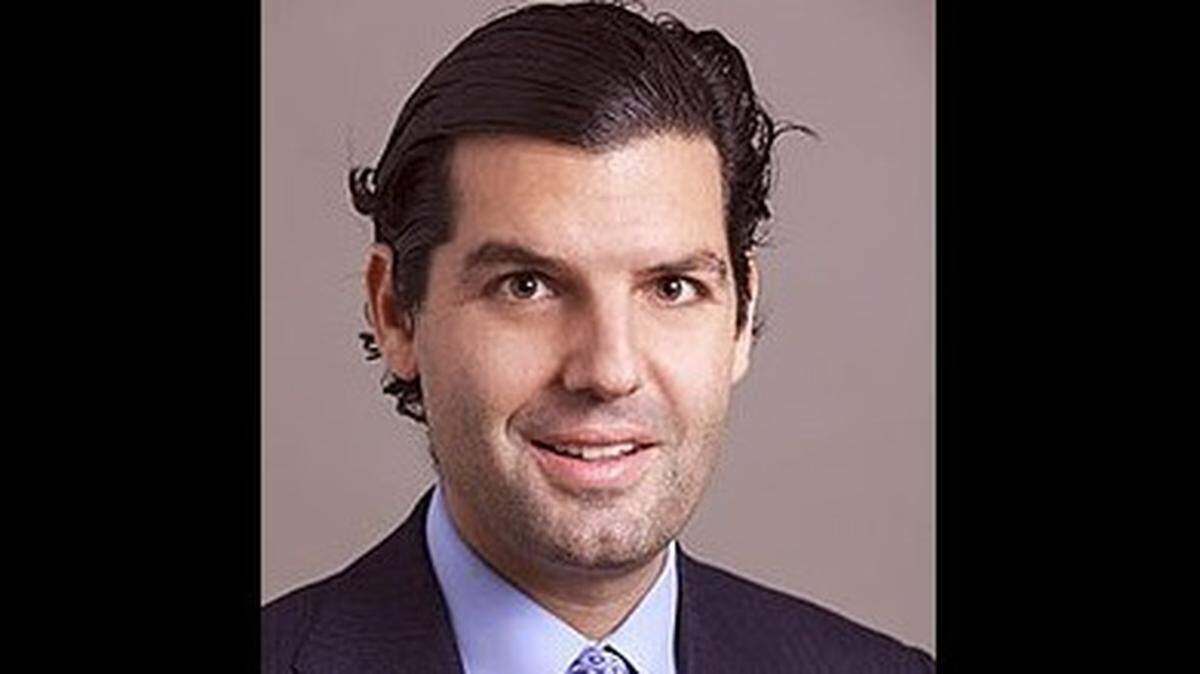
A couple of photographs appear online of Luis, with salt-and-pepper hair and piercing green eyes. Good luck finding one of Guillermo, who just turned 63 on Jan. 31, according to public records.
He’s a phantom, showing up in a few corporate registries but never appearing in photos, phone directories or websites that offer home addresses.
“From the very beginning he was told to keep a low profile,” said Delfín Fernández, a former Cuban spy who defected to Spain in 1999 and currently lives in Miami. Fernández said he knew the Rodríguez López-Calleja brothers well, and described them as “very smart and highly educated.”
Guillermo is a graduate of the Cuban Naval Academy, he said, and lived several years in the Greek capital of Athens, where he handled “everything to do with the merchant navy and shipping and cargo for Luis’ companies.”
“He was more powerful than a minister,” Fernández said.
But the real power figure was brother Luis, who turned military companies into profitable businesses, with the blessing of the Castro brothers.
Since 1992, when Luis created GAESA, “he is the owner of that island,” Fernández said.
Guillermo is a more mysterious figure, but “seems to handle transactions related to the movement of Venezuela oil and everything related to shipping that is profitable, such as the transportation of minerals,” said Morales, the former state company executive who now heads the Havana Consulting Group in Miami, which provides market analysis of the Cuban economy.
Reporters obtained a private Cuban cellphone number for Guillermo and reached him briefly. Surprised, he dodged questions and feigned a bad connection before hanging up. A few hours later, a recording said the phone was no longer in service, and his profile picture was removed from his WhatsApp account.
Another brother, Gustavo Ernesto Rodríguez López-Calleja, has lived in Florida for almost 20 years with his wife and daughter. He currently runs an air-conditioning company in North Fort Myers.
Gustavo declined to answer questions about Guillermo and his role in the offshore companies.
“I have no interest in talking to the press,” he said. “We have been in this country for 20 years and have kept a low profile. I don’t have any relationship with any of my two brothers.”
Connecting Dots
Guillermo’s name is also found in leaked offshore documents from multiple countries, some dating back to 1991. His shell companies appear to have helped Cuba skirt U.S. sanctions and survive the decades-long U.S. trade embargo by operating in near secrecy in both Switzerland and Luxembourg.
The Luxembourg records show Mid Atlantic S.A. — first created in August 1973 as Mid Atlantic Holdings S.A — owns the London-based shipping firm Anglo-Caribbean Shipping Co. Limited.
And Guillermo is also a “person with significant control” of that firm, according to documents dating to July 22, 2016, in the British corporate registry Companies House.
Anglo-Caribbean, which also dates in the British registry to 1973, lists an address for Guillermo in Havana near offices of Fincimex and Cimex, two companies sanctioned by the United States that are under control of his brother Luis.
Luxembourg’s Ministry of Finance bristles at the idea that the wealthy nation is being used as an offshore haven for nefarious purposes such as evading sanctions.
“Luxembourg doesn’t provide anonymity to firms or individuals!” the ministry insisted in a written response to questions. “Over recent years, Luxembourg’s tax policy has been consistently redirected toward the fight against tax evasion.”
But the ministry was also quick to note it is under no obligation to treat Cuban firms differently because the last European Union trade sanctions on Cuba were lifted in 2008.
Blurring Sanctions
Still, the lack of a searchable registry of owners and directors provides cover to U.S.-sanctioned Cubans. The documents in the Luxembourg corporate registry show how until recently Cuban-controlled firms, which by definition tie to the island’s communist government, could operate hidden from the public.
One example: An otherwise unremarkable document that announces a Mid Atlantic directorship change in February 2018. It notes the appointment of a Cuban man, Andrés Ernesto Muñoz Campos, as an administrator of Mid Atlantic S.A.
Muñoz Campos, 65, also appears as a director in Cyprus of Caroil Transport Marine Ltd. That company and three of its tankers were blacklisted by the U.S. Treasury in September 2019 for helping Venezuela skirt sanctions by bringing Venezuelan oil and chemicals to the island.
Guillermo is also listed in the Cyprus corporate registry as a director of the sanctioned entity, first registered there in 1992.
Like puzzle pieces, each new bit of public data connects to another to show an emerging image.
The little-known Muñoz Campos, who is listed on two maritime companies registered in the Cuban Chamber of Commerce, also served as an officer with Anglo-Caribbean from 2008 to 2013. That was before Guillermo was listed with a controlling stake.
The Venezuelan media reported in 2019 how its government forgave millions in Cuban debts, including that of a Bahamian-registered grain-shipping company called Albagranel S.A. Documents in the Panama Papers show that as recently as 2014, Muñoz Campos and Guillermo were both directors of the Bahamian offshore company.
On his public-facing Facebook page, Muñoz Campos shows Cuba’s current economy minister, Alejandro Gil, among his friends. Several others work at Navegación Mambisa, a Cuban state shipping company that had been sanctioned by Treasury’s Office of Foreign Assets Control, or OFAC.
Networks of Protection
The Panama Papers leak showed how Cuba relied on a network of private bankers, lawyers specializing in offshore secrecy and corporate services providers to make it maddeningly difficult to follow the money.
The documents from the files of now-disgraced Panamanian law firm Mossack Fonseca also showed Guillermo in some of the oldest available offshore documents, dating back to 1991 and about an offshore company called Pescatlan S.A. How Pescatlan was used is not revealed, though one document mentioned a fleet of fishing vessels in the Caribbean.
The true owner of Pescatlan was hidden by something called bearer shares, now illegal, where ownership shares are transferred to a third party to expressly keep the true owner hidden. That makes it tough to tell if the intention was skirting sanctions or a case of regime leaders hiding wealth abroad.
That company in the British Virgin Islands was established with the help of a Geneva-based Swiss lawyer named Albert Louis Dupont-Willemin.
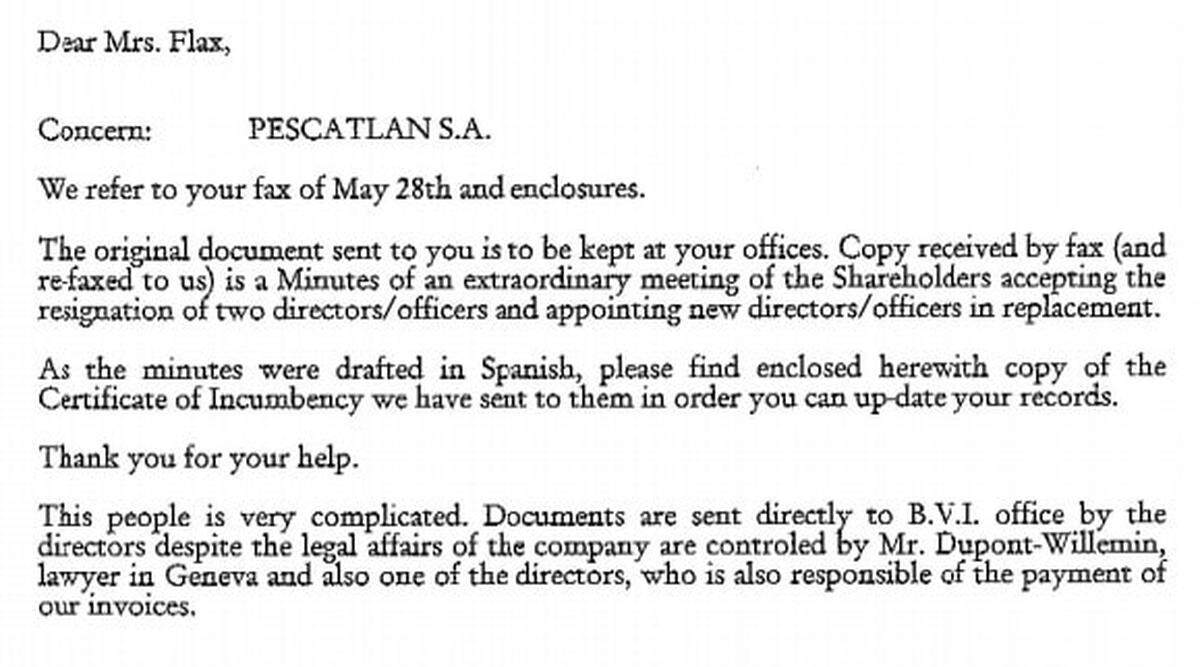
The Luxembourg documents, and the Panama Papers more broadly, show Dupont-Willemin helped Cuba incorporate offshore companies and conduct banking in Switzerland for decades.
In fact, he was flagged in a secret diplomatic cable from September 1979 alleging that he was linked to a secret Cuban-owned trading company in Switzerland called Delvest Holding, later put under U.S. sanctions.
This document about Dupont-Willemin, and the CIA document, appear in the leak of searchable State Department cables from 1973 to 2010 published in late 2010 by the self-described anti-secrecy group WikiLeaks. McClatchy and the Miami Herald reached his office in 2018 on an unrelated story and were told he’d retired.
Shell companies such as Pescatlan were created by law firms like Mossack Fonseca and Appleby, which in recent years had their internal records leaked to the International Consortium of Investigative Journalists (ICIJ) and published in the Miami Herald and elsewhere in the ensuing Panama Papers and Paradise Papers.
In the Panama Papers and in Luxembourg corporate records, Guillermo’s shell companies often have the same directors/administrators — Valon S.A., Lannage S.A. and Koffour S.A. — which are themselves shell companies. These repeat-use firms often cite Luxembourg accountants and lawyers as their own directors.
The most recent name attached in Luxembourg as an administrator of Mid Atlantic is Apollo Services S.A., whose multilingual website boasts the firm is a privately owned tax and accounting specialist offering “the trusted solution.”
Apollo appears on Mid Atlantic’s documents in 2019 and 2020, signed by Stéphane Liégeois, Apollo’s managing partner.
Reached by phone, he declined to comment, saying, “I am a Chartered accountant and I have made the promise of secrecy” to clients.
Liégeois suggested by email later that he was aware of Guillermo’s unique status.
“As a Chartered accountant, I can’t share any further information on this matter but I assure you that additional AML/CFT [anti-money laundering] measures are applied when establishing a business relationship with a PEP and required preventive ongoing monitoring is performed,” he wrote.
That was a reference to the fact that banks and law firms are supposed to view Guillermo as a politically exposed person, or PEP, because of the government post of his brother Luis and subject him to greater scrutiny.
“The reality is the United States can only control the United States, and our U.S. laws are quite specific over who we have jurisdiction over,” said Jennifer Diaz, whose firm Diaz Trade Law in Miami helps clients stay on the right side of international law.
Diaz wasn’t surprised that Luxembourg has been used by Cuban companies, and said that given the wide range of ways to hide ownership and transactions, her clients are advised to adopt tough know-your-customer policies.
Mid Atlantic documents dating back almost two decades don’t give too many clues about where the money is ultimately flowing, but the Luxembourg registry now clearly establishes Guillermo as its current true beneficiary of shipping activities that benefit the Cuban government. That’s advancement.
Brian Latell, a former U.S. intelligence official and longtime Cuba watcher, didn’t recall past activities linking the Cuban government to Luxembourg companies.
Guillermo’s role in Mid Atlantic, he posited, might reflect official Cuban government business or corruption involving the Rodríguez López-Calleja brothers.
“How good is the Cuban government at secret, undercover, and corrupt practices that rarely ever are detected? I would say confidently that they are highly skilled practitioners of these and other black arts,” Latell said. “After all, they have had so many years to practice.”
This story was originally published February 12, 2021 at 7:40 AM.

_fitted.jpeg)