Are common medical tests worth potential risks? Here’s what to consider
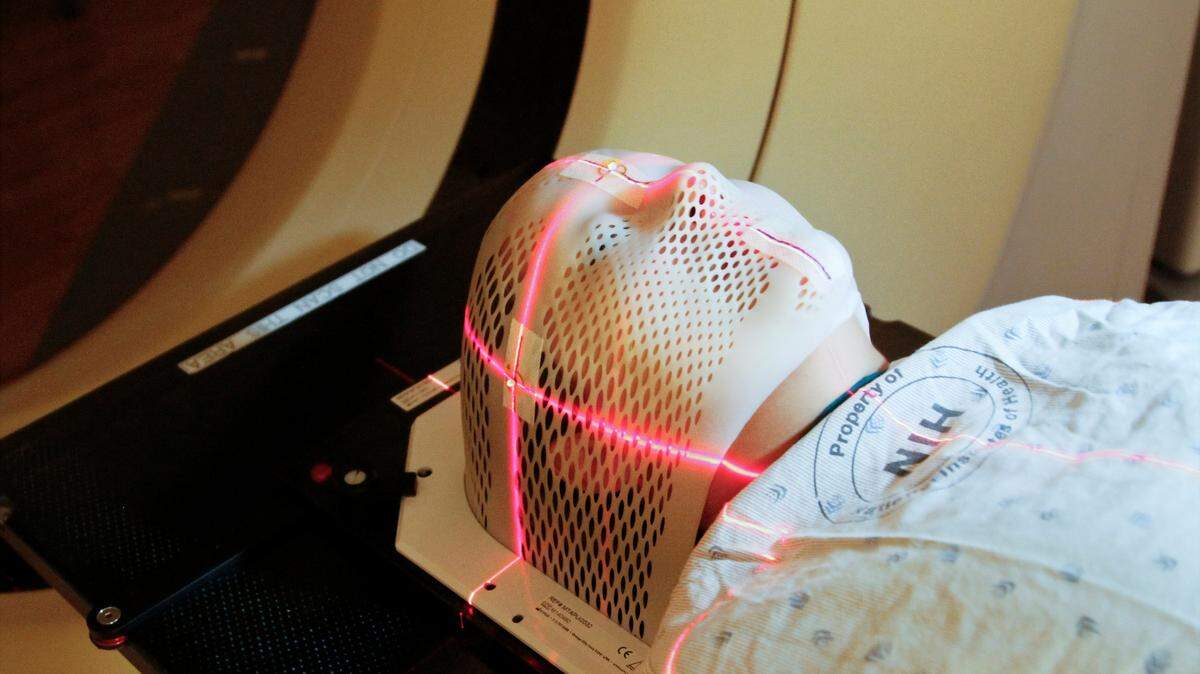
Researchers from UC San Francisco have announced a study that found computed tomography, or CT scans, may account for as much as 5% of all cancers annually. This is comparative to the cancer risk from alcohol use and being overweight, according to an April 14 news release from the university.
An estimated 93 million CT scans were performed in 2023, and researchers predict 103,000 cancer cases could be attributed to those scans, according to the release. The risk is increased for children, according to the study.
The scans expose patients to ionizing radiation in order to get an inside look into the body, but radiation is a known carcinogen, or cancer-causing agent, according to the university.
CT scans fall under a group of medical tests known as diagnostic tests, or “a test used to help figure out what disease or condition a person has based on their signs and symptoms,” according to the National Cancer Institute.
The finding raises questions about whether other common diagnostic tests carry known, or still unknown, risks.
The question becomes does the information gathered by diagnostic tests — like CT scans, X-rays or colonoscopies — outweigh the potential risks?
What makes a good diagnostic test?
A good test comes down to three things, Ashley Graham Kennedy, an associate professor at Florida Atlantic University, wrote in a March 2022 peer-reviewed article published in the Journal of the American Medical Association.
“Assessment of a diagnostic test involves consideration of three components of effectiveness: accuracy, clinical utility, and patient benefit,” Kennedy wrote. “To be effective, a test must be accurate, which is determined by sensitivity (how often the test correctly identifies if something is present) and specificity (how often the test correctly identifies when something isn’t present).”
Clinical utility means the test has a “net positive effect” on a patient’s overall clinical outcome, or their physical health, Kennedy wrote, and patient benefit means the test positively affects the patient’s health or well-being, whether or not it ends up being used to diagnose or treat the patient.
This means good diagnostic tests are the most likely to give you a clear answer without causing physical harm and can be used to make medical decisions about your next steps, according to the article.
At varying times in your life, from falling off a swing set to reaching the recommended age to start testing for colon cancer, doctors will recommend a diagnostic test.
Here are some common tests, what they are used for, the benefits they can provide, and potential risks to consider.
All decisions regarding diagnostic testing should be made in consultation with a healthcare provider.
Computed Tomography, CT scans
Purpose: Computerized tomography scans, or CTs or CAT scans, use X-ray techniques to create cross-sectional images, or slices, of bones, blood vessels or soft tissues in more detail than a traditional X-ray, according to the Mayo Clinic. They can be used to diagnose muscle or bone conditions, identify bone breaks or fractures, locate tumors, infection or blood clots, help guide doctors during surgeries, biopsies or radiation therapy, and find places of internal bleeding after trauma.
Benefits: CT scans are considered a step up from X-rays because they can create a 3D picture of areas of the body so doctors can better target a specific region or guide their treatment. They show more detail than an X-ray and can be done over the course of treatment, allowing doctors to track how a condition is changing over time.
Potential Risks: CT scans use ionizing radiation, a type of electromagnetic wave that is found naturally in the environment, according to the World Health Organization. However, it is at a much higher concentration than what occurs naturally. Repeated exposure to ionizing radiation, through repeated CT scans, for example, can in some cases cause radiation damage to tissues and organs, and can lead to cancer. It is important to note that undergoing a CT scan does not necessarily mean later cancer development is inevitable, but it can be a factor, per findings of the UC San Francisco study.
Magnetic Resonance Imaging, MRI scans
Purpose: MRIs are scans that can create detailed images of the internal structures of the body, including organs, bones, muscles and blood vessels, according to Johns Hopkins Medicine. A tube-like machine creates a magnetic field that causes the atoms in your body to align in the same direction, then radio waves are sent from the machine into your body which causes the atoms to return to their original position. This is recorded by the machine and used to create the body images.
Doctors may recommend an MRI if they suspect an issue with the brain or spinal cord, ranging from a stroke to multiple sclerosis to a brain injury from trauma, according to the Mayo Clinic. They can also be used when investigating symptoms relating to the heart or the other internal organs, or to take a closer look at bones and joints.
Benefits: Because MRIs rely on magnetism and radio waves, there is no need for ionizing radiation, eliminating MRIs as a source of radiation-induced cancer. MRIs are most beneficial because they are non-invasive, while to get the type of information from inside the body other ways may require a more invasive procedure. The machines can also scan large sections of the body, where other scans are limited to a smaller surface area.
Potential Risks: An MRI machine is, at its core, a giant magnet, and therefore the highest risk potential of receiving a scan is making sure there isn’t any metal in or on your body. This includes pacemakers, prosthetic devices, surgical screws or plates, piercings or even some tattoo ink that can contain metal, according to the Mayo Clinic. MRIs may also raise the internal temperature of amniotic fluid, meaning if you are pregnant or believe you may be pregnant, an MRI could be dangerous for a fetus, according to Stanford Medicine. In some cases, a dye is injected into your body before an MRI to provide additional contrast in the images, and the dye can potentially cause allergic reactions, Stanford Medicine says, particularly for people allergic or sensitive to some medications, iodine or shellfish.
Ultrasounds
Purpose: Ultrasound imaging, also known as sonography, is a type of scan that works in real-time, rather than producing a still image after the fact, according to the Food and Drug Administration. A transducer, or probe, uses high-frequency sound waves to show internal organs and blood moving through vessels. Typically, a gel will be applied to the body to help the ultrasound waves transmit from the probe and into the body. Ultrasounds are commonly used during pregnancy to examine the uterus or fetus, but can also be used for other abdominal tissues and organs, on bones, on the heart or in the eyes.
Benefits: Ultrasounds are another type of scan that do not use ionizing radiation and have an “excellent safety record,” according to the FDA. They are safe to use during pregnancy, and in more sensitive areas like the eyeballs. Because they show internal structures in real-time, they can be an essential tool in situations where trauma makes fast action necessary, like in emergency rooms or during childbirth.
Potential Risks: Ultrasound waves have the potential to slightly heat tissue, in some cases causing small pockets of gas in tissues or fluids known as cavitation. Because this would be most dangerous for a fetus, many health groups discourage the use of ultrasounds simply for “keepsake” videos of a fetus rather than for a specific medical need, according to the FDA.
Colonoscopies
Purpose: The American Cancer Society recommends regular colonoscopies for everyone over the age of 45, meaning most Americans will get multiple colonoscopies throughout their lives. You may be recommended to have a colonoscopy if you are over the age of 45, haven’t had one in more than 10 years, had tissue removed during a previous colonoscopy, or have a family history of colorectal cancer. Doctors use an endoscope, or flexible tube with a light and camera to search your large intestine, according to the Cleveland Clinic. The tube passes through the anus and rectum into the colon and takes photos along the way that can be checked for signs of cancer, or if you’re experiencing gastrointestinal illnesses like inflammatory bowel disease.
Benefits: Colonoscopies can provide a better look inside the large intestine than can be achieved from an external imaging procedure, like a CT scan or MRI, according to the Cleveland Clinic. It gives doctors an actual view of the intestine, and because screening is recommended for everyone over 45, it can sometimes catch colon cancer early, before symptoms ever start. In some cases, the procedure can even identify, diagnose and treat things like abnormal growths all in one procedure. Doctors can remove polyps, seal wounds, inject medications, remove a blockage, place a stent or even use laser therapy all while inside the large intestine.
Potential Risks: In most cases, you will be sedated and under anesthesia during a colonoscopy, meaning there isn’t any pain while it occurs, but the procedure carries the additional risk of anesthetics. In some cases, there can be tears in the colon wall, uncontrolled bleeding after removing tissue, an infection or adverse reactions to anesthesia, according to the Cleveland Clinic.