
The solution to crime in South Beach isn’t more of what destroyed its cool vibe | Opinion
Let’s take a trip down memory lane — in case Miami Beach Mayor Dan Gelber has developed amnesia.
Greed destroyed our South Beach, the one that belonged to Miamians and that we shared with tourists who never came in large enough numbers for the ambitions of the powers that be.
Our South Beach of art galleries, studios, specialty boutiques, small live-music venues and quaint eateries like the Haitian Tap Tap, the News Cafe, and the Estefans’ Lario’s on the Beach was a treasure. Fun and flair set to the backdrop of Art Deco hotels and buildings that preservationists fought hard to keep.
The party at Mango’s Tropical Cafe — now a lightning rod for those like the mayor who want to destroy the entertainment district on Ocean Drive — also was part of the scene in the 1990s and early 2000s. Always raunchy, but the exposed skin and the dance moves were part of the eclectic atmosphere, like the tattoo parlor near the walk-up ventanita where you ordered sandwiches to go.
The beaches belonged to families, high school kids, in-town college kids and tourists with foreign accents. All left garbage behind, but the city cleaned up. It didn’t make the news.
People called the liveliness and diversity “a renaissance” because, during the 1980s, South Beach had become a depressing haven for homeless Cuban refugees with a bad rap amid retirees waiting at heaven’s door. This did make the news.
Then, word got around that South Beach was the place to be. Madonna and JLo said so. A young rapper named Will Smith said so, too, on his hit 1997 album “Big Willie Style:”
“Here I am, in the place where I come let go
In Miami, the bass and the sunset low.
Every day like a Mardi Gras, everybody party all day
No work, all play, okay...”
Town boosters loved the attention. Come, they advertised, the best party in the country is here. We incorporated hip-hop into the music scene. Cool was us.
But the vibe that artists, writers, musicians and residents who embraced the Bohemian created was usurped by developers who swooped in and, in the name of progress, developed every inch of concrete available, packing in people and cars.
The big-money interests finished erasing the hometown feel after Lincoln Road became a target, too expensive for artists to afford studios, when unique stores were replaced with name-brand vendors and jazz disappeared from the Van Dyke. We Miamians moved on and moved out. We couldn’t afford the $30 valet, the overpriced menus created for the masses and the $500-a-night hotel room.
The siren call of South Beach
South Beach went glam — party city for the Kardashians and stars making videos on our sands, showcasing our pastel facade, as millionaires filled the towers and cultural tourism’s high-end events were brought to cater to the monied: Art Basel and the South Beach Wine and Food Festival.
Those raking in the revenue, including City Hall, were fine with the traffic and the crowds. That is, until mostly Black and Latino young people from neighboring Southern states came to join the fun — fans of the stars, following in their footsteps, but broke.
They can’t afford South Beach’s high hotel prices so they pack six, seven or 20 into a room. They can’t afford the $50 cover charge at clubs so they party in the streets, on top of cars. They can’t afford the fancy restaurants so they order pizza or leave a restaurant with the bill unpaid.
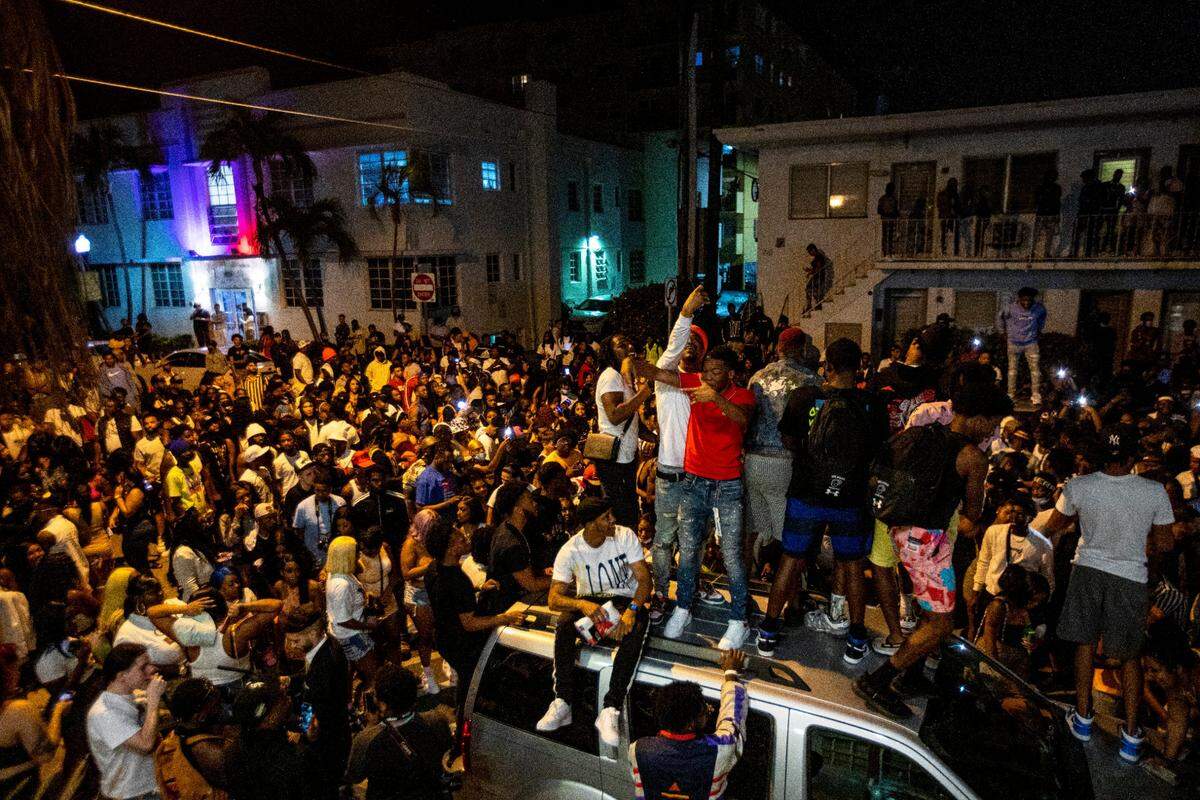
Also coming to the best party in the USA: drug dealers — and crime.
The city’s response: Not enough police or too much policing when nothing bad is happening, like a line of SWAT vehicles waiting for trouble and angering people who already are suspicious of police.
The drunkenness and debauchery, the garbage left behind — and not enough services provided, things like darned disposable garbage cans made available at other venues. Certainly, no events are programmed for the Memorial Day crowd, in the name of cultural tourism, to channel energy away from the streets.
Now, in the aftermath of two murdered tourists — a young woman drugged, raped and left to die in her rental by spring breakers and a young father gunned down by the lunatic high on drugs who aimed a gun at his baby son at a restaurant — the city has had enough.
Fate of entertainment district
South Beach is at a crossroads — and the debate over the fate of the entertainment district is the most heated issue on the Nov. 2 ballot. A non-binding referendum question asks voters: Should the city shut down the alcohol sales at 2 a.m. or continue to serve until 5 a.m?
This question reminds me of the joke about the man who finds his wife sleeping with another man on his sofa and he changes the sofa.
Cracking down on alcohol sales is a tactic for Gelber, former Mayor Philip Levine and other allies to shut down the entertainment district and make properties available for redevelopment. In this region, such a move always amounts to over-development.
Get rid of the music and entertainment, argues Stuart Blumberg, former president of the Greater Miami and Beaches Association in a Miami Herald op-ed.
What music or, more important, whose music, I ask?
The jazz at The Betsy Hotel, the sexy Latin sounds at Mango’s or the hip-hop on the streets?
I suspect the answer is only the last two.
No, the solution in South Beach is not to whitewash it by bringing back what destroyed its hometown vibe in the first place — developers.
