
Coronavirus closed our beloved peluquerías. Reopening requires a safety makeover | Opinion
Update: Bogy’s Hair Salon opened on Wednesday, May 20 after the city of Miami Lakes allowed non-essential businesses to reopen, following the lead of Miami-Dade County Mayor Carlos Gimenez. The mayor was photographed Tuesday visiting a tiny packed barbershop in the city, violating the county’s six feet social distancing rules for personal grooming businesses.
Before the novel coronavirus shutdown in Florida, the beloved Miami-style peluquería wasn’t just a place you visited for a haircut.
It was an essential mental health practice.
For longtime clients, “therapy” began with the exchange of a kiss on the cheek with your stylist, the greeting de rigueur.
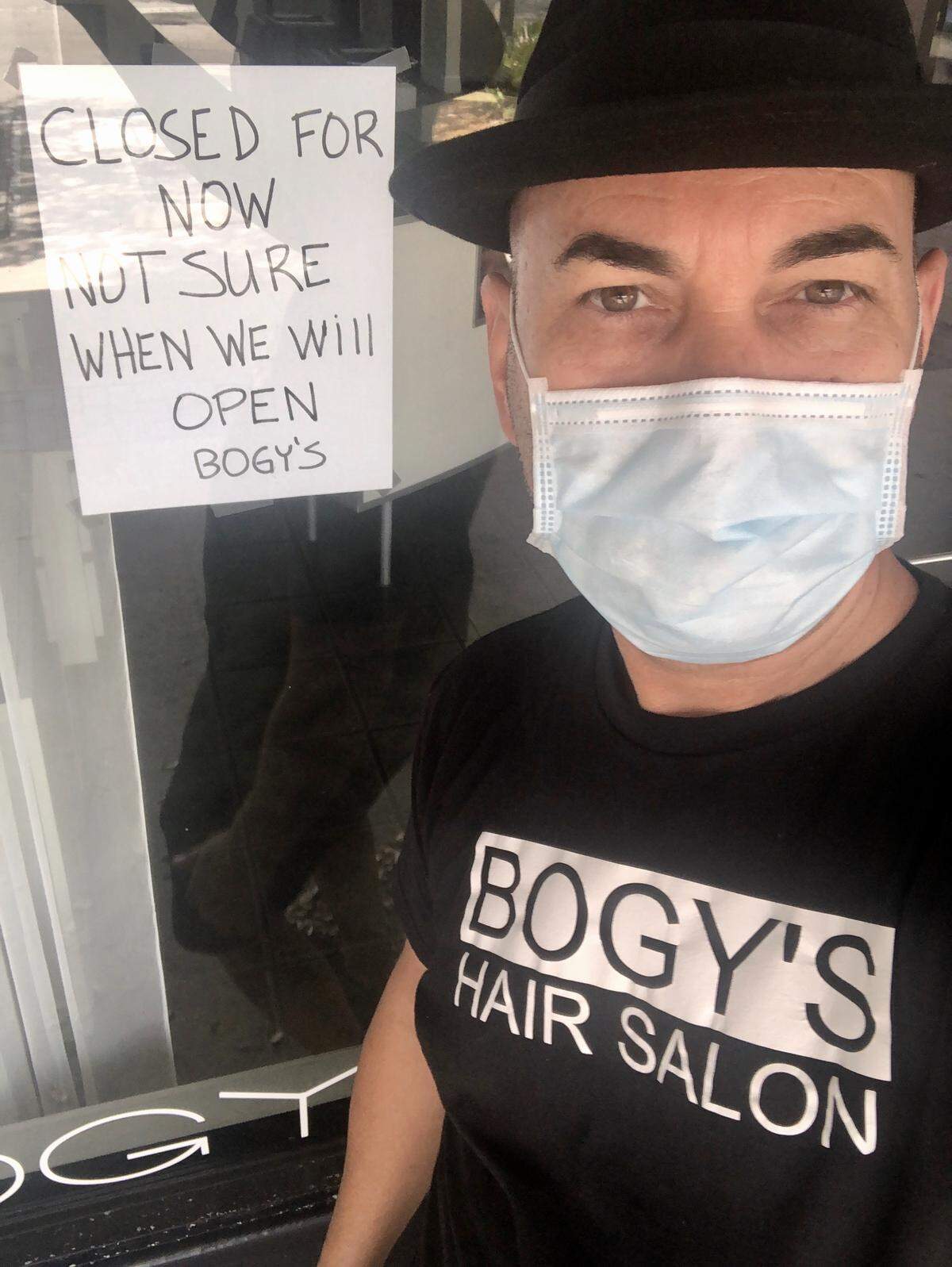
“We’re with people all the time,” Rolando “Roly” Torres, owner of Bogy’s Hair Salon in Miami Lakes tells me. “We are touching them. They are sharing the wedding, the children, the sad stuff.”
Oh, how we miss the pampering, the before and after of walking in a mess and leaving with a pep in your step, ready to face the world.
With the salon now closed for five weeks, the master hairstylist is one of the small business owners in Florida and the nation sidelined by the necessary shutdown to contain the deadly coronavirus outbreak.
His salon is also one of hundreds of thousands of shuttered businesses getting no help from the controversial federal loan program for small businesses, which quickly ran out of money when much of it went to large, publicly traded companies.
It is expected to return in a second round of stimulus measures.
Not much consolation, however, when there’s rent due again in May.
No break on the rent
Despite emails to his landlord, the Graham Companies, Torres isn’t getting a break on the $3,300 monthly rent for the shuttered storefront.
All the company staffers did was point him to the small business loan program, which doesn’t apply to commercial rentals.
“It’s frustrating,” Torres says. “I have zero income.”
His team of six, he laments, is in the same boat and now depend on working family members to sustain them through this dark period, made worse by Florida’s failed unemployment system.
“What [amount of work] we do in the salon is what we make,” he said. “They work on commission. If we don’t work, we don’t make money.”
But, he quickly adds: “We need the money, but what we miss the most is the interaction, the connection with our clients. We touch their hair, we touch their hands, and emotionally, they unload on us.
“You make them look good and you make them feel good.”
Sounds like our beauticians need a little love, too.
“Yesterday morning, I almost had a breakdown,” said Torres, 55, too young to retire even if he wanted to, which he doesn’t because this is his life, his identity.
In his 30 years at the same location, “the longest vacation I’ve ever taken is two weeks,” said Torres. “I went through Hurricane Andrew, the recession, the walkouts of staff in my salon and we’ve gotten through everything. Now you think, what the hell is this mess? It’s sad.”
A consumer of news from credible media outlets, Torres doesn’t begrudge the closures, as caravans of people are doing throughout the nation.
Opening prematurely, he says, “is a terrible idea.”
Georgia barbershops
He understands the science of containment and that’s why he’s closely watching what happens in Georgia, which has announced to much criticism that it’s ready for a gradual opening of the economy, starting with barbershops.
He’s also turning to the experts in his field and says he’s willing to adopt rigorous safety practices while the pandemic remains with us until a vaccine is produced.
The “new normal,” however, will heavily impact that traditional peluquería relationship.
Here’s what the radically different salon experience would look like, based on federal guidelines for a “soft opening” from the Occupational Safety and Health Administration’s “Guidance on Preparing Workplaces for COVID-19:”
No kissing or handshaking the stylist, who will be masked and behind a shield like health workers.
There will be no lobby to wait for an appointment. You will have to wait in your car and your stylist will text when he or she is ready, or go get you.
Only one-hour appointments allowed, which by definition excludes treatments that take hours like the Balayage, a French hair-coloring technique Torres describes as almost like natural highlights and more blended with the darker side inside and then lighter, as if kissed by the sun.
It’s a big money-maker for stylists and so popular Torres expects customers will be angry when he tells them he can’t do it.
“You know how Miami people are, they are going to say, ‘Wh-a-a-a-t?? I want to get it done!’ You know they’re going to say that’s nothing [the continued threat of coronavirus] and demand to be as always.”
And wait until he tells them there will only be dry cuts. Shampooing is only allowed to remove color. You’ll have to come with clean hair — and masked.
They will sanitize chairs between customers, work in shifts to stay within the 10 people limit. Torres envisions that even the music will change to what people need now: soothing.
“There’s a lot of things that can be done, like pay by phone so no credit card exchange needs to take place,” Torres said.
Seeing a sliver of hope amid the mounting infection and death toll in Miami-Dade, the state’s epicenter, has lifted his mood.
“I’m a firm believer that you have to take the good from the bad,” he said. “I’m a very logical person. I’ve always believed in things that make sense.”
And when a good friend told him she wasn’t accepting the no hair-drying rule, he told her: “Then go get a blow-dry somewhere else and get COVID-19.”
Tough love from your Miami stylist, sorely needed for the times.
This story was originally published April 24, 2020 at 6:00 AM.
