
Supreme Court to weigh if Trump can end Haiti, Syria TPS: What you should know
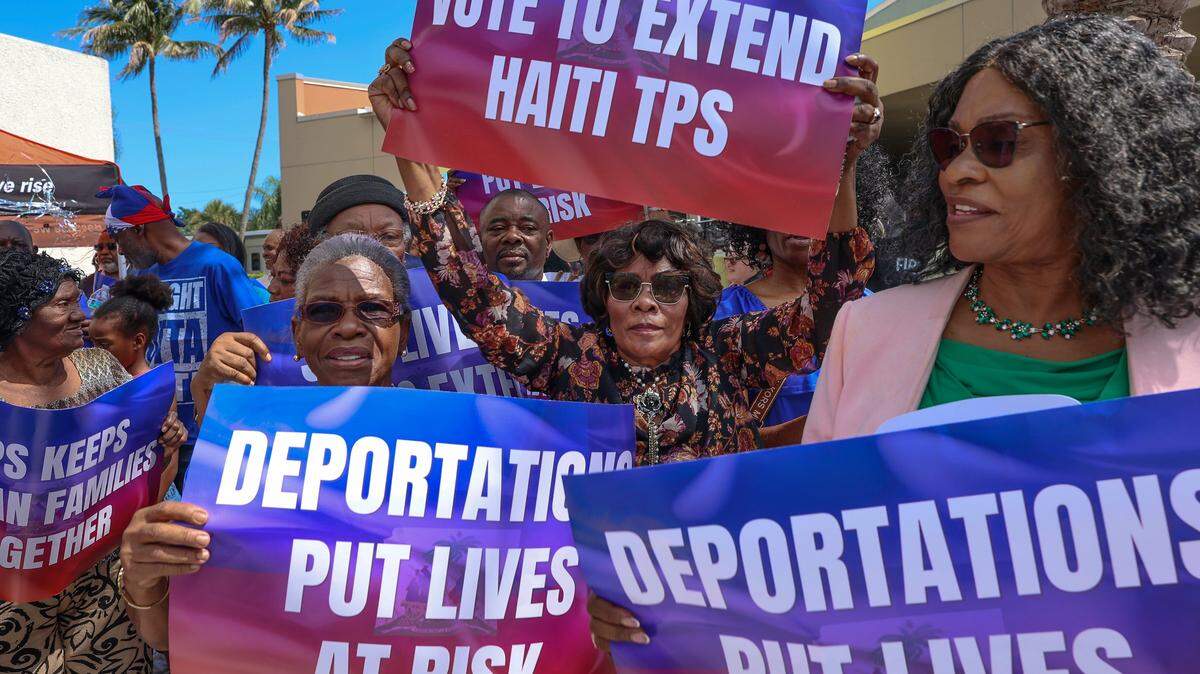
The U.S. Supreme Court will hear oral arguments Wednesday on a case that could determine the future of hundreds of thousands of Haitians and Syrians, and over a million immigrants from other countries who are currently living in the United States.
The high court will then decide whether the Trump administration should be able to terminate Temporary Protected Status for more than 300,000 Haitian beneficiaries of the program. TPS shields people from countries in turmoil from deportation and also gives them work permits.
If the Supreme Court accepts the Trump administration’s argument that TPS decisions are not reviewable by the federal courts, that would mean that the Department of Homeland Security can go ahead and end TPS protections for 350,000 Haitians and 6,000 Syrian, as it has been trying to do for over a year amidst fierce litigation.
In October, the Supreme Court allowed the Trump administration’s terminations of Venezuela’s TPS to go forward while litigation is ongoing. The Supreme Court gave no reasoning, did not weigh on the merits, and stripped over hundreds of thousands of Venezuelans of their TPS, leaving them vulnerable to detention and deportation. A lower federal court in California had determined that those terminations illegal. An appeals court in January upheld the lower court’s ruling, but the Supreme Court stay is still in effect.
In South Florida, the heart of the Haitian community in the United States, the Supreme Court case is a local issue. On Sunday, the Family Action Network Movement, advocates and community members called on the Trump administration to protect TPS for Haiti in a rally in North Miami.
READ MORE: Dozens rally in North Miami for Haiti TPS extension ahead of Supreme Court hearing
But beyond Haitians and Syrians, experts say the case could have weight for 1.3 million other immigrants from over a dozen countries, including Venezuelans. The Trump administration could use the Supreme Court ruling in this case to end other TPS designations as well and argue that they are not subject to judicial review. If the Supreme Court weighs in favor of beneficiaries, they can use the ruling to continue arguing against their terminations.
“The stakes are very high,” said Geoffrey Pipoly, an attorney who represented the plaintiffs in the New York and Washington cases. He is set to argue on behalf of Haitians in the Supreme Court.
Here are answers to some of the key questions about the hearing and the uncertain future of Temporary Protected Status beneficiaries nationwide.
What is Temporary Protected Status?
Temporary Protected Status is a federal program that offers deportation protections and work permits to immigrants who are already in the United States and cannot return home. That can be due to war, conflict or a natural disaster. Immigrants must apply to TPS to receive the protections. To qualify, they must have arrived in the United States before a cutoff date. They must have also not been convicted of a felony, among other requirements.
Congress created TPS in 1990. The Secretary of Homeland Security has the authority to designate a country for the protections. DHS, in collaboration with other agencies, periodically reviews country conditions to decide whether it will expand, extend, or cancel the TPS designation for a country. Extensions can be for 6, 12, or 18 months.
Haiti, for example, first received TPS after the devastating 2010 earthquake that its government estimates killed over 300,000 people. As a result of continuing deteriorating conditions in the country, such as another earthquake in 2021, extreme gang violence and the assassination of President Jovenel Moïse, the designation was continued and expanded to include more Haitians.
As of March 31, 2025, the Congressional Research Service estimated there were 1.3 million TPS holders across the U.S. That includes nationals from Venezuela, Ukraine, Somalia, El Salvador and South Sudan — all countries experiencing heavy turmoil at the their designation. It also includes over 330,000 Haitians and nearly 4,000 Syrians.
But those numbers have likely plummeted since President Donald Trump returned for a second term. On his first day back, Trump proclaimed in an order that TPS designations should be “appropriately limited in scope.”
The Trump administration moved to cancel TPS protections for multiple countries, including for Haiti and Venezuela. The slew of TPS terminations has caused furious litigation in federal courts nationwide.
What were the key legal challenges and court decisions regarding Haiti’s TPS?
In February 2025, the Department of Homeland Security issued a notice to partially vacate Haiti’s TPS. That means that it would end half a year earlier than it was supposed to under a Biden-era extension of the protections. The government argued that there were “no extraordinary and temporary conditions in Haiti preventing its nationals from returning,” despite extreme violence, widespread hunger and political instability plaguing the Caribbean country. The government also noted that regardless of conditions on the ground, the designation was not in the national interests of the United States.
Separately, the State Department has reissued a “Do not travel” to Haiti advisory for Americans.
The Haitian Evangelical Clergy Association, a powerful labor union, and several Haitian immigrants sued the Trump administration in the federal courts in the Eastern District of New York. They claimed that former Homeland Security Secretary Kristi Noem had ended the protections without the proper periodic review the law requires. They also said that the decision to end TPS was driven by the president’s “racial animus towards non-white immigrants.”
READ MORE: Haitians and clergy group sue Trump over decision to end protection from deportation
After the judge in that case restored the six months of TPS, the Trump administration issued a new TPS termination notice on July 1, 2025, that would go into effect in September. Then it reissued the termination notice in November setting the new expiration date for Haiti’s TPS in February 2026.
READ MORE: Federal judge maintains block on ending Haitian TPS, responds to death threats
In a separate lawsuit in Washington, D.C.., U.S. District Judge Ana Reyes ruled in favor of keeping TPS for Haitians in place while litigation is ongoing and said that Noem’s previous remarks about Haitians showed prejudice.
The Trump administration immediately appealed. It also asked Reyes to reverse her ruling. Reyes declined and said that she had faced death threats over the case. In March, the federal appeals court upheld Reyes’ decision in a 2-1 ruling.
Why is the Supreme Court hearing arguments this week?
After three lower courts ruled in favor of Haitians with TPS, the Trump administration asked the Supreme Court to intervene. In an emergency petition, Solicitor General John D. Sauer said the lower courts were overstepping and weighing in on “an area of wide Executive Branch Latitude.”
READ MORE: Trump administration asks U.S. Supreme Court to strip over 350,000 Haitians of TPS
The emergency request is the fourth time that the Trump administration asks the Supreme Court to intervene on lower courts’ decisions about TPS. As Sauer noted, the prior requests were about Venezuela and Syria’s TPS designations. For Venezuela, the Supreme Court ruled that the Trump administration could go ahead with the termination.
The Supreme Court agreed to hear arguments on the case for an hour in April. It also consolidated the Haiti and Syria cases into one.
READ MORE: Supreme Court to hear arguments on Haiti, Syria TPS; future of 355,000 people at stake
What are the arguments that the governments and the plaintiffs are expected to make at the Supreme Court?
The Trump administration has argued that the federal courts do not have the authority to review executive decisions about Temporary Protected Status because of the legislation’s language. In the emergency stay request, Sauer said that the federal courts are overstepping their authority and that the plaintiffs’ claims around improper procedures to end TPS don’t have merit because they can’t challenge them anyway.
He also dismissed plaintiff claims on racial animus as a “far-fetched and far-reaching equal protection claim ... .a theory that threatens to invalidate every immigration policy of the current administration.”
“Unless the Court resolves the merits of these challenges—issues that have now been ventilated in courts nationwide—this unsustainable cycle will repeat again and again, spawning more competing rulings and competing views of what to make of this Court’s interim orders,” Sauer wrote.
Meanwhile, the plaintiffs have argued in court hearings and documents that the termination of Haiti’s TPS was a “preordained and pretextual decision by the government,” said Pipoly, the plaintiffs’ lead counsel.
“Their stated reasons for terminating were not their real reasons. Their real reasons were the fact that President Trump doesn’t like Haitians and other non-white immigrants. Neither the Constitution, nor the TPS status Congress enacted and made mandatory allow for that” Pipoly said.
It’s likely that during the oral arguments there will be several questions and arguments around equal protection claims and the racial animus allegations that the plaintiffs have made in their cases.
How many people could lose their protective status if the government wins this case?
There are as many as 350,000 Haitians with TPS whose protections are at risk. They would need to find another way to stay in the United States. But it will be very difficult for nationals from Haiti and Syria, experts say, because the Trump administration has layered several restrictions that make it hard for them to enter and stay in the country.
Both Haitian and Syrian nationals are on travel and visa bans. The Trump administration has also frozen existing applications for asylum, family-based and employment-based green cards, and other immigration benefits for people from both countries and others. That means many people from both countries will have to leave the United States and possibly return to homelands where their lives are in danger.
Lawyers and experts say that the Syria and Haiti case could have implications beyond recipients from these two countries.
“If the government argues that federal courts have no role to play around at all and the Court accepts that argument, it will effectively be allowing the termination of TPS not just for 350,000 Haitians but for a total of about 1.3 million immigrants around the country,” said Pipoly.
What happens if the Supreme Court upholds lower court decisions’ keeping TPS for Haitians and Syrians in place?
If the Supreme Court upholds the decisions, Haitians and Syrians will be able to keep their protections. If the Supreme Court rejects the government’s argument against judicial review it could also mean that Haitians, Venezuelans and Syrians will be able to fight the Trump administration’s terminations of their TPS in front of federal judges.