
Trump administration asks U.S. Supreme Court to strip over 350,000 Haitians of TPS
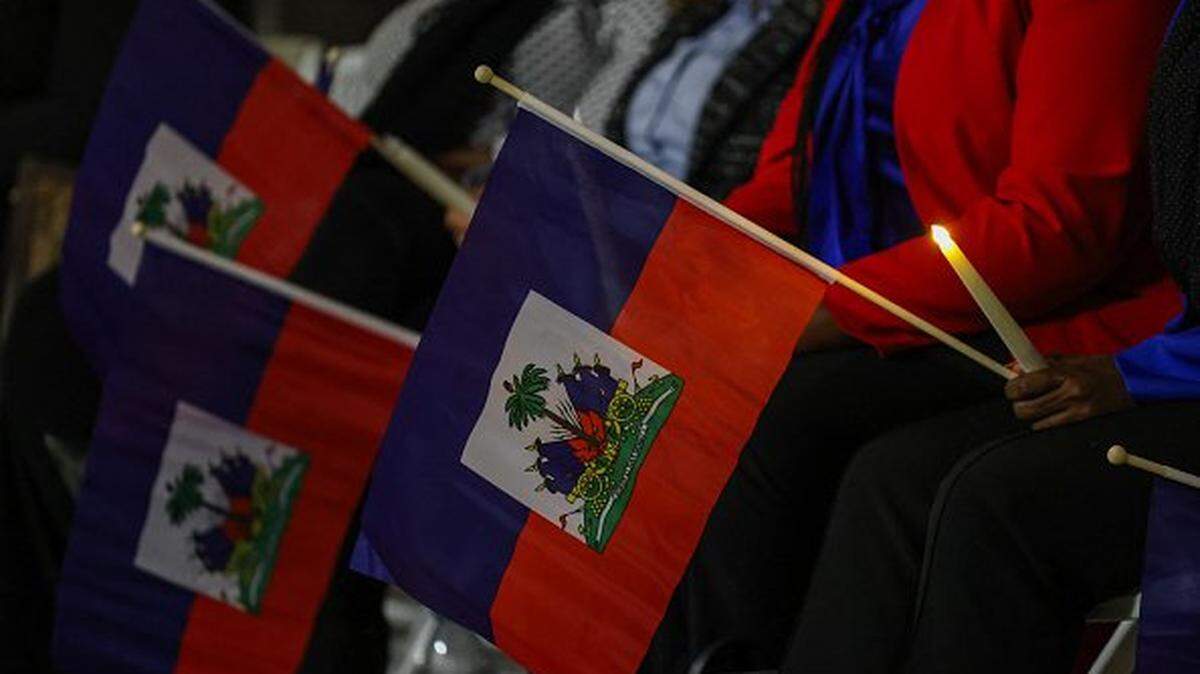
The Trump administration is asking the Supreme Court to end deportation protections under Temporary Protected Status for hundreds of thousands of Haitians who are living in the United States.
In an emergency request to the Supreme Court on Wednesday, Solicitor General D. John Sauer argued that lower courts had overstepped by keeping the protections because they were weighing in on “an area of wide Executive Branch Latitude.”
“Lower courts are again attempting to block major executive-branch policy initiatives in ways that inflict specific harms to the national interest and foreign relations,” he wrote.
The request to the high court comes after two lower courts refused to allow the Trump administration to end Haiti’s Temporary Protected Status designation, which was set to terminate on Feb. 3.
Sauer noted in his request that it was the fourth time the administration made a request to the Supreme Court about TPS because of a lower court’s decision. The Trump administration has asked the nation’s highest court to weigh in on Venezuela’s designation twice and once for Syria. The decision for Syria’s designation is still pending.
Sauer also defended the determination that former Secretary of Homeland Security Kristi Noem had made that parts of Haiti were “suitable” for Haitians to return even if there were conditions like gang violence in Port-au-Prince that were concerning, and that regardless of conditions the designation was against American national interests.
Last week, a federal appeals court ruled in favor of Haitian plaintiffs who sued the Department of Homeland Security accusing it of racial and national animus in seeking to end the protections. The judges’ ruling came as the Trump administration in another case before the Supreme Court involving Syrian TPS holders asked for broad powers to end TPS in all cases.
The request from the federal government is the latest development in President Donald Trump attempts to strip Haitians already living in the United States from deportation protections that shield them from being returned to a homeland that is plunged in gang violence, hunger and political instability.
There were about 330,000 Haitians with TPs living in the United States as of March 2025, according to the Congressional Research Service. Many of them live in Florida; over a third of program beneficiaries living in the state came from Haiti.
READ MORE: Federal appeals court upholds TPS for Haitians, but the case just got complicated
In February, U.S. District Judge Ana C. Reyes ruled in favor of keeping TPS for Haitians in place and said that the beneficiaries who sued the Trump administration to uphold the protections would likely succeed on the merits of their lawsuit. She had previously quoted comments from Noem, ruling that they showed that racial or national-origin animus fueled the TPS termination. She has also noted that the administration had ended TPS protections for a dozen countries in conflict and turmoil.
In his filing, Sauer dismissed the rulings of Reyes and other judges who have maintained TPS for designated countries.
“The main variation is that courts in some cases (including this one) endorse a far-fetched and far-reaching equal-protection claim based on decision makers’ purported racial animus—a theory that threatens to invalidate virtually every immigration policy of the current administration,” he wrote.
Ira Kurzban, one of the attorneys representing the Haitian plaintiffs in the ongoing lawsuit, told the Miami Herald that “Trump’s longstanding animus against Black refugees” and “his request to stay the lower court’s decision that protect them” are “no surprise.”
“After being rebuffed in both the district court and the Court of Appeals, Trump’s vendetta is obvious. We hope the Supreme Court will recognize that this is nothing more than blatant racial discrimination and that there is no emergency requiring the deportation of 350,000 Haitians; the harm that it will do to them and their tens of thousands of U.S. citizens and lawful permanent resident family members is immeasurable and should not be sanctioned by our highest court,” the veteran attorney said.
Advocates have long feared that the administration would try to use the high court’s “shadow docket,” the name for orders before the merits of a case have been heard, as it has done in challenges involving Venezuelans to get the court to allow DHS to detain and deport Haitians as the case runs its course in the courts.
Brian Concannon, the executive director of the Institute for Justice & Democracy in Haiti, told the Herald that “the administration’s decision to appeal its court losses through the Supreme Court’s emergency procedures rather than wait for the ordinary appeals process demonstrates that the administration is targeting the rule of law for all Americans, not just Haitian TPS recipients.
“Judges appointed by Republican and Democratic Presidents have, without exception, blocked the termination of TPS for Haitians and others as violations of the TPS statute and unconstitutionally racist. Instead of following the normal appeals process that would entail full briefing and a decision carefully justified by precedent, the administration is seeking a hasty, short, Supreme Court edict unburdened by precedent that will prevent courts from reviewing a broad spectrum of abusive, illegal Presidential actions.”
Last week after the appellate court’s decision advocates said it’s Americans who will lose should DHS “keep trying to try to bully the courts by accessing the Supreme Court’s emergency docket procedure, as it did in 2025 in other TPS cases, rather than the normal appeal to a circuit court of appeals.”
“Six judges, appointed by Republican and Democratic Presidents, have ruled on Trump Administration efforts to terminate Haitian TPS since 2018 and all six have found those efforts to be illegal,” said Blaine Bookey, legal director of the Center for Gender and Refugee Studies. “If DHS now appeals to an appeals court, it will lose. If DHS uses the Supreme Court’s shadow docket to reinstate its indefensible action, everyone in America will lose the rule of law that undergirds our stability and prosperity.”
The secretary of Homeland Security has the authority to designate a country for TPS. The status is then renewed periodically, based on the government’s review of country conditions.
The federal government designated Haiti for TPS the first time after the devastating 2010 earthquake near Port-Au-Prince. During his first term, President Donald Trump moved unsuccessfully to take away TPS from Haitians and other nationalities. The Biden administration expanded the protections for Haiti amid worsening crises in the Caribbean country, including the assassination of President Jovenel Moïse in 2021.
For years and spanning several administrations, Haitian advocates and community leaders have urged the United States to pause deportations to Haiti, arguing that conditions on the ground make it too dangerous to return there.
They have also pointed out that TPS holders are critical to the Florida and U.S. economies. Data shared by the Haitian Bridge Alliance, FWD.us and UndocuBlack Network shows that Haitian TPS beneficiaries contributed almost $6 billion to the U.S. economy and more than $1.5 billion in taxes a year.
FWD.us President Todd Schulte called Wednesday’s filing by the adminstration an “effort to weaponize the ‘shadow docket” that would result in the deportation of hundreds of thousands likely years before the Supreme Court could rule on the merits of the case.
“Ending these protections would put families at risk of deportation to a country facing severe instability and violence while also harming local economies and communities across the United States,” Schulte said in a written statement.
This story was originally published March 11, 2026 at 4:49 PM.