
Where is Carlos? An American family caught in the immigration crackdown

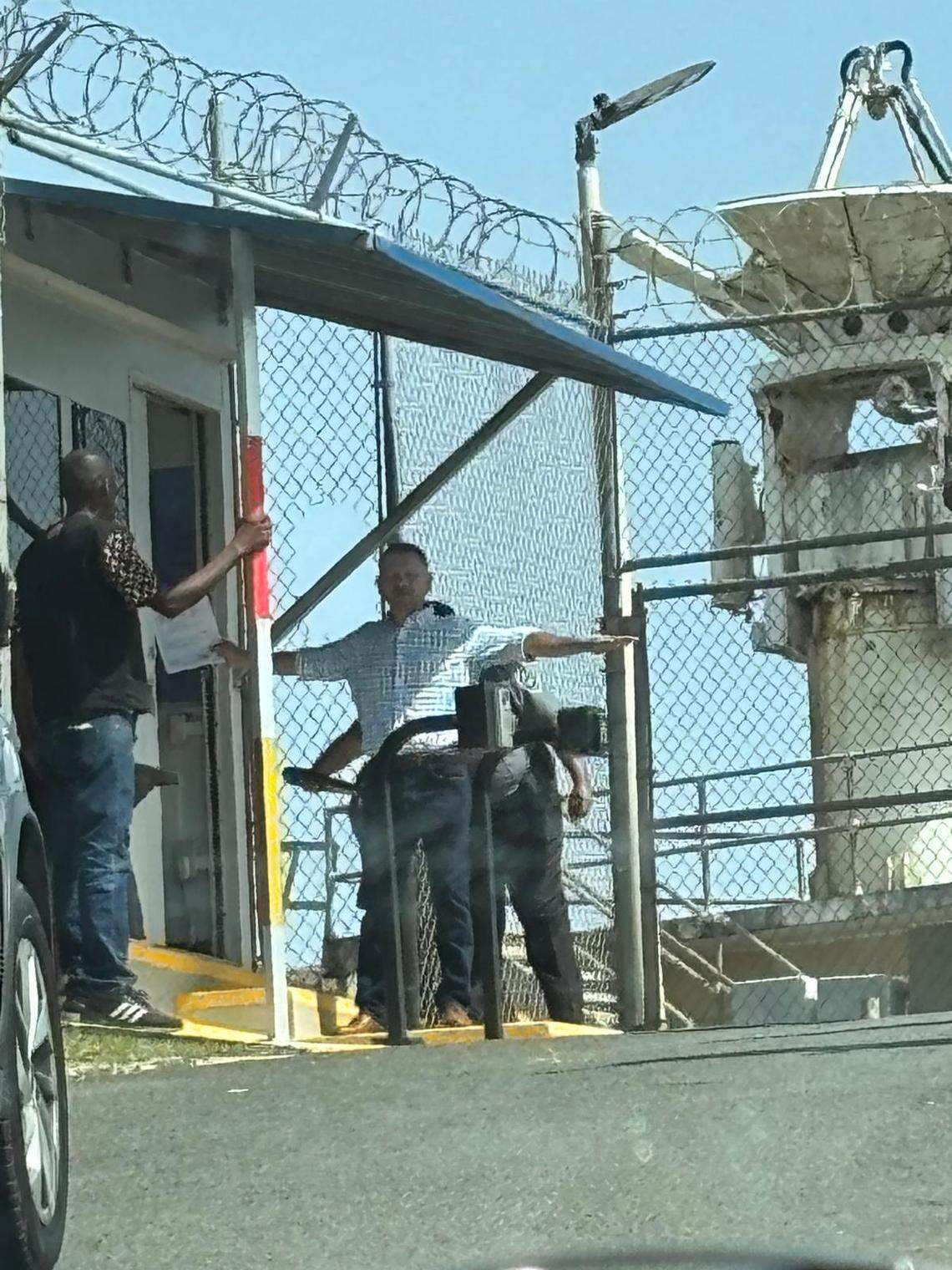
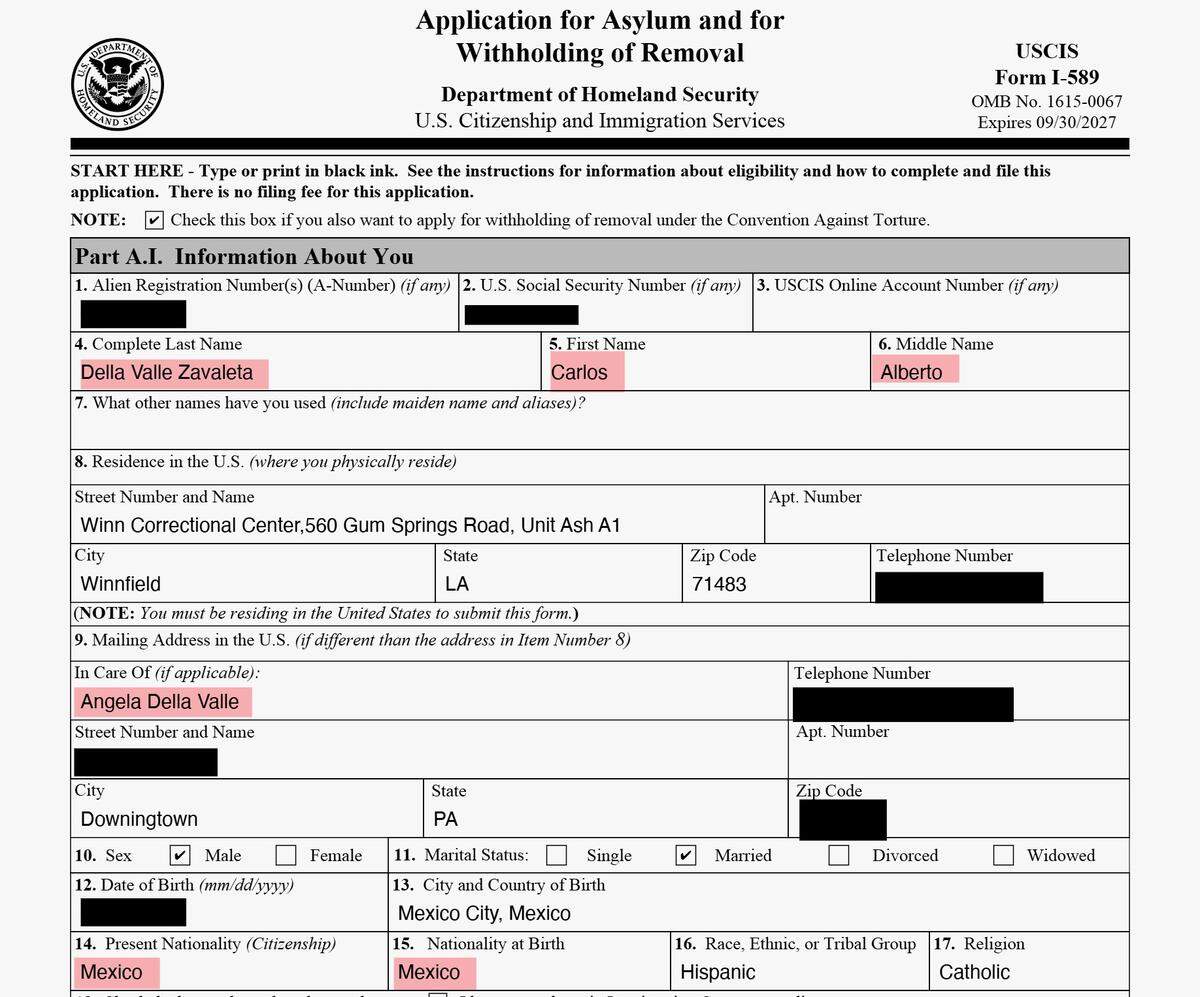
Every day, Angela Della Valle drives an hour through central Louisiana’s yellow-pine hills to visit her husband at Winn Correctional Center, in the middle of the Kisatchie National Forest. The former state prison now houses immigration detainees. She pulls up to the gate as sunlight filters through the forest foliage.
After driving through the first security checkpoint, a second guard inspects her rental car and verifies her ID. Inside the facility, Angela empties her pockets, a guard scans her with a metal-detection wand, pats her down and asks her to spread her legs.
She doesn’t mind. She’d wear a chicken suit if she had to. All that matters is being close to Carlos, a 49-year-old Mexican national who has been transferred to more than a dozen detention centers over the last five months. His only crime - being undocumented.
Angela, 49, has stayed at 21 hotels and rental properties across three states, including Florida, and in two U.S. territories since her husband of 23 years was detained at the facilities, including Alligator Alcatraz.
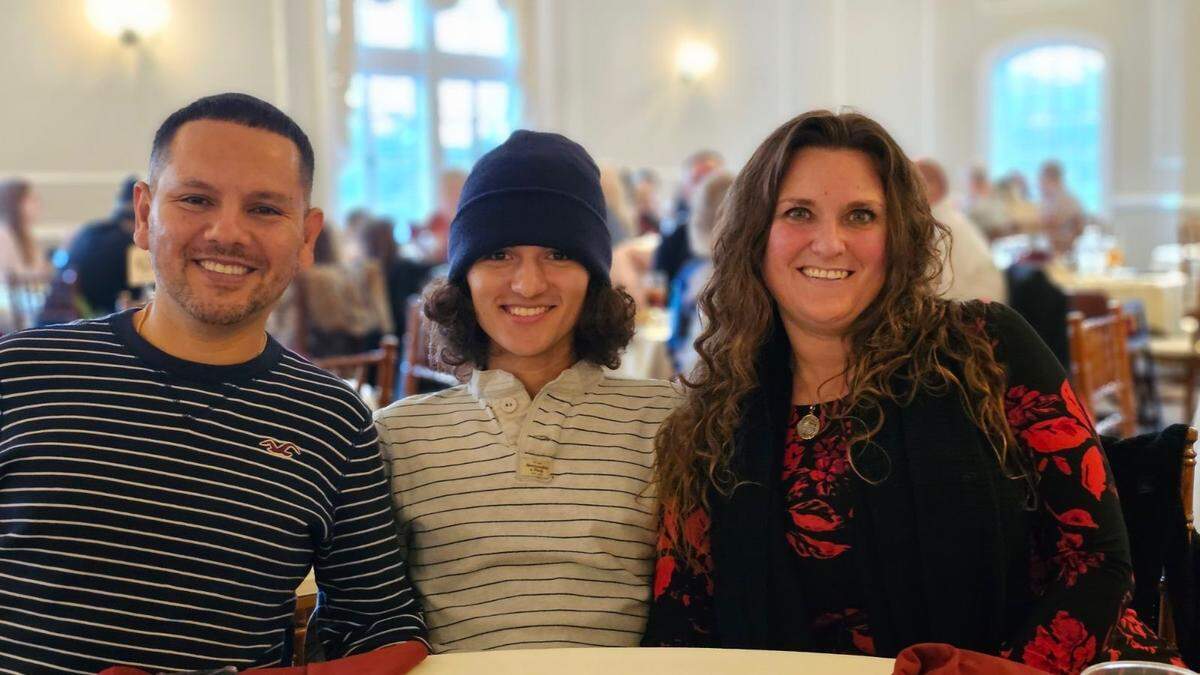
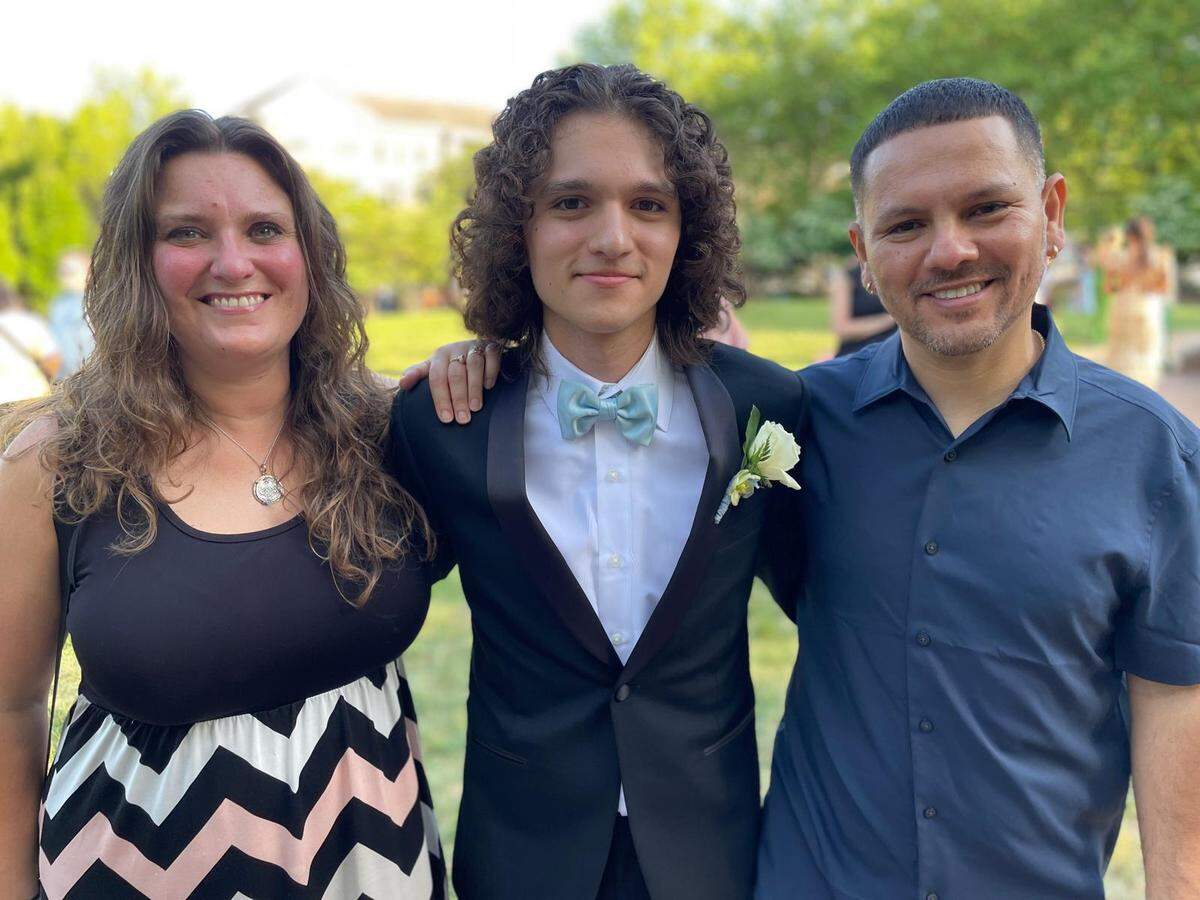
Families like Angela, Carlos and their son Alessandro, made up of U.S. citizens and undocumented members, are referred to as mixed-status. They have found themselves ensnared in an immigration vortex where simply being undocumented is treated as a crime. Marriage to a U.S. citizen provides a pathway to citizenship, but only if you enter lawfully. Those caught illegally entering the country could be barred from coming back for up to 10 years.
In 2024, the Department of Homeland Security estimated that 765,000 noncitizens, like Carlos, are married to U.S. citizens and lack lawful immigration status. Many have been married for more than 20 years.
It’s a grim situation. Under the Biden Administration, Carlos Della Valle would be a free man. The administration prioritized deporting violent criminals.
Under the Trump administration’s mass deportation campaign, the net has been widened. Immigration officials are not just going after the “worst of the worst.” Carlos and thousands of mixed-status families are being torn apart.
After the security checks at Winn, Angela walks through iron bars into a visitor hall. She and Carlos sit at a wooden table surrounded by plastic chairs. They have an hour together.
Angela is upbeat. Compared to so many others she has met in the same predicament, she’s lucky. She was able to take time off from work as a middle school teacher and doesn’t have to worry about kids at home since their son is now in college.
The family’s story has touched the hearts of their community in Downingtown, a small former paper mill borough in Chester County, Pennsylvania. Residents have helped raise funds to allow Angela to follow Carlos. Their story also inspired more than 200 letters calling for Carlos’s release.
Carlos has been transferred more than a dozen times



Before coming to the U.S, Carlos could not find a decent paying job in his home state of Guerrero, Mexico. He said he was assaulted four times by a local drug cartel for refusing to join. In 1997, he borrowed money from his grandmother, who lived in Guerrero and crossed the border into Douglas, Arizona, with the help of coyotes, people paid to smuggle immigrants across the border. He was later detained and deported.
Unaware that re-entering the U.S. after deportation is a serious offense – punishable by up to two years in jail – Carlos crossed again. He moved to Chester County to be closer to friends of his grandmother who live there.
Carlos met Angela in 1998. She was in college and worked nights teaching English as a second language. Carlos was one of her students. In her class, she noticed his kind smile and how the other students gravitated toward him. His good looks were a bonus, she said.
Their romance started as a friendship. Young, naive and unaware of immigration laws, they married in 2002 without consulting a lawyer. Carlos’s status was a secret from friends and Angela’s conservative-leaning family. But it didn’t affect their love. It was never a factor that crossed Angela’s mind. She only knew she wanted to be with Carlos.

After their wedding, a tough reality settled in. The first lawyer they consulted explained that Carlos might have to leave the country. A blow to the lovebirds. They held onto hope that Congress would pass a law to help resolve their situation.
Carlos kept a low profile. He remained cautious. Not drawing any attention to himself. He avoided even a traffic violation. Their lives revolved around their small town. Angela went to teach. Carlos went to work three minutes away. While Angela made dinner, Carlos cut the grass.
Carlos and Angela avoided any misstep that could lead to an encounter with immigration agents. They spent two decades trying to adjust his immigration status, despite the complication of his illegal entry.
Since 1996, multiple administrations have tried to address family separation. The Biden administration’s 2024 “Keep Families Together” program was intended to help these families adjust their legal status without risking separation. The program was suspended in November of 2024 after legal challenges by Republican-led states, including Florida.
It did not matter; Carlos’s second entry complicated his eligibility for this program.
Marielena Hincapié, an immigration scholar at Cornell University who helped shape the Biden program, said families like the Della Valles need federal lawmakers to change U.S. immigration law so they can stay together.
The Trump administration has made the situation even more difficult. It fired scores of immigration judges and de-legalized thousands of immigrants by stripping them of their temporary protected and humanitarian status.
“These are families who are deeply rooted, who are part of our communities, who are contributing,” Hincapié said. “The cruelty, the inhumanity and the complexity of the immigration system are being brought home to local communities in a way that people had never experienced or never understood before.”
While Carlos’s status cast a shadow over their lives, the family chose not to live under that cloud of fear.
For their annual Christmas vacations, they had traveled without incident to places like Puerto Rico, California and Florida. But in December 2024, they chose the U.S. Virgin Islands.
On Christmas Day, the Della Valle family wrapped up their week in St. Thomas with a hike on the three-mile Mermaid Chair trail, which overlooks a spit of land where the Atlantic Ocean meets the Caribbean Sea. They then hurried to the Cyril E. King airport in Charlotte Amalie for their afternoon flight to Miami.
Around 12:45 p.m., TSA agents scanned their IDs. Angela was about to go through the body scanner when she looked back and realized Carlos was missing.
“Where is my husband?” she asked the TSA agents. They did not answer.
For over six hours, Angela sat on the gray metal bench next to the TSA screening area, watching travelers remove their belts, put their shoes back on. Her eyes were fixed on the TSA entrance. Searching for Carlos among the families, many in Christmas pajamas, passing through the screening machines.
As the wait stretched on, a sickening dread coiled in her stomach and she felt like throwing up. The family’s deepest fear was coming true. Though no airport official answered her questions, she was certain they’d uncovered Carlos’s status. She started sweating. She wanted to use the restroom, but she was rooted to the spot, in case he reappeared.
Angela dialed a lawyer they had consulted months earlier regarding his status.
“He’s got this ICE detainer, so the best thing is to ask for him to be sent back,” the lawyer told her. “If any lawyer down there says they can get him out, they’re going to steal your money. They’re going to steal your time.”
“That’s not acceptable. You’re saying not to fight at all?” Angela pushed back.
Angela appreciated the lawyer’s brutal honesty. And for picking up her call on Christmas Day. She just could not believe that after Carlos had spent decades in the U.S., the lawyer’s solution was to send him back to Mexico.
“We’ve come too far,” she told herself.
Around 8 p.m, they had missed all their flights home. Angela refused to leave the airport. She sent their son, Alessandro, to a nearby hotel and sat by the airport doors with her luggage.
An immigration agent approached.
“You probably know, but your husband has an old deportation from 1997,” he told her. “We have to hold him in custody.”
Angela followed the immigration agent to retrieve Carlos’ luggage. Just a dozen steps inside the airport, she saw his suitcase and backpack. Then, an office with the door ajar.
While the ICE agent was talking, Angela, peering inside, spotted Carlos seated at a desk with another immigration official. He was moments away from being moved to an ICE holding facility in St. Thomas.
“Do you want to fight?” she shouted to him, with the agents listening in.
“Yes,” he yelled back.
Not guilty. Not a criminal
That Friday morning, two days after Christmas, Angela walked into the Ron de Lugo Federal Building and U.S. Courthouse in Charlotte Amalie. She met with a lawyer. He was a tall, slender man in a gray suit, wearing socks and sandals — quintessential “island guy,” she thought.
The judge immediately informed them that the lawyer had not filed the necessary paperwork. Angela was shocked, thinking, “This is over.” The courtroom doors cracked open, and a Black woman with long dreads walked in. A tall White guy accompanied her.
“Here is ICE” Angela thought. “They are coming for him.”
But the woman, Federal Public Defender Melanie Turnbull, had heard about Carlos’s case. She asked the judge for a brief recess and by 6 p.m., Carlos was released on a $20,000 bond and free to travel back home. The next step: an August trial to determine if he’d entered the country illegally.
Eight months later, Carlos was back in the courthouse. Twenty friends and supporters had flown in to St. Thomas from Pennsylvania. They waited for the trial to begin. They hugged Carlos. As the jurors walked to their seats, their eyes got big at the sight of the crowded courtroom.
Donald Trump was now president and his administration waged a sweeping crackdown on immigrants across the country.
Two of Angela’s friends created a GoFundMe page in case things did not go their way.
The president of the adhesive company where Carlos worked had voted for Trump. He believed in the immigration crackdown. But not for Carlos. He called Carlos’ life “exemplary.” He asked the judge in his letter to allow Carlos to remain in the U.S.
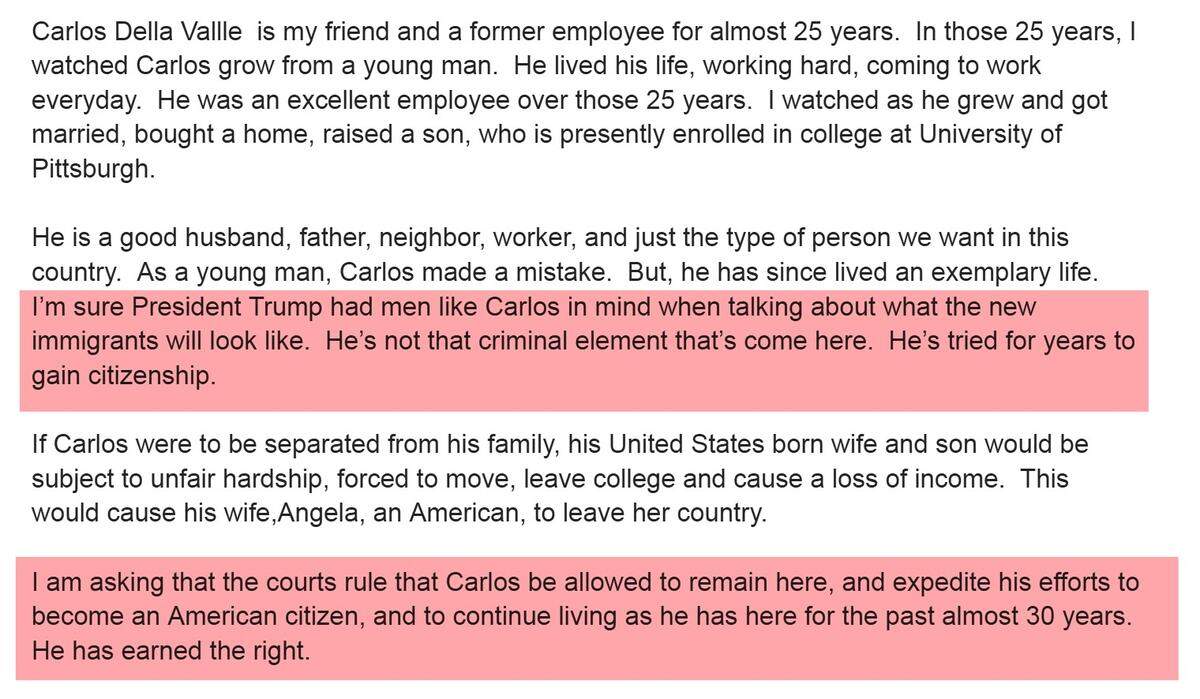
Carlos, he said, deserved to be a U.S. citizen.
“I’m sure President Trump had men like Carlos in mind when talking about what the new immigrants will look like. He’s not that criminal element that’s come here,” the company head wrote.
Letter after letter, the Chester County community wrote of Carlos:
After a two-day trial, a jury found Carlos not guilty of illegal reentry into the U.S., swayed by 200 letters from his community. They found Carlos had spent more than two decades at a company where he was now a plant manager. He paid his taxes. He was a good citizen.
The cheers had barely faded when an immigration agent pulled Carlos and Angela aside.
Though Carlos had just been found not guilty of illegal re-entry, it did not matter. In the new administration, he remained guilty of being undocumented.
“Carlos, I’m sorry,” the ICE officer told them. “You are without status, and you’re going into detention.”
She granted them one last night together.
The next morning, Carlos, dressed in blue jeans and a tucked-in blue-and-white collared shirt, reported to the St. Thomas ICE facility with his lawyer and turned himself in. Angela and several friends watched as Carlos was patted down and searched.
Immigration agents said Carlos would be transferred to Puerto Rico that very afternoon; Angela hurried back to their hotel. She packed a small backpack for him, filling it with necessities: underwear, toiletries, shirts, shoes.
It didn’t matter to her which of the two immigration detention centers on the island Carlos was being taken to. She only knew she had to catch the next flight to San Juan, Puerto Rico.
Detention Ping-Pong
Every day, for a week, Angela waited outside the ICE staging facility in Guaynabo, a city just a few miles from San Juan. She sat on the concrete pavement for hours in the scorching August sun, hoping she would be allowed to see Carlos. Visitation was not guaranteed.
The guards offered her an umbrella – she refused. “I wanted them to see our suffering,” she recalled.
“I want you to know that it hurts what we’re seeing. We don’t like this,” one of the guards told Angela. “We try not to show it.”
A week later, on August 19, Carlos went missing.
Angela typed his Alien number into the ICE locator, a tool that shows a detainee’s location. It only said Carlos was in ICE custody. She did not know if that meant deported or transferred.
She called their lawyer. She called the Mexican consulate.
The consulate told Angela that Carlos had been moved to Florida.
Angela learned that those in San Juan were often moved to a new tent detention center in the Florida Everglades.
She immediately packed up her rental in San Juan and flew to Miami. She checked in at the Miccosukee Casino and Resort on the edge of the Everglades.
Two days later, their lawyer found Carlos at Florida’s soft sided facility, popularly known as Alligator Alcatraz.
Angela immediately made her way to the site. She drove past the blue and red lights of state trooper vehicles stationed at the front before reaching the checkpoint.
She told the guard she was there to visit her husband. He looked at her pale face and green eyes and assumed her husband was an employee. The guard asked which department her husband worked in? Angela told him her husband was a detainee.
He turned her away.
“This place is everything they say it is,” Carlos told Angela during a call from the facility. The makeshift detention center, surrounded by chain-link fences, had detainees sleeping on brown bunk beds under bright, perpetual fluorescent lights. The detainees said they lived in unsanitary conditions.
The Everglades facility had drawn national attention for its name and for President Trump’s advice to potential escapees: “Don’t run in a straight line,” to avoid being eaten by an alligator.
Carlos was transferred 10 times within Florida. Like a human ping-pong ball, he was shuttled across the Sunshine State, from Miami to Orlando and then to Baker County. Angela was always right behind.
In late September, Carlos was transferred to Winn, one of the largest ICE detention centers in Louisiana. This part of the country is known as “Detention Alley.” It houses 14 of the largest immigration detention centers in the U.S.
In the fall of 2024, federal investigators began looking into Winn after receiving over 100 allegations of civil rights violations.
The allegations included a guard demanding a detainee “get down on his knees and beg” for his legal documents. Confinement of some detainees in a freezer. An incident where 200 cell-confined detainees were pepper-sprayed.
Although the complaints were jarring, the move to Winn meant Angela could see Carlos more often. Visiting him in Florida was almost impossible. She was always denied.
.jpg "PHOTO-2025-12-02-20-35-01 (1).jpg")
That September, Angela moved into a rental in Natchitoches, LA. Almost 30 miles away from Winn.
Back in Chester County, Pennsylvania, the local churches held vigils calling for Carlos to be brought home. Across yards, people placed ‘Bring Carlos Home’ signs. The GoFundMe campaign ballooned to more than $90,000 in donations.
On Columbus Day, Carlos called.
“Something’s going to happen. They say I’m on a list,” he told Angela.
Carlos was being transferred to Texas for deportation.
After a flight from Alexandria, Louisiana, to Brownsville, Texas, Carlos and the other detainees were told by border agents to walk across the border into Matamoros, Mexico. Some complied. Carlos refused. He did not want to give up on his family so easily.
The border agents transferred Carlos to a facility in Port Isabel, Texas. Angela again was right behind.
Three days later, Carlos was back at Winn.
Dad in detention
The constant back-and-forth, the waiting, the fear that Carlos will be forced to move to Mexico, was taking its toll — not just on Angela, but on their son, Alessandro.
The fall semester started out tough for Alessandro. With his father in detention, he had to grow up fast. He was on his own.
“It can’t get any harder,” the 20-year-old thought as he drove back for move-in day of his junior year at the University of Pittsburgh. “Then it gets harder.”
For the first time, Angela and Carlos weren’t there. They had always driven back to school with him to help hang curtains and set up his room. He felt empty during the car ride. He tried playing music to drown it out — the emptiness remained.
When family weekend came, Alessandro was alone.
For three months, he did not see his parents. He only talked to his mom and dad on the phone.
In November, he decided to head down to Louisiana.
As Alessandro drove with his mom toward Winn, he was surprised by how large the place was. He had imagined something smaller. The prison seemed to grow as they drew closer.
The layers of razor wire. Going through metal detectors. Being patted down by guards. All of it startled Alessandro. He was very nervous.
“It feels like a prison,” Alessandro thought as the metal-sliding bars leading to the visitor waiting area slammed behind him.
He and Angela sat on the elementary school-style tables, eyes locked on the gates where detainees come through to see their families.
Alessandro was scared. He imagined his dad would look beat up.
Carlos entered the detainee entrance to the visitation area. Alessandro broke down crying.
His dad looked skinny and pale. Carlos had lost a lot of muscle mass compared to the man Alessandro remembered. His dad had deep bags under his eyes. Carlos had not slept in days.
Alessandro clutched his dad tightly. It felt like home. Something he hadn’t felt in months.
Angela looked on. Her eyes swelled as she fought back tears. She was shattered by thoughts of all the father-and-son moments Carlos and Alessandro had missed — things like girlfriend issues.
They held hands the entire visit. Carlos told Alessandro he needed some adjustments to his new haircut. He had trimmed his long, curly black hair. They talked about school, Alessandro’s recent reunion with his ex-girlfriend, what it was like for Carlos at the facility. The hour came to an end.
Angela was angry. Mad at the immigration system that robbed her family of time.
The immigration courts were slow. It did not matter what legal argument was made. Her husband remained detained.

That weekend, Angela struggled to be present with Alessandro. She took him to a zoo in Alexandria, a small town in Louisiana. As they toured the zoo, she kept thinking, “Carlos should be here.”
Carlos called. He realized they were at the zoo and told her he would call later. Angela wanted to keep talking. It annoyed Carlos. He wanted her to savor every moment with their son. Something he could not do.
A group of men had just been deported from Winn. One of them had four kids.
“They didn’t care,” Angela thought to herself about ICE’s decision to deport the man. It could have been Carlos.
Angela is frustrated. She does not understand why her husband is being moved around like human cargo. He is not a criminal. He was found not guilty of any immigration-related crime.
The uncertainty of Carlos’ fate and potential deportation is sometimes the only thing Angela thinks about.
She is torn between being a good mother and a wife.
Carlos’s shadow
On November 20, Angela was sitting in her rental. Her son was at school. Carlos was at Winn. They all joined a video call. It was a court hearing to stop Carlos from being sent back to Mexico. He had not yet exhausted all his legal options, including asylum.
“We could be home for Thanksgiving,” Angela thought to herself. She was hopeful.
“Why do you think you’re still at risk if returned to Mexico?” the judge asked Carlos. Angela watched on.
Carlos told the judge he had been in the U.S. for almost 28 years. He feared people would look at his family and think they were wealthy.
“I have a White American wife and son,” Carlos told the judge. “They’re going to find me. They’re going to kill or extort me.”
They had submitted research and news articles to the court, detailing the violence Carlos might face if returned to Guerrero, Mexico.
In the spring of 2025, 11 bodies were discovered in Tecoanapa, Guerrero, following a clash between local criminal groups. In another city, the mayor was beheaded. The U.S. State Department warns U.S. travelers against visiting Guerrero, citing cartels and terrorist groups.
The agency has assigned the highest alert level, “level 4,” which advises “do not travel.”
“There is a risk of violence in the state from terrorist groups, cartels, gangs and criminal organizations,” the advisory states.
Lawyers for the government disagreed. They said the fear of violence described was too general.
Roughly 25 minutes later, the hearing was over.
The judge agreed with the government. He reinstated a deportation order for Carlos. He told Carlos’s lawyers they can appeal his decision.
“I’m really sorry. I wish you guys luck. Happy Thanksgiving,” Angela remembered the judge saying.
Carlos could be deported any day now. His lawyer appealed the judge’s decision. The appeal is still making its way through the court.
The family’s lawyer declined to talk to the Herald.
In response to questions from the Herald about Carlos’s case, DHS Assistant Secretary Tricia McLaughlin said the Trump “administration is not going to ignore the rule of law.” She said that “illegal aliens” like Carlos should self-deport and receive a $2,600 reward. That would give him a “chance to come back to the U.S. the right legal way to live the American dream.”
The agency spokesperson did not address the fact that Carlos had previously been found not guilty of illegal reentry.

U.S. Rep. Maria Elvira Salazar, a Miami Republican, introduced a bill last year that could help Carlos. The bill would allow immigrants like him, who have been in the United States for more than 5 years, to apply for legal status, but the bill has made little progress since it was first introduced.
Angela is in a perpetual state of anxiety, alarmed every time she hears the phone ring. It could be that Carlos was deported. She is prepared to travel wherever he goes.
Their plan is simple. Alessandro must complete his schooling. Angela will spend a few weeks in Mexico before returning to Downingtown to maintain their home.
Angela is also helping other families. If a detainee’s commissary account is low on funds — needed to call family — Carlos will sometimes ask Angela to add money to the account.
Angela’s fight for her family has become lore in immigrant circles.
In late December, Angela checked in on one of Carlos’s friends who had been detained at Winn. The man had been deported to Mexico and wanted Carlos to know he was reunited with his family.
He said something that made Angela feel all of her efforts did make a difference.
“Eres una sombra atrás de Carlos y la mejor medicina para él es verse,” he told Angela. “You are a shadow behind Carlos, and the best medicine for him is to see you.”
This story was originally published January 31, 2026 at 5:00 AM.