How is Trump’s immigration policy affecting Miami businesses? A new survey asks
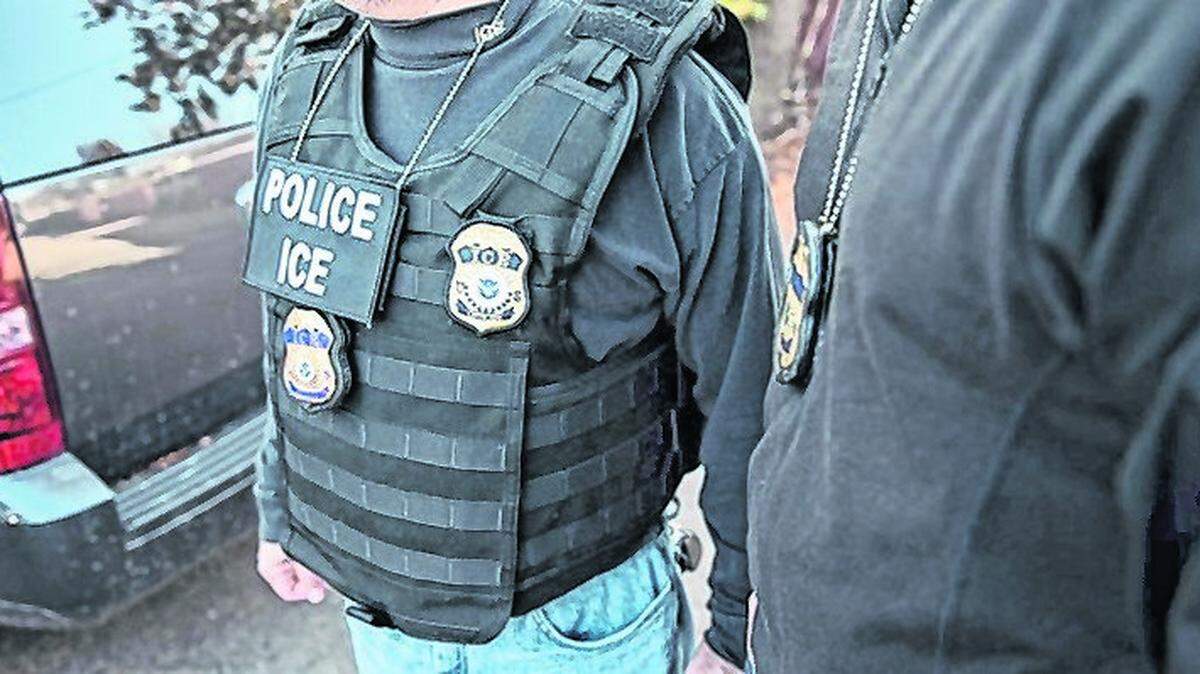
An immigration crackdown has shaken communities throughout the country. Perhaps nowhere is that more the case than in Miami-Dade County, where several cities have signed up to collaborate with federal authorities on immigration enforcement, putting many non-citizens on alert.
Miami businesses are watching the issue closely, said Alfred Sanchez, CEO of the Greater Miami Chamber of Commerce. He noted “concern” from some of the Chamber’s 1,400 members about what shifting immigration policies mean for their workers and, in turn, their business operations.
To measure how local firms are feeling, the Greater Miami Chamber and Florida International University have released a short anonymous survey gauging local business sentiment on the matter. The survey does not ask respondents for their name or for the name of their business.
Click here to take the survey.
Sanchez said his organization wants to “get our first real picture of what the impact is today and what people think it’s going to be tomorrow.” That data will help businesses understand what others in the community are feeling, he said, adding that it could also be informative for lawmakers.
Immigrants make up 60% of Miami-Dade’s workforce.
More than 40% of the local immigrant community — which totals roughly 1.47 million people — does not have U.S. citizenship, according to data from the U.S. Census Bureau. They are either on green cards or visas, have some protected status or are here illegally. Census data shows that non-citizens constitute more than 20% of Miami-Dade’s entire adult population.
But recent proposals by the Trump administration, including an effort to strip protected status from a half-million Cubans, Haitians, Nicaraguans and Venezuelans, could see scores of people lose their work permits.
“What’s legal today may not be legal tomorrow,” Sanchez said of his members’ immigration anxieties, “and everybody who’s working legally may all of a sudden lose their status.”
Peter Dyga runs the Associated Builders and Contractors Florida East Coast Chapter, one of Florida’s largest builders’ associations. So far, he hasn’t heard much concern from his members, many of whom are large companies. A 2023 state law compelled firms with 25 or more employees to verify their workers’ legal status. “We’re just more prepared because we went through that,” said Dyga, noting that many of his association’s members have already purged their staff of undocumented workers.
But, he added, the construction industry’s labor pool would be negatively impacted should the Trump administration follow through on its recent talk of deporting upward of 20 million people. As an industry, construction has long been one of South Florida’s biggest drivers of economic growth.
According to Pew Research, Florida’s undocumented workforce stands at 625,000 people, the third largest in the country behind California and Texas. That’s almost 8% of Florida’s entire labor pool.
Those workers are most present in the construction, agriculture and service industries. In the event of a more widespread deportation scheme, those sectors will be most vulnerable, said Romy Moreno, Florida deputy director of the America Business Immigration Coalition, a bipartisan advocacy group promoting legal immigration reform.
But a company’s concerns might have as much to do with its size as it does with its field. Moreno thinks smaller businesses — which haven’t been subject to the same verification requirements as their larger counterparts — might have more undocumented workers on their payroll, potentially leaving them more exposed. This year, the Florida House of Representatives considered a bill, HB 955, that would have required all private employers, including those with fewer than 25 employees, to verify their workers’ legal status. While state senators did not approve the bill, Sanchez said it could have had an outsized impact on smaller businesses with fewer resources to replace knowledgeable workers lost to deportation.
Despite those concerns, Moreno said many businesses in her network are afraid to speak out.
“We have around 200 members,” she remarked. “They don’t want to speak publicly” about how federal and state immigration policies are affecting them “because they don’t want to be punished.” That wariness comes as the Trump administration has targeted private companies, including a number of major law firms, it views as unfriendly.
The Greater Miami Chamber’s survey aims to mitigate those fears by letting respondents answer anonymously. “We’re trying to remove as many barriers as possible” to participation, said Sanchez.
All of this, he stressed, is about gathering data and reducing speculation. Then, armed with numbers, “people can do something about it.”
This story was produced with financial support from supporters including The Green Family Foundation Trust and Ken O’Keefe, in partnership with Journalism Funding Partners. The Miami Herald maintains full editorial control of this work.
This story was originally published May 7, 2025 at 1:08 PM.