
Trump administration rolls back extension of Temporary Protected Status for Haitians
The Trump administration has rolled back an 18-month extension of legal immigration protections for over half-a-million Haitians temporarily residing in the United States, creating uncertainty and anxiety as their homeland continues to veer on the brink of a violent collapse led by armed gangs.
The Department of Homeland Security announced on Thursday that Haiti’s Temporary Protected Status, which gives people from countries in turmoil who are already in the U.S. deportation protections and work permits, will now end on Aug 3. Homeland Security Secretary Alejandro Mayorkas, who served in the Biden administration, had previously extended Haiti’s TPS through Feb. 3, 2026.
“Biden and Mayorkas attempted to tie the hands of the Trump administration by extending Haiti’s Temporary Protected Status by 18 months — far longer than justified or necessary,” said a DHS agency spokeswoman in the new administration. “We are returning integrity to the TPS system, which has been abused and exploited by illegal aliens for decades. President Trump and Secretary Noem are returning TPS to its original status: Temporary.”
Ira Kurzban, a prominent Miami immigration attorney who sued Trump when he tried ending TPS for Haitians during his first term, said the decisions to roll back protections for Haitians and Venezuelans, which the administration had announced earlier, will send people into danger.
“After being unable to deliver on his promise to deport millions of criminal and ‘illegal aliens’ because it was a big lie from the beginning, he is taking away legal status from Venezuelans and now Haitians so he can hide his lie,” Kurzban said. “Even an elementary understanding of Haiti and Venezuela would lead any normal person to understand these people are in danger.”
Kurzban added: “We will sue.”
Guerline Jozef, the head of the San Diego-based Haitian Bridge Alliance, said her organization is ready to accompany anyone who wants to challenge the decision in the courts.
“The Trump administration’s decision to cut Temporary Protected Status early for roughly 500,000 Haitian nationals is a cruel and calculated attack on Black and brown immigrants,” she said. “Slashing six months of protection while Haiti faces rampant insecurity and a humanitarian crisis is nothing short of a death sentence. This is racism in policy form, and we must resist it at every turn. We call on Congress and allies to apply maximum pressure on this administration to extend TPS for Haitian recipients and protect their right to safety and stability.”
The administration’s decision is a huge blow to Haiti, where the U.S. has spent more than $620 million to support a United Nations-authorized multinational security mission. Despite the force’s presence, it has been struggling to break the stronghold of armed gangs that now control up to 90% of metropolitan Port-au-Prince, the capital.
.JPG "48cadf14-14be-43ee-8f04-14f69d2eb573 (1).JPG")
Earlier this month, after initially freezing tens of millions of dollars in aid for the mission, Secretary of State Marco Rubio approved $40.7 million in exemptions. In providing the waivers, Rubio not only issued reassurances of the U.S. commitment but during his visit to the Dominican Republic, which shares the island of Hispaniola with Haiti, recognized that the force “the way it is currently constructed, will not be enough” to defeat the gangs.
The gangs have forced more than a million people to flee their homes and neighborhoods, including hundreds of police officers and their families; schools have shuttered and 80% of the hospitals in the capital are not working. Last year, gang violence, including at least four massacres, led to the deaths of more than 5,600 Haitians.
“Haiti doesn’t even have the capacity to receive 50,000 people,” Pierre Esperance, a human rights advocate in Port-au-Prince, said. “A large chunk of the people in the metropolitan Port-au-Prince area forced out of their homes are living on the streets. The gangs occupy more than 80% of the capital.... There is no structure to take care of these people and in many cases, gangs now occupy their homes.”
Esperance said given the United States’ investment in the multinational security mission, which is being led by Kenya, “they know that the security situation is not good. Even their embassy isn’t properly functioning. They should have a consideration for Haitians.”
Democratic U.S. Rep. Frederica Wilson of Miami said in a statement that sending Haitians back to their home country right now was “a kiss of death.”
“This decision is completely outrageous and part of this administration’s reign of terror,” she said. “The turmoil in Haiti is real, and instead of turning our backs, we should be supporting the Haitian people.”
The Trump administration’s announcement occurred at the very moment Caribbean leaders were discussing the deteriorating security and humanitarian crisis in Haiti, a member country, during a meeting in Barbados. After being steadfast in their push last year for a date to hold elections, which last took place in 2016, leaders were much more cautious this time around.
Even those like Antigua and Barbuda Prime Minister Gaston Browne who believe elections need to take place before the end of the year to finally put a legitimate government back in office acknowledged that the security situation remains challenging even with the presence of the underresourced Kenya-led mission, known as the MSS.
“The MSS obviously has to scale-up and ensure they bring some level of stability,” Brown told the Herald. “The U.S. and other developed nations need to have troops on the ground to stabilize the situation so that Haiti can have a legitimate government.”
Under a 1990 law, the secretary of Homeland Security has the authority to designate a country for Temporary Protected Status if it’s too unsafe for people from that nation currently in the U.S. to return to their home country. Those conditions can include armed conflict, natural disasters or other extraordinary conditions. The Homeland Security secretary can continue to extend that protection pending a review of conditions.
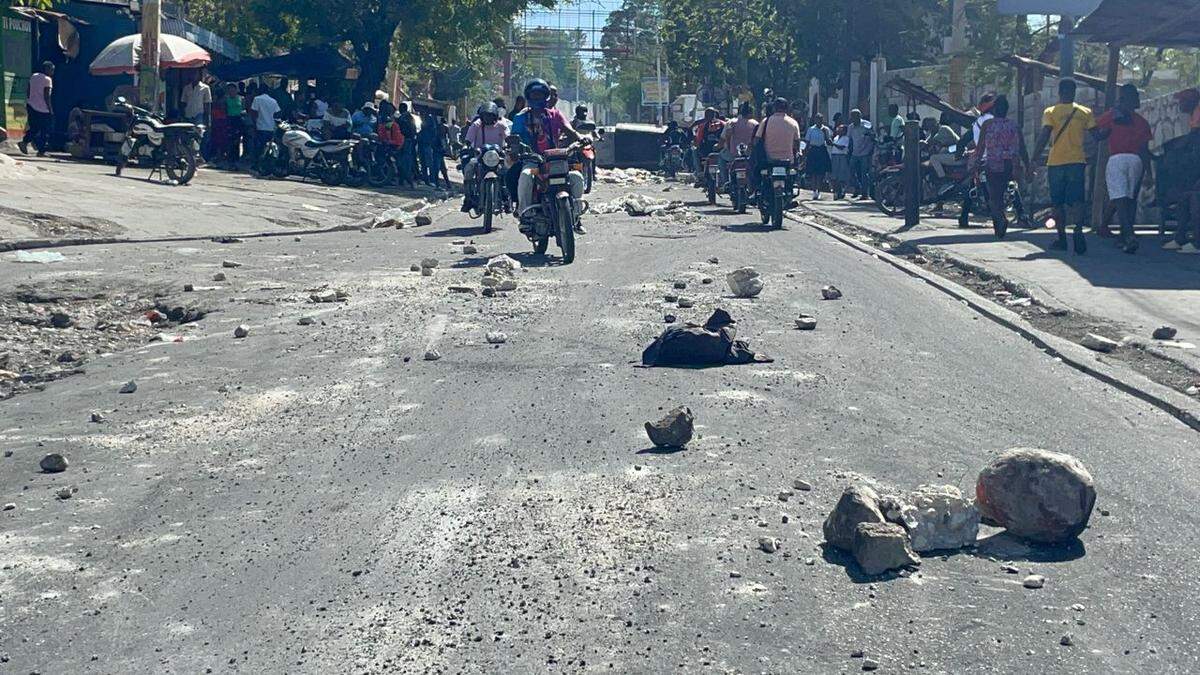
In July 2024 Mayorkas extended Haiti’s TPS protections, saying that the Caribbean nation was experiencing “simultaneous economic, security, political, and health crises.” Extreme gang violence continues to be an issue in the Caribbean country, and gangs hold a significant presence in Port-au-Prince, the capital. Haiti’s government has also been in significant turmoil since the resignation of its prime minister last year and the assassination of its president in 2021. Trump had previously attempted to end TPS for Haiti during his first term in the White House, but was ultimately unsuccessful.
READ MORE: Venezuelans sue Trump administration, claiming racial bias, unlawful revocation of TPS
The current Trump administration has also ended Temporary Protected Status for roughly half of Venezuela’s recipients last month, after announcing that it would roll back an 18-month Biden-era extension. Many immigration advocates and Haitian leaders worry that Haiti’s TPS will face a similar fate, and that people will be forced to return to dangerous conditions in Haiti.
Randy McGrorty, executive director of Catholic Legal Services in Miami, said the administration is ignoring that the situation in Haiti has not improved, the requirement for ending TPS.
“Clearly country conditions in Haiti have not changed since the original designation to safely return Haitians from the United States, which is what the statute requires.”
This story was originally published February 20, 2025 at 4:28 PM.