
In accidental leak, U.S. told Cuba that potential deportees fled island fearing persecution, torture
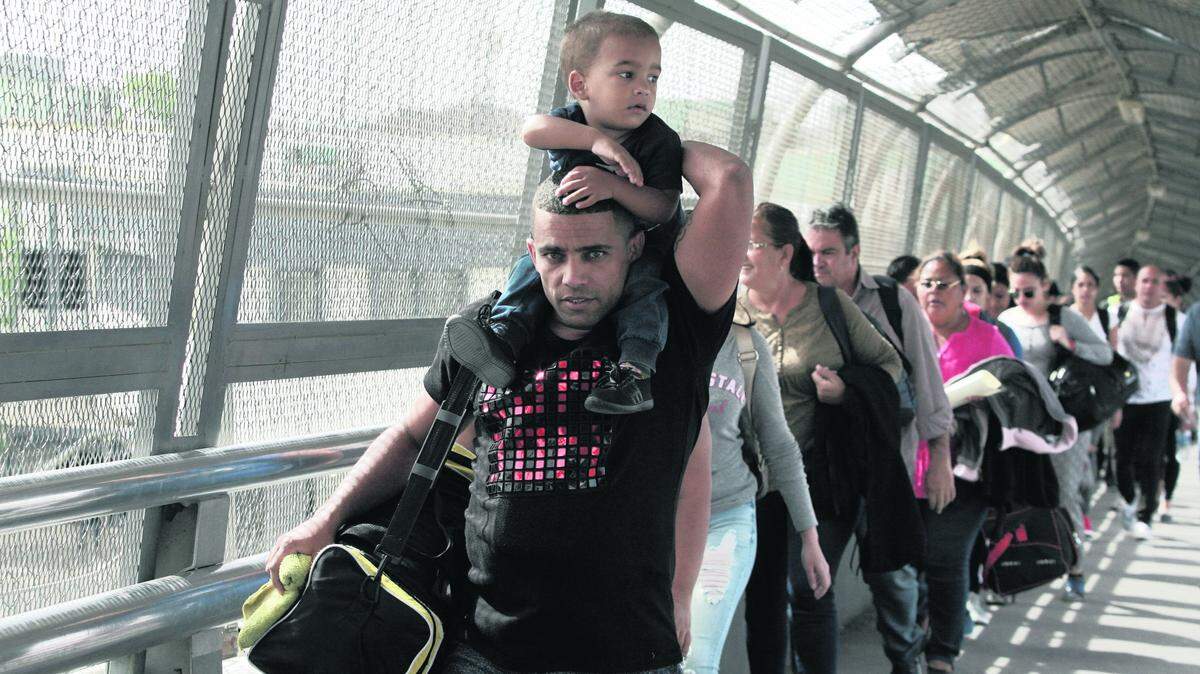
When José Enrique Bernal Castillo made his asylum claims to the federal government, the last thing he ever imagined was that Immigration and Customs Enforcement would accidentally publish his personal details on its public web page.
Bernal Castillo, 28, from the central Cuba province of Sancti Spíritus, is among more than 6,000 immigrants whose names, nationalities, birthdays and other confidential data, including the outcomes of credible or reasonable fear interviews, were accidentally posted to the agency’s website on Nov. 28.
Even worse, U.S. officials recently told the Cuban government that the deportation of several Cuban migrants back to the island would be delayed due to the federal government leak of confidential information — indirectly confirming to Havana that the potential deportees sought to flee persecution, even though federal regulations bar the U.S. government from releasing such information.
In a letter ICE sent detained migrants whose information was revealed, the agency apologized for the mistake and said it would delay deportations by a month so the detainees could decide what actions to take, including consulting about the development with attorneys.
“We do not understand how after this information is published, instead of giving us support, how are they going to deport us?” said Bernal Castillo, who is currently detained at the Broward Transitional Center, an ICE detention center for immigrants in Pompano Beach.
The Los Angeles Times first reported Monday about how the leak had affected Cuban migrants, as well as about the original leak last month. The information was inadvertently posted in an Excel spreadsheet in ICE’s website that included extra pages with the compromising information.
Several detainees at the Broward Transitional Center shared similar stories with the Miami Herald on Tuesday. They said they had left Cuba in the fall after experiencing persecution and entered the U.S.-Mexico border through Piedras Negras, across from the Texas city of Eagle Pass. They had failed their credible-fear screenings, in which authorities initially determine if someone has sufficient grounds to apply for asylum, a decision the courts upheld. ICE shuffled them through detention centers in Texas.
Then, in early December, the migrants said the agency told them their personal information had been leaked by the agency and they were transported to the Broward Transitional Center. Between 17 and 25 Cubans in that situation are currently detained in the Pompano Beach facility, the detainees said.
Melissa Contreras, a Miami-based immigration lawyer, is representing Bernal Castillo and two clients who were affected by the Nov. 28 data leak. She said it could be “reasonably foreseen” that if people are returned to their home countries, their lives and freedom will be at risk, and that they could experience more persecution if deported.
“It appears to be a mistake. However, it has very serious implications for the detainees, especially from countries whose regimes persecute citizens, such as Cuba,” she said.
Typically, if migrants fail their credible-fear screenings, they can request that a judge reconsider that decision. A judge can uphold or not uphold the asylum officer’s negative decision.
She believes that the massive information leak changes the cases for affected detained migrants, especially those from countries with governments with a track record of human rights violations and suppression of political dissent. She called the situation “extraordinary circumstances that violate the right to privacy and cause extreme damage to the rights of life and liberty.”
“I expect that they will publish at least what they will do,” she said, “because expecting to [deport] them a month after the leak is not an option, especially for certain countries.”
Damián Calderin Prendes, a 24-year-old Cuban man from Havana, said he left Cuba in October 2021, prompted by an incident the year before in which a pro-Cuban government neighborhood leader had physically assaulted him and said he was a gusano, a worm. After that, he said, they tried to force him to join a neighborhood block organization called the Committees for the Defense of the Revolution.
He’s among those detained at the Broward detention center whose information was leaked.
“If before we were deserters for simply leaving, imagine now,” he said.
Last month, two U.S. officials told the Miami Herald that deportation flights to Cuba, which have been paused during the COVID-19 pandemic and then later because the island nation has refused to accept deportees, would resume. But two U.S. officials said the deportation flights have not restarted.
ICE referred questions from the Miami Herald to its parent agency, the Department of Homeland Security, which did not respond to a request for comment.
Human Rights First, an international nonprofit group, reported the original leak by ICE in late November. The group’s refugee advocacy director, Robyn Barnard, told the Herald that the leaked data was “incredibly sensitive” and involved people hailing from Eritrea, China, Iran and Afghanistan as well as Cuba.
The repercussions of information leaks like this one, she said, can extend beyond the detained immigrants and also affect loved ones who have not left their country.
“The immediate fear is, what’s going to happen to my family back there?” she said. “Will they be interrogated, surveilled?”
She questioned how the U.S. government could have told the Cuban government that people they would put on deportation flights were part of a data leak that solely involved asylum seekers. She also said she did not understand why they would need to divulge information beyond names or other information needed to emit travel documents.
“How do you not think through the catastrophic impact that would have on these individuals?” she said. “I don’t know how anyone could do that accidentally.”
Federal immigration law aims to protect applicants who are fleeing countries where seeking asylum in the United States could result in retaliation, as well as any family or friends who remain in the home country. Barnard said the U.S. government should release these individuals and bring any family members who are still in Cuba to safety.
“They need to take immediate steps to fix what they’ve done for these individuals,” she said. “And I want to know if they’ve done this to anyone else.”
According to federal immigration regulations, application information about refugees or asylum seekers cannot be made public to third parties unless there is written permission from the applicant or “at the discretion” of the Homeland Security Secretary.
“DHS will coordinate with the Department of State to ensure that the confidentiality of those records is maintained if they are transmitted to Department of State offices in other countries,” the law states.
Talks between U.S. and Cuban officials to restart deportation to Cuba earlier this year were prompted by one of the largest numbers of Cubans in several decades to arrive in the U.S. Almost 225,000 Cubans arrived at the U.S.-Mexico border in the fiscal year that ended Sept. 30.
The Obama administration struck a deal with Raúl Castro in 2017 to send Cubans who arrived at the border back to the island if they didn’t have a strong asylum claim, but the flights were suspended during the pandemic, and later, Cuban authorities refused to take deportees.
Biden administration officials traveled to Havana to discuss the flights and the full resumption of consular services. They also announced the restart of the Cuban Family Reunification Parole Program, which provides a fast track to reunite people from the island nation with relatives in the United States.
Omar Camuzo, 58, from the central province of Villa Clara, said he had left the island nation because Cuban police had threatened him several times and asked for money. On one occasion, during elections, they had come to his house to force him and his family to vote for the Communist Party’s slate of candidates. When they refused, he said, they were taken into custody and interrogated.
Camuzo came to the U.S. in mid-October with his wife. He’s been in custody at the Broward Transitional Center ever since. Now, he not only fears deportation to his home country, but the possibility that the Cuban government will retaliate because he left and because his information was leaked.
“If I was afraid before, now it’s worse,” he said. “Now what I feel is terror.”
This story was originally published December 20, 2022 at 1:27 PM.