‘My child’s freedom is tied to my own.’ For DACA parents, court ruling brought tears of joy
After shedding tears of joy when the U.S. Supreme Court announced its decision last week to uphold the Obama-era program that protects her from deportation, Maria Angelica Ramirez turned to her son, Julio Gabriel, and tried putting the momentous ruling in terms the 5-year-old might be able to understand.
“I sat down with him and I tried to explain that Trump wanted to do something, and there is this group of people, who are called the Supreme Court, that get to decide if what Trump said is cool or not. So I told him that they thought that what Trump wanted, which was for me to leave this country, was not OK,” said Ramirez, a 33-year-old Colombian immigrant who was brought to Miami when she was 14.
“I don’t think he really got it,” she added with a laugh. “But afterwards he understood that it was a celebration. He got hyped up.”
In a 5-4 decision, the court halted the Trump administration’s effort to eliminate the Deferred Action for Childhood Arrivals program, or DACA, which has since 2012 allowed immigrants brought to the United States as children, such as Ramirez, to apply for a temporary status that shields them from deportation and allows them to work.
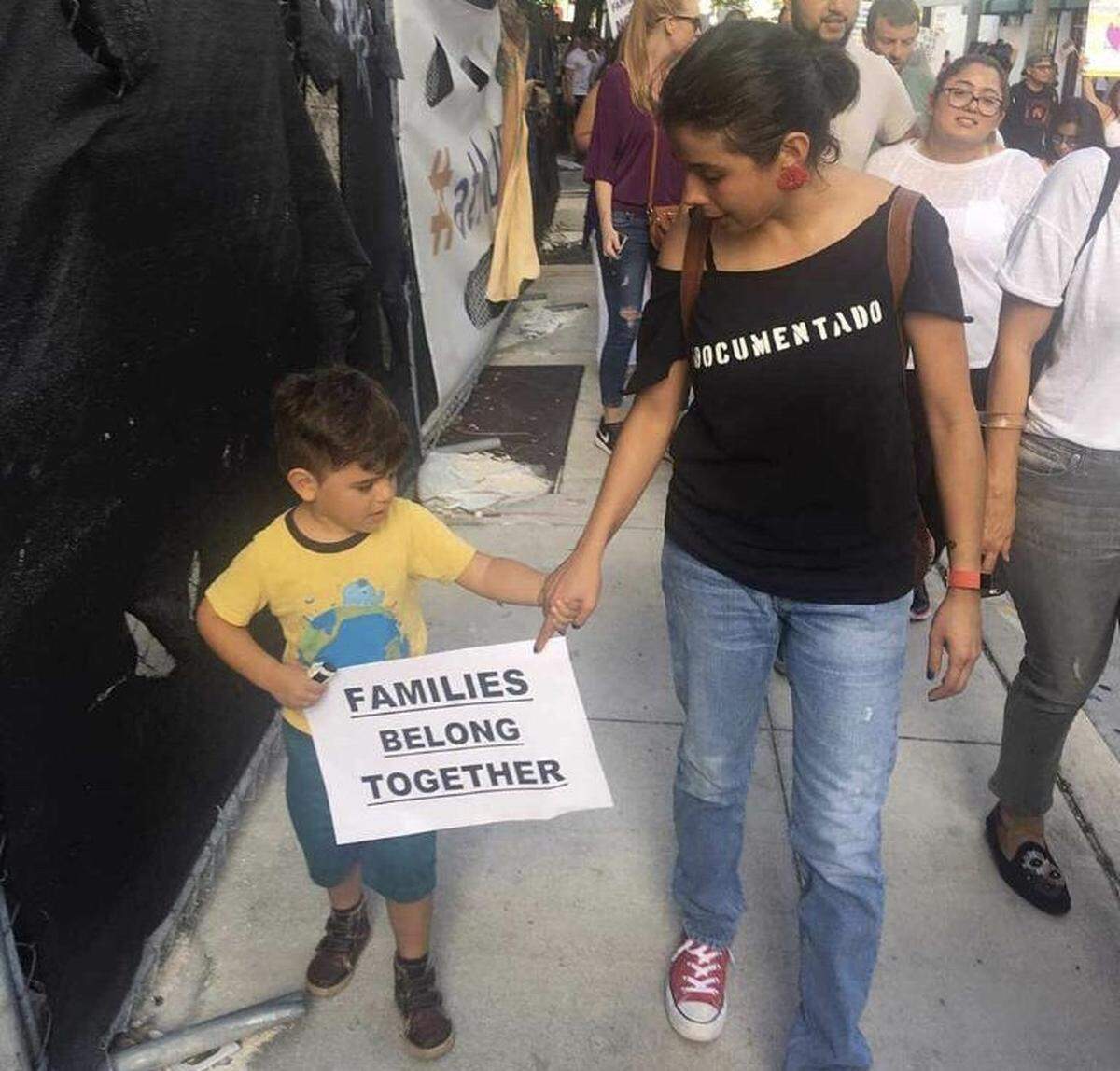
Although the ruling was based on procedural issues and leaves the door open for the Trump administration to rescind DACA at a later date, the June 18 decision meant program beneficiaries, known as Dreamers, could breathe a sigh of relief.
Among those with the most at stake when the ruling came down were Dreamers who have started families of their own, and are parents to U.S.-born children.
According to the Center for American Progress, there are about 7,200 U.S.-born children of DACA recipients who, like 5-year-old Julio Gabriel, call Florida home.
For those families, the preservation of DACA puts the prospect of children losing their parents to deportation at bay, at least for now.
“It’s not just the lives of us DACA recipients. You also have to take into consideration our families and our children,” said Blanca Sanchez, a Dreamer who is raising a 9-year-old son, Benjamin, in Pembroke Pines. “I think people need to realize that many of us are not teenagers anymore. I mean, yeah, we’re young, but we’re not that young, honey.”
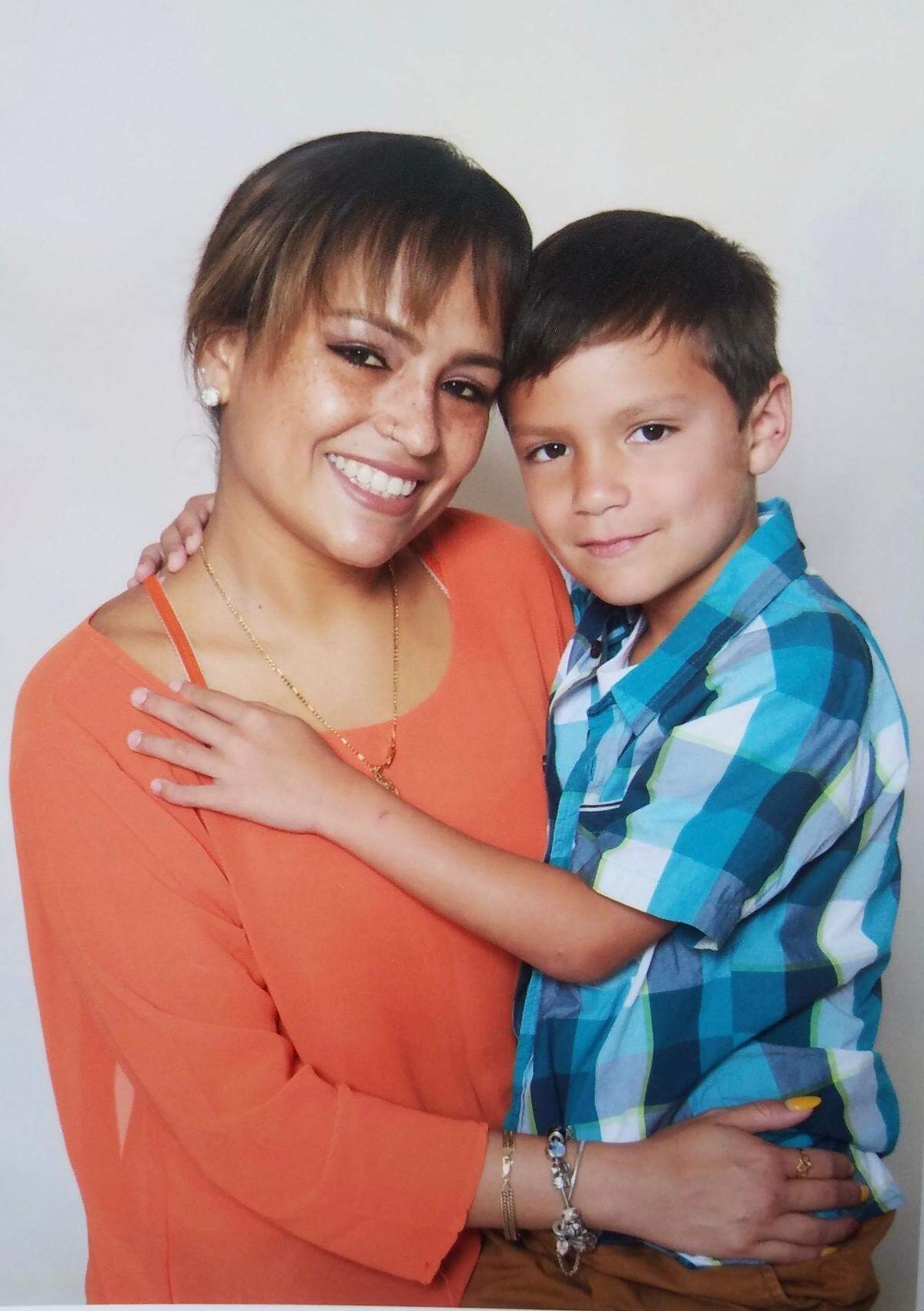
Though often referred to as “DACA kids,” more than a third of Dreamers are now older than 26. And according to a recent study conducted by the National Immigration Law Center, United We Dream, and others, more than a quarter of Dreamers have a child who is a U.S. citizen.
For Sanchez, who was brought to the U.S. from Colombia when she was 7, younger than her own son is now, the announcement of the Supreme Court decision felt like a victory.
“I looked at my son and it was like, yes, baby, we got this. We still got this. It felt amazing,” she said.
Specter of DACA deportations led to difficult conversations
Lorena Jofre, an immigrant from Chile, whose 9-year-old daughter Anabelle was born in the United States, vividly remembers the stress of life without legal status before DACA.
“That fear of getting deported. It’s a kind of fear that, if you let it, it completely consumes you. So after I got DACA, I had the opportunity to get a driver’s license, to get the job where I still am now that has benefits, that has a 401k, that has health insurance, all these things that I didn’t even know existed,” said Jofre. “I’m head of household. I’m able to provide for my daughter … DACA changed my life completely.”
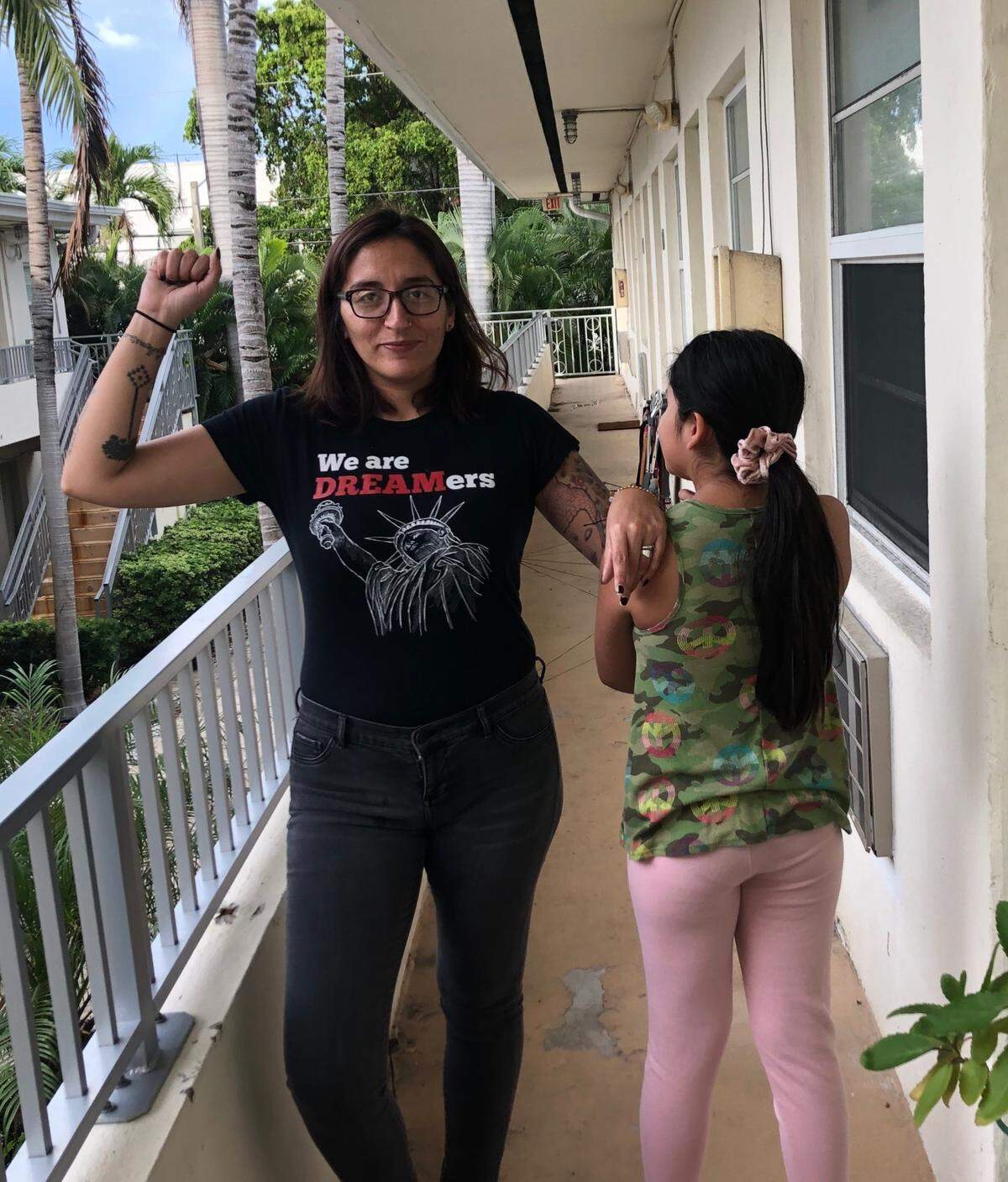
Since Trump first announced his intention of winding down the program in 2017, Jofre considered, during darker moments, a potential return to Chile, a country she hasn’t been to since she was 10. A separation from Anabelle, though, was always a non-starter.
“If we leave, we leave together. I wouldn’t leave her here. We are a unit so that thought never crossed my mind,” said Jofre. “And we actually had a conversation about it one time, that there might be a possibility that we might have to go back to Chile depending on whatever decision was to be made by the Supreme Court.”
Ramirez also described “heightened levels of anxiety” during the months leading up to the court ruling. “It was like swallowing this ball of tension every week,” she said.
Through it all, she made an effort to keep her 5-year-old informed of the family’s situation.
“I’ve had to try to put it in the simplest terms that I came to the country in ways that Trump doesn’t like,” she said. “It’s difficult.”
Sanchez, on the other hand, has preferred not to share most of the details about her immigration status with her son, though she did feel the need, during the lead-up to the court ruling, to come up with a “backup plan” in case DACA was canceled.
But the coronavirus pandemic in the spring posed troubling health concerns — Sanchez is immunocompromised — and the economic crisis that followed left her jobless for many weeks. That context made coming up with any plan impossible.
“My son is here; my life is here; I belong here,” she said. “There’s nowhere I can go and there’s nowhere I want to go.”
A path forward
Despite the favorable ruling last week, Cheryl Little, executive director of the Miami-based Americans for Immigrant Justice, said in a statement that Dreamers had “little time to breathe easy.”
That’s because on June 19, just a day after the Supreme Court announced its decision, a Trump tweet indicated the administration was committed to “submitting enhanced papers” to end the program. Acting Homeland Security Secretary Chad Wolf also reiterated over the weekend that his team is still looking “to end an unlawful program.”
“The court made clear that the president has the power to terminate DACA if he follows the correct legal process,” added Little.
Dreamers know that the fight is not over.
“To be honest, I think this is just the beginning. We don’t know what’s going to happen next,” said Jofre. “I believe that moving forward we have to push not just for legislation that protects us, but also for legislation that protects the rest of the immigrants in this country who currently have no protection at all.”
Ramirez agreed, and vowed to more fully dedicate herself to immigration activism.
“The truth of the matter is that this was a wake-up call for me that, regardless of what is happening in my life, I need to make time to make our voices heard about this... DACA people need to get together and organize, because if we don’t, this thing that we have had for all this time that we thought wasn’t going to go away, will go away. I don’t think we can be complacent,” she said.
Securing more thorough, and more permanent, privileges for Dreamers could also enhance their children’s well-being, as concerns about what may happen to an undocumented parent have been shown to take a toll on a child and even hinder their integration into society.
“You know, I just want my child to be happy and to live freely. He has been talking a lot about traveling so I’m seeing that my child’s freedom is tied to my own, and if my child wants to go to other countries, he can’t because I can’t,” said Ramirez. “I want to strive to be as free as I can be so that my son can also be as free as he wants to be.”
Resources for Dreamers
Although it’s unclear if the U.S. Citizenship and Immigration Services will accept new DACA applications following the Supreme Court ruling, Americans for Immigrant Justice is encouraging qualifying immigrants to get in touch by dialing 305-573-1106, ext. 1400.
This story was originally published June 24, 2020 at 6:00 AM.