U.S. Supreme Court blocks Trump effort to end DACA, a win for Florida DREAMers
The U.S. Supreme Court on Thursday blocked the Trump administration’s effort to end the Deferred Action for Childhood Arrivals program, which since 2012 has allowed hundreds of thousands of young adults brought to the U.S. as children to avoid being deported back to their home countries.
The 5-4 decision grants temporary relief for about 700,000 beneficiaries of the program nationwide — about 25,000 people in Florida — at a time of national uncertainty amid a global health pandemic, civil unrest and an upcoming presidential election.
The court ruled that the Trump administration did not pursue the end of the program properly, but said the Department of Homeland Security can try again.
“We do not decide whether DACA or its rescission are sound policies,“ Chief Justice John Roberts wrote. “We address only whether the agency complied with the procedural requirement that it provide a reasoned explanation for its action. Here the agency failed to consider the conspicuous issues of whether to retain forbearance and what if anything to do about the hardship to DACA recipients.”
In 2012, President Barack Obama signed the DACA executive order after the DREAM Act — short for Development, Relief and Education for Alien Minors Act — did not pass in Congress several times. The young people impacted by DACA and the DREAM Act are often referred to as “Dreamers.” The measure was shut down in 2017 after President Donald Trump took office.
Thursday’s decision to leave the program in place for now means that about 76,000 people in Florida — and 1.3 million people nationwide — who could have become eligible for DACA in the past three years before it was terminated, could soon apply for the protection, according to data from the Migration Policy Institute. Immigration experts say it also means that those already in the program could take a sigh of relief — at least for now.
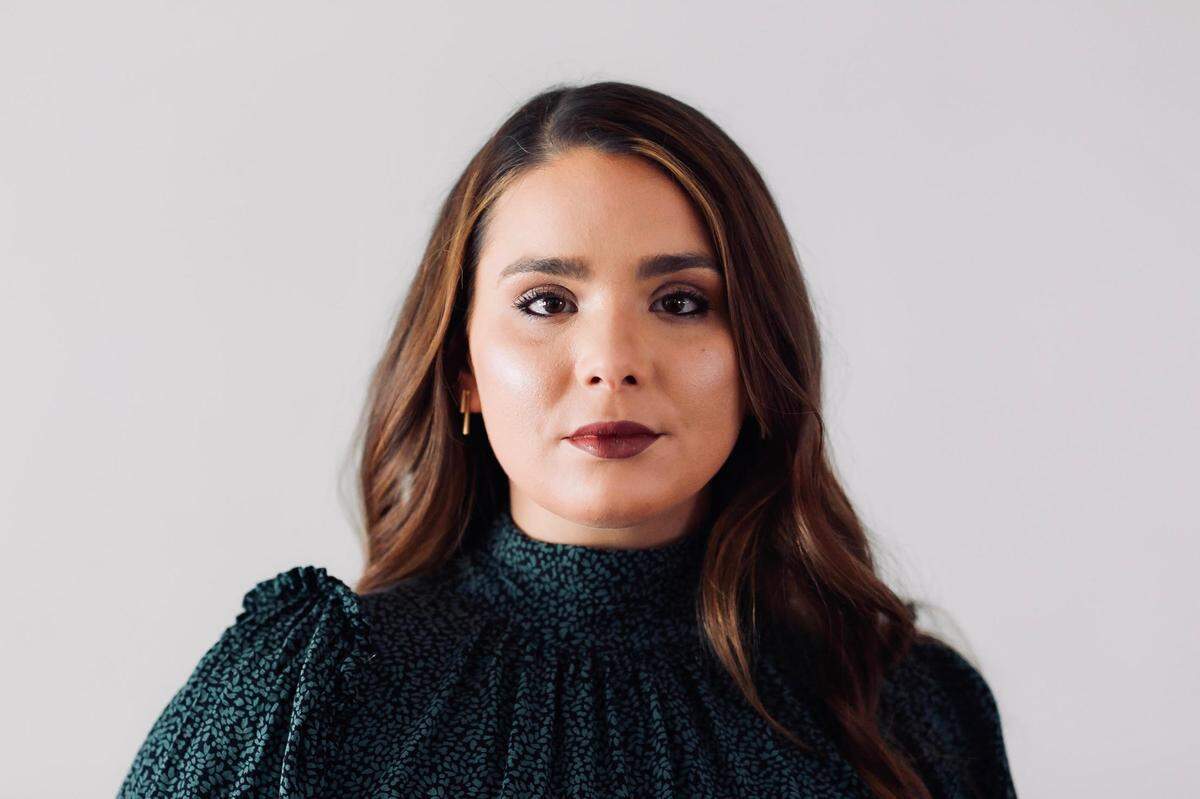
Juan Escalante, 31, says he did just that. The DACA beneficiary and longtime immigration activist was raised in Miami-Dade after arriving from Venezuela at the age of 11.
He moved to Tallahassee, where he attended Florida State University and earned a master’s degree in public administration. He was approved for DACA in 2013 and now helps lead FWD.us, a nonprofit immigration and criminal justice lobbying group based in Washington, D.C.
He said Thursday that although the court’s decision was a “major victory” for DACA recipients their families and communities, immigrants across the country will have to “fight to keep it in place.”
“As we celebrate today’s decision, we are also aware that it comes as our nation is directly confronting its long history of targeting Black people, and when communities across America are actively fighting over an affirmative vision of who gets to survive and thrive in America,” he said. “Today is a good day, but we are always aware of the tenuous nature of DACA protections, particularly in light of the Trump administration’s continued attacks on immigrant communities. The Trump administration should commit to leaving DACA in place and reopen the ability for new people to apply for DACA.”
According to U.S. government data, the majority of DACA recipients are from Mexico, which means Florida’s share of the nation’s DACA population is somewhat smaller than that of other large states. Florida is home to about 25,000 DACA recipients, with 11,000 of them in Palm Beach, Broward and Miami-Dade counties. Texas and California are home to about half of the country’s estimated 690,000 DACA recipients.
Democrats were quick to praise the Supreme Court’s ruling on Thursday.
“Dreamers and DACA are here to stay,” U.S. Rep. Donna Shalala of Miami tweeted minutes after the decision was announced.
Senate Minority Leader Chuck Schumer said he cried tears of joy after the decision was announced: “These wonderful DACA kids and their families have a huge burden lifted off their shoulders,” Schumer said. “They don’t have to worry about being deported, they can do their jobs. I believe that someday soon they will be American citizens.”
Florida Republicans’ support for DACA recipients has fluctuated over the years. In Congress, Miami’s Republican congressional delegation usually voted in favor of DACA legislation, including Trump’s efforts to include DACA recipients as part of a deal to fund a wall at the U.S.-Mexico border.
Democrats declined to cut a deal that included DACA recipients and the program remained in limbo until Thursday’s ruling. Former Miami Republican Rep. Ileana Ros-Lehtinen introduced a bill to give Dreamers a pathway to citizenship, but the bill did not come up for a vote.
Florida Sens. Marco Rubio and Rick Scott have generally supported plans to find a permanent solution for DACA recipients, though Scott originally opposed the Dream Act in 2010. Rubio said there is bipartisan support to pass a bill that provides a pathway to citizenship for Dreamers, but that Democrats must be willing to address border security and enforcement.
“There is strong bipartisan support for a permanent and generous solution for those in DACA program,” Rubio tweeted.
Neither Scott nor Rubio were in the U.S. Senate when the Dream Act initially failed, and Rubio’s 2013 bipartisan immigration proposal included a path to citizenship for Dreamers but failed to receive a vote in the GOP-controlled House of Representatives.
But Miami Democratic Rep. Debbie Mucarsel-Powell said there’s no appetite for Democrats to strike a DACA deal in the coming months. She said the Senate should simply pass the House legislation instead of including a pathway to citizenship for Dreamers and billions for border security in the same legislation.
“I think America by this time understands how disingenuous and dishonest DC Republicans are,” Mucarsel-Powell said. “We all want to have a secure border, but that’s a separate issue. This is another way to feed their base and a way to obstruct. Close to 80 percent of Americans... support a pathway to citizenship for Dreamers.”
Mucarsel-Powell said there are 8,300 DACA recipients living in her congressional district, which stretches from Kendall to Key West.
Rep. Mario Diaz-Balart, Miami’s only House Republican, said he was pleased with the Supreme Court’s decision, but said Congress must come up with a permanent solution for DACA recipients. Diaz-Balart was one of only seven House Republicans to vote in favor of the House version of the Dream Act last year.
“I am pleased that the individuals who benefit from DACA are still protected, but as I’ve repeatedly said, both sides have been playing politics for far too long on this issue, and it’s time to come up with a permanent solution for those who are here at no fault of their own,” Diaz-Balart said in a statement. “I reiterate my willingness to work with anyone and everyone on a bipartisan, bicameral solution that provides a path toward permanence, while also adhering to the rule of law.”
Trump called the court’s decision “politically charged.”
“These horrible & politically charged decisions coming out of the Supreme Court are shotgun blasts into the face of people that are proud to call themselves Republicans or Conservatives,” Trump tweeted Thursday. “We need more Justices or we will lose our 2nd Amendment & everything else. Vote Trump 2020!”
“Do you get the impression that the Supreme Court doesn’t like me?” he said in a subsequent tweet.
Miami-Dade Mayor Carlos Gimenez, who is running as a Republican to challenge Mucarsel-Powell, praised the Supreme Court’s decision.
“Today’s DACA decision... gives a lifeline to thousands in our South Florida community,” Gimenez tweeted. “As an immigrant myself, I know that we must help these young men and women, not penalize them.”
In 2017, Gimenez ordered Miami-Dade County jails to begin holding suspected immigration offenders when they were booked on unrelated local charges and flagged by federal law enforcement for possible deportation. The move in January 2017 ended Miami-Dade’s time as an unofficial “sanctuary” community, and it received immediate praise by Trump on Twitter.
In a statement Thursday, presumptive Democratic presidential nominee Joe Biden vowed to “immediately work to make [DACA] permanent by sending a bill to Congress on day one of my Administration” if elected.
“The Supreme Court’s ruling today is a victory made possible by the courage and resilience of hundreds of thousands of DACA recipients who bravely stood up and refused to be ignored,” he said.
But the Acting Deputy Secretary of DHS, Ken Cuccinelli, disagreed. In a tweet, the official called the ruling “Terrible. Awful. [A] double-standard. Outrageous.”
“I used to use #SCOTUS...,” he wrote. “I think after today’s rulings, I’m going to start typing it like this: #scotus. We need more good Justices.”
In a statement, Acting Secretary Chad Wolf chimed in: “DACA recipients deserve closure and finality surrounding their status here in the U.S. Unfortunately, today’s Supreme Court decision fails to provide that certainty. The DACA program was created out of thin air and implemented illegally. The American people deserve to have the Nation’s laws faithfully executed as written by their representatives in Congress—not based on the arbitrary decisions of a past Administration. This ruling usurps the clear authority of the Executive Branch to end unlawful programs.”
Comments like Wolf’s and Cuccinelli’s are keeping local, state and national immigration organizations like the Florida Immigrant Coalition “vigilant.”
“We won by an inch,” said FLIC spokeswoman Melissa Taveras. “It is urgent and important that each of us joins an organization, speak their truth, engage their families and flexes their civic engagement muscle in the next few months. This moment has shown us that when we organize we win.”
This story was originally published June 18, 2020 at 12:54 PM.