Miami’s sargassum problem is exploding. Is climate change to blame?
Sargassum is washing up on South Florida beaches in mountainous amounts, rotting into a gag-worthy mush. It’s scaring away tourists, making swimmers itchy and costing millions to clean up.
Scientists say the problem is getting worse. Blooms are growing larger and arriving earlier. This January, satellite images showed some of the largest masses of sargassum ever for that month, according to Chuanmin Hu of University of South Florida, who pioneered satellite tracking of sargassum using NASA data.
“What is scary to me as a scientist is, in the last two or three years, more and more historical records are being reached,” Hu said. “At a certain time, I said, ‘Well, this is a record.’ Three months later, ‘Well, this is another record.’”
So why the increase, and how much of this can be blamed on climate change?
“It’s a tough question,” said National Oceanic and Atmospheric Administration researcher Joaquin Trinanes, who also tracks sargassum growth and movement. But he said there are likely several factors fueling the blooms.
Some scientists think that pollution and fertilizer runoff may be feeding the blooms, allowing them to multiply as they float through the sea.
Massive rivers like the Amazon, Mississippi and Congo carry nutrient-rich water into the Atlantic. Dust blowing off the Sahara Desert could act like airborne fertilizer.
But the answer is not as simple as coastal pollution.
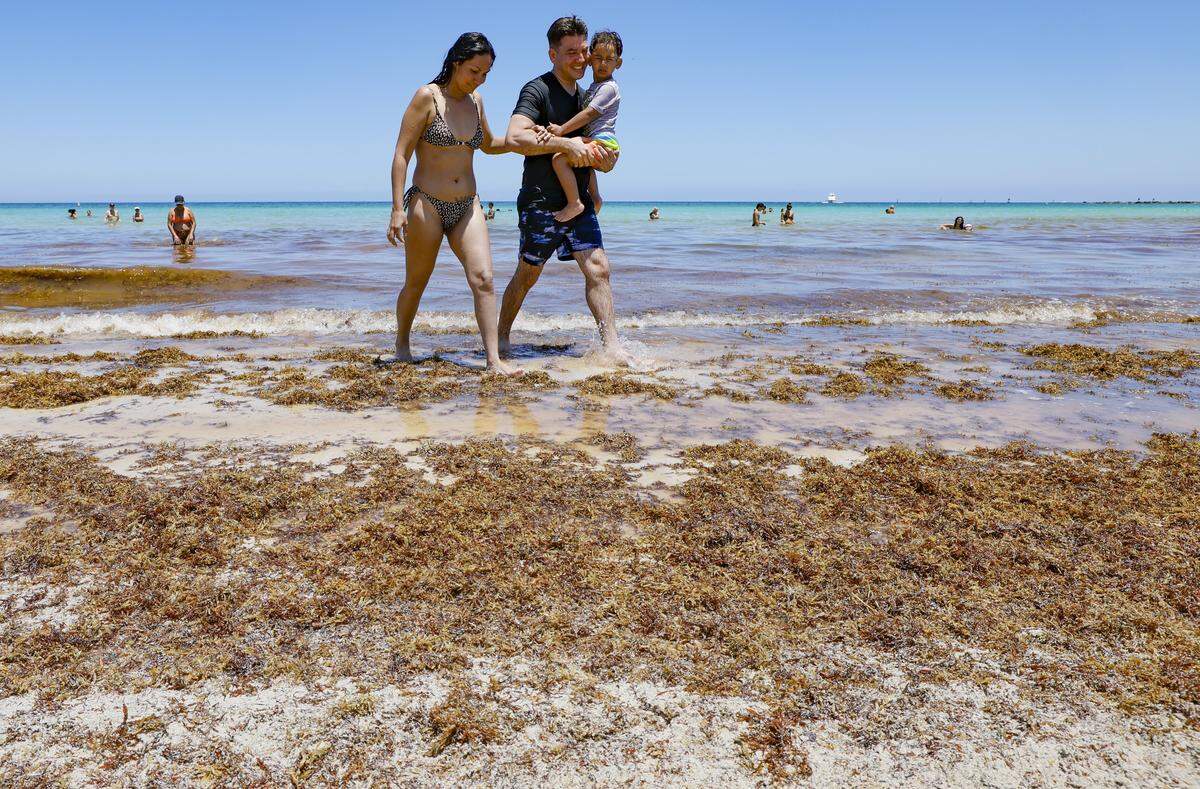
Trinanes said recent research supports that blooms are most likely triggered from the deep ocean climate cycles. In a process called “equatorial upwelling,” where winds push surface water away, allowing nutrient-rich water from the deep ocean to rise to the sunlit surface. Upwelling is a natural process, but climate change can alter its timing and intensity.
Warming ocean temperatures tied to climate change can make the sargassum more comfortable to grow when the nutrients like phosphorus reach the surface, Trinanes said.
Sargassum’s sweet spot is close to 82 degrees — roughly the same sea temperature recently recorded off South Beach, where tons of seaweed have been piling up along the shore.
In the Gulf of Mexico, Trinanes said sargassum tends to decline once ocean temperatures climb to about 87 degrees because the “seaweed’s metabolism cannot function as efficiently in extreme heat.”
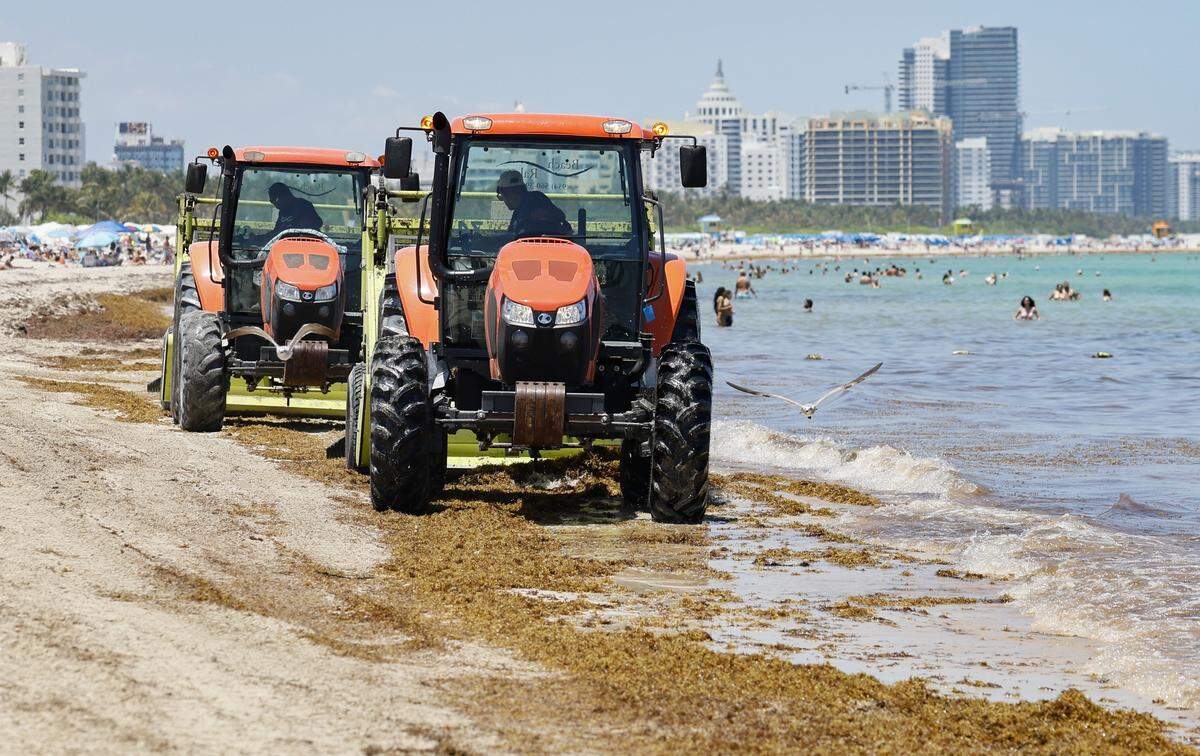
The entire tourism industry takes a hit when its postcard beaches are piled high with foul-smelling seaweed. Some studies estimate tourism loss at least $2.7 billion. To keep the shorelines from being such an eyesore, Miami-Dade spends nearly $4 million to haul it off the beaches to the landfill, where it decomposes and releases methane, a potent greenhouse gas.
READ MORE: Miami-Dade’s sargassum problem isn’t going away — and neither are the costs
With no way of stopping it, and no technology approved to dispose of it all any other way, researchers are working toward getting better tracking systems so governments can better decide where to deploy their expensive clean-up crews.
Ashley Miznazi is a climate change reporter for the Miami Herald funded by the Lynn and Louis Wolfson II Family Foundation and MSC Cruises in partnership with Journalism Funding Partners.
This story was originally published May 11, 2026 at 4:01 PM.