‘Scoop the poop!’ Miami pet event’s message: That mess is bad for our waters and bay
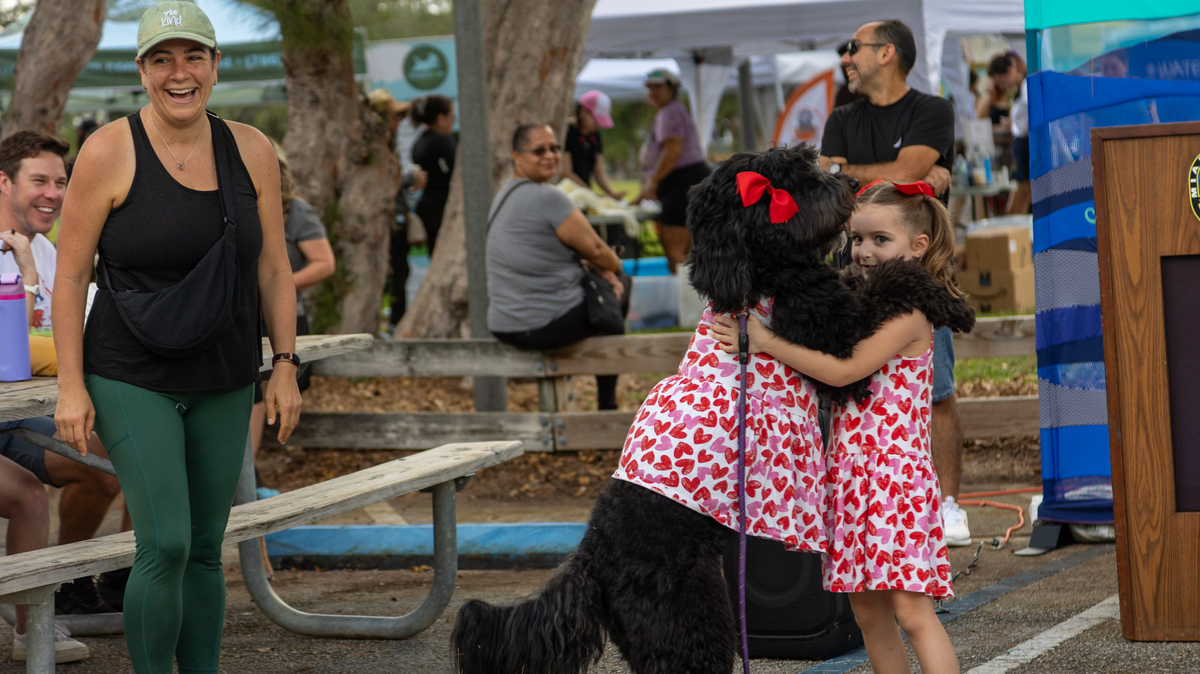
Dog poop. It’s more than just something you wrinkle your nose at or almost step in on your morning walk. It’s packed with harmful bacteria that can make people sick and even lead to fish kills when it washes into Biscayne Bay.
“Dog poop has a lot of nutrients, similar to fertilizer,” explained Caiti Waks, co-founder of Debris Free Oceans. “So if there’s already algae in the water, those nutrients can make it bloom. We don’t want to be swimming in our pets’ waste.”
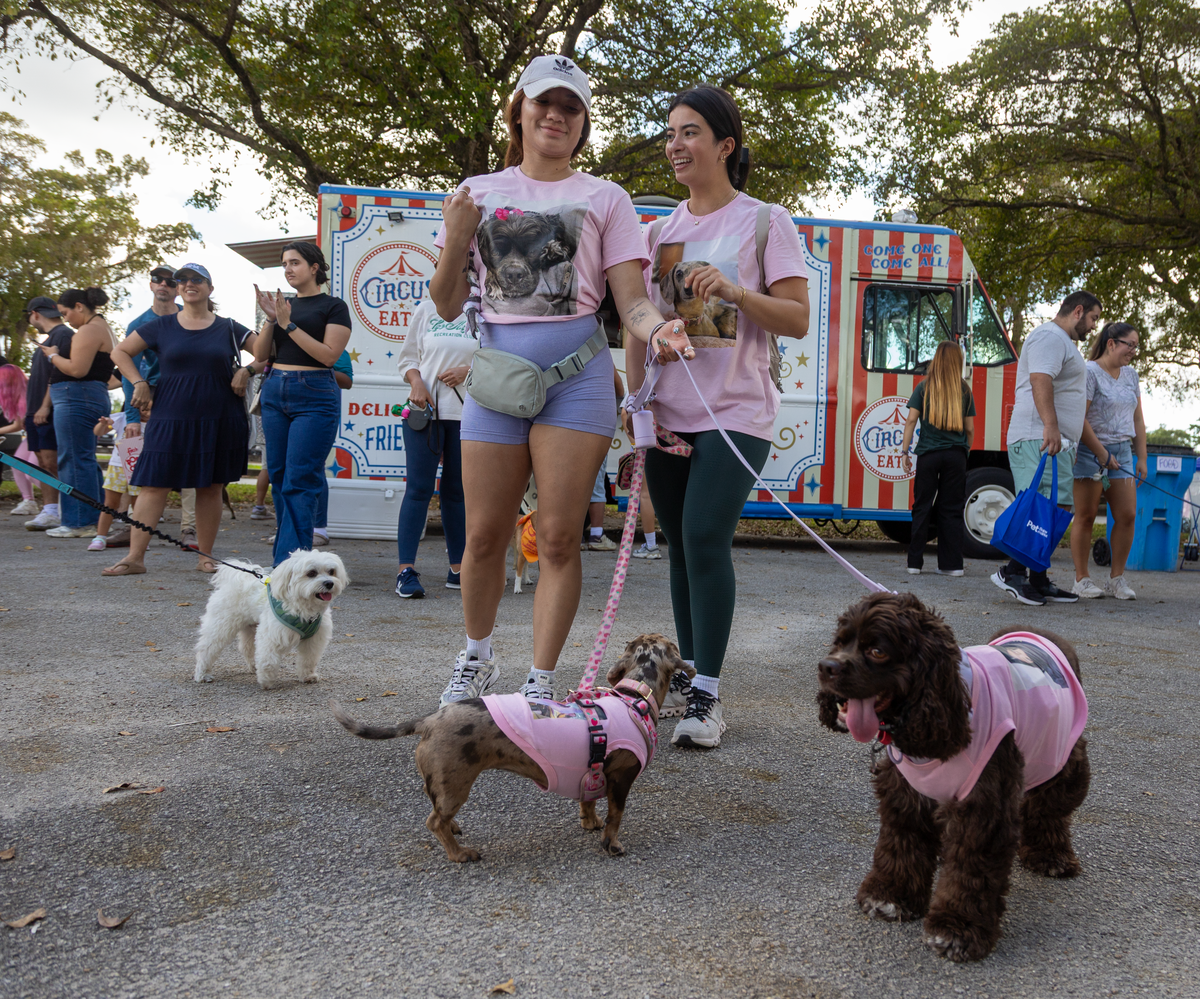
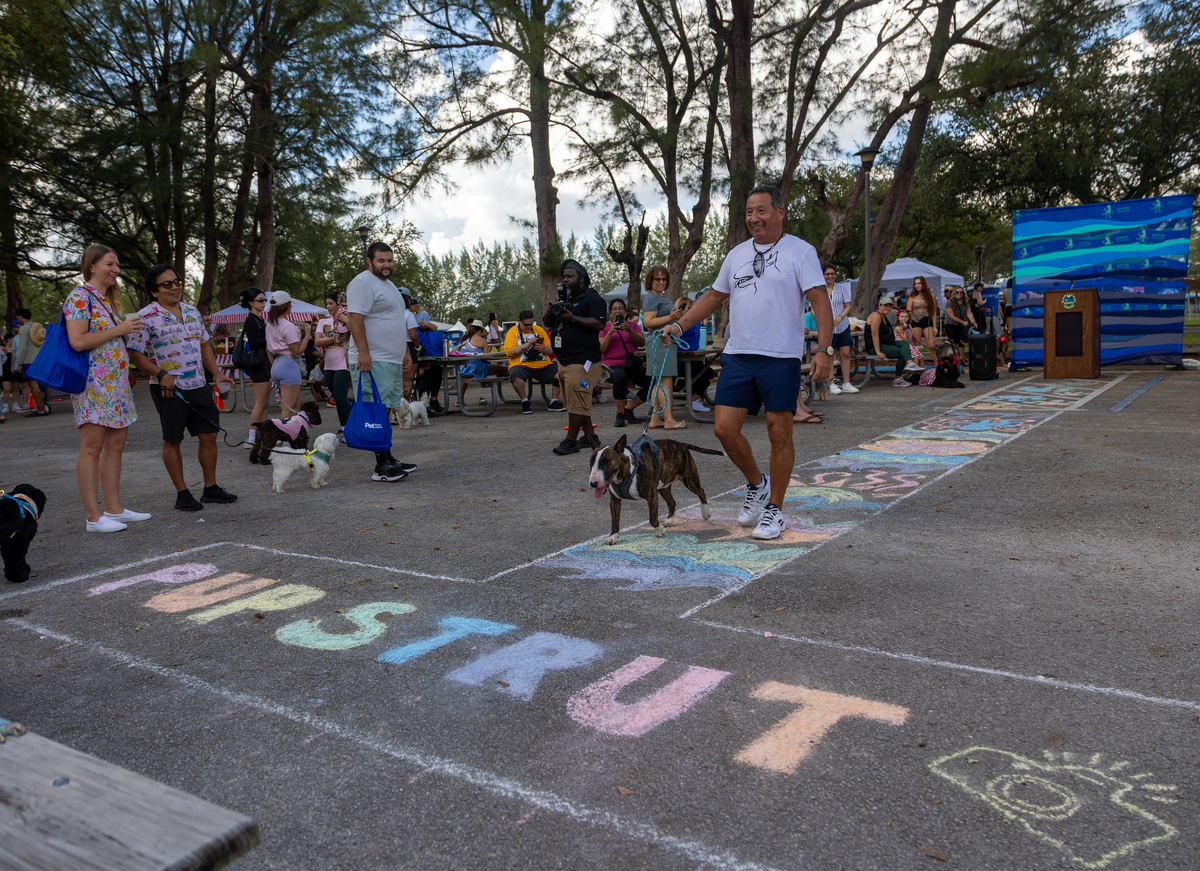
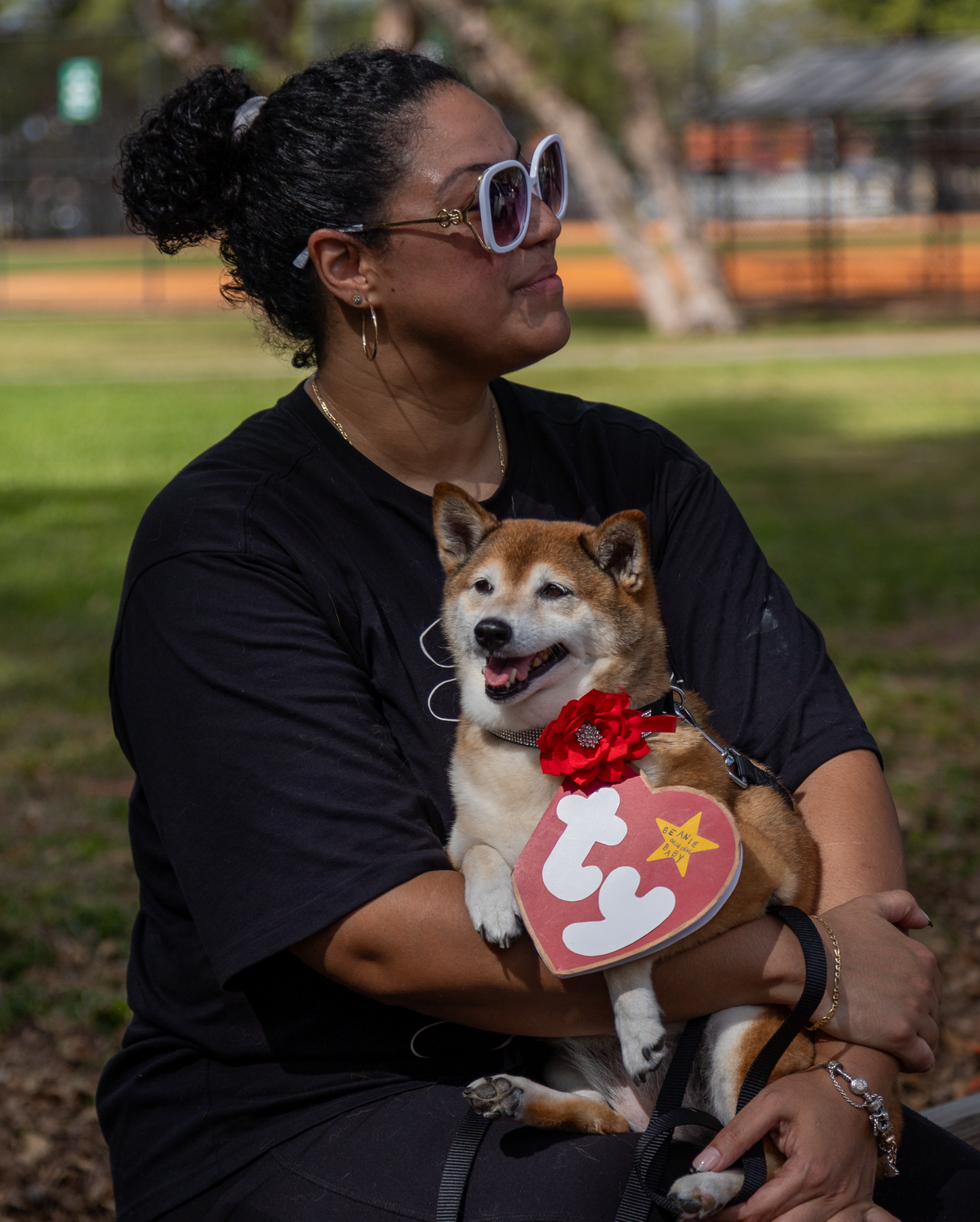
To raise awareness, Debris Free Oceans hosted a “Pup Carnival” at Tropical Park in partnership with Miami-Dade County. The event featured a “Pup Strut” runway, where owners and their dogs showed off their best looks. Among the winners were a Taylor Swift–Travis Kelce dog duo and a hot dog paired with a ketchup bottle. Bonus points were awarded to participants who could pull off the “bend and snap” to demonstrate picking up after their dogs.
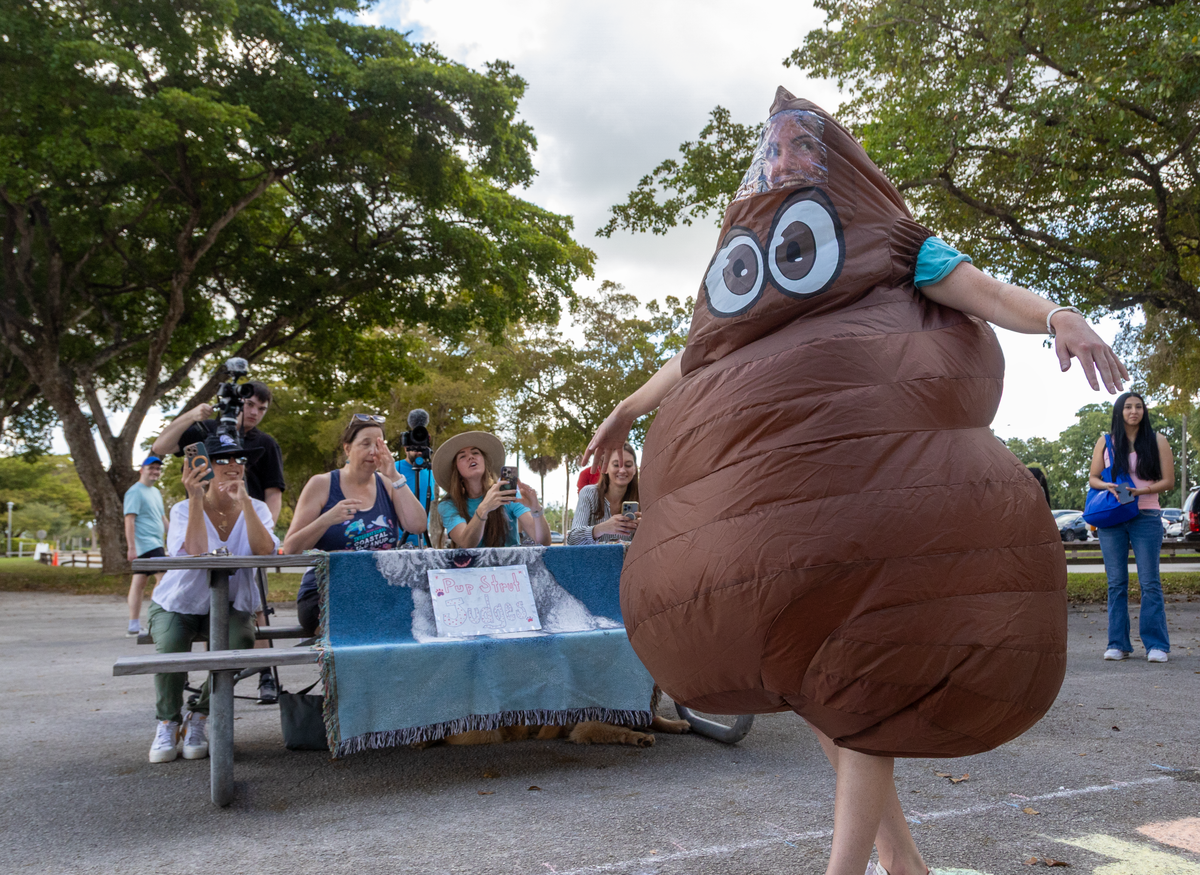
The event also included pet vendors, recycled dog-toy making, a dog adoption van, carnival snacks, and even a mascot: a giant inflatable poop emoji.
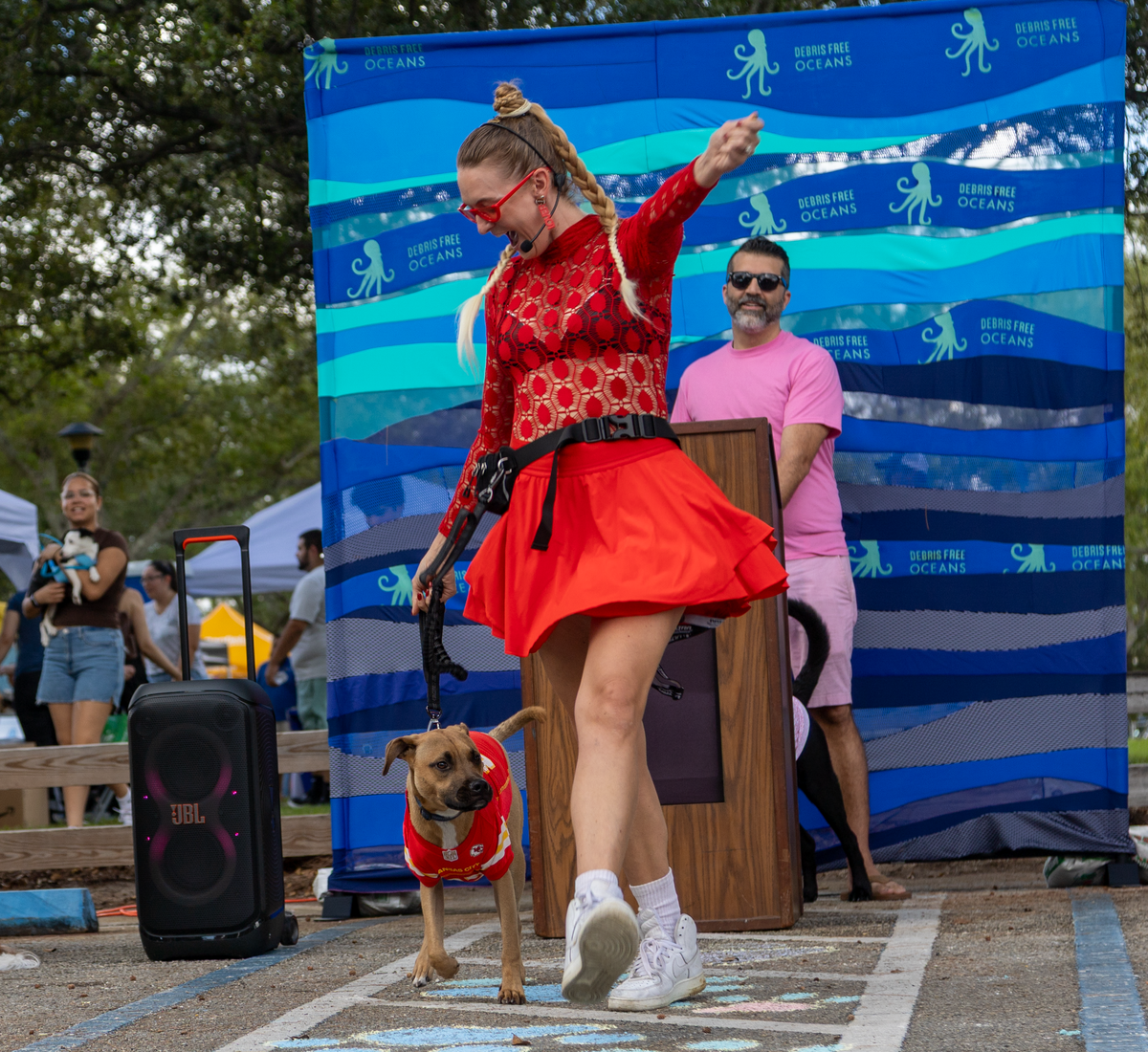
Andrew Otazo, MC of the Pup Strut, is locally known for removing tens of thousands of pounds of trash from Miami’s mangroves. He helped Debris Free Oceans plan the event, calling it “environmental education without the lecturing.”
“I take concepts that may seem a little complicated or not that interesting and make them compelling and funny and motivate Miami to do something,” Otazo said.
Growing up, he said, his dad would tell him that if a dog poops in the grass, it’s fertilizer – but he learned there were not enough microbes in the turf to actually break it down before it’s a threat to our water.
“It’s a topic few people know directly affects the environment. Maybe they’re heard they should pick up their poop, but maybe don’t want to and this is an opportunity to teach them why they should,” he said.
The issue isn’t limited to dogs who poop with a bayfront view. Even inland areas can contribute to the problem, especially when the poop is on asphalt or concrete, where there are no microbes to absorb the waste.
“What a lot of people don’t know is that the drainage systems in the street connect to the Bay, and they don’t filter — so even if you live pretty far inland, it’ll end up in the drain and then the ocean,” said Amelia Myers, a UM student intern and volunteer with Debris Free Ocean. “Tackling the issue nationwide is difficult, but targeting here, and locally, is important,”
It’s also against the law to leave your dogs poop behind. In Miami-Dade County, fines that vary by municipality, but can generally range from $50 to $165 for a first offense, with potential for higher fines of up to $500 for multiple or severe offenses. The law is in place to prevent illnesses and diseases, according to the Miami Police Department in a Facebook post.
Miami-Dade Water and Sewer also joined the event and brought a storage barrel filled with locally sourced water. Staff said many visitors did not know where their water came from, so it gave them a chance to teach about the county’s primary water source, the Biscayne Aquifer that’s underneath Miami-Dade, Broward, Monroe and Palm Beach County.
Climate change already making the problem worse. Bacteria thrive in warm water, and runoff from intense rainfalls rises. Not only this, but higher levels of carbon dioxide in the air and water can lead to rapid growth of algae, according to the U.S. Environmental Protection Agency (EPA).
“Just remember, scoop the poop!,” Waks said.
Ashley Miznazi is a climate change reporter for the Miami Herald funded by the Lynn and Louis Wolfson II Family Foundation and MSC Cruises.
This story was originally published November 10, 2025 at 6:20 AM.