This brief lull in hurricanes could be a glimpse of the future. But it won’t last
.png "An empty Atlantic is a welcome, but strange, sight for mid-September.")
An Atlantic Ocean devoid of swirling tropical waves is a welcome but unusual sight for mid-September.
Traditionally, this is peak hurricane season. The main development region of the Atlantic usually looks more like a conveyor belt this month, ferrying seedling tropical storms across the ocean, feeding them with warm water and moist winds until they hurl themselves at the Caribbean or U.S. to wreak havoc as tropical storms and hurricanes.
But for the third time in a few years, what is usually the busiest stretch of the season is in a lull. Meteorologists say it’s a combination of factors that has led to this oddly quiet period. They also warn that it will not last — the months ahead are still expected to be busy.
“I would certainly caution anybody who wants to write off this hurricane season as a whole,” said Ryan Truchelut of Tallahassee-based Weather Tiger. On Thursday, in fact, the National Hurricane Center tagged a wave rolling off Africa with a 30 percent chance of development over the coming week.
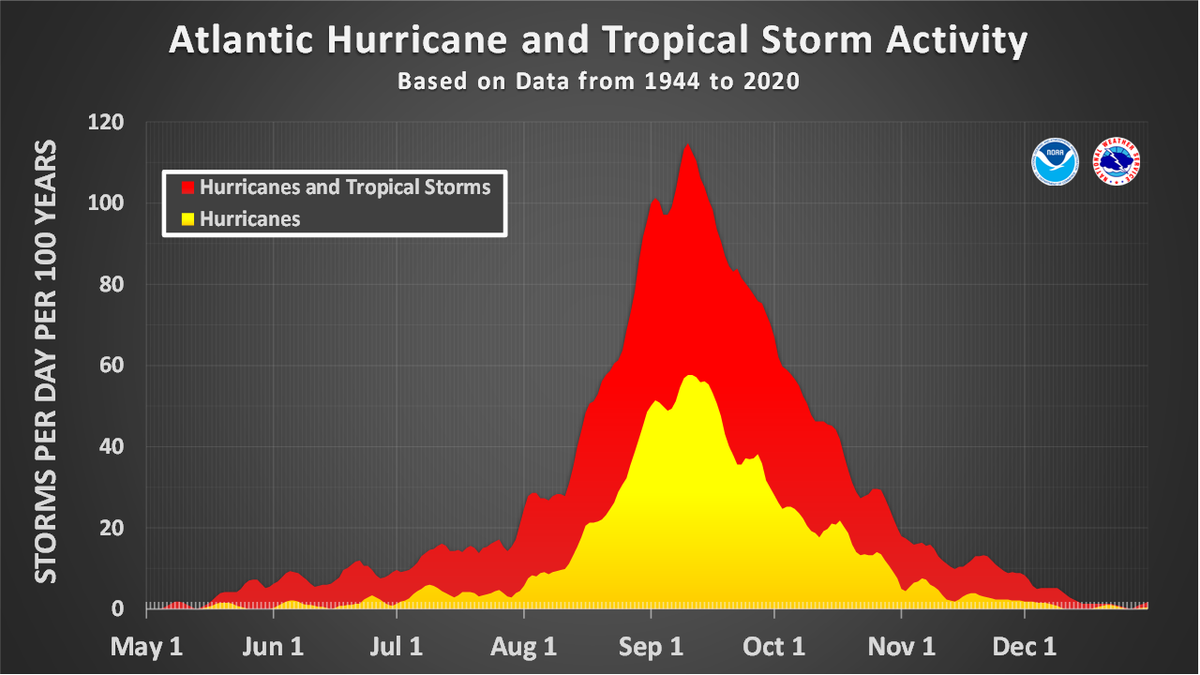
The peak season lull is particularly intriguing to researchers, however, because it happens to coincide with hot ocean temperatures that typically fuel hurricane development and are forecast to continue rising as the global climate warms.
An emerging theory — and it should be stressed that it remains only scientific speculation at this point — is that the air high above the Atlantic hurricane breeding waters is also warming, narrowing the temperature gap between sea and air and creating what meteorologists call atmospheric “stability.”
It’s instability — the clash between hot ocean and cooler air high aloft — that really helps get a tropical system churning.
“We talk a lot about sea surface temperature and ocean heat content. That is, of course, important because that’s thermodynamically fueling the storm. But the thing that really makes the difference in where a hurricane is getting its energy is the difference between the ocean surface and six to seven miles up, the lowest level of the atmosphere,” Truchelut said. “That is warming too, with climate change.”
But in coming fall months, that air is going to cool — potentially igniting a late surge of storms. If verified, some researchers suggest this respite also could be a glimpse of future hurricane seasons, with the historic early-to-mid-September peak pushed back on the calendar.
So, where are all the hurricanes?
Or, maybe the latest pause is just nature tossing a curveball, which it tends to do with all things weather. There also are other factors at work that also explain this brief respite. Over the last two weeks, two things have tamped down tropical systems in the Atlantic — dry air and strong wind shear.
Dry air robs storms of a key building material: moist air. And wind shear rips into baby storms before they can stack up and strengthen, like knocking over a Jenga tower that’s only a few rows off the ground.
Both of those factors are due to a trough that recently formed over the western Atlantic, said Jeff Berardelli, chief meteorologist and climate specialist at Tampa Bay’s WFLA.
“It’s the reason why it’s been so cloudy and unsettled in Florida,” he said. “There’s lots of wind shear across the northern tropical Atlantic. It’s not allowing systems to develop.”
Another factor that meteorologists are seeing is a pattern of rising air over the Pacific Ocean and sinking air over the Atlantic Ocean. When air is sinking, it forces dry and cool air down toward the sea surface, quashing a storm’s ability to bubble up the thunderstorms that power it.
“That’s what we’ve been seeing over the past two months, more sinking air than usual, and it’s really putting the kibosh on convection,” Truchelut said.
But back to that stability stuff, perhaps the biggest factor cooling down an active season.
For the last few weeks, the air in the Atlantic has been remarkably stable. That’s a great thing for everybody in Florida, the Caribbean and other storm-prone areas. It’s a bad thing for wanna-be storms.
Hurricanes need the energy of rising warm air off steamy waters into cooler air above it to generate the towering thunderstorms that fuel storms. But right now, the sea surface of the Atlantic is hot, and so is the air above it.
That stability, Truchelut said, is what snuffed out a tropical wave the National Hurricane Center was monitoring last week. It had high chances of development for one day, then dropped to zero the next.
“Writ small, that’s what we’re looking at for the season,” he said. “Having a very hard time generating enough convection over the Atlantic main development region to kick off that cycle that generates tropical cyclones.”
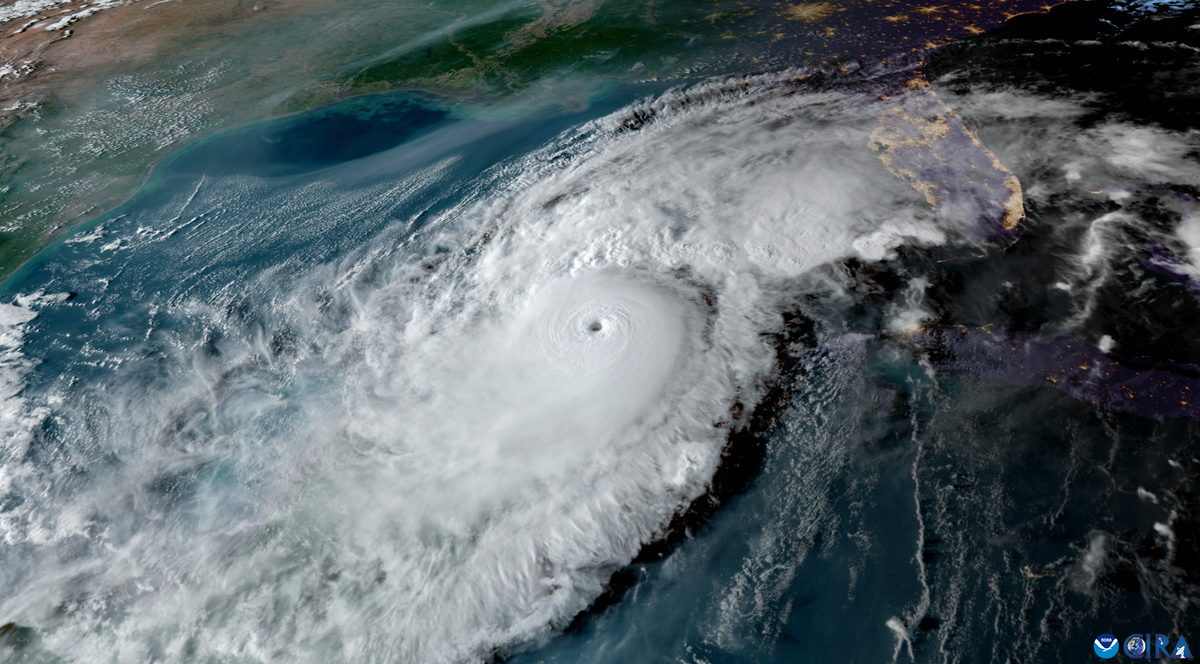
You don’t have to look very far back, however, to see that things can change quickly. This is now the third season in recent years with a dramatic storm drought in what is supposed to be the busiest time of the year. In 2022 and 2024, there were similar blank stretches, but both seasons ended with major wallops to Florida — Hurricanes Ian and Nicole in 2022, and Hurricanes Helene and Milton last year.
With some of these storm-squashing factors set to lift in the next few weeks, as well as the usual swivel from storms spawning in the Atlantic to the much-closer Caribbean, some meteorologists worry that the worst is yet to come.
“The question is, are we going to see a backloaded season?” Berardelli asked.
A sign of climate change?
Still, that recent pattern of hurricane seasons of a busy start and end — with a hush in the middle — has made scientists curious. Some wonder it shows the fingerprints of climate change, the human-driven global warming that is altering many aspects of the world, including how and when hurricanes form.
“When you get three in a row, you think ‘hmm, maybe something is changing,’ but obviously we need a lot more data,” said Andy Hazelton, an associate scientist for the University of Miami who specializes in hurricanes.
Generally, published science has suggested that in a warmer world, there would actually be fewer hurricanes in the Atlantic every year — but the few storms that do form would be more likely to be powerful, rapidly intensifying beasts.
READ MORE: What we know — and don’t — about how climate change impacts hurricanes
That could be because as global warming heats oceans, it also heats up the air above them — a stability that could inhibit formation. The current lull could be an example and an effect many researchers find worthy of further study.
“It’s entirely possible that some of this is just rolling a six on a dice a few years in a row. I don’t think we can entirely rule it out,” Hazelton said. “But, I do tend to think it’s an indicator of what long-term climate change looks like.”
One point in favor of climate change playing a role is the overall warmth of the Atlantic, and not just in the tropics. The main development region is hotter than usual but so are the waters to the north.
That expands stability over even a broader region, Berardelli said, allowing fewer spots for a growing storm to grow. Later in the season, as more northern waters cool off and the main hurricane development region stays toasty, the instability dial could be turned back up.
Whether it’s climate change or just natural variability isn’t yet clear, Berardelli said.
“We look at this and say, ‘Aha, this is interesting, let me keep watching.’ But we don’t know for sure, and we probably won’t for years,” he said. It takes time to reveal trends, a lot of time.
A few years ago, Truchelut and a team of researchers published a paper suggesting that climate change was moving the beginning of the hurricane season about two weeks earlier, due to warmer waters earlier in the season. At the time, he said, they also looked at the end of hurricane season to see if climate change might be pushing it later.
“At the time, there wasn’t a statistically significant shift in the last 10 or 20% of the season getting longer,” he said. “There was a trend, but it wasn’t statistically significant yet.”
He called a shift to a later peak hurricane season “plausible,” but something that would require a good deal more data and research using climate models to prove.
“There certainly could be a longer-term trend afoot there, but it’s not something where there’s a clear conceptual way of explaining that yet,” he said. “We don’t know.”
Busy period ahead
With cooler fall air likely in coming months, many meteorologists expect the tropics to fire back up.
Already, long-range computer models have started sniffing out a potential new tropical wave near Cape Verde in the next week or two, and by the end of the month, storm-watching eyes shift from the coast of Africa to the heart of the Caribbean and Gulf, where storms are more likely to bubble up toward the end of hurricane season.
So far, this season has seen six named storms, one of which, Erin, developed into both the first hurricane and first major hurricane of the season. The National Oceanic and Atmospheric Administration predicted 13 to 18 named storms, five to nine hurricanes and two to five major hurricanes this season.
Whether this unexpected lull means a season that falls (hopefully) short of those predictions remains uncertain.
“It’s going to be hard to get that when you don’t have anything for the few weeks of peak season,” said Hazelton.
Another sobering trend: In mid-September through November, meteorologists say, the biggest threat to Florida and the U.S. typically shifts from the Atlantic to the Caribbean and Gulf, where waters are already hotter than usual. In the last ten years, Truchelut said, there’s been an uptick in intense, damaging hurricanes churning through the Gulf at the close of the season.
“There’s never been 10 major hurricane landfalls in the Gulf in a nine year span in history. That’s very unusual,” he said. “I certainly wouldn’t downplay the possibility of the kind of late season Gulf coast hurricanes we have observed repeatedly over the last 10 years.”
This story was originally published September 11, 2025 at 5:20 AM.