Records confirm what you’re already feeling: Miami nights are hotter than ever
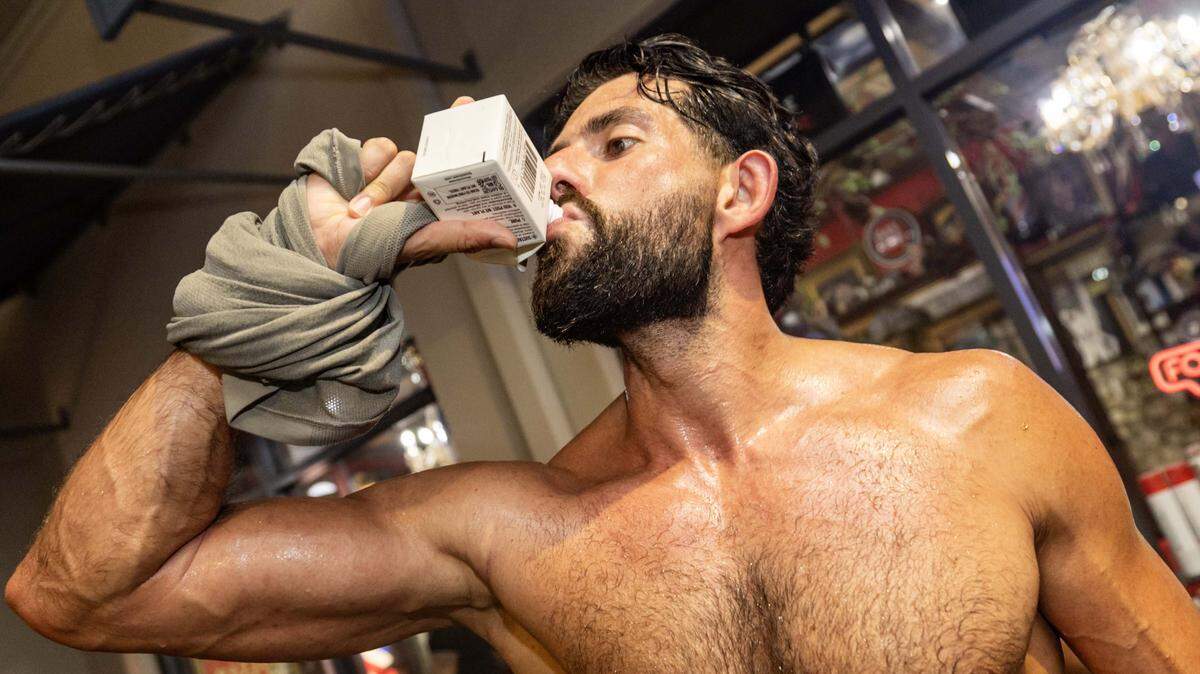
Nights are supposed to provide a respite from daytime heat for the Brickell Run Club. But after logging three and half miles through Miami one sweltering evening this week, members wrung out sweaty shirts, chugged ice water and welcomed a soaking rain shower at the finish line.
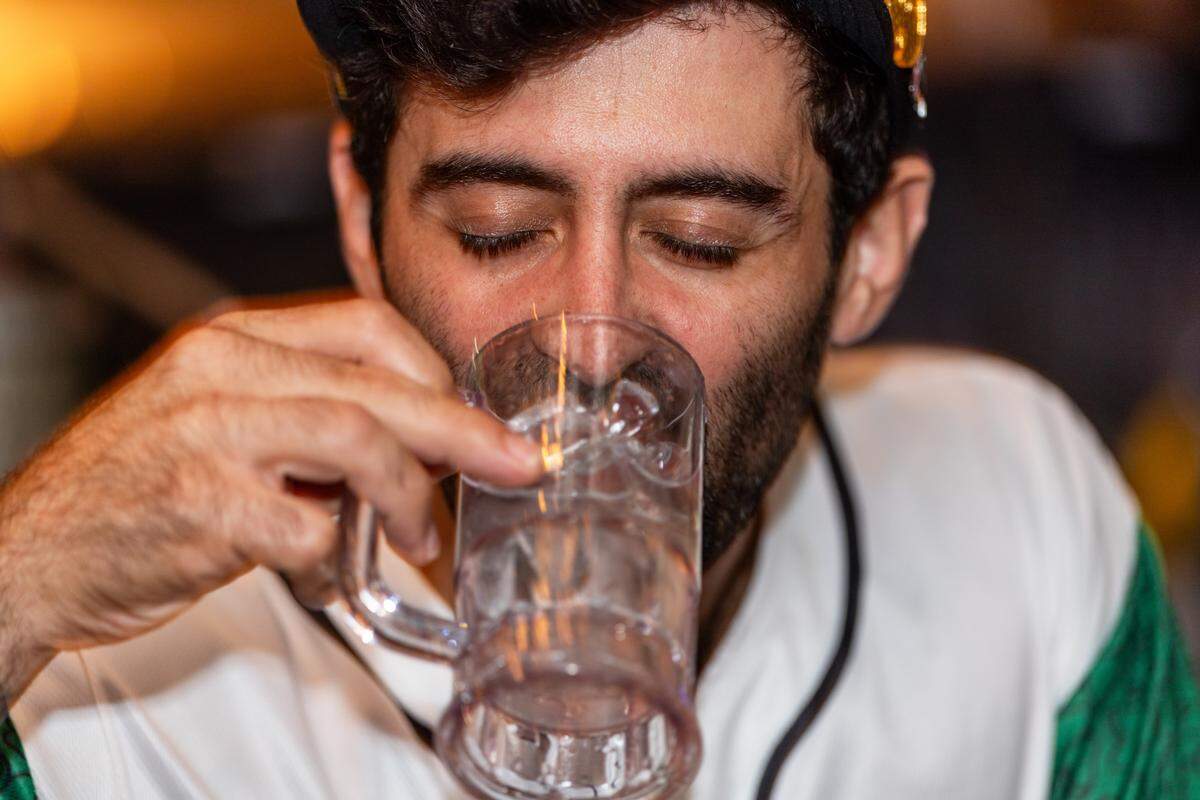
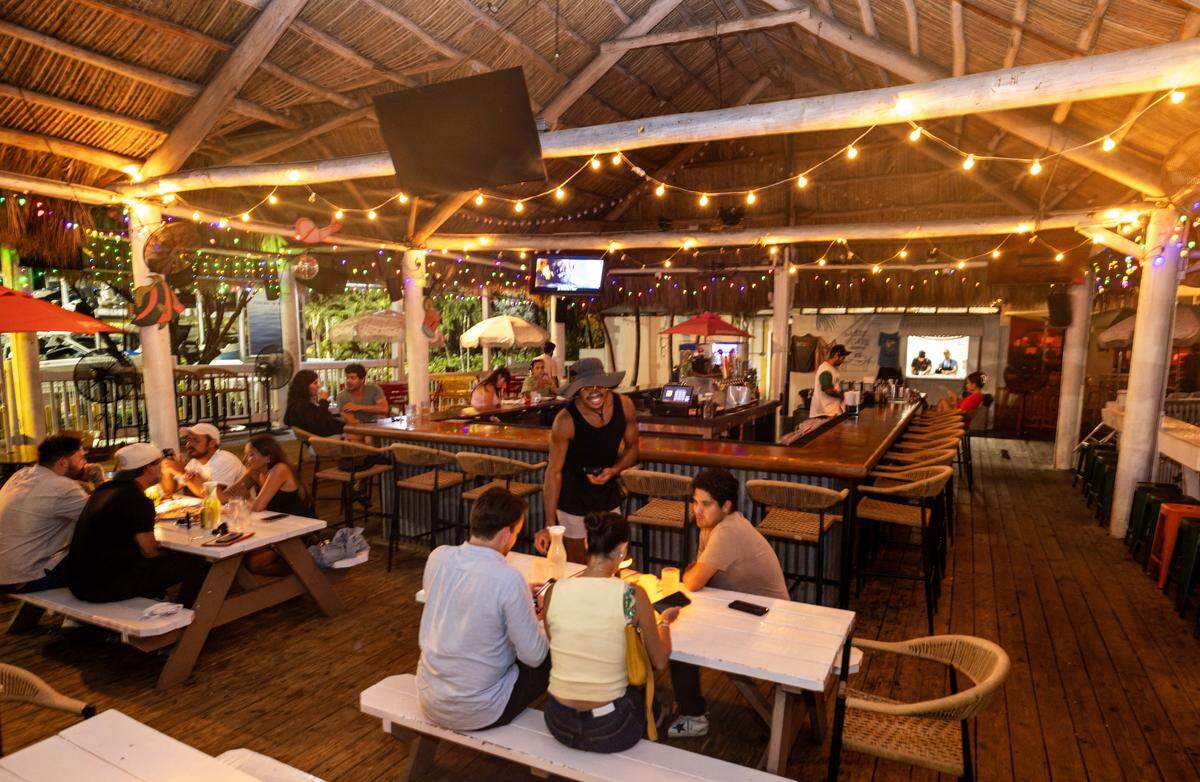
At Gramps Getaway on Key Biscayne, management added nine fans this year and the staff is under marching orders to keep water glasses full at the popular outdoor bar, even as moonlight takes over.
“It’s getting to the point that the sun goes down and you think that there’s going to be a significant amount of relief, but that’s not true anymore” said Derek Tormes, Gramps’ director of operations.
Records confirm what runners, bar and restaurant owners and just about anybody who spends time outside in South Florida can sense. Miami nights are hotter than ever.
Rising summer daytime temperatures have gotten the most attention, setting a string of record highs in Miami-Dade and Broward over the last few years. But data shows that nighttime temperatures have actually gone up more. Since the 1990s, overnight temperatures have climbed nearly 3 degrees, increasing at 0.88 degrees each decade. By comparison, the official daytime highs at Miami International Airport have gone up slightly more slowly at .73°F per decade.
Another telling and totally uncool measure: Our daily low temperatures, usually recorded just before sunrise, also are higher than ever. So far this decade — according to Brian McNoldy, a senior research associate at the University of Miami’s Rosenstiel School of Marine, Atmospheric and Earth Science — the number of days that lows failed to dip below 80 degrees has already doubled compared to the 2000’s. And the decade isn’t even halfway over.
So, what’s driving the Miami heat up?
South Florida — particularly in heavily developed urban areas — is being hit by what Nkosi Muse, a former doctoral student at the University of Miami whose research on regional humidity and temperature trends is soon to publish, calls a “double whammy.”
Muse, now an environmental fellow at Harvard, said it’s partly due to rising global temperatures from climate change. Rising daytime temps mean it takes more time to cool down after sunset, essentially setting a higher starting point that naturally leads to warmer nights. That’s exacerbated by what climatologists call the “urban heat island” effect. All the concrete and pavement of cityscapes like Brickell Avenue or downtown Miami absorb heat throughout the day and then radiate it throughout the night, he said.
Then pour rising humidity levels into the simmering stew across the South Florida region — a layer of moist air that tends to trap heat at the surface where we’re all jogging, strolling or drinking and eating al fresco.
“A cloudy night is probably warmer than it is on a night where the clouds are not there,” Muse said. “The clouds are essentially serving as a blanket. And that’s exactly what air moisture is doing, too.”
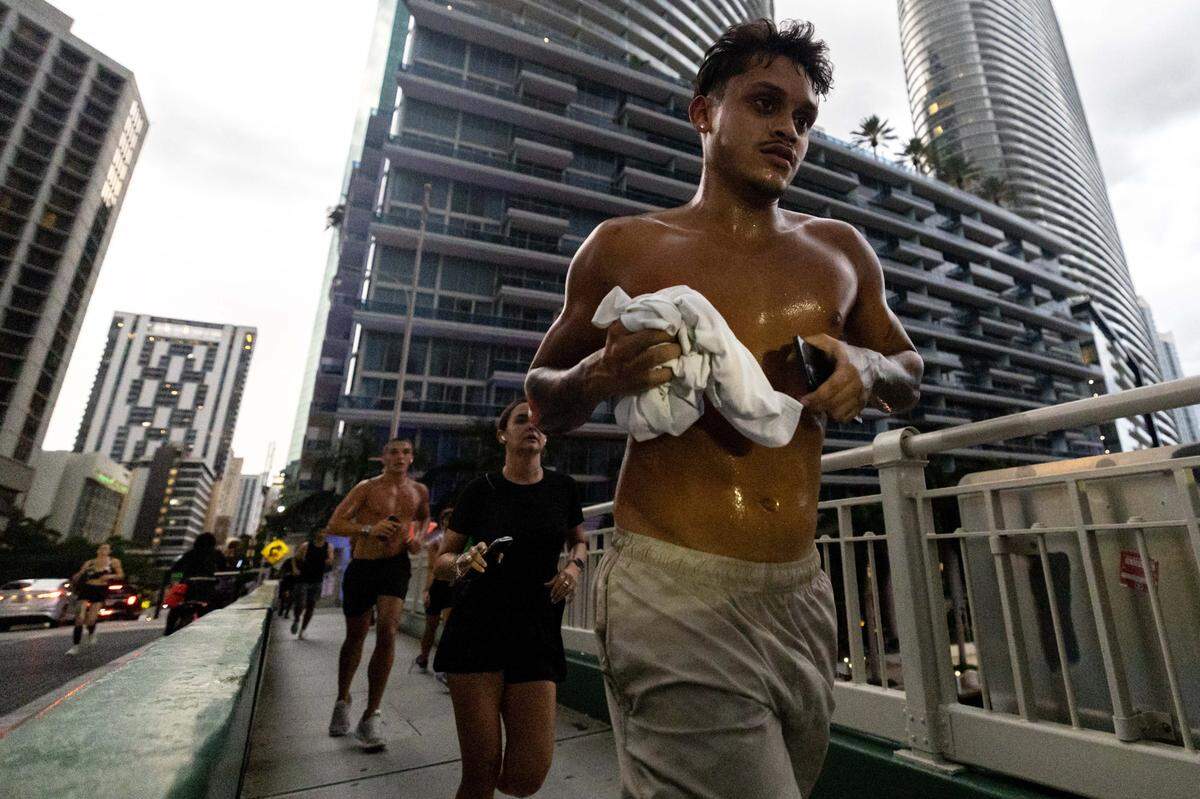
The Baptist Health Brickell Run Club can attest to the heat island effect.
Club founder Frankie Ruiz said he’s noticed a night shift over the years that is “warmer than recent memory” – and he’s made changes to adapt. Iced water bottles have become the norm, and runners are now asking for more than one to stay cool.
“We still experience some heating from the day since it’s downtown with all the pavement, cars and buildings,” Ruiz said.
.png "mia_30yr_trends (1).png")
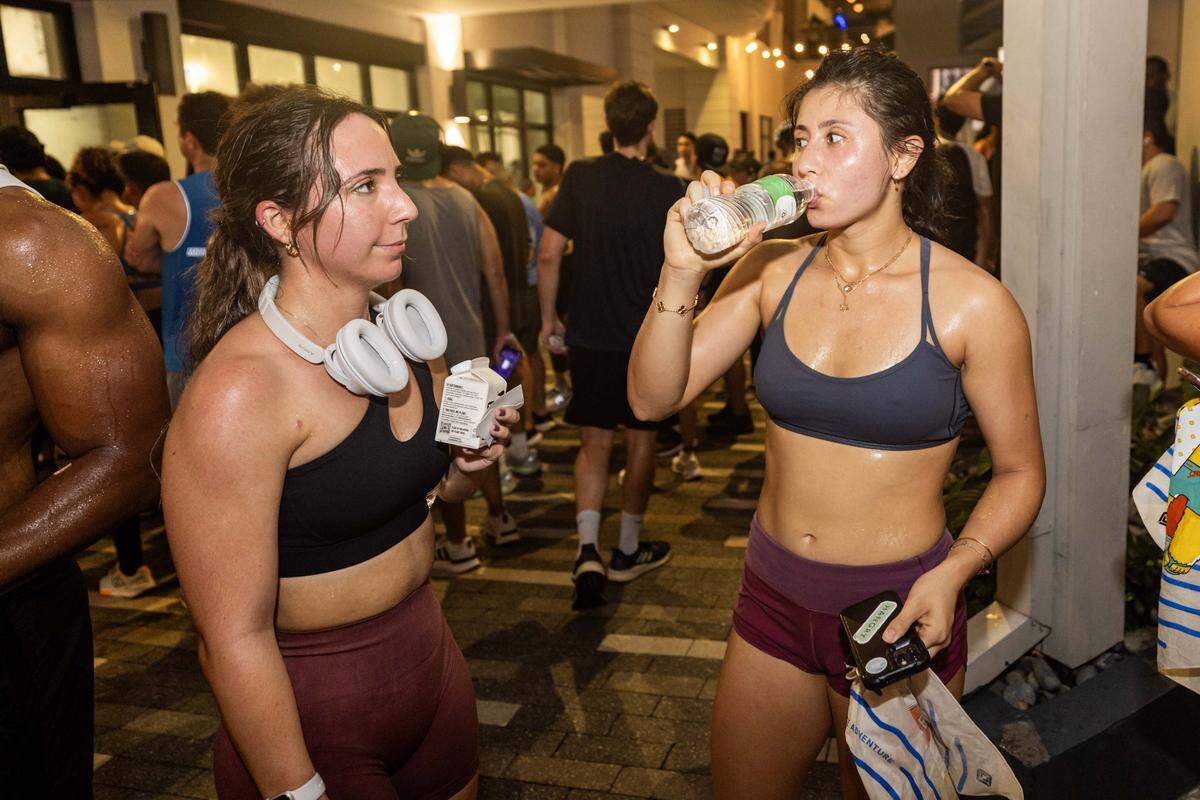
Cheryl Holder, a physician and co-chair of Florida Clinicians for Climate Action, said the health risks of dehydration is one of the most common issues and they extend beyond runners. It’s especially a problem for vulnerable groups like pregnant women and outdoor workers, but it can be a concern for anyone without access to reliable air conditioning.
“If you leave the windows open at night like you used to, it’s hot and humid, so the cooling isn’t there, and they’re more likely to sweat and become dehydrated,” Holder said.
Higher lows, here and everywhere
While it’s most noticeable in the summer, temperatures are rising at night throughout the year as well. In fact, winter nighttime temperatures are warming the fastest, according to UM’s McNoldy. Mornings are also heating up faster than afternoons.
Basically, average lows are getting hotter both at night and in the early morning, a trend seen across the country and globe. Laurence Kalkstein, a South Florida climate scientist, has been working on a study funded by Climate Resilience for All, looking at the hottest “domes” of air masses.
But night temperatures rising faster than day are most obvious in the places with the most extreme dry and humid temperatures, like Phoenix or Brazil.
“The minimum temperatures are increasing, in some cases, rather rapidly,” Kalstein said.
“The relief overnight is becoming less and less,” he continued. “We are probably dealing incorrectly with the way we warn people about heat. We always emphasize how many 95-degree days we have, but no one ever talks about how many days are so warm at night.”
Keeping customers cool
For many people, the rising nighttime temps are simply an annoyance or a reason to pack an extra water bottle. But they’re having real economic impacts for some restaurants and bars — it’s yet another factor to worry about in an industry that is also struggling to keep customers who are concerned about rising prices and an uncertain economy.
At Gramps Getaway, which offers a picturesque view of Miami and Biscayne Bay, umbrella and fan placement is a daily concern — anything to keep customers cool from day into night.
“We have some really nice big umbrellas, making sure those are open, correctly covering as much of the floor as possible,” he said. “Just really trying to protect as many people as possible.”
At Mandolin Aegean Bistro, a popular Greek restaurant in Buena Vista, they still manage to draw crowds even in the peak of summer with 90% of their seating being outside. But they also have taken a lot of steps to make it more comfortable for guests, adding cooling fans and more foliage.
Matt Dinkel, Mandolins’ general manager, measured the sidewalk outside at 17 degrees hotter than the dining area. After that realization, he asked staff to seat guests quickly and not have them wait on the sidewalk. To keep water cool, the restaurant goes through a new ice machine every summer, he said. The staff, similar to at Gramps Getaway, are also trained in managing airflow from the restaurant’s 32 fans.
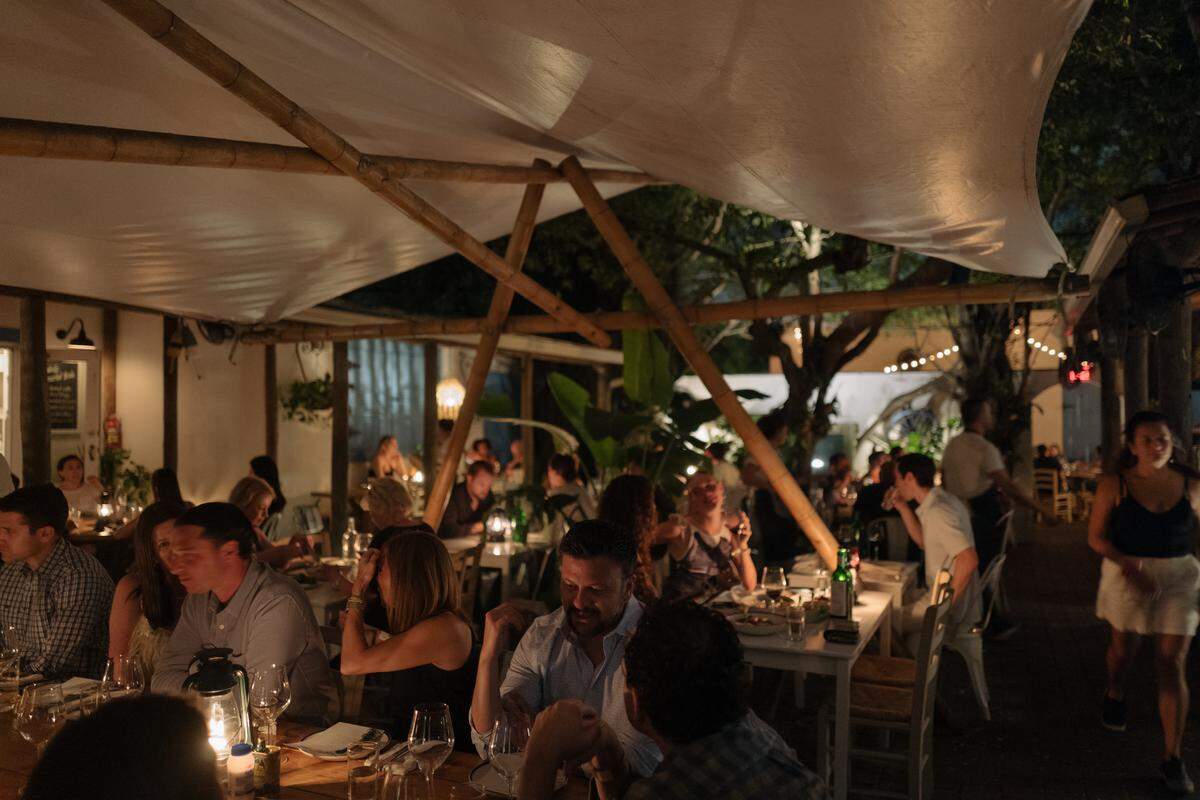
Large retractable awnings, originally installed to keep rain out, now also provide critical shade from the sun.
In the kitchen, a powerful air conditioning system works to keep temperatures down. Even so, staff also rely on cold rags and ice vests for relief. Still, sometimes the heat is impossible to ignore — evident in the small sweat stains on Dinkel’s blue collared shirt.
“Working here in the summer isn’t for everyone. It’s physically demanding,” he said. “Three years ago, we didn’t allow staff to wear shorts. But with every summer feeling hotter, I just can’t ask them to work in pants or jeans anymore.”
Ashley Miznazi is a climate change reporter for the Miami Herald funded by the Lynn and Louis Wolfson II Family Foundation and MSC Cruises.
This story was originally published September 5, 2025 at 5:00 AM.