We answer your climate questions: How much sea level rise is Miami expecting?
The Miami Herald is launching a new periodic series where we answer reader questions about climate change. Send us yours at climate@miamiherald.com.
Miami regularly tops global lists as a city with the most to lose from rising seas, which experts warn could continue to flood streets and buildings and potentially erode property values.
Sea level rise has picked up the pace in recent years, as scientists have long predicted. Last year, sea levels around the world rose even faster than expected, the National Aeronautics and Space Administration found. Only by a teeny amount, through — .06 inches more than NASA initially predicted.
But every inch, or tenth of one, adds up, particularly in the lowest-lying sections of Miami.
How much sea level rise is Miami going to see?
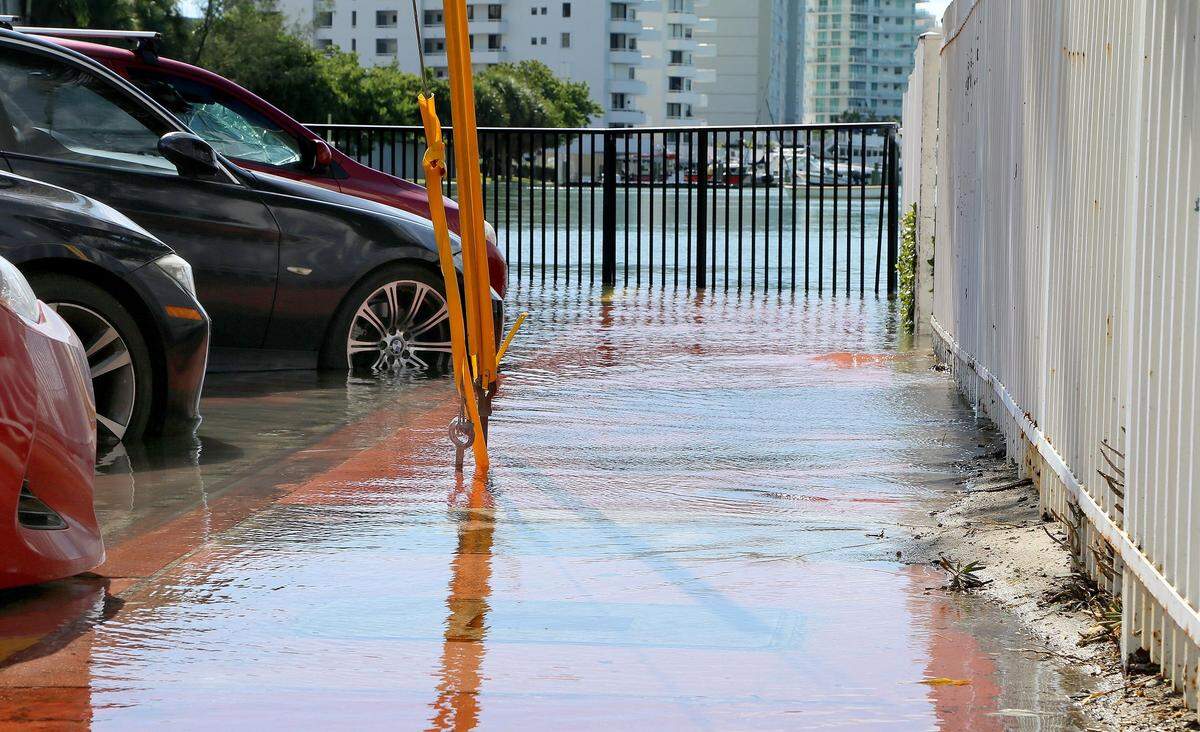
The short answer to what is coming is about two feet by 2060, and potentially up to six feet by the century, according to the National Oceanic and Atmospheric Administration. That’s about as much water as we see in the streets during a fall king tide, the highest annual tide of the year.
The long answer is that those numbers could change. If the world stops burning fossil fuels and warming the atmosphere, melting glacial ice and heating up the ocean, then we could collectively see lower-than-expected sea levels by 2100.
If humanity keeps on driving gasoline-powered vehicles and burning natural gas and coal to generate electricity, then we could potentially see even more sea level rise.
And “two feet by 2060” is a global average. Low-lying South Florida could see even more if certain ocean currents shift or if crucial glaciers melt faster than expected.
“It varies a lot around the world,” said Brian McNoldy, a senior research associate at the University of Miami’s Rosenstiel School of Marine, Atmospheric and Earth Science.
And sea levels vary every year. A device installed on the dock of UM’s Virginia Key campus measures the sea level underneath it regularly. Over the last 29 years, the device has seen water levels rise and fall every year, but overall, the trend is unmistakable — higher water.
“It is almost certainly going to continue that way,” said McNoldy.
Local governments, from counties to cities, in South Florida are using a range of sea level rise predictions for new developments.
For projects that are shorter-term or where it matters less if they flood, like a park, planners use the lower prediction of sea level rise. For more important developments, like a major road used to evacuate people from a hurricane, South Florida governments rely on the two feet by 2060 figure, which comes from NOAA’s “intermediate high” prediction for sea rise.
For crucial building projects that will last longer than 50 years, like a new hospital or power plant, local governments use the highest projection, NOAA’s “high” prediction, which calls for closer to three feet by 2060.
READ MORE: Sea levels are starting to rise faster. Here’s how much South Florida is expecting
This story was originally published April 1, 2025 at 5:30 AM.