It’s king tide season again. Here’s when (and where) Miami could see high tide flooding
In South Florida, one of the surest signs that fall is here isn’t changing leaves or a chill in the air — it’s saltwater pooling in the street on a sunny day.
September marks the start of an annual series of high tide days, the highest tides of the season. These “king tides” push sea levels a foot or two higher than normal, causing street and yard flooding in low-lying spots along the east coast, like Miami.
These high tides are a natural occurrence during new and full moons, but unchecked climate change is making them worse. As sea levels rise, flooding is getting more common and worse. One neighborhood in the Keys saw 90 straight days of flooded streets during a particularly nasty king tide season.
The combination of higher water levels with Miami’s leaky septic tanks and aging sewer system also means that the floodwaters could be pretty gross. Experts strongly suggest staying out of it.
Cities are spending tens of millions of dollars to slow it down with more powerful stormwater pumps, bigger pipes, higher roads and special valves that allow water to drain from city streets into Biscayne Bay but stop it from flowing backward when tides rise. Despite the influx of cash, it will be years before most residents see relief from constant flooding.
The first king tide of the season is Saturday when the moon will be full, but the days leading up to and following that peak are generally higher too.
The other king tide windows of the year are Sept. 27-30, Oct. 6-12, Oct. 24-30, Nov. 6-9, and Nov. 23-27. The highest king tide of the season is expected to be Oct. 10 around 10 a.m., when sea levels could be nearly two and a half feet higher than usual.
Rain — or tropical storms and hurricanes — on top of these high tides can cause even more flooding.
That can cause havoc on roads. On some extra soggy days, tow trucks are a common sight near flooded streets, yanking out disabled cars that went in too deep. Anything more than three feet of water is enough to float a car.
In Miami Beach, where these floods can conquer whole streets for days at a time, residents on particularly flood-prone streets can sign up for free temporary parking accommodations somewhere where their car will stay dry. The city also alerts residents to road closures due to flooding.
Amy Knowles, the city’s chief resilience officer, said Miami Beach has 12 temporary stormwater pumps ready to deploy, and city workers already cleaned the entire stormwater system to make sure clogs don’t cause more flooding.
“All stormwater pump stations have been inspected, cleaned, and adjusted,” she wrote in an email.
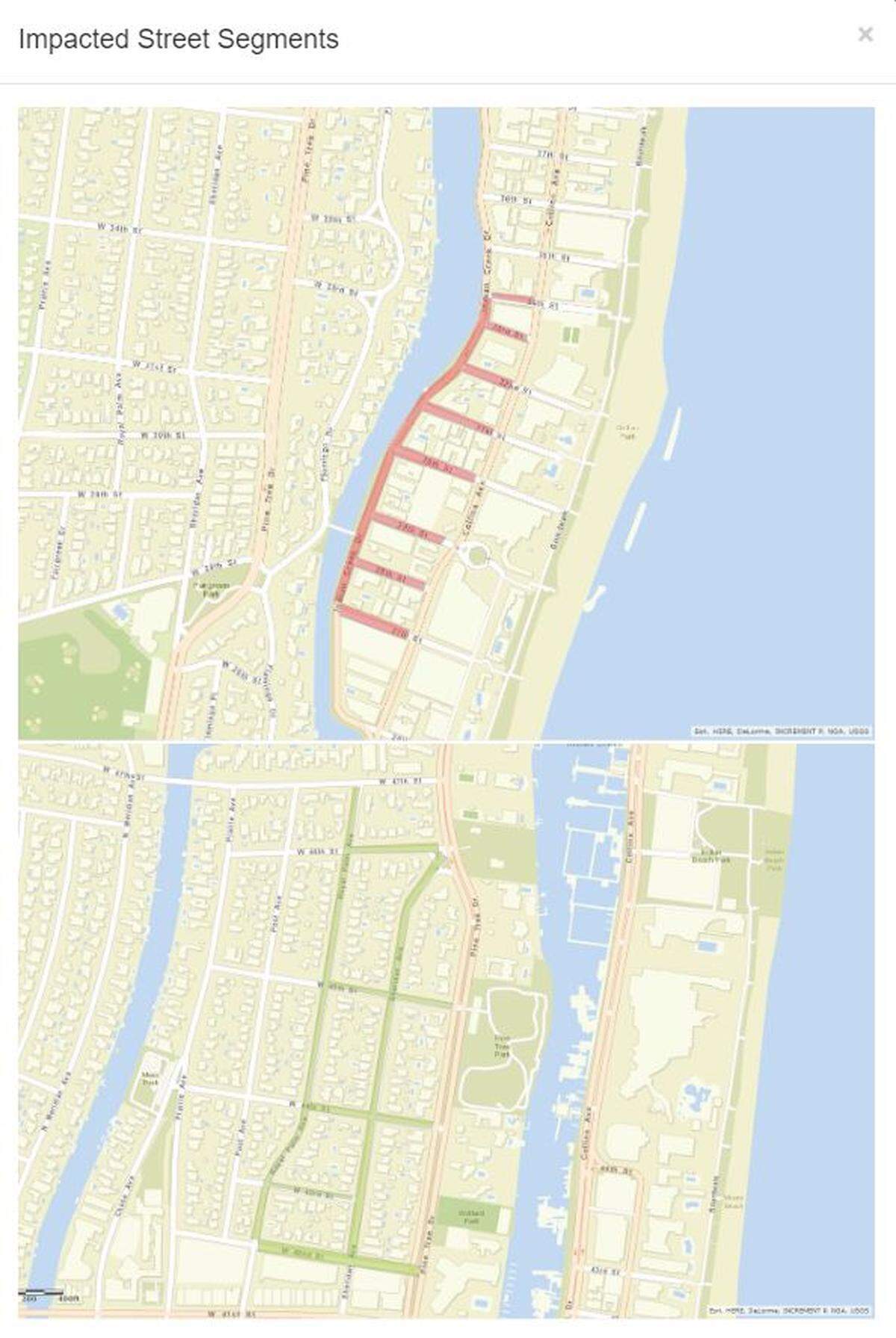
Minus the impact of rain, wind or tropical storms, king tide flooding in South Florida usually happens in the same places. In a newsletter to residents warning them about king tides, Miami Beach lists the following hot spots:
▪ West Avenue and Eighth Street
▪ First Street and Alton Road
▪ South Pointe Drive and Washington Avenue
▪ 44th Street and Post Avenue (Muss Park area)
▪ North Bay Road from 43rd to 63rd streets
▪ Bonita Drive
▪ Marseille Drive and Rue Notre Dame
▪ Crespi Boulevard and 79th Terrace
Miami is tracking repetitive flooding spots through a paid partnership with ISeeChange, a company that asks residents to report flooding, heat and other climate-related impacts on its app. So far, the city has identified the following areas as flood-prone:
▪ Coconut Grove: South Bayshore Drive and streets south of it
▪ Brickell: Brickell Bay Drrive, Brickell Avenue, Mary Brickell Village area
▪ Downtown and Edgewater: Biscayne Boulevard south of Northeast 20th Street, North Bayshore Drive along Margaret Pace Park, streets east of Biscayne Boulevard between I-395 and I-195
▪ Miami River: South River Drive along the Sewell Park area
▪ Melrose: Northwest 36th Street and streets south of it, east of Northwest 25th Avenue
▪ Upper Eastside: Morningside neighborhood, Shorecrest neighborhood east of Northeast 10th Avenue
To report flooding:
In Miami Beach
▪ If you see standing water for more than 48 hours, call the MB Control Room at 305-673-7625.
▪ If you come across any flooding that obstructs access or causes damage to public or private property, report it through the Miami Beach e-Gov app or email flooding@miamibeachfl.gov
In Miami
▪ Report King Tides in your neighborhood using ISeeChange.
This story was originally published September 9, 2022 at 12:30 PM.