
Work on developer’s Coconut Grove mansion damages protected limestone landmark
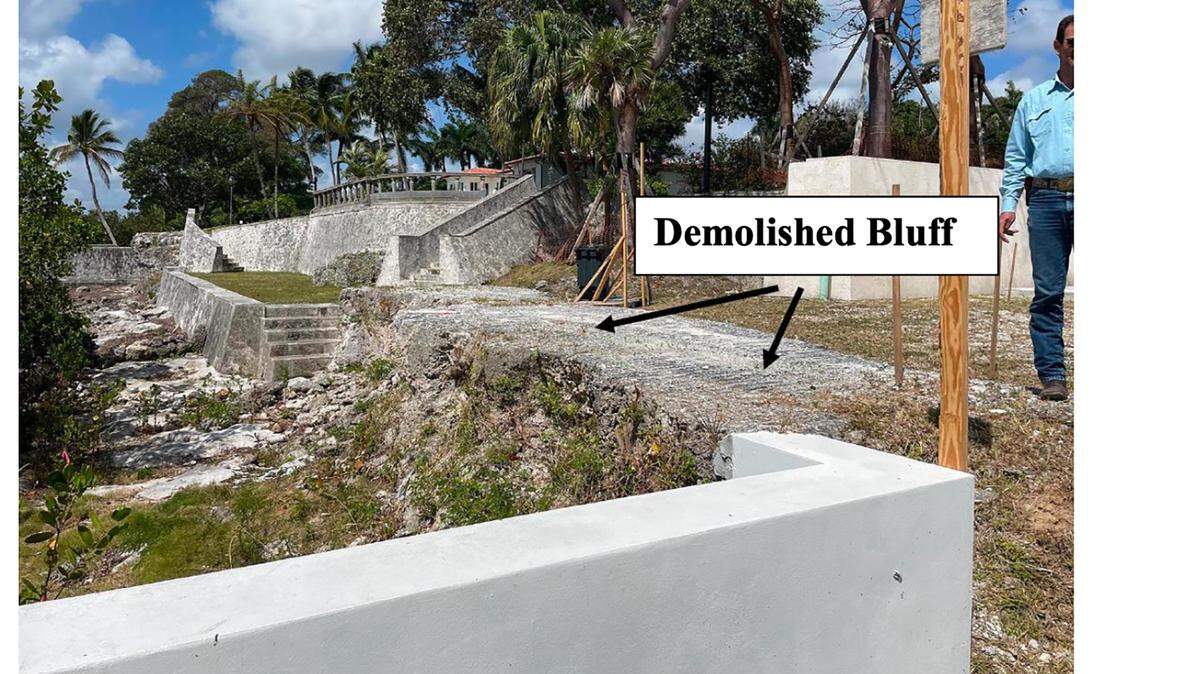
About two years ago, a construction crew working on a Coconut Grove mega-mansion for prominent Miami developer David Martin sliced off a 45-foot-long piece from the top of Silver Bluff, a protected and much-cherished 120,000-year-old limestone ridge that runs along the Biscayne Bay shoreline.
Now, an apologetic Martin, who says the damage to the bluff was unintentional, has won city of Miami approval for an unprecedented fix — hiring a skilled stonemason to recreate the missing top two-and-a-half feet of the exposed, naturally jagged rock outcropping.
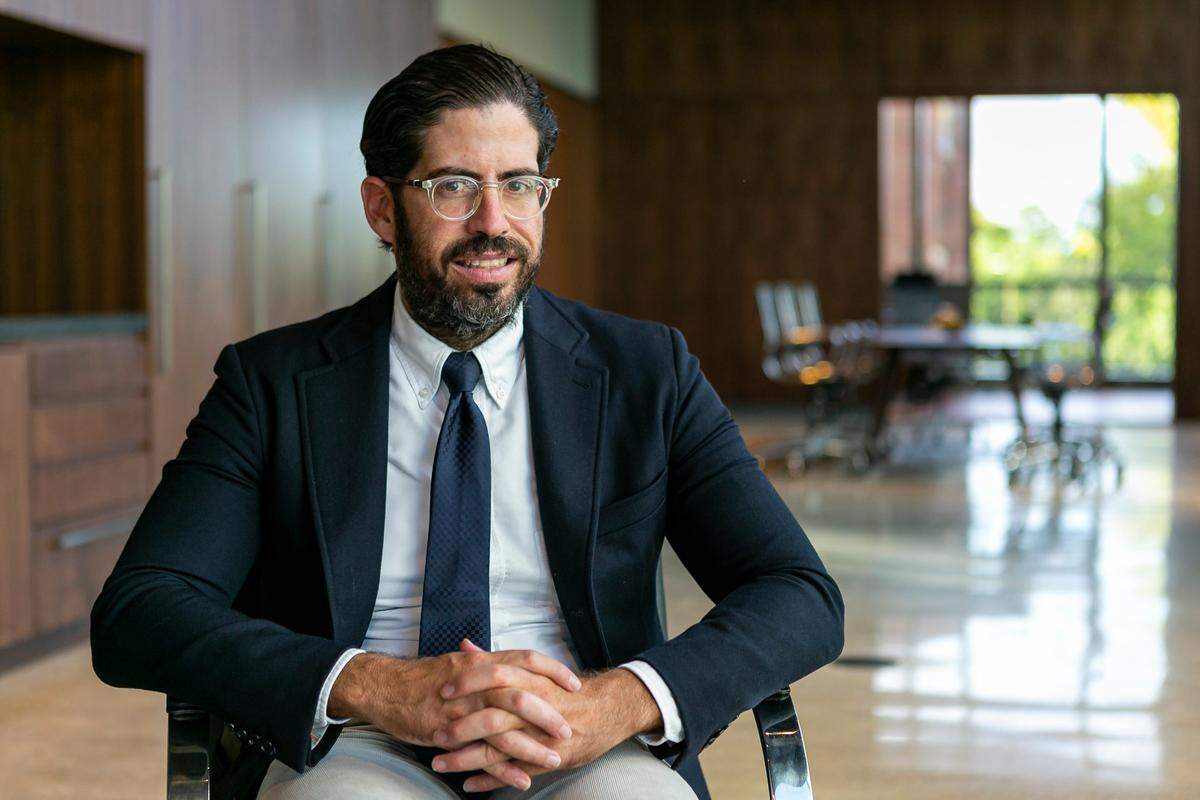
But Martin, CEO of Grove-based Terra Group, first came in for a dressing-down from one frustrated member of the city historic and environmental preservation board at a hearing on the issue last week.
“This is insane,” board member Hugh Ryan, also a developer, told Martin while questioning why he didn’t notice the obvious damage until after it was done. “This didn’t take one day to do. This has to have taken weeks of grinding. I want to let you know how insanely irresponsible this is. It’s worse than knocking down a building. God is the one that built it.
Added Ryan, a veteran board member, before angrily shutting off his own mike: “This is one of the worst things I’ve ever seen. Thank you.”
Martin, his lawyer and his architect said during the hearing that the contractor, whom they did not name, made an inexplicable mistake.
Crews were supposed to reduce the height of a retaining wall built for a house on the property that Martin previously had demolished. That old wall had already done some damage: It had been erected atop a six-foot high portion of the bluff that overlooks the bay at the rear of the property, but left another adjacent stretch of the outcropping untouched.
Instead of stopping with the wall, Martin and his representatives said, his contractor kept slicing, also taking the top off that previously intact 46-foot length of the bluff next to it. That left the top of the bluff flat as a sidewalk.
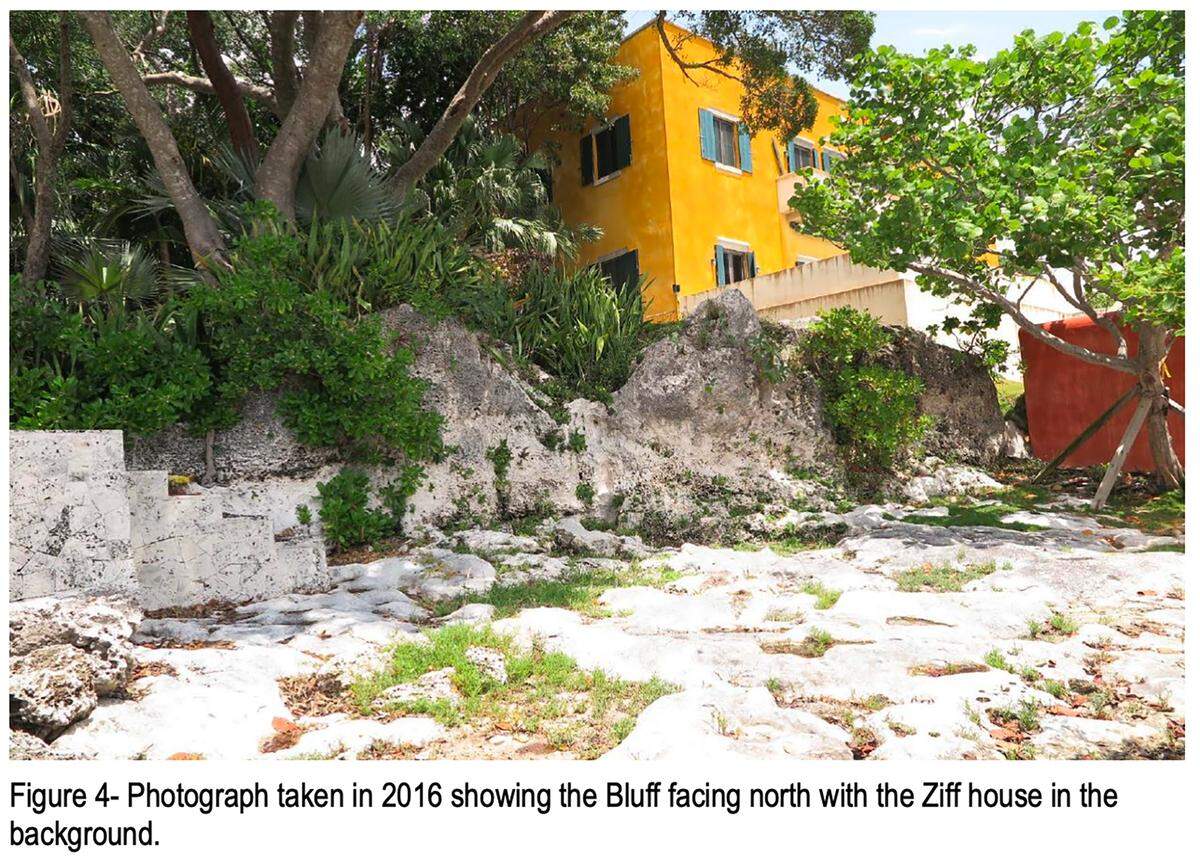
“It was protected in our drawings and was supposed to be preserved,” Martin’s architect, Jacqueline Gonzalez Touzet, told the board. “They basically gave it a haircut for 46 feet.”
Martin, who grew up in Coconut Grove and has developed a reputation for environmental advocacy, was apologetic. Among other ecologically-minded endeavors, Martin has been a funder for the Miami Herald’s climate reporting.
“I know the importance of what the bluff means for Coconut Grove.” he told the board. “It was not intentional. There is no excuse. It’s really disheartening what occurred.”
The damage to the bluff, first reported by the Coconut Grove Spotlight news website, came to light after Bob Carr, the veteran South Florida archaeologist who leads the Archaeological and Historical Conservancy, alerted the city. Carr conducts monitoring of construction in designated archaeological zones and had been doing periodic inspections of the Martin site at the request of the project’s manager, city documents show.
The exposed ridge, legally protected by the city of Miami since the 1970s as an important landscape feature, is a conspicuous piece of the Coconut Grove shoreline, and is part of the larger Atlantic Coastal Ridge formation that runs down the full eastern coast of Florida. The protected stretch of bluff runs from the entrance to the Rickenbacker Causeway for a couple of miles along South Miami Avenue and South Bayshore Drive down to the Grove’s village center.
Because Bayshore Drive and the land to its east consists of fill added at the foot of the bluff, the rocky ridge today sits along the west flank of the scenic, historic road.
But to the north, at Martin’s property, which sits on a quiet piece of Brickell Avenue between the causeway and Vizcaya Museum and Gardens that’s lined with multi-million-dollar estates, the bluff runs just above the Biscayne Bay shoreline.
That portion of the bluff is most prominently visible to the public in Alice Wainwright Park. The Martin property abuts the south edge of the park, from which the developer’s massive, long-under-construction estate is plainly visible.
Martin has been working for years to complete the 21,000 square-foot Modernist house for his family, designed by the highly regarded Miami architectural firm Touzet Studio. He spent $14 million in 2015 to buy and tear down the property’s previous occupant, the Ca’Ziff, a 14,400- square-foot Venetian-inspired villa built in 1990 for founders of the Sunglass Hut empire that had won international praise for its architecture.
Construction of the new house, which started in 2019, has been bedeviled with delays, in part because of the COVID-19 pandemic.
According to the Spotlight, Martin previously got into hot water with the city over work on the house project. He and his wife, Christina, were cited in 2023 for removing 71 trees without permits. The city ordered the couple to plan 59 new trees and contribute $117,000 to the city’s tree fund.
Martin has become one of Miami’s most prolific developers in recent years, having built or partnered on a series of architecturally distinctive high-rise condos, including the twisty, twin Grove at Grand Bay towers, as well as residential subdivisions in Doral. He’s also a partner in the planned hotel at the Miami Beach Convention Center.
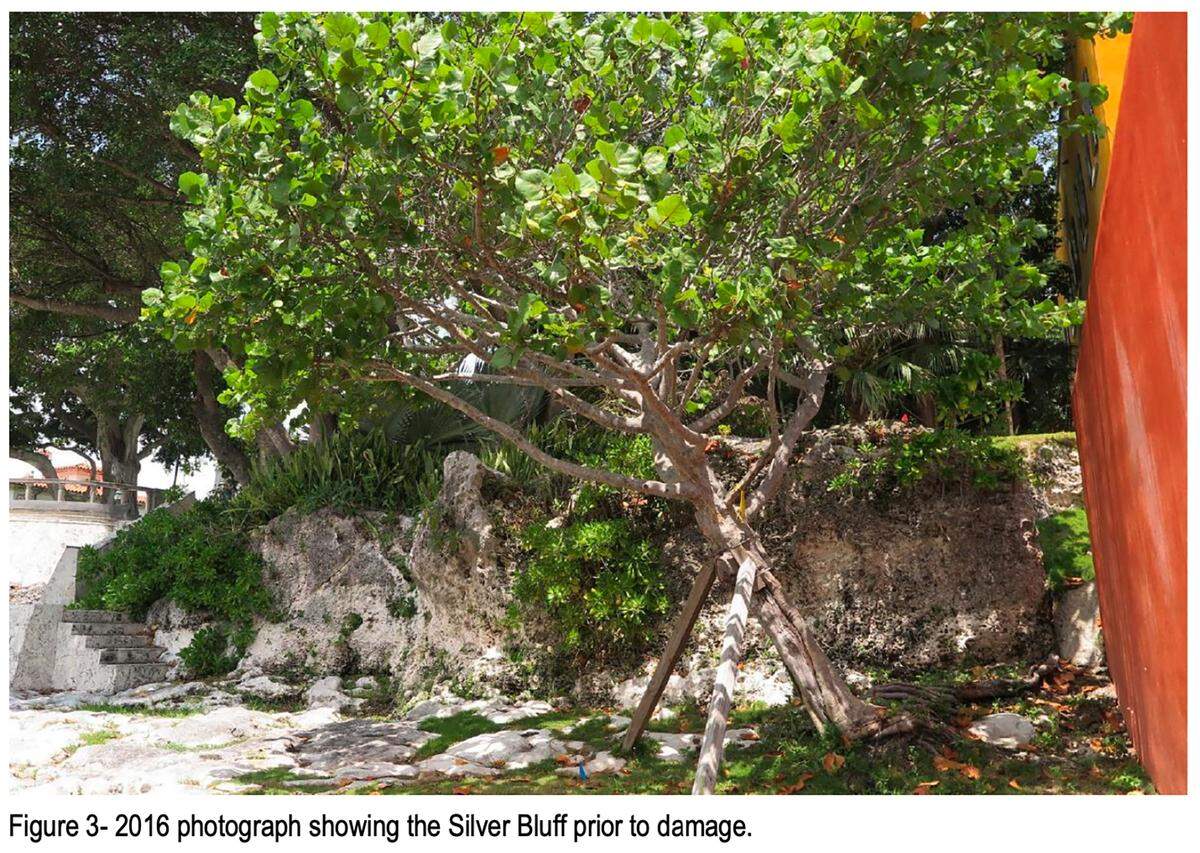
Martin’s attorney, Iris Escarra of Greenberg Traurig, said her client and his wife were “upset” when they learned about the damage to the bluff. They identified experienced stonemasons who work with the oolitic limestone that the bluff is made out of, and who could reproduce the missing portion from photographs using boulders of the same material. The boulders are already on the site being exposed to weathering, the Martin representatives said. The Martins would cover the cost of the work and materials.
The developer’s representatives told the preservation board that the Martins had no larger view or any other advantage to gain from trimming down the bluff. A protected mangrove fringe that sits between the bluff and the edge of the bay on their property already obstructs their water views at that point, they noted.
The city preservation officer, Kenneth Kalmis, said in a report that there is no precedent for doing what Martin proposed. Because the city’s environmental preservation law doesn’t contemplate any such damage, it provides no guidance for official action, he said.
Board members noted that the incident indicates the need to lose the legal loophole.
Ryan, the board member who scolded Martin, noted that the affected portion of the bluff is especially significant because it’s the location of the Devil’s Punch Bowl, a natural sinkhole fed by springwater where early Grove settlers got freshwater. The hole still survives at a neighboring property.
Given that the damage to the bluff was already done, Kalmis and the board majority concluded they had little choice but to approve Martin’s proposal. The board approved the plan unanimously, but required for historic purposes that the mason indicate where the natural bluff ends with a thin layer of material of a different color or texture. That will allow viewers in the future to identify which portion is natural and which is not.
The Martins must now apply for building permits for the restoration, which must be monitored by an archaeologist.
Though the law provides for minimal penalties, there’s no indication Martin was fined. One board member asked whether Martin could be required for provide financial assistance to the city to pay for a needed update to its environmental preservation guidelines, but officials said they have no authority to require that in this case since it’s not covered by current law.
But Escarra, nothing her hourly rates to represent Martin in the matter will be substantially more than he could have been fined, volunteered her labor on the updates free of charge — an offer the city accepted.
This story was originally published January 14, 2025 at 4:02 PM.