Chemicals taint Biscayne Bay oysters. What FIU study says about our drinking water safety
Unlike some spots in the state, the oysters found in Biscayne Bay aren’t good for eating — they’re typically too scarce, too small and too tainted with pollution to be safe.
But for researchers at Florida International University, the shellfish that grow in the briny bay also can serve an important and counter-intuitive purpose. They’re actually indicators of the safety of fresh drinking water pumped from Miami-Dade’s wells into household taps.
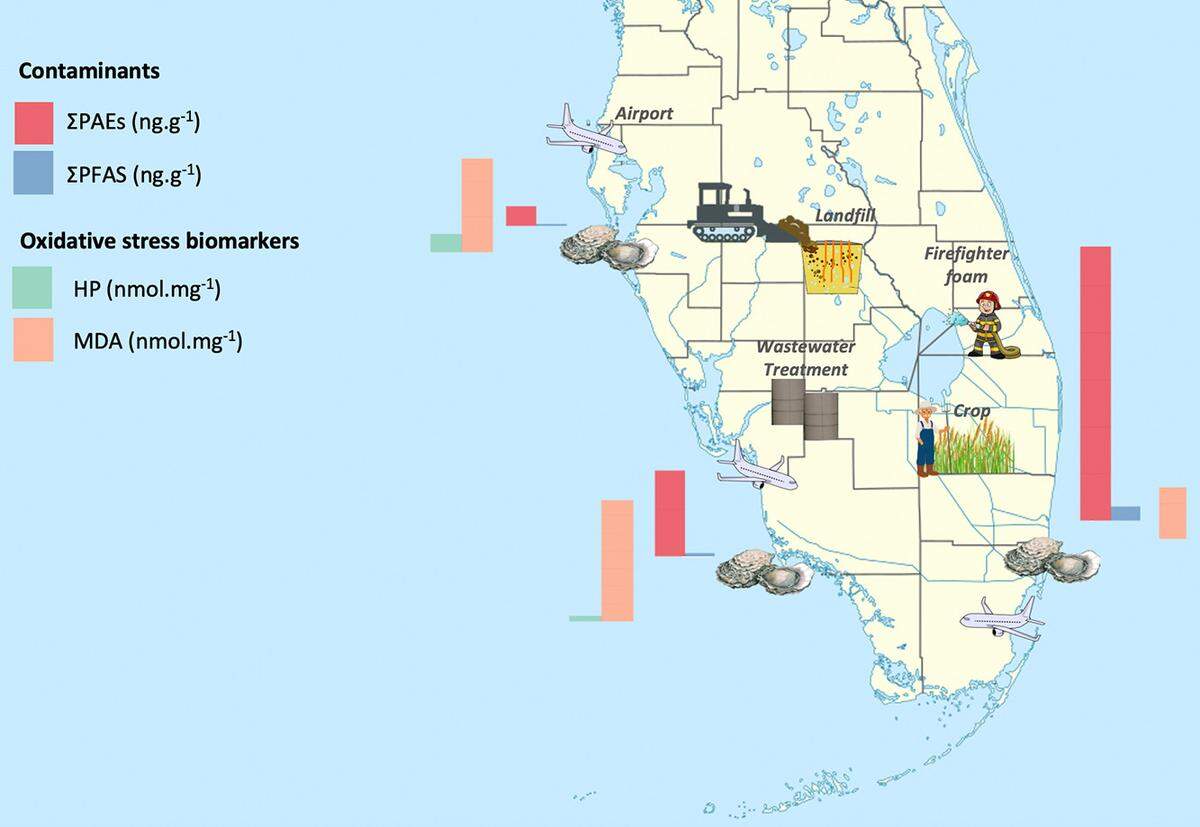
A newly published FIU study of oysters in three coastal Florida areas — Miami-Dade, Tampa and Naples — found they were contaminated with potentially harmful chemicals known as PFAS, short for per- and polyfluoroalkyl substances. And Biscayne Bay’s shellfish had, by far, the highest levels of what are also known as “forever chemicals.”
PFAS include thousands of man-made chemicals used in everything from nonstick pans to fast-food packaging to waterproofed clothing to fire-fighting foams. Though research is ongoing, the U.S. Environmental Protection Agency says high exposures have been linked to different types of cancers, thyroid issues and disruption to the reproductive system.
These chemicals have bled into drinking water in every state, and experts say nearly everyone has been exposed to at least some PFAS. Miami-Dade doesn’t tap the salty bay for drinking water, of course, but researchers say the oyster study still serve are an indicator of PFAS in the local water supply. The FIU study also echoes multiple previous studies and testing that have detected high levels of contamination in some wells.
As recently as 2020, the county shut down three drinking water wells over unsafe levels of PFAS, including several chemicals that posed serious enough public health risks that production was halted years ago.
“PFAS has been known to be toxic for many years. This is an ongoing problem,” said Natalia Soares Quinete, an FIU assistant professor of chemistry and one of the authors of the paper, published in the journal Science of the Total Environment.
Sampling across state
She and other researchers collected oysters from Biscayne Bay, Marco Island near Naples and from an oyster farm near Tampa Bay. They found PFAS in oysters from all three spots. Oysters, “filter feeders” that constantly pump water through their systems, are particularly vulnerable to coastal pollution. Chemicals can build up in their meat, which makes them valuable to water quality researchers.
Decades ago, when more fresh water from the Everglades flowed into Biscayne Bay, oysters were common in some areas. They have largely disappeared since, although a grassroots restoration effort is underway.
In the study, the Biscayne Bay oysters were the tiniest of the bunch, which initially led the researchers to assume that they were younger and might have absorbed the least amount of PFAS.
“But what we found was exactly the opposite. Biscayne Bay oysters were the smallest and they had the most contamination,” said Leila Lemos, a postdoctoral scientist at the FIU Institute of Environment.
Biscayne Bay oysters also had thinner shells than they should have for their age. Lemos suspects it’s because Biscayne Bay is far more polluted than the other two spots, so struggling oysters struggle with higher concentrations of PFAS and other toxins.
The study wasn’t intended to assess the health of actually eating oysters. None of the farmed Tampa oysters, for instance, exceeded recommended PFAS levels, but Lemos warned that her team only tested for a handful of known compounds linked to health issues. And there is no commercial harvest of oysters in Naples or Biscayne Bay so they’re rarely, if ever, eaten.
The health problems posed by PFAS are still being assessed but are potentially wide-ranging. Unlike more well-known contaminants, like lead, where one dose can cause immediate problems, PFAS builds up in the body over time and are linked to long-term impacts like birth defects or certain cancers. A Harvard University study even suggested that high exposure to PFAS could decrease the efficacy of COVID-19 vaccines.
No set health standard
So far, there isn’t even a firm standard for a ‘safe’ level of PFAS for water utilities. The EPA has never set mandatory regulations for the chemicals, but in June, the agency did dramatically toughen recommendations for some chemicals identified as the worst of the bunch.
For one of the most common and harmful forms, called PFOA, the agency dropped its recommendation for a safe daily dose from 70 parts per trillion to 0.004 parts per trillion. That’s thousands of times stricter — and a sign that particular PFAS is more problematic than initially believed.
That’s such a minuscule amount — think a fraction of a grain of sand in an Olympic-sized swimming pool — that most water utilities don’t have sensitive enough equipment to even measure a near-zero level.
“We shouldn’t be seeing those compounds. The goal is to not see them in our water,” said Soares Quinete.
In Miami-Dade, PFAS have been measured way above the new recommendations in some past sampling — high enough to shut down some wells.
The county has explored suing some of the chemical companies who originally made the toxic PFAS chemicals to help pay for future cleanups, an approach Tampa is also considering. Florida beat them to it with a state lawsuit filed in May accusing several major chemical companies of failing to warn consumers of the dangers of their products.
Miami-Dade has been under fire for high PFAS levels even before the EPA tightened up its recommendations for safe levels.
When an environmental advocacy group named Miami’s water number three on the nationwide list of most PFAS contaminated in 2020, Miami-Dade pushed back and declared its water safe and within the EPA guidelines it uses as a yardstick.
The Environmental Working Group said it found PFAS levels of 56.7 parts per trillion in Miami’s drinking water, the third-highest of the 31 states it tested. The nonprofit advocacy group did not say where it sampled that water.
At that time, the EPA suggested limit for PFOA — one of the most infamous chemicals — was around 70 parts per trillion, so the county argued that it was still well within safe limits. And when water levels exceeded those safe limits, the county acted.
Around the same time, Miami-Dade found unsafe levels of PFAS in six drinking water wells and shut down three of them. Two of the wells, in Hialeah, registered about double the 70 ppt limit then suggested by the EPA.
Since then, the average PFAS levels reported by the county have been far below that older 70 ppt threshold.
Miami-Dade County’s latest annual drinking water report showed a PFOA concentration of up to 10 ppt in the main system and South Dade water supply system and undetectable levels elsewhere.
But under the new EPA suggested threshold of 0.004 ppt, Miami-Dade’s water contains thousands of times more PFOA than it should.
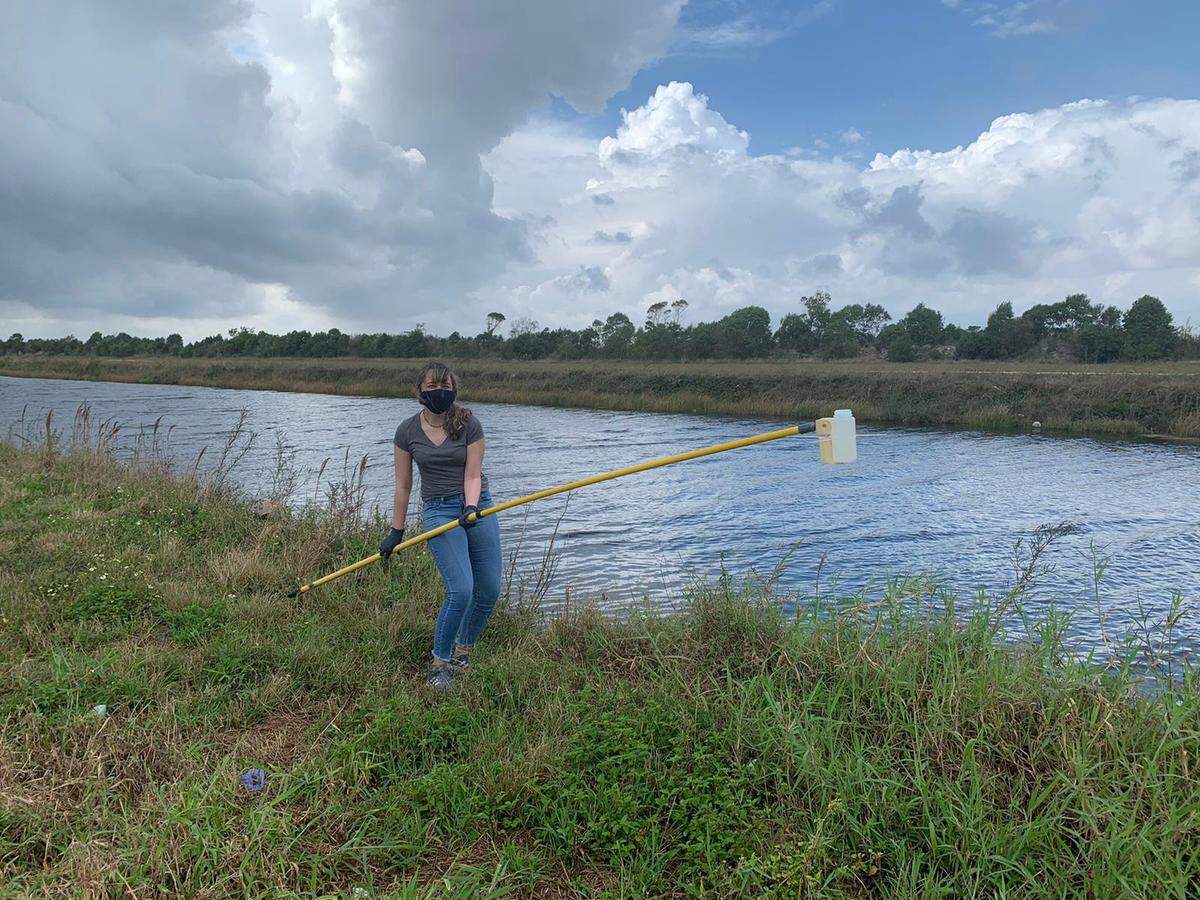
And more recent one-time samples, like those in a newly published paper from Soares Quinete and Lemos examining PFAS levels in surface and drinking water across Florida, are even higher.
They found South Florida’s tap water had the highest levels of PFAS compared to central and southwest Florida, and in some spots, they were several times higher than even the old EPA safety guidelines suggested.
The average total for all tap water was 86.3 ppt, with an even higher concentration near airports, where it used to be common to use a fire fighting foam with extremely high levels of PFAS chemicals. Tap water in the Grapeland Heights neighborhood near Miami International Airport was a staggering 242 ppt, and Dania Beach, near the Fort Lauderdale-Hollywood International Airport, had the second-highest levels at 124 ppt.
That’s far higher than the new EPA suggested limits, which are near zero.
The researchers also were surprised to find that PFAS levels were higher in people’s tap water than in surface water, like canals and Biscayne Bay. Soares Quinete thinks it might be due to the degradation of the plastic PVC pipes carrying our water supply, but she said more research is needed.
She said the entire field of PFAS and drinking water is not researched enough, but what’s been found so far suggests that the government needs to take action to protect people.
“I think people should be worried. They should advocate for changes,” Soares Quinete said.
How Miami-Dade is adapting
Since the new recommendations were released last month, Miami-Dade is in something of a holding pattern.
The EPA is widely believed to be releasing formal mandatory limits later this year, and Water and Sewer Department Director Roy Coley said when they are released the county will quickly do everything necessary to comply.
That could be an extensive — and expensive — process.
Miami-Dade uses the water testing and methodology required by the EPA, which Coley said can only detect as low as 2 parts per trillion of PFOA in drinking water. If the government requires utilities to limit PFAS any further, it will need to approve newer and more sensitive testing technology.
Currently, Coley said the county can use carbon-based filters that reduce PFAS levels to about 20 parts per trillion. Going further would require nanotechnology or full reverse osmosis, an expensive process usually used to make saltwater drinkable.
“If it’s determined that any detectable level of PFAS is health-compromising then we’re going to have to spend billions of dollars to make sure that no amount of PFAS is in the water,” Coley said. “We will comply with it and we will do whatever is necessary to make sure our water is safe.”
When asked about the higher individual PFAS levels in South Florida drinking water identified by the FIU researchers, Coley said that if the department could replicate those numbers then it wouldn’t use that well. The three closed in 2020 due to excess PFAS levels are still closed and will remain shuttered until the county cleans the water.
Until the EPA issues more formal rules on PFAS, Coley said the department will continue to abide by the 2016 recommendations.
“We made the decision as an agency that we’re not going to deliver any water over that 70 (ppt) health advisory. Right now we’re at a fraction of that,” he said.
Miami-Dade Mayor Daniella Levine Cava said in a statement that water quality is a top priority for her administration and noted that the county has been monitoring for PFAS since 2015, before the EPA issued its first guidelines for the chemicals.
“All drinking water provided to Miami-Dade customers has been well within the original Health Advisory Level for PFAS instituted in 2016. We are taking all steps needed to address the EPA’s updated guidelines and to ensure the continued safety of our water supply,” the statement read. “At the same time, the County is working aggressively across all Departments to reduce the amount of pollutants affecting our environment.”
Update: This article has been revised to include additional comments from Miami-Dade County.
This story was originally published July 8, 2022 at 7:00 AM.