If clean water is Bradenton’s ‘No. 1 issue,’ here’s why keeping grass green isn’t helping
READ MORE
Growing pollution: Read more from our series
Expand All
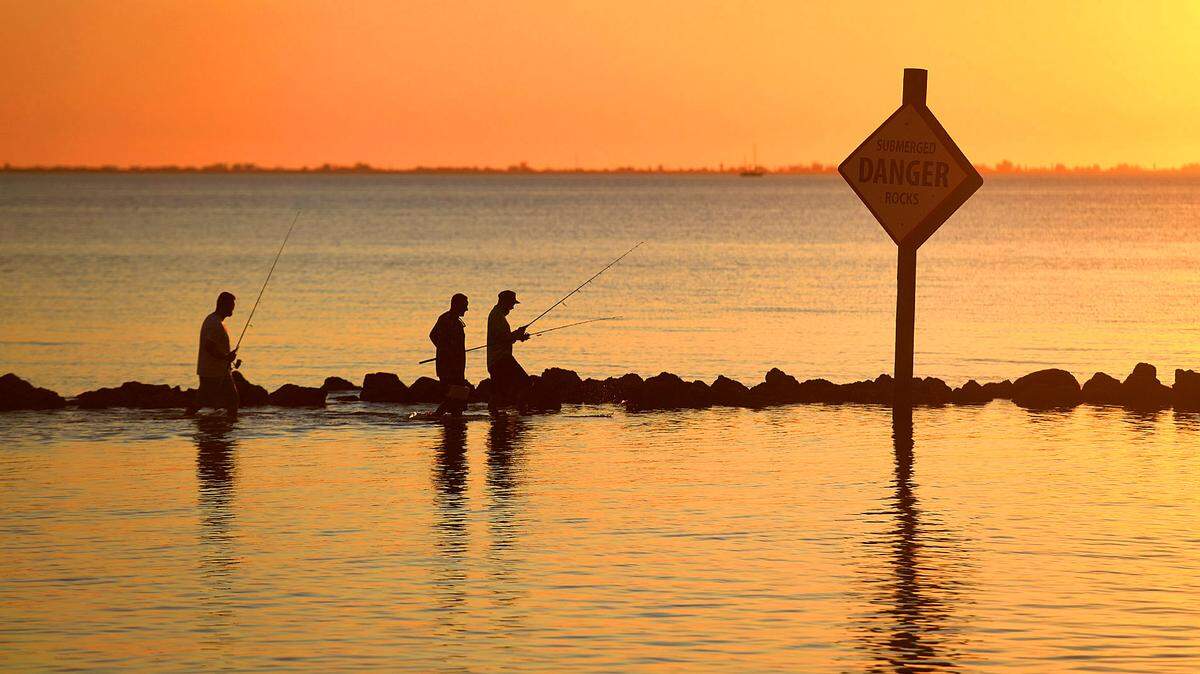
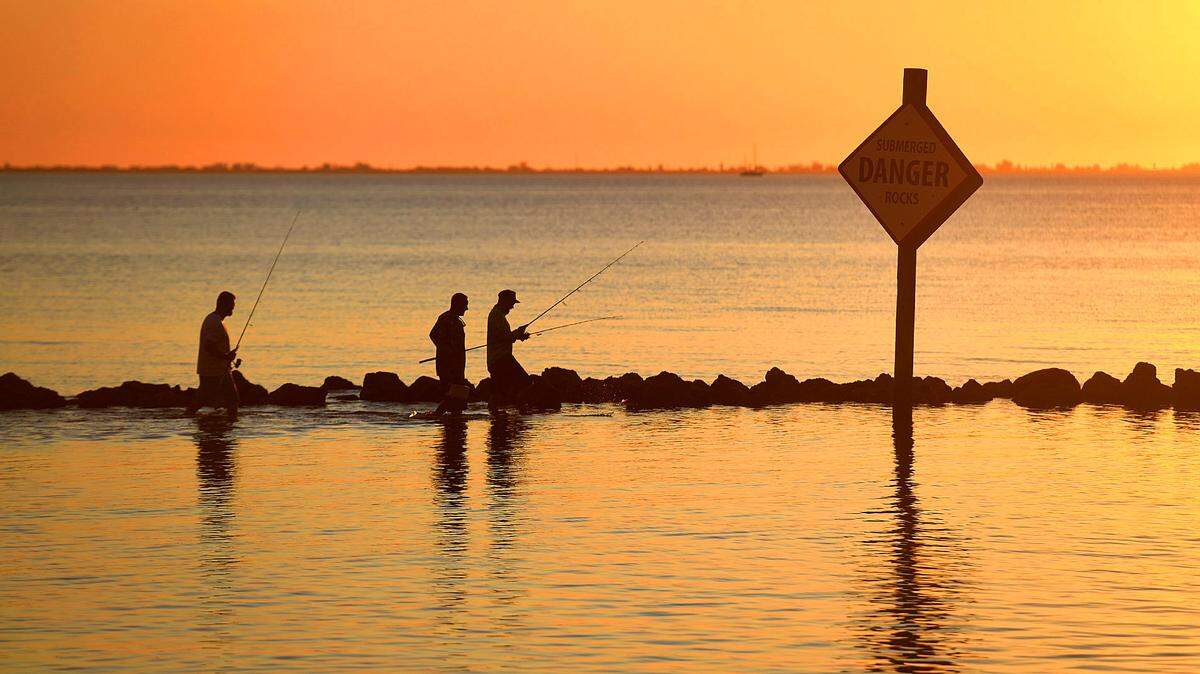
Light aqua blue and seafoam green water so clear you can see to the bottom of white sand beaches.
Gray manatees idling in the darker blue river mouths and canals lined with twisting masses of mangrove roots rising to yellow-green leaves.
These are colors of Manatee County’s natural beauty that attract so many.
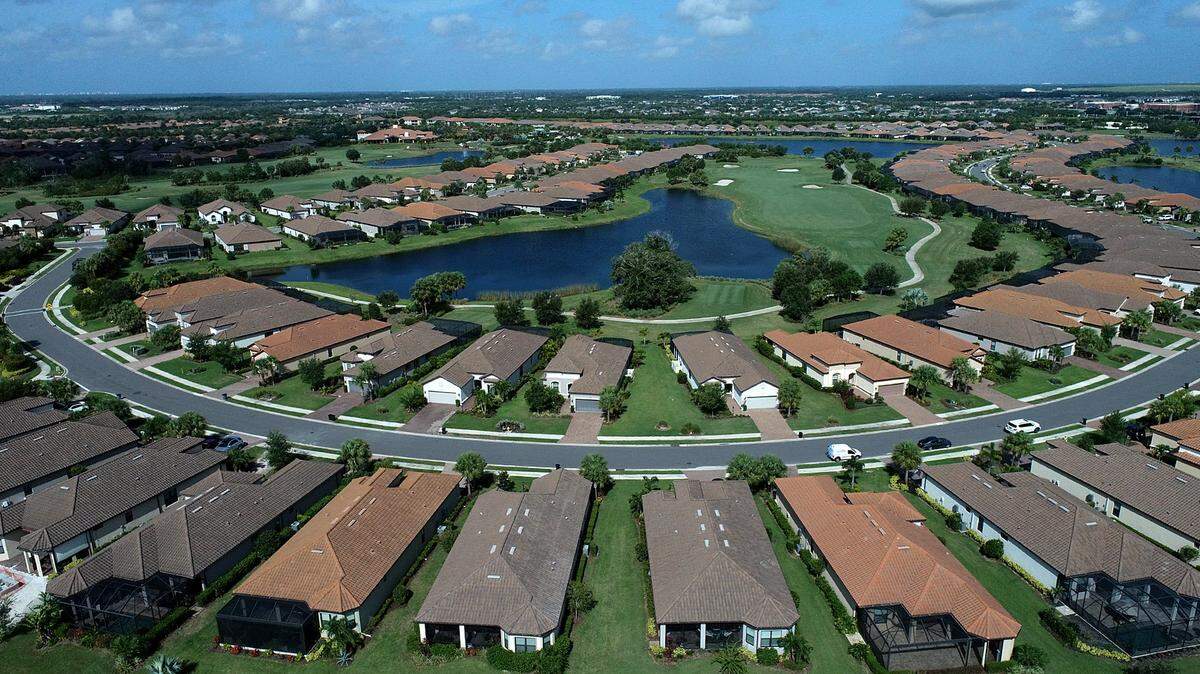
But another manmade color threatens their existence: pristine grass-green lawns that are swiftly multiplying in an area being rapidly developed and occupied.
Last year, Bradenton’s beaches were choked with a different kind of blue and green — algae and red tides that sent noxious fumes into the air and killed wildlife.
More manatees than ever died last year, and a massive red tide was among the worst in recent history on the Suncoast.
And a recent study showed Manatee County has the most imperiled waters in Southwest Florida.
While sources of pollution are many, and the vast majority come from commercial and industrial sources, experts say there’s one piece of the puzzle that many Floridians can help solve.
Some fertilizers that keeps lawns green contain high levels of nitrogen or phosphorous — two nutrients known to influence harmful algae blooms.
Through careless application or heavy rainfall, those nutrients can eventually make their way into local waters. There, they act as a food source that help fuel the blooms.
The state and local governments have taken steps to try to prevent that from happening, like enacting controversial bans during the summer rainy season.
But a Bradenton Herald analysis shows Florida’s tracking system does not provide an accurate picture of how much fertilizer is used in the state, and by whom.
A request for data on the breakdown of commercial versus residential use of fertilizer raised more questions than it answered.
‘Red flags everywhere’
Faced with a worsening water quality crisis, Manatee County officials and environmentalists agree it’s time to take a closer look at how lawn fertilizers factor into our chronic pollution problem.
“It dumbfounds me that the place we live, with such a dependence on water, that this isn’t our No. 1 issue. There should be red flags everywhere. We need to find a solution,” said Rusty Chinnis, a fishing instructor, outdoors columnist and board member with the Suncoast Waterkeeper environmental group.
“This will affect restaurants, water tours, fishermen, developers and everybody,” he added. “Tourism is why people come down here.”
In Manatee and Sarasota counties, agriculture is by far the biggest driver of fertilizer distribution to the region. But residential lawns rank second.
In the past, the state’s agriculture department published a yearly breakdown of how much fertilizer was distributed to each county and for what purpose. Since 2013, that information can only be obtained through a records request.
A Bradenton Herald records request of Florida Department of Agriculture and Consumer Services found that, from 2019-21, agriculture accounted for about 95-99% of nitrogen-containing fertilizer distributed to Manatee County and 91-98% in Sarasota.
Residential use accounted for 1-3% in Manatee and 0.4-0.7% in Sarasota, which represents hundreds of tons of fertilizer products. The estimates are conservative, as not all nitrogen-containing fertilizers are tracked by the state.
The accuracy of the state’s fertilizer records is also unclear. A Bradenton Herald analysis found that state fertilizer records contained errors and incomplete information.
Fertilizer distributions are self-reported by wholesalers, who are not required to provide complete details about their products or where they’re used.
“There can be no concrete correlation drawn regarding the location where the fertilizer was ultimately used and the county code reported” to the state, said FDAS Deputy Communications Director Caroline Stonecipher.
Thousands of tons of fertilizer deliveries to Manatee and Sarasota counties were of unknown nature or incompletely documented. That makes it hard to track the potential pollution footprint.
Easily accessible data on the use and distribution of fertilizer is “urgently needed,” says Jennifer Shafer, co-executive director of the nonprofit Science and Environment Council in Southwest Florida.
With it, local governments and science groups can glean a more accurate picture of how much potential pollution is happening in a given community. From there, they can assess and adjust their efforts to regulate the problem and educate the public.
Shafer’s organization and others recently called on FDACS to reinstate the public reporting of fertilizer sales and distribution by county.
A build-up of pollution
Manatee’s waterways, including the Terra Ceia Aquatic Preserve, Tampa Bay and Sarasota Bay, were strangled by months of lingering algae blooms in 2021.
The same local rivers and bays that are crucial for marine life, tourism, seafood and quality of life in Southwest Florida have faced one disaster after the next.
Scientists like Tampa Bay Estuary Program’s Ed Sherwood fear that a buildup of pollution from mega-sources, like sewage spills and industrial waste, and micro-sources, like lawn fertilizer, will set back decades of recovery. It’s a foul recipe that could eventually turn once-thriving water bodies into toxic dead zones, water experts argue.
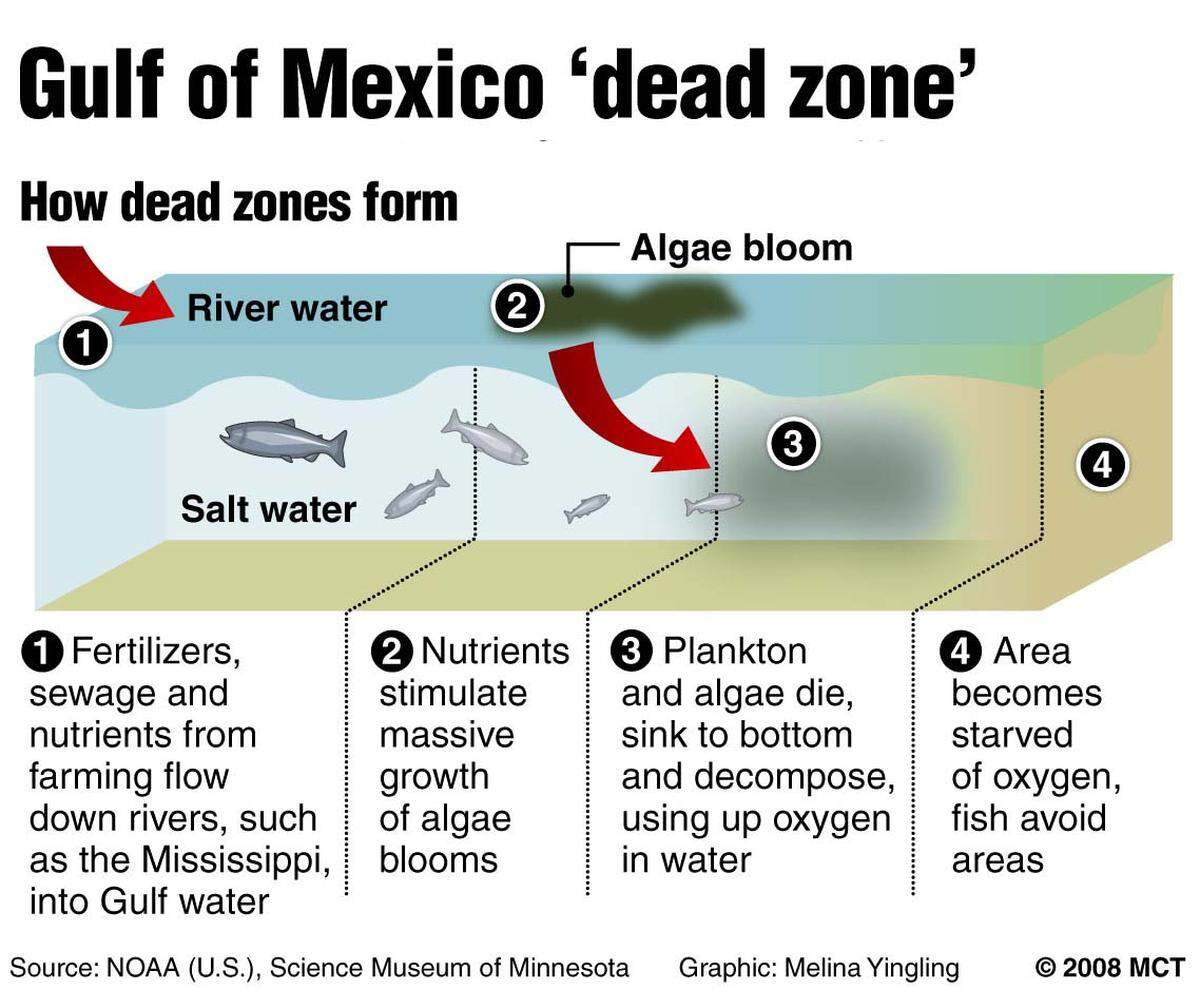
In some areas of the Gulf, it’s already happening. This year, NOAA predicts that the annual summer time dead zone in the northern Gulf of Mexico will span over 5,300 miles.
Scientists attribute the dead zone, where oxygen is too low to support marine life, to “excess nutrient pollution from human activities in cities and farm areas throughout the Mississippi River watershed.”
But, according to the researchers that study local waterways and the activists that advocate for their health, that outcome is preventable elsewhere. They say it’s time for Southwest Florida governments to educate residents, businesses and communities about the impact of pollution — including misusing fertilizers.
Fewer manatees
Lynn Aragon, a resident of Casco Dorado Condominiums on the edge of Palma Sola Bay, has long enjoyed waterfront views from her home of more than 20 years. But where there is usually a host of manatees gathering, foraging and even mating in the canals, last year she witnessed only a few.
A casual survey among her neighbors on the social media app Nextdoor confirmed they were noticing the same drop-off in numbers.
“It’s been devastating to not see the manatees,” Aragon, a retired local school teacher, said in 2021.
That wasn’t the only concerning trend she noticed. Seagrasses, the staple food of manatees, also appeared to be far sparser than usual in the nearby waterways.
Another startling sight came when she witnessed the lawn care company that serves her condo spreading fertilizer far too close to the seawall.
“I was sitting there watching them spray the pellets, and it hit me — that’s not supposed to happen,” Aragon said. “The fertilizer was actually going into the water.”
Rules for fertilizer use
Joining a wave of Florida governments strengthening or creating fertilizer rules, Manatee County commissioners last year expressed an interest in expanding the existing fertilizer ordinance. But no new action has been taken.
The county’s current ordinance puts restrictions on what types of fertilizer can be used, where it can be used, and how residents can treat their yards throughout the rainy season.
Manatee’s existing guidelines, first approved in 2011, prevent the use of fertilizers containing nitrogen or phosphorus between June 1 and Sept. 30, when the heaviest rains typically fall. Certain properties, such as farms, golf courses and athletic fields, are exempt.
“We know June 1 it starts raining here. If anyone applied fertilizer yesterday, it’s in the rivers and creeks now,” said Rob Brown, former Environmental Protection Division Manager with Manatee’s Parks and Natural Resources Department. “That’s the whole idea behind the blackout period.”
The county’s rules also require “fertilizer-free zones” within 10 feet of surface waters, wetlands or seawalls. Fertilizers are banned year-round in those zones, and an additional 6 foot buffer zone with low-maintenance plants is recommended to capture and filter runoff.
Another part of the ordinance bans grass clippings — which produce a lot of nitrogen — from being swept into drains, ditches, roads or waterways.
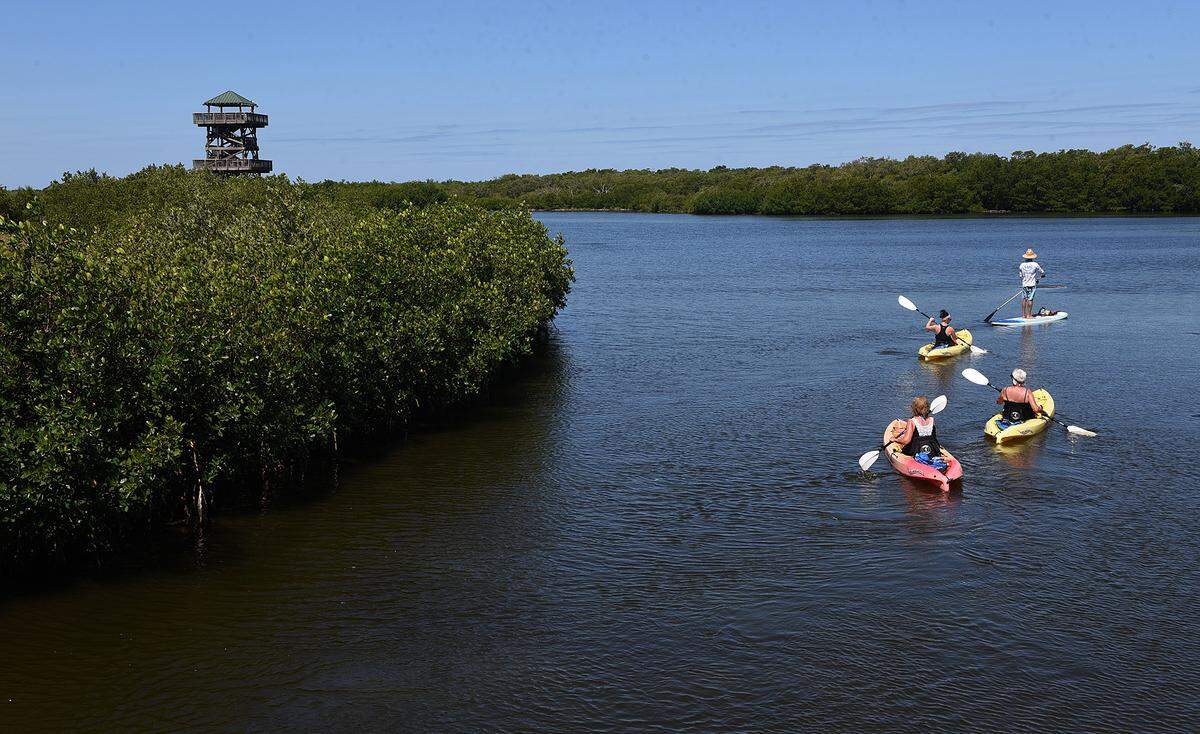
Manatee and Sarasota’s current rules are already among the strictest in the state. But water experts and some government officials agree that they could go further to prevent water contamination.
Published in 2021, Gulf Coast Community Foundation’s “Community Playbook for Healthy Waterways” is a guide on public policy to reduce water quality pollution, penned with insights from scientists, conservationists, government officials, business and agriculture leaders.
One of its recommendations is stronger fertilizer ordinances for Florida’s coastal regions, including steps toward better education and enforcement.
The estimated cost of the playbook’s proposal — $10,000 to $50,000 — would be relatively cheap compared to the millions that the state and local governments have burned through in red tide cleanup.
‘You make red tides worse’
Even small amounts of nutrients can produce hundreds of pounds of algae in local waterways, said David Tomasko, executive director of the Sarasota Bay Estuary Program.
“The more residents that adhere to pollution regulations, the easier it is for the environment to bounce back from a harmful algae bloom,” Tomasko explained. “When you add nutrients to the bay, you make red tides worse. You just do. It’s not an either-or situation.
“Red tide is not new, but we do know that if you add nitrogen from fertilizer, septic tanks or Piney Point, you run the risk of making it worse or making it last longer.”
Southwest Florida waters were still recovering from the major red tide of 2018 when news came last spring that the Piney Point industrial site in Manatee County, long known to officials and environmental advocates as a ticking time bomb, had reached a tipping point.
State officials hoped for the best when they authorized Piney Point’s release of 215 million gallons of contaminated water into Tampa Bay, the region’s largest estuary, but major blooms of toxic algae soon followed.
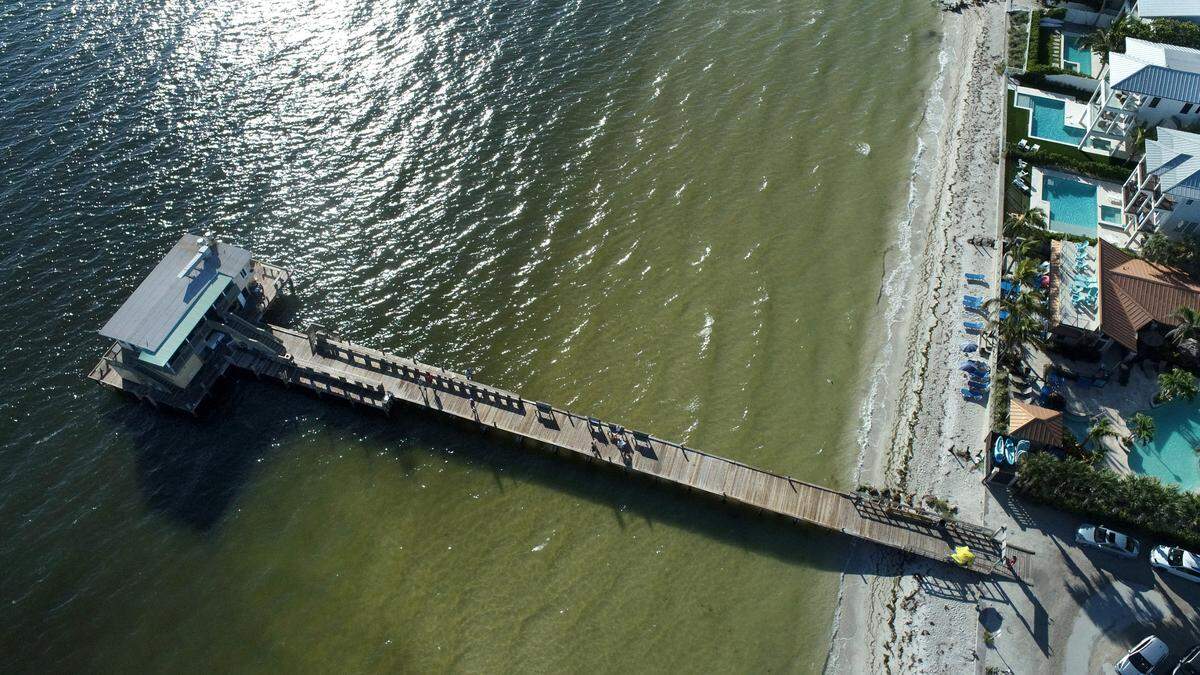
The average person can’t prevent a Piney Point disaster, but rethinking your approach to lawn maintenance can go a long way, said County Commissioner George Kruse, who last year pushed the Board of County Commissioners to tighten existing fertilizer restrictions.
“We’ve got big companies with tankers that spray that stuff everywhere and it gets all over the place. It rains and washes it all into our stormwater and our river,” Kruse said. “There are places that ban these things because they’re shown to facilitate algae blooms and manatee deaths.”
Kruse’s proposal to strengthen local fertilizer restrictions found support from fellow Manatee County Commissioner Kevin Van Ostenbridge. With Tampa Bay and its surrounding waters in poor condition, he hoped the county could come up with a metered approach that helps limit any additional nutrients from entering the water.
“I want to be careful because I don’t like overreaching government, and I don’t want to overburden our residents at a time when the state just approved the equivalent of 15,000 bags of fertilizer into the bay,” Van Ostenbridge said, referring to Piney Point.
Piney Point’s emergency release has been blamed for the severity of a red tide bloom that spanned from Venice to Tarpon Springs last summer. The impact was most apparent in Pinellas County, where crews ultimately scooped up more than 1,800 tons of dead sea life.
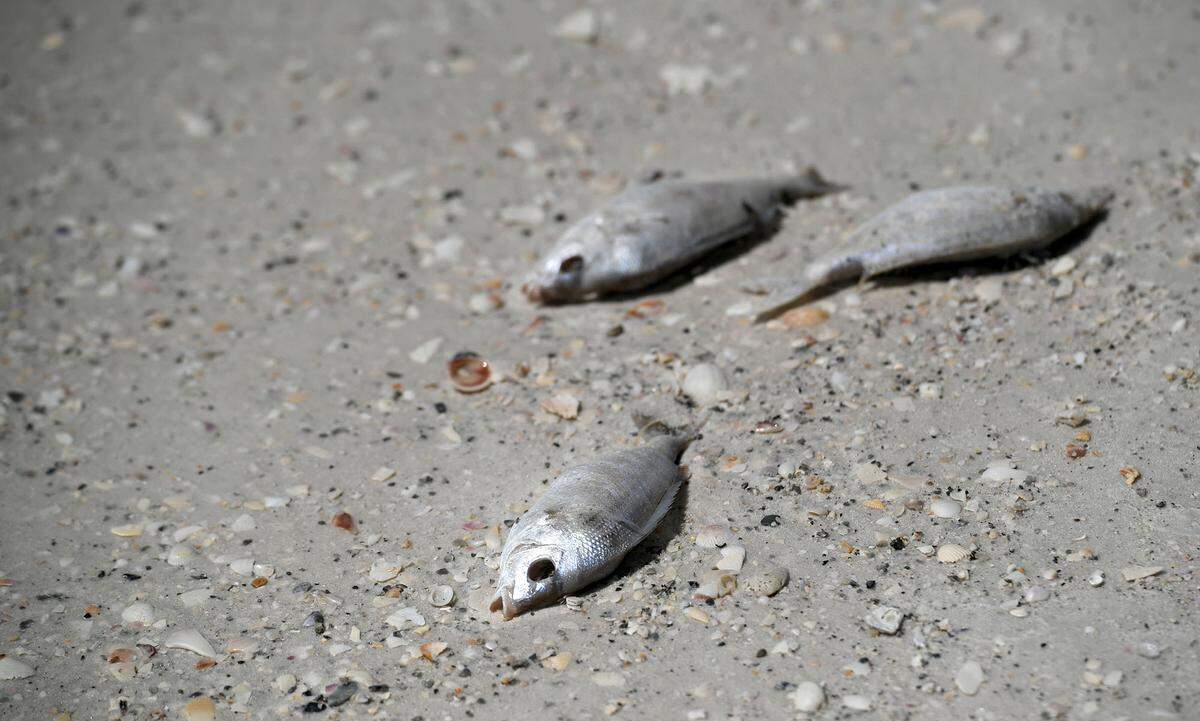
Scientists still have many questions to answer about what makes red tides thrive. But a growing body of evidence suggests that the organism that causes it, Karenia brevis, can take up nitrogen and phosphorus from numerous sources — including several human-related ones.
After a five-year research project, the results of which were published in 2014, Mote Marine Laboratory and their study partners found that human pollution can reach and feed red tide.
That’s why it becomes imperative to cut off as many excess nutrient sources as possible, scientists argue.
Last March, scientists at Florida International University released a report that described how nitrogen and phosphorus runoff can lead to algae blooms. And University of Florida researchers have also proven that higher nitrogen runoff improves the chances of a harmful algae bloom.
Getting worse in Manatee County?
Manatee County could be seeing just the beginning of a worsening water quality crisis.
An analysis published last March by environmental group Calusa Waterkeeper found that Manatee County has the most imperiled waters in the Southwest Florida region.
Among the threats highlighted in the state data-based assessment were rapid increases in population, urban development and impervious cover (hard surfaces like concrete and rooftop that don’t allow water to absorb into the ground).
Those factors all make it easier for fertilizer nutrients to run away from suburban yards and rush into local waterways.
There has also been a tremendous decline in seagrass acreage in Sarasota Bay and Tampa Bay in recent years, according to surveying results from the Southwest Florida Water Management District. Between 2018 and 2020, Sarasota Bay lost about 18% of its seagrass coverage, or more than 2,300 acres, and Tampa Bay lost about 16%, or more than 6,300 acres.
While the Piney Point wastewater release and the ensuing blooms grabbed everyone’s attention, scientists say it’s always a good time to shine a light on other preventable sources of pollution.
“Just because you got set back by Piney Point doesn’t mean you throw up your hands. Each of us has to do a better job with our own nutrient footprint,” said Tomasko, who explained that last year’s emergency release had the same impact as 2 billion gallons of wastewater in Tampa Bay. “It works both ways.”
“It’s all cumulative. What anyone else adds to the water will add to the problem,” Chinnis added.
When it comes to reducing nutrient pollution, water experts stress that every bit counts — from large-scale sewage spills and industrial waste down to small sources that feed the issue over time.
Minor problems that turn into major pollution headaches include leaky yard pipes, grass clippings that wind up in storm drains, and neighbors that are too generous with their lawn fertilizer.
“Our focus and renewed interests are reducing nutrients from those stormwater sources, whether that’s from residential communities reducing their fertilizer footprints or reducing emissions from power plants and cars,” said Ed Sherwood, executive director of the Tampa Bay Estuary Program. “It’s not one source contributing to our problems, it’s many.”
Spreading the word on fertilizer rules
Fertilizer ban rule-breakers aren’t usually malicious. A lot of their mistakes come down to lack of awareness, said Chinnis, who pushed for a public information campaign to inform residents about proper lawn care techniques.
“People need to be reminded,” Chinnis noted. “We’ve got people who would never break the rules, but I’ve seen my neighbors putting the stuff down because the ban goes right over the top of their head.”
Leading with education can have a better impact than writing a citation, said Tomasko, who also promoted education and resources for homeowners to make sure they’re treating their yards in a way that doesn’t disrupt the environment.
“In my view, I think we have all the rules we need. We just need to enforce them. Not with a cop writing a ticket, but a lot of people don’t know what they’re doing,” Tomasko noted.
Since implementing the rainy season fertilizer ban more than a decade ago, Manatee County has largely chosen education over enforcement.
Teaching homeowners proper techniques has been the most helpful approach, said Brown, especially given that the county only has one officer on staff to write citations.
“A lot of it, for the homeowners, is targeting education,” Brown said, noting that the county also has encouraged lawn care services to help their clients understand what’s allowed.
Knowing your yard is the first step. Depending on where you live, a sprinkler system’s reclaimed water might provide all of the nutrients a lawn needs. When in doubt, ask a lawn care expert for guidance.
At her bayside condo complex, Aragon took the task of addressing pollution into her own hands. She used her phone to shoot a video of the lawn care company spraying fertilizer into the bay and then shared it with the members of her homeowner’s association. The HOA addressed the issue with the company, Aragon said, and the workers are no longer fertilizing too close to the seawall.
“All these people that live in condos and communities on the water should speak out themselves about following the ordinance,” Aragon said. “It’s really up to the lawn companies too. They’re supposed to follow it.”
She added that government officials could do a better job of informing the public about fertilizer rules with mailings, signs and more frequent reminders. And, true to her roots as a teacher, Aragon said she is considering putting together a presentation about the ordinance to share with neighboring HOAs.
“I’d love to get to the point where the general public knows about this problem,” Aragon said.
Tips for maintaining a yard without harming water quality
Follow the rules. Absolutely do not use nitrogen or phosphorus fertilizer between June 1 and Sept. 30. Additionally, the use of phosphorus-containing fertilizers is only permitted when a State of Florida-certified laboratory test shows a deficiency in the soil.
Check the weather. Don’t put down fertilizer if the weather forecast predicts rain.
Use slow-release fertilizers that produce nutrients over time.
Reclaimed water already has nutrients baked into it. You may not need fertilizer if you have a sprinkler system.
If you use a septic tank, have it inspected for leaks.
Keep grass clippings out of the water and out of the storm drain. Try raking them up and using them to refertilize the lawn instead.
Pick up behind your pets to remove another common source of nitrogen from your yard.
Limit the amount of food that goes down your garbage disposal. If possible, throw it in the trash instead.
Only used licensed fertilizer applicators and lawn care providers.
For more tips, check out Tampa Bay Estuary Program’s Be Floridian Program at tbep.org/our-work/education/be-floridian and UF/IFAS Extension’s Florida Friendly Landscaping Program at ffl.ifas.ufl.edu.
BEHIND THE STORY
MOREWhy we reported this story
Water quality is under threat around Florida. Pollution — big and small — is fueling devastating algae blooms, seagrass die offs and manatee deaths.
After the Bradenton Herald first broke the story and led the way in reporting on pollution from Piney Point, a former fertilizer plant, we decided to dive into other water quality hazards.
One needless source of pollution is yard fertilizer. Used for largely aesthetic reasons, the millions of pounds of fertilizer distributed around Florida for lawn care each year contain nutrients that add to the problem when they escape into neighborhood retention ponds, storm drains and eventually into local waterways.
Over the past year, we took a deep dive into the world of fertilizer use by looking into regulations that are working well and investigating what can be done to improve the ones that aren’t.
There are also steps the average person can take to lessen their fertilizer footprint without sacrificing a healthy, happy yard.
This series is the result of more than a year of research, hours of interviews and several public records requests.
We think there’s plenty to take away from these stories, but the bottom line is this: Government, business owners and residents can all be a part of the solution.
This story was originally published July 21, 2022 at 5:50 AM with the headline "If clean water is Bradenton’s ‘No. 1 issue,’ here’s why keeping grass green isn’t helping."